
January 22, 2024
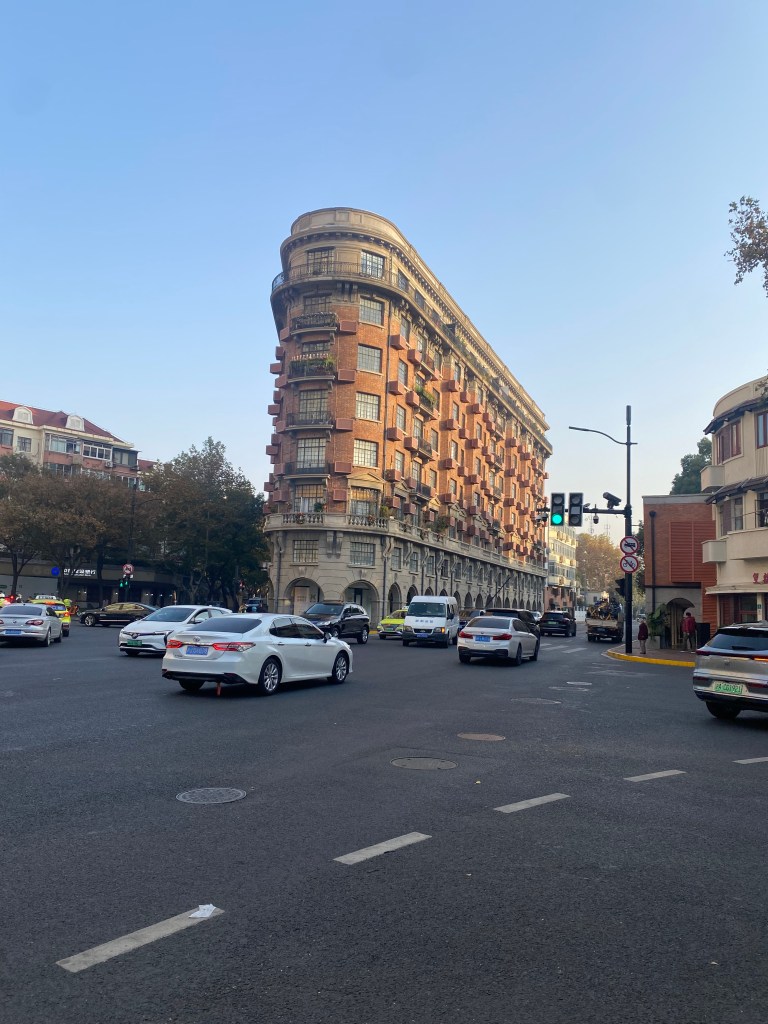
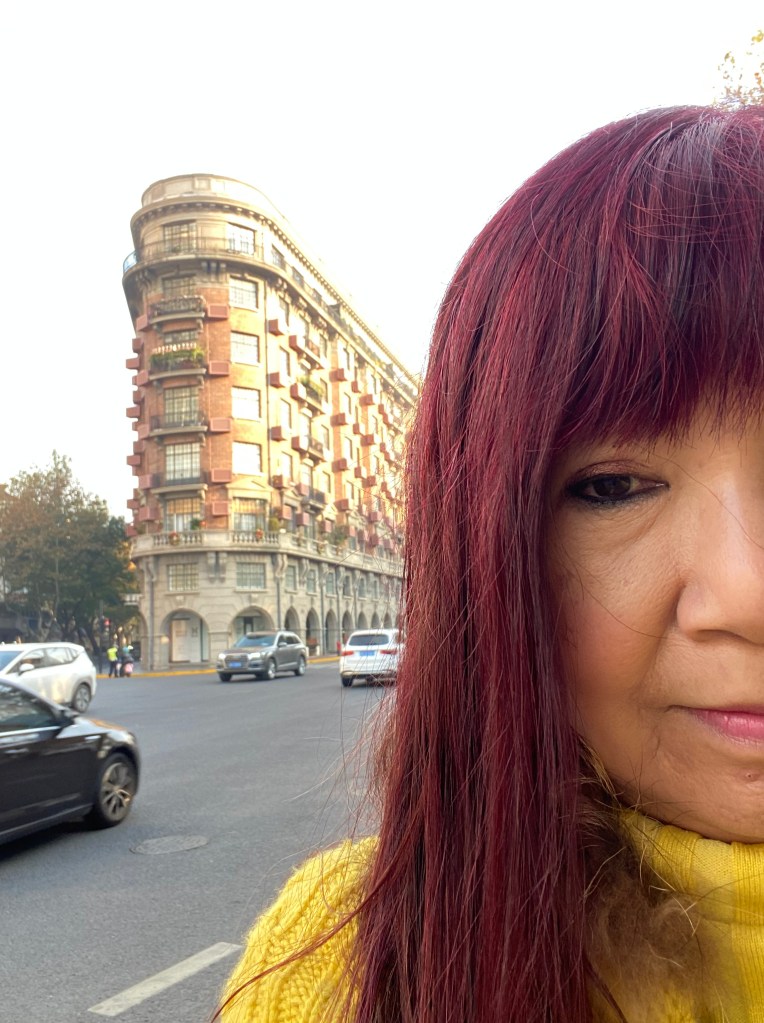
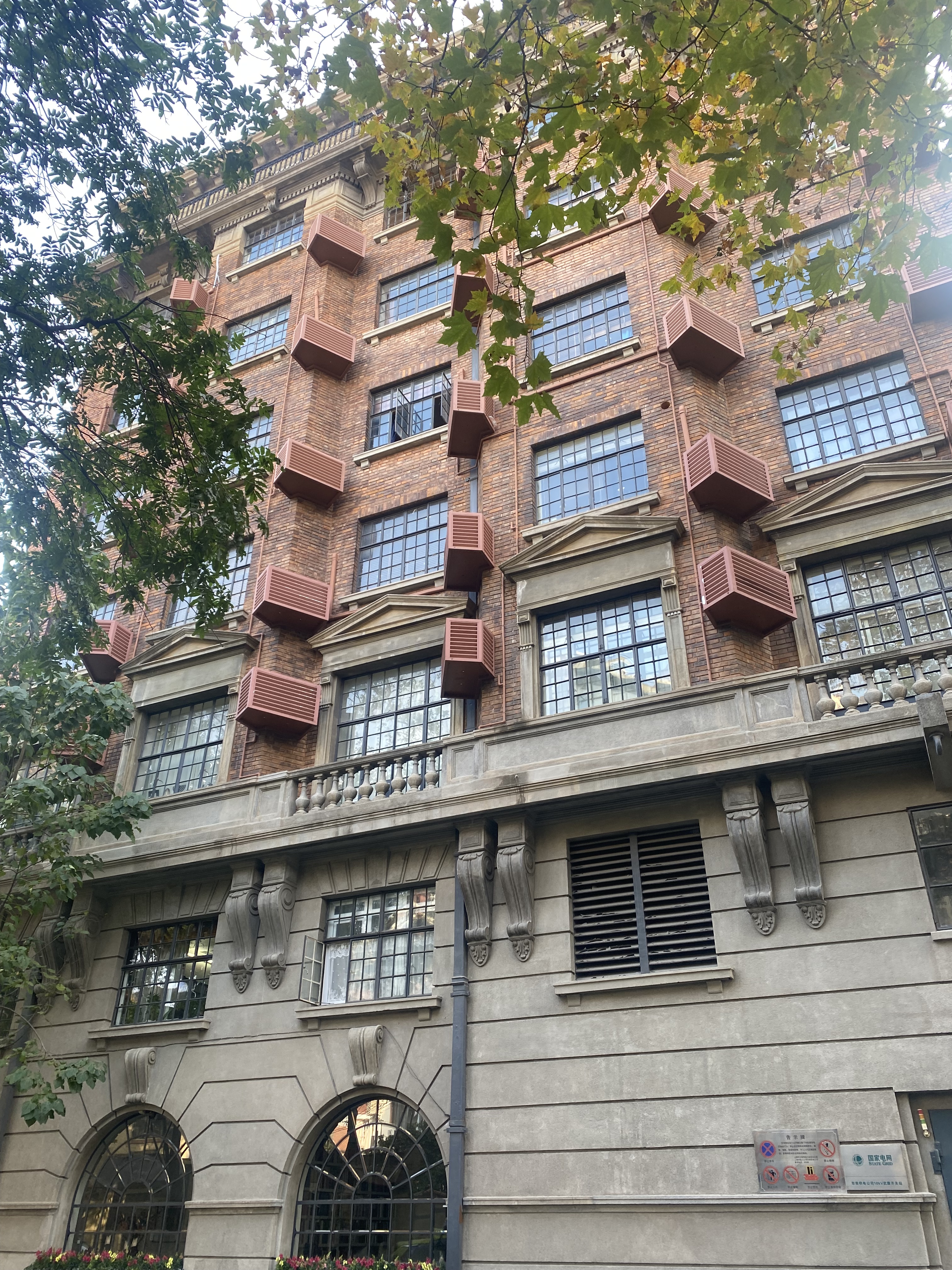
DAY 1: I decided at the last minute to visit my hometown Shanghai after 13 years of absence. I bought a plane ticket, applied for a tourist visa in a hurry. All my immediate family members (my mother, my brother and my sister) all flew back from abroad and reunited in Shanghai. Shanghai was a cosmopolitan city where I spent my childhood and youth. We rented a 4-bedroom apartment on 18th floor across street from the legendary “The Wukang Mansion”, formerly known as the Normandie Apartments (built in 1924). It was located in French Concession. “The Wukang Mansion” has become a tourist attraction. To me, it was like a spectacular cruise ship that was about to depart. It was also like a crab body, with its 8 legs (all the side streets) extending in all directions.
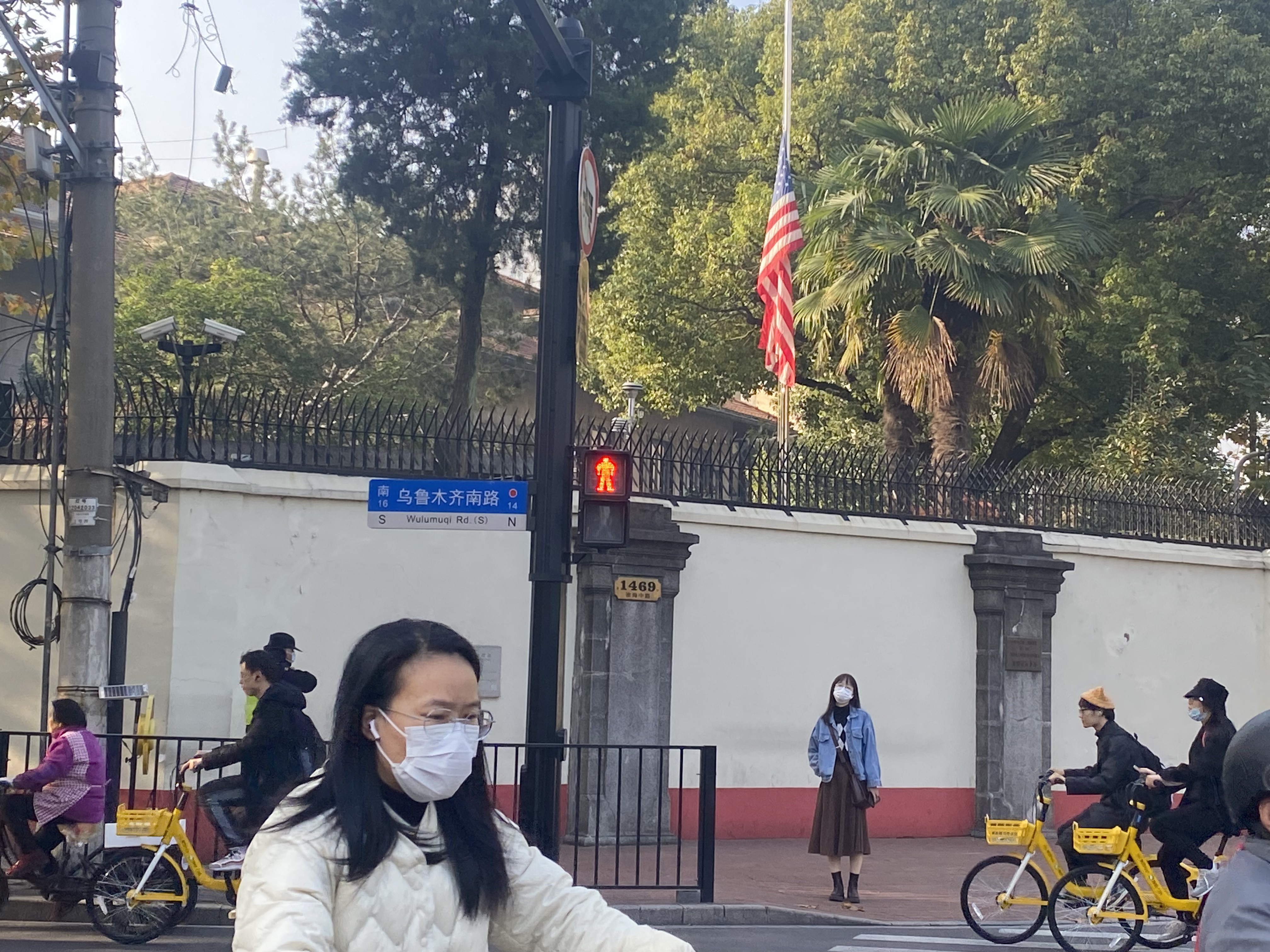
DAY 2: Due to the jet lag, I woke up before dawn. I was so excited that I started my morning walking. Going through all my familiar areas. Walking is the best way capture all the details. I passed by my Kindergarten in a gray bungalow opposite the US Consulate.
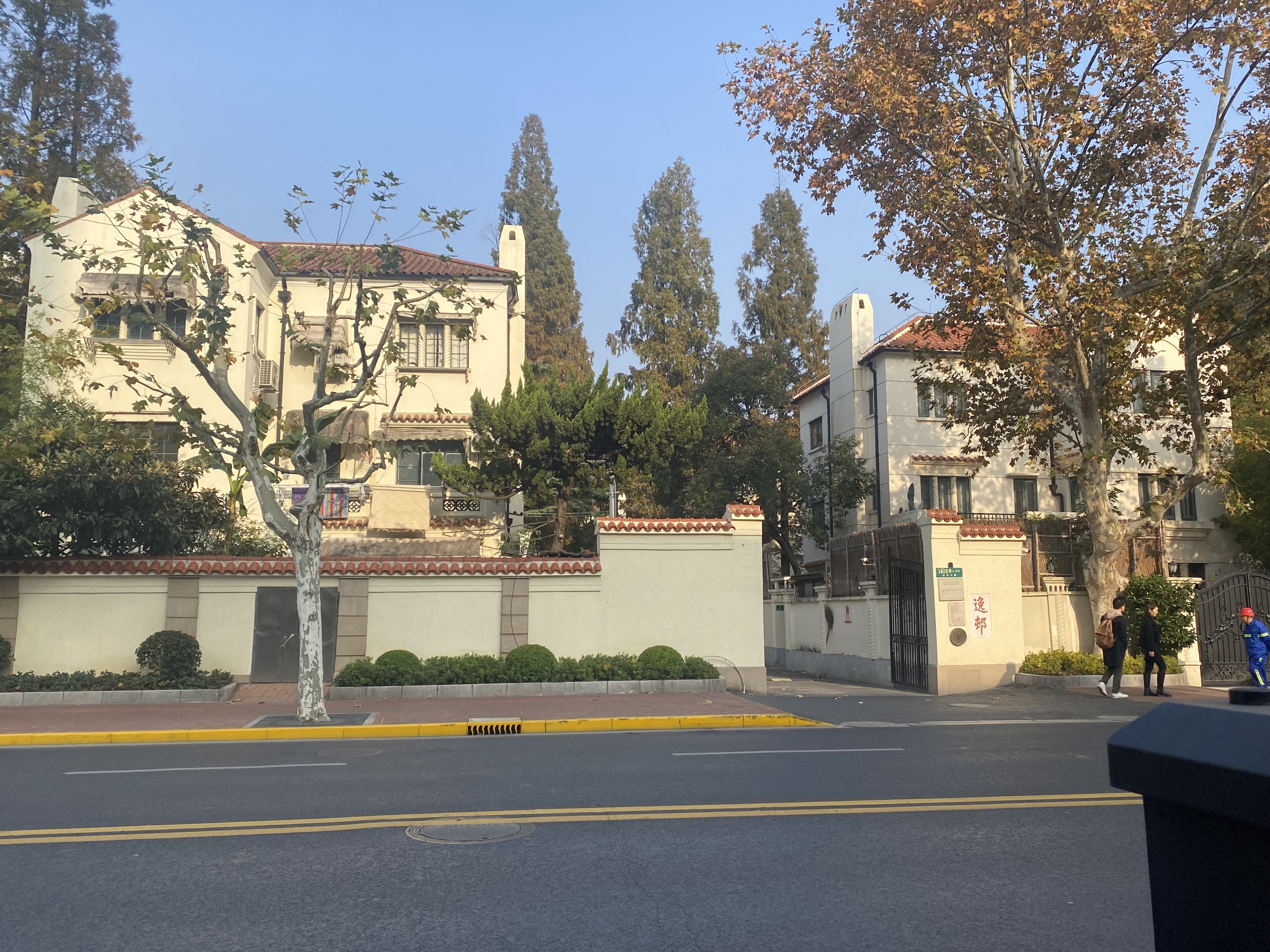
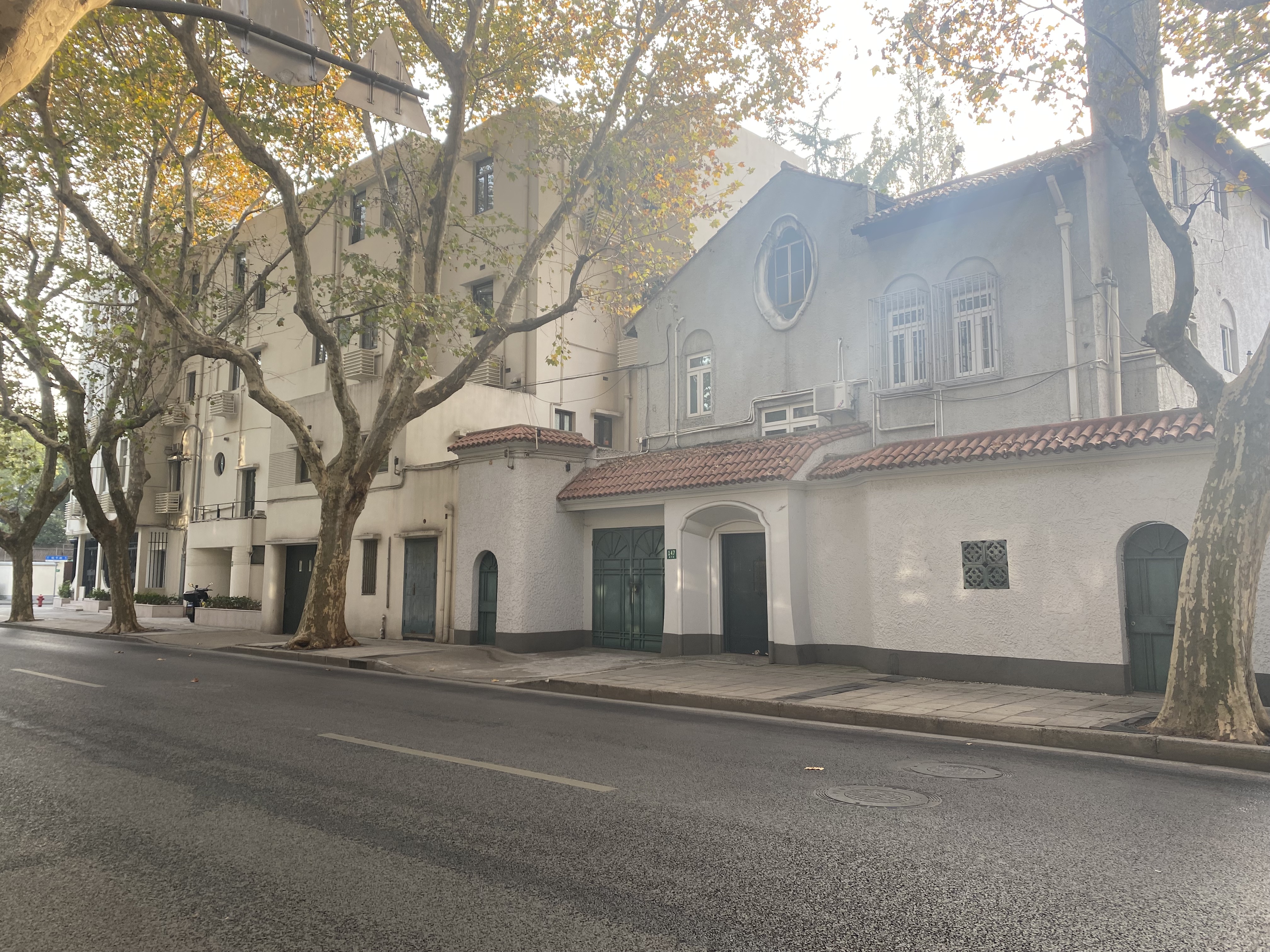
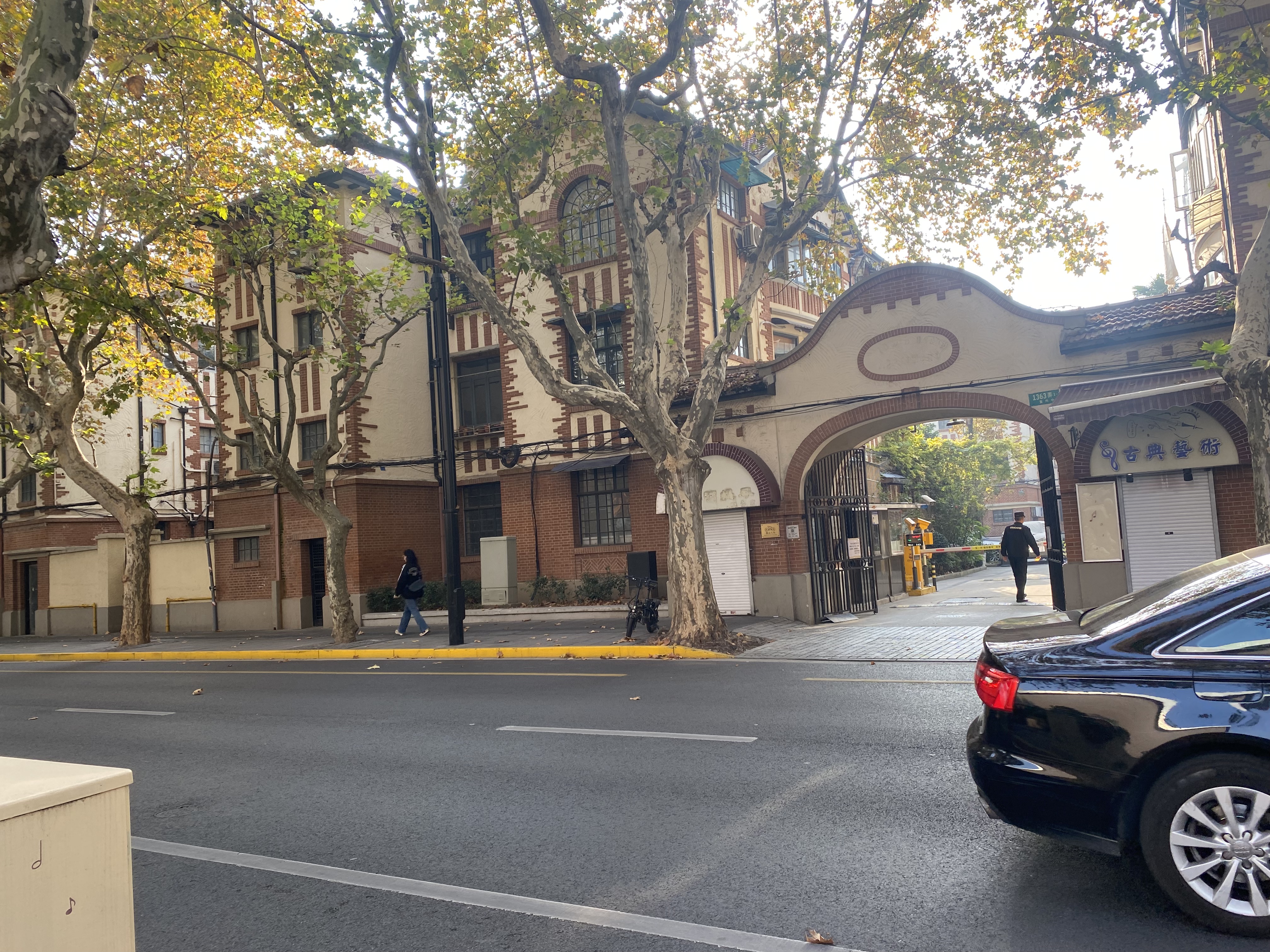
Continuing…I arrived at the newly built Shanghai Symphony Orchestra Concert Hall. This was used to be the Shanghai Diving Pool where I used to swim here during the summers. The beautiful rows of elegant apartments opposite the Shanghai Symphony came into my view. Many of my classmates from Fenyang High School used to live in these apartments which were preserved.
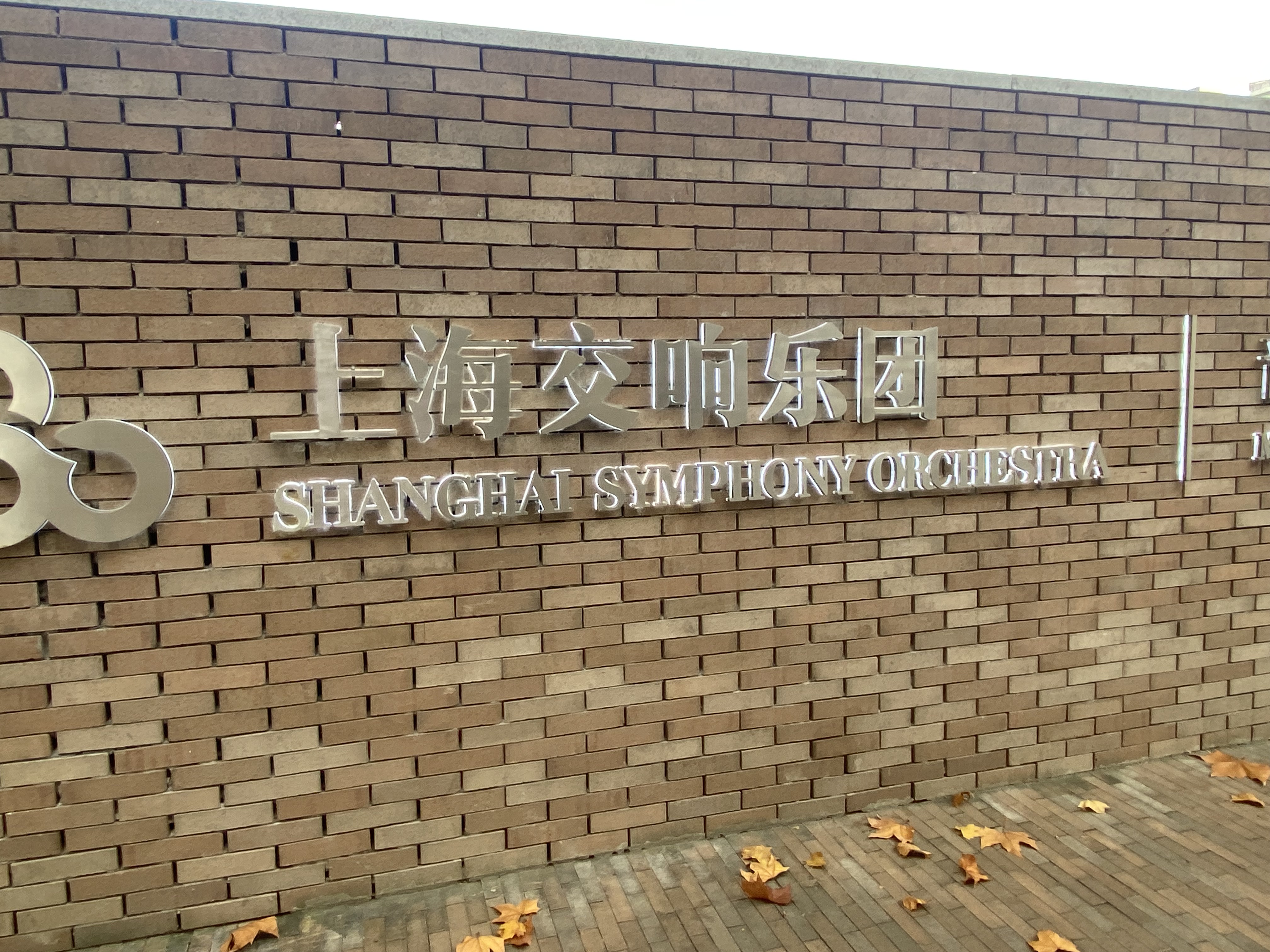
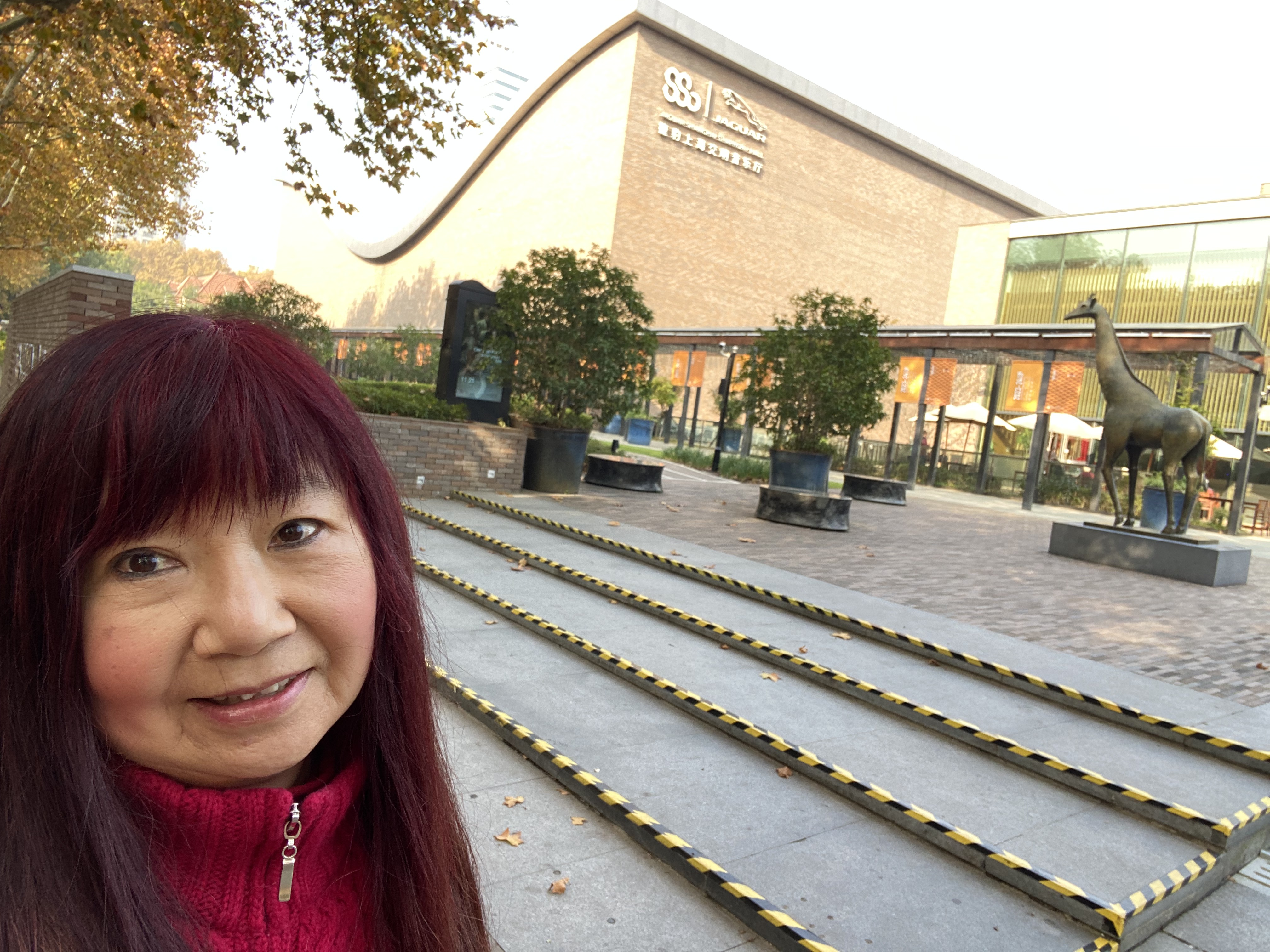
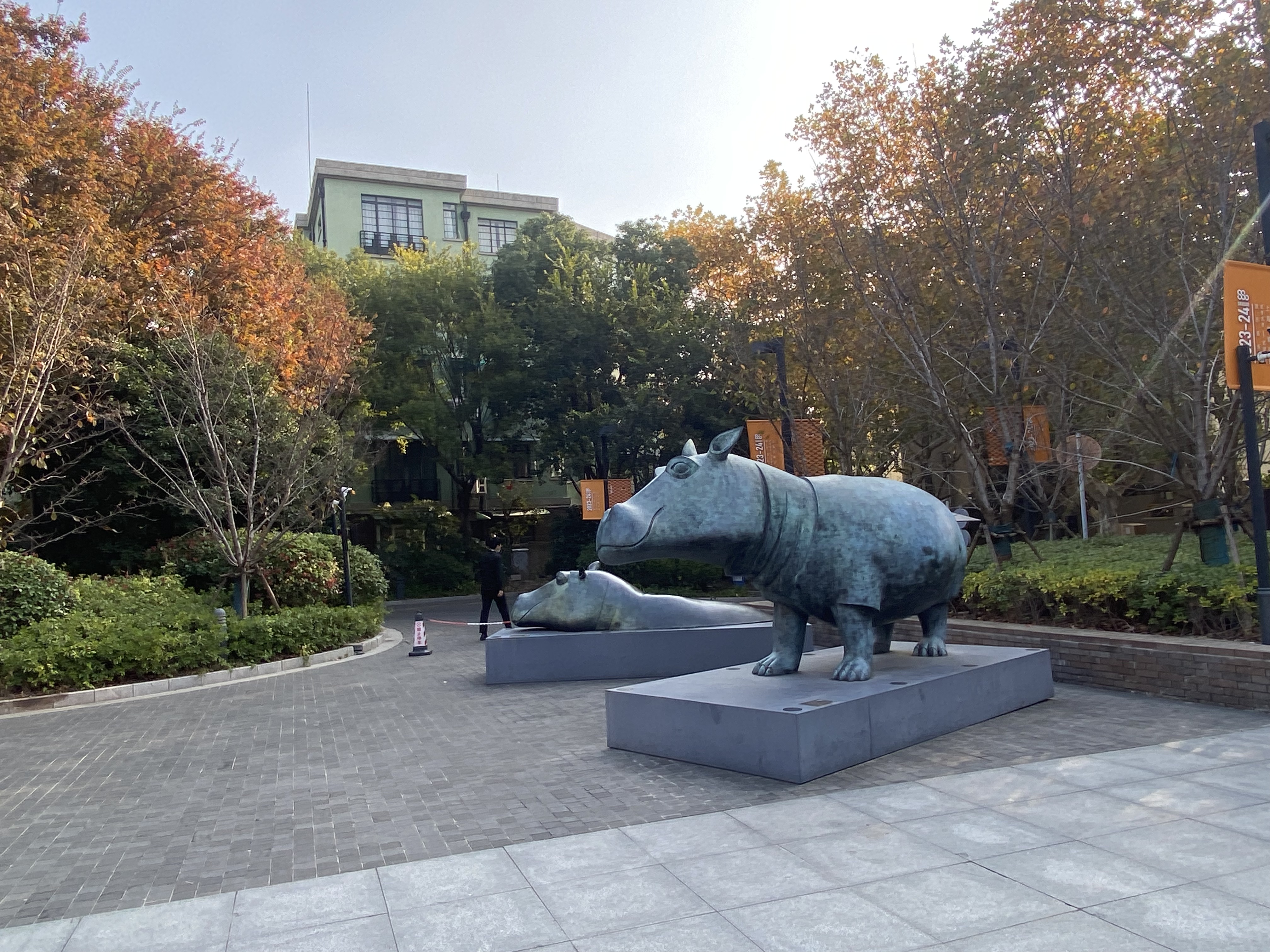
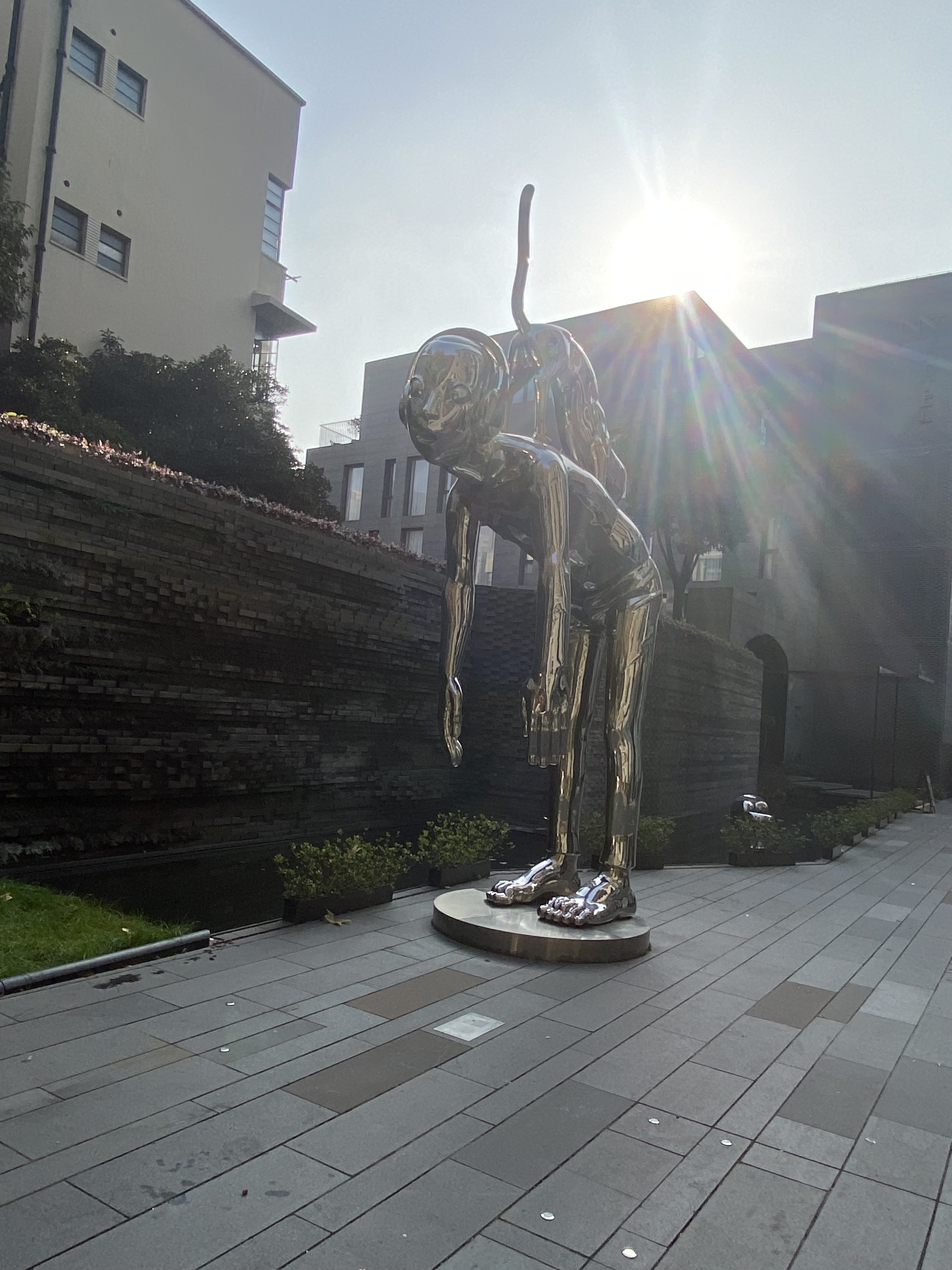
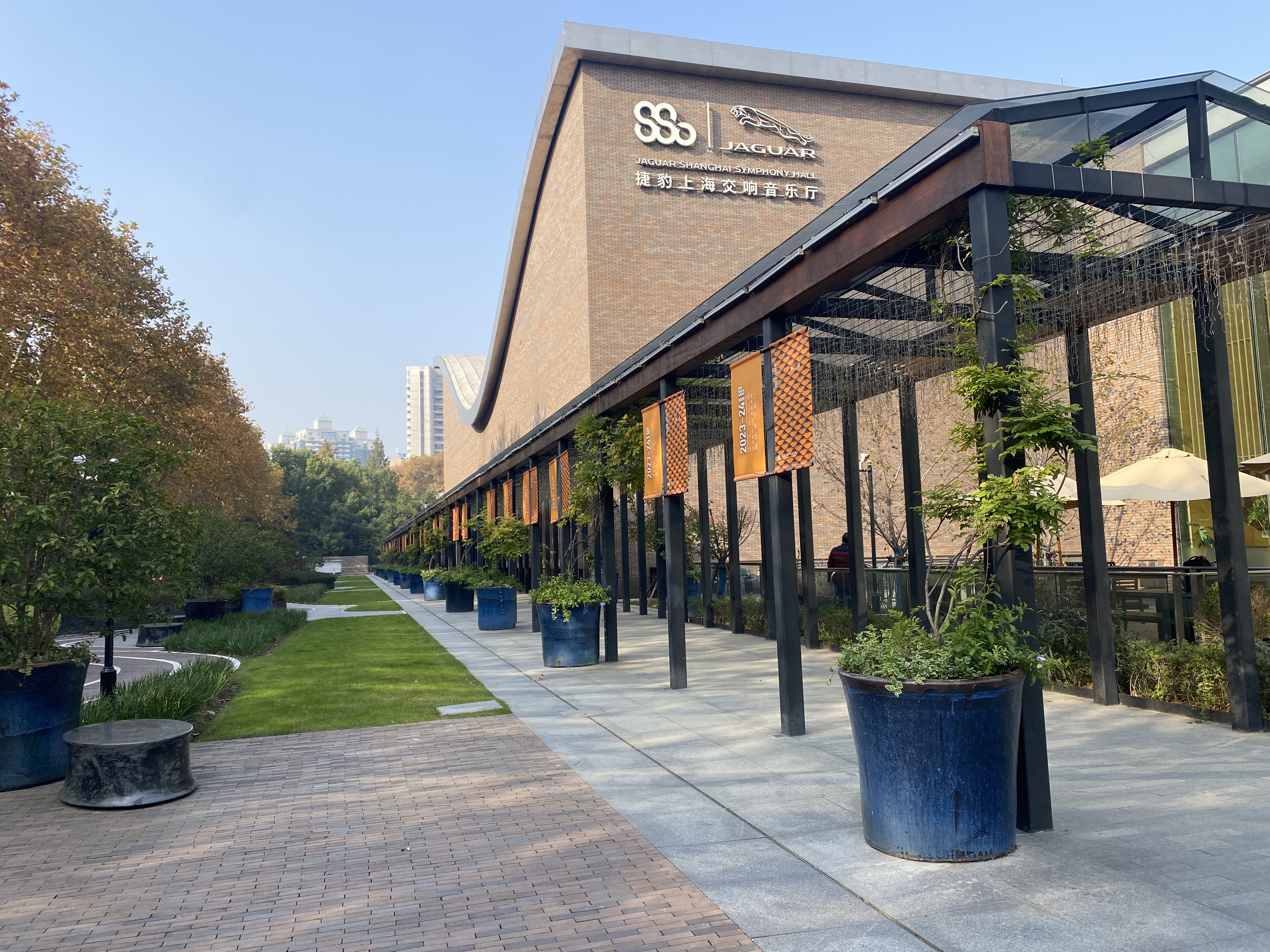
There were a few elegant bars and cafes cross street from the concert hall of Shanghai Symphony. The Fenyang High School where I studied had been demolished to make way for the bars which were right next to the classic Blackstone Apartments with a history of more than 100 years. After listening to a classical concert it’s a great idea to come here have a drink and have a social time with friends…
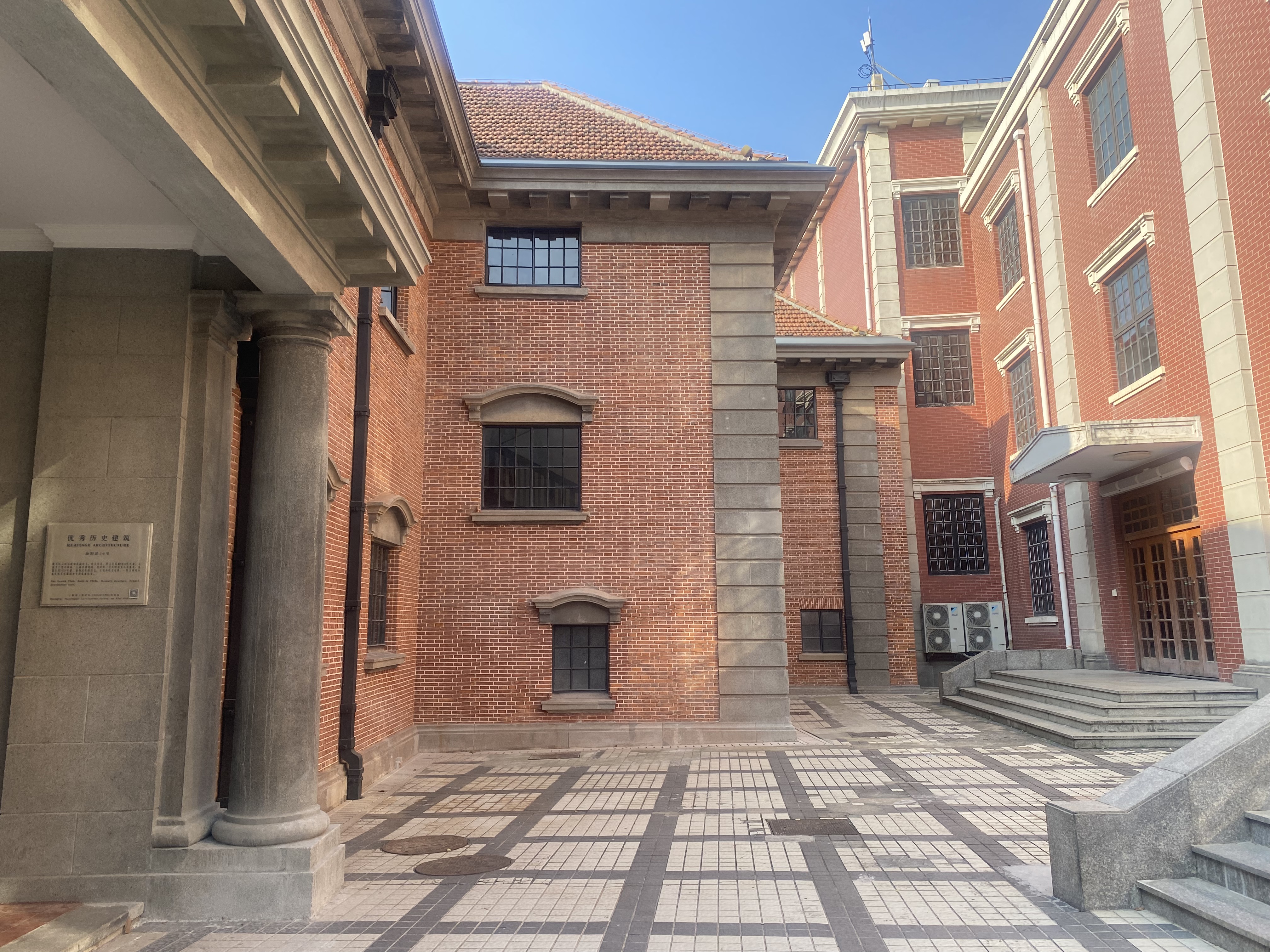
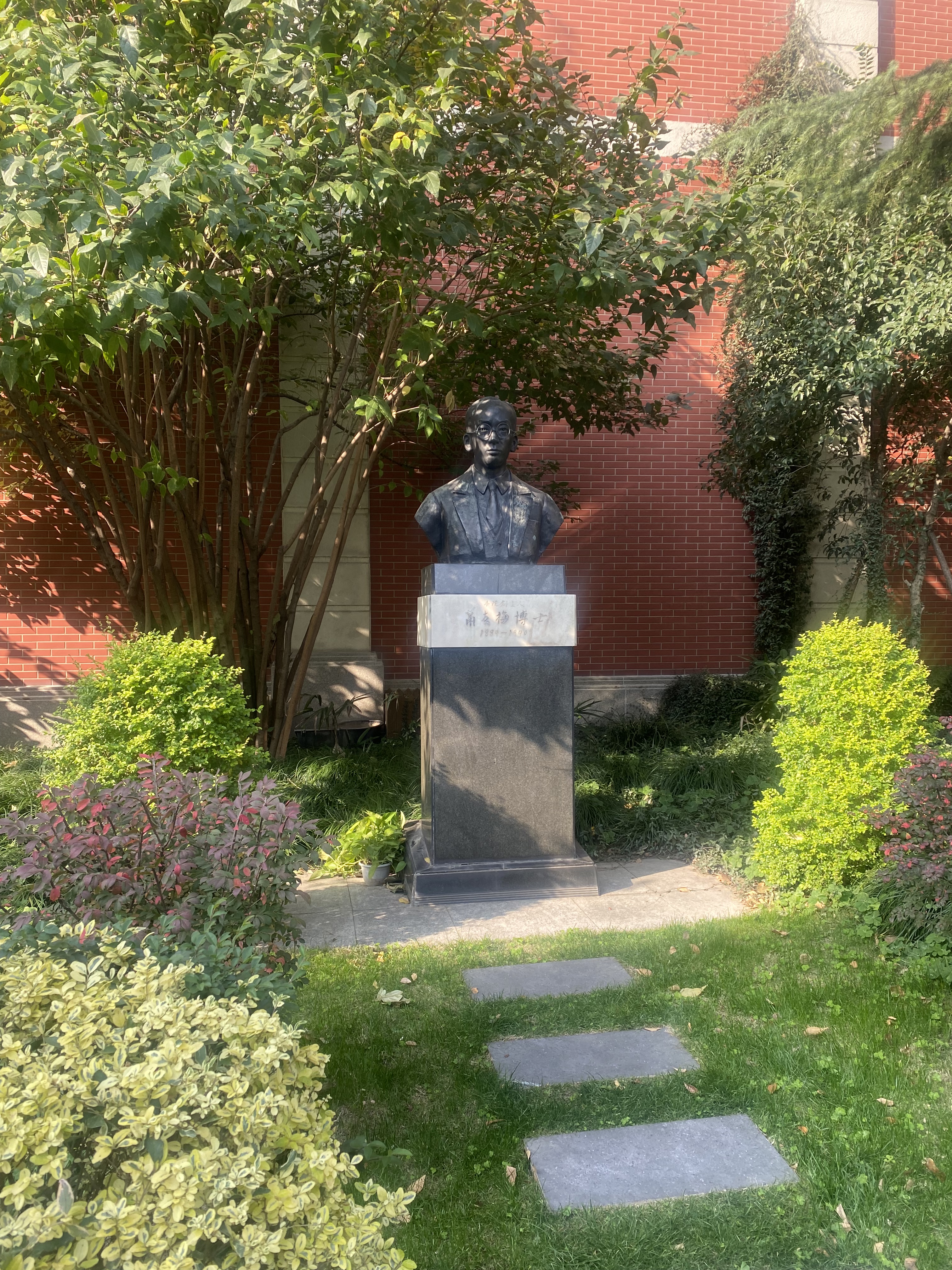
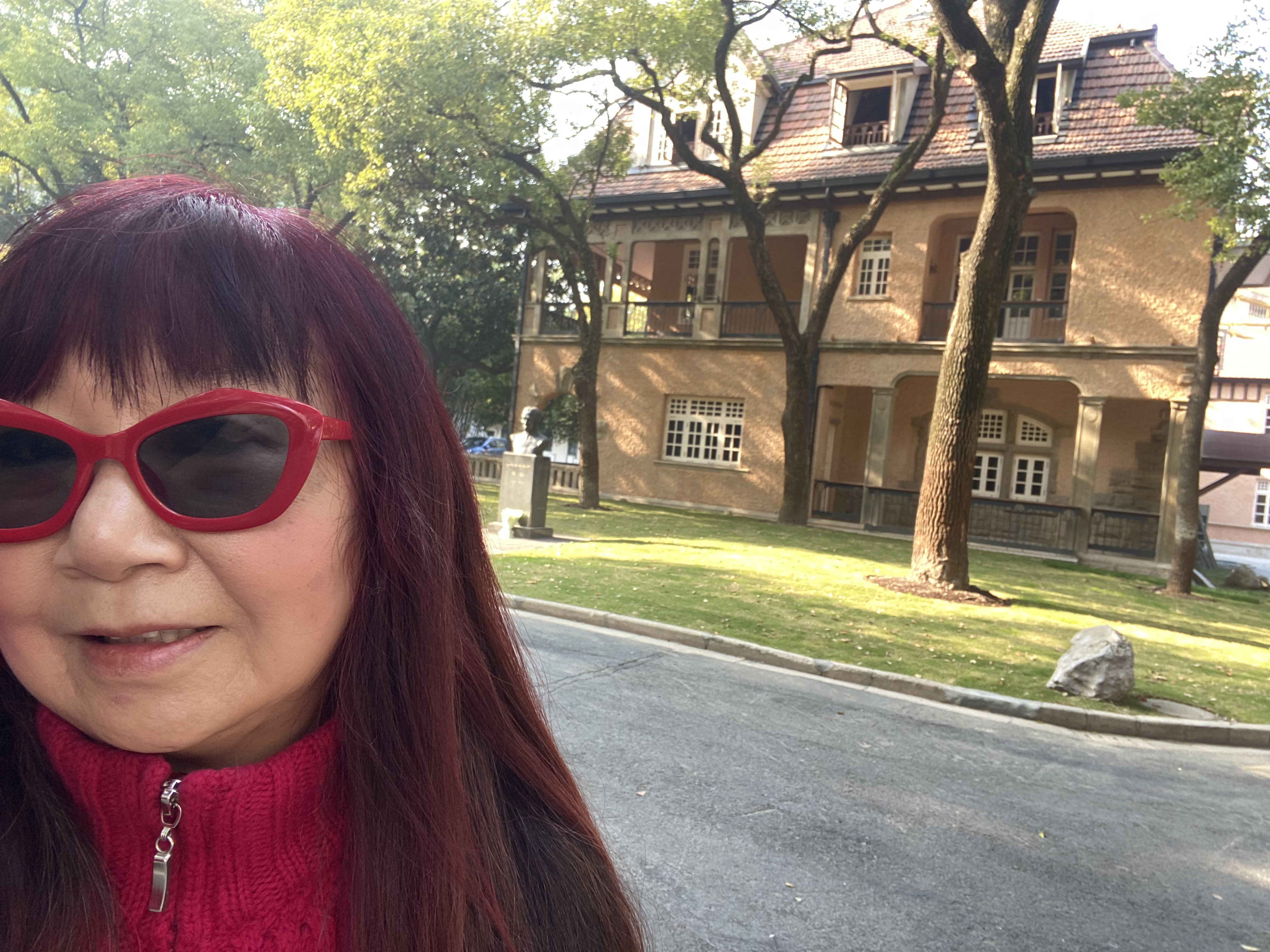
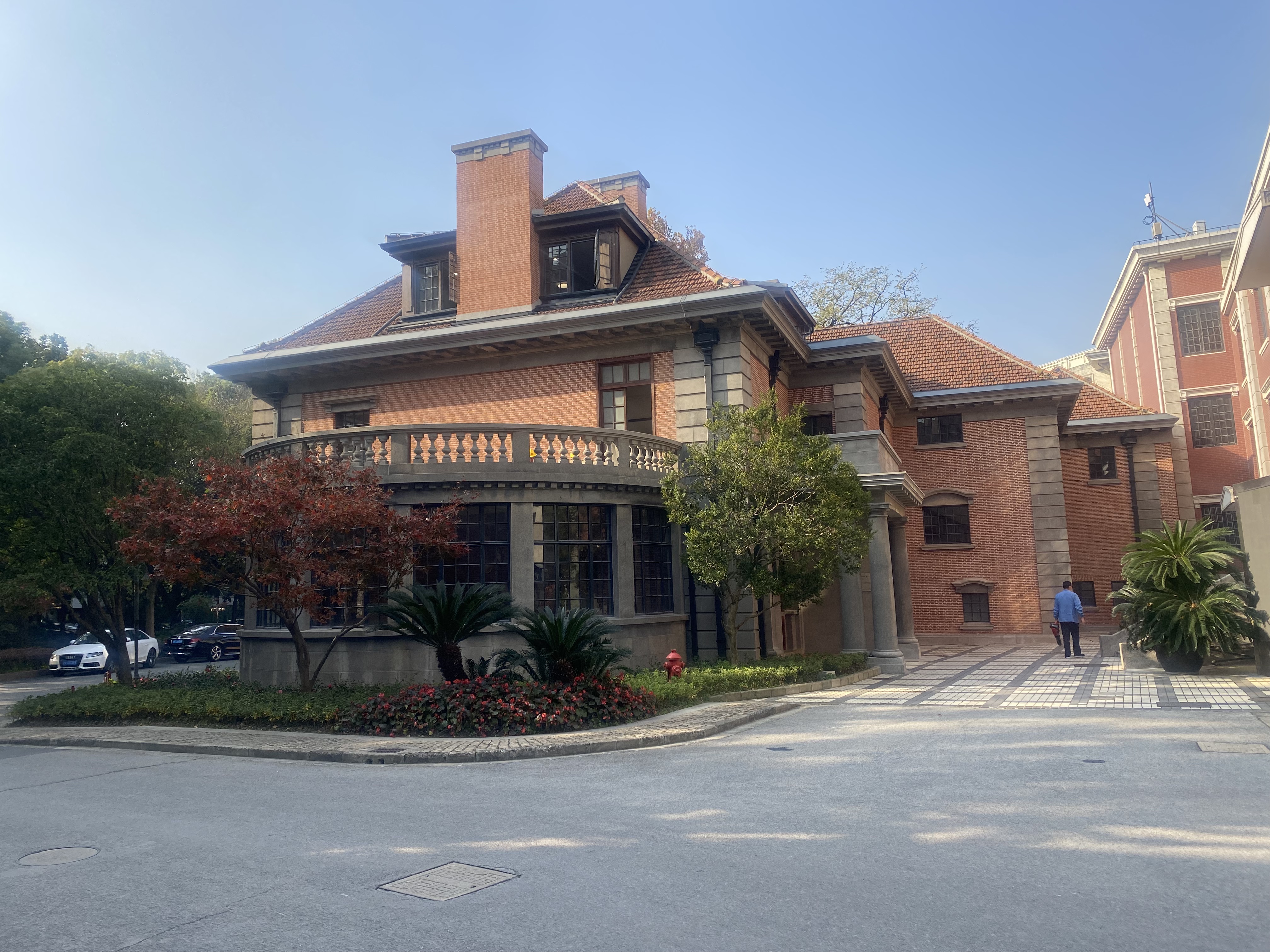
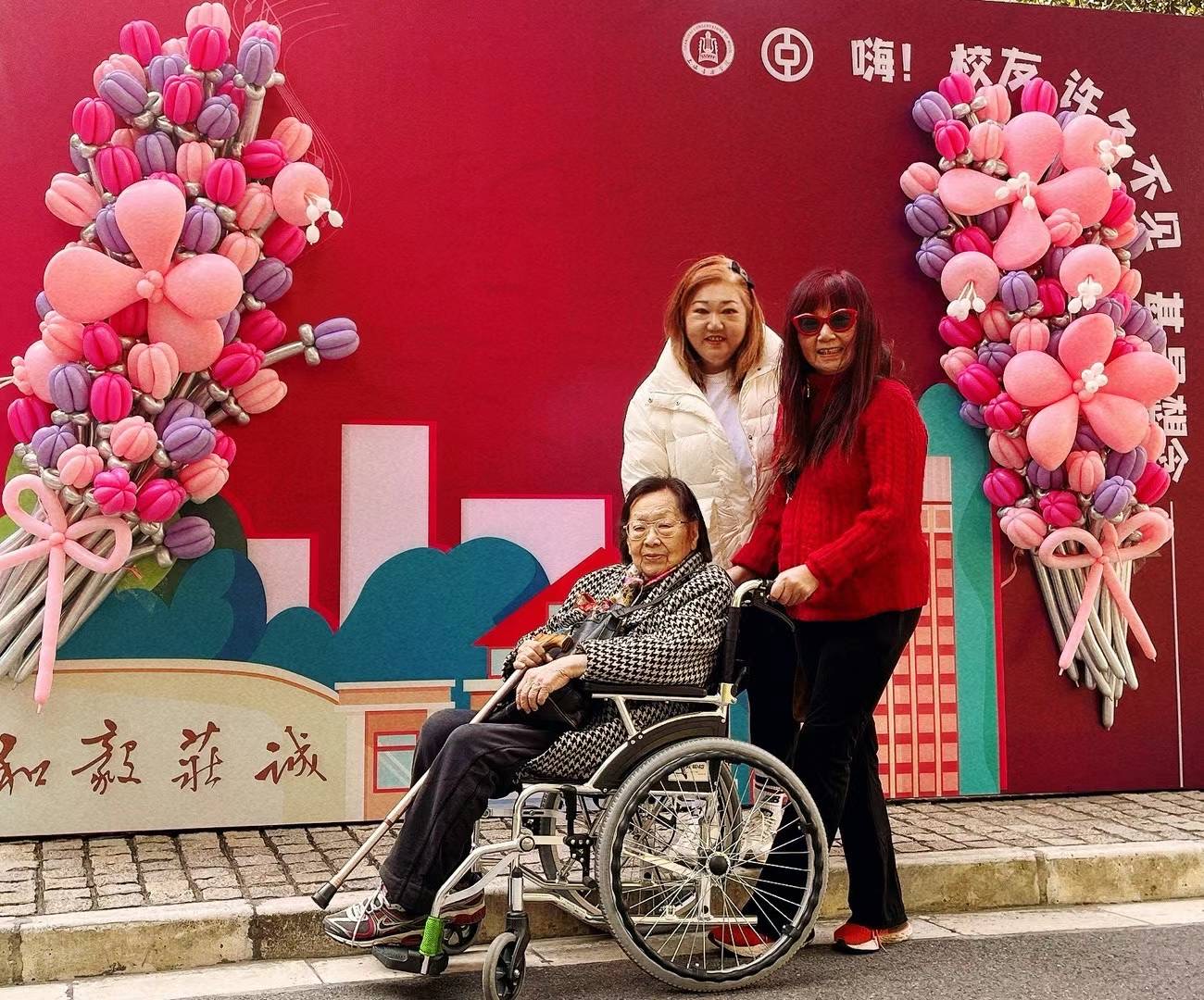
I took a left turn and came to the my alma-mate Shanghai Conservatory of Music where I studied for 8 years. It was the 96th anniversary, so I stopped to join the celebration. The administration’s burgundy colored attractive house built in 1910 was once a Jewish club before the Communists took the power in 1949; and the music hall was once a ball room dance hall. The library building of the conservatory is also an architectural gem where I studied diligently during my student years. The building hidden behind the lawns was once girls’ dormitory.
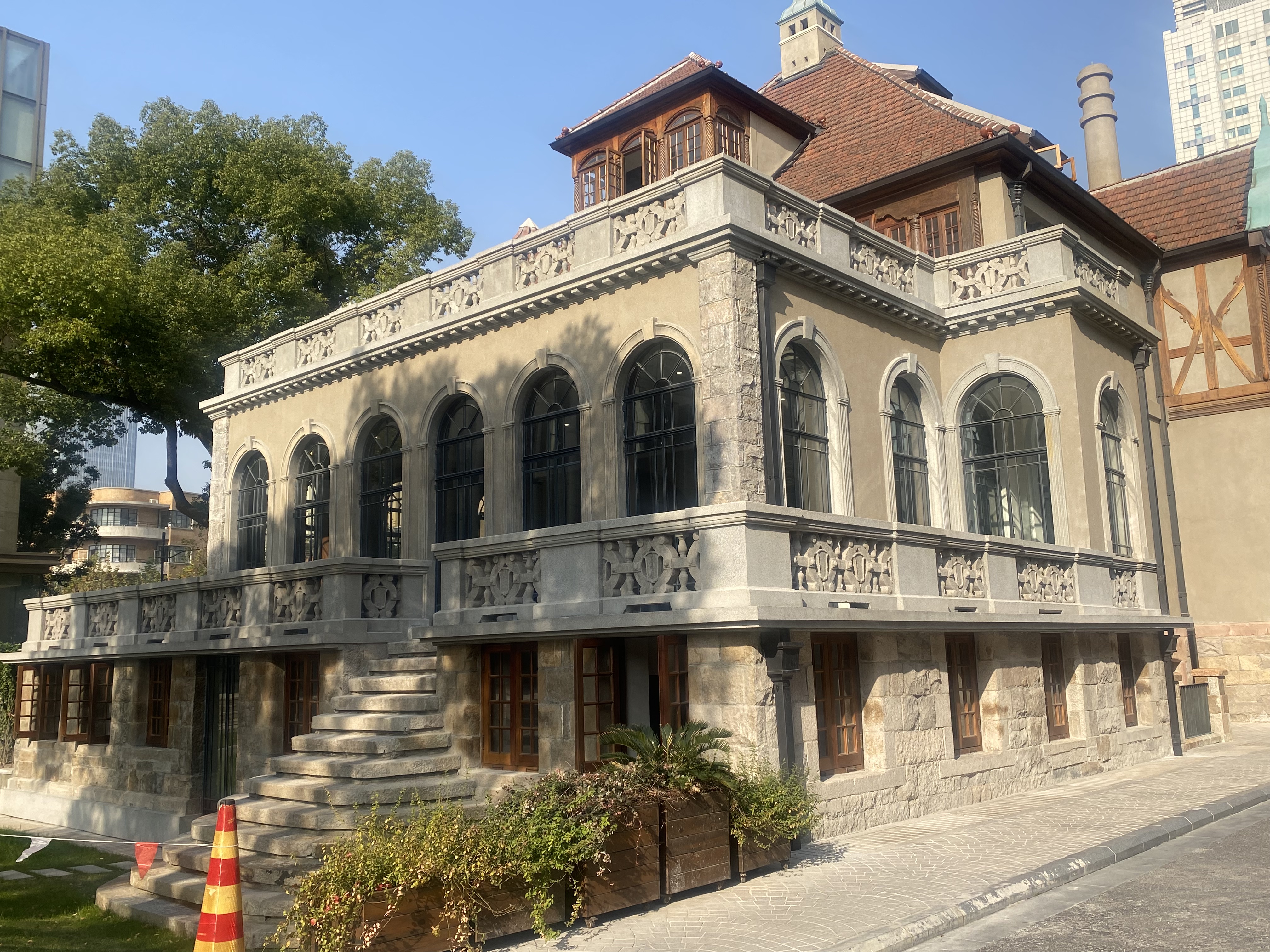
DAY 3: It is my dream to take my 91-year-old mother to visit old places we used to live. Our family of 5 all graduated from Shanghai Conservatory of Music. The trip to Shanghai after the 3 difficult years of pandemic was really special🌹🌹🌹! Avenue Joffre (Huaihai Middle Blvd) has brought us so many stories… Xiangyang Park was where my grandpa walked every day..
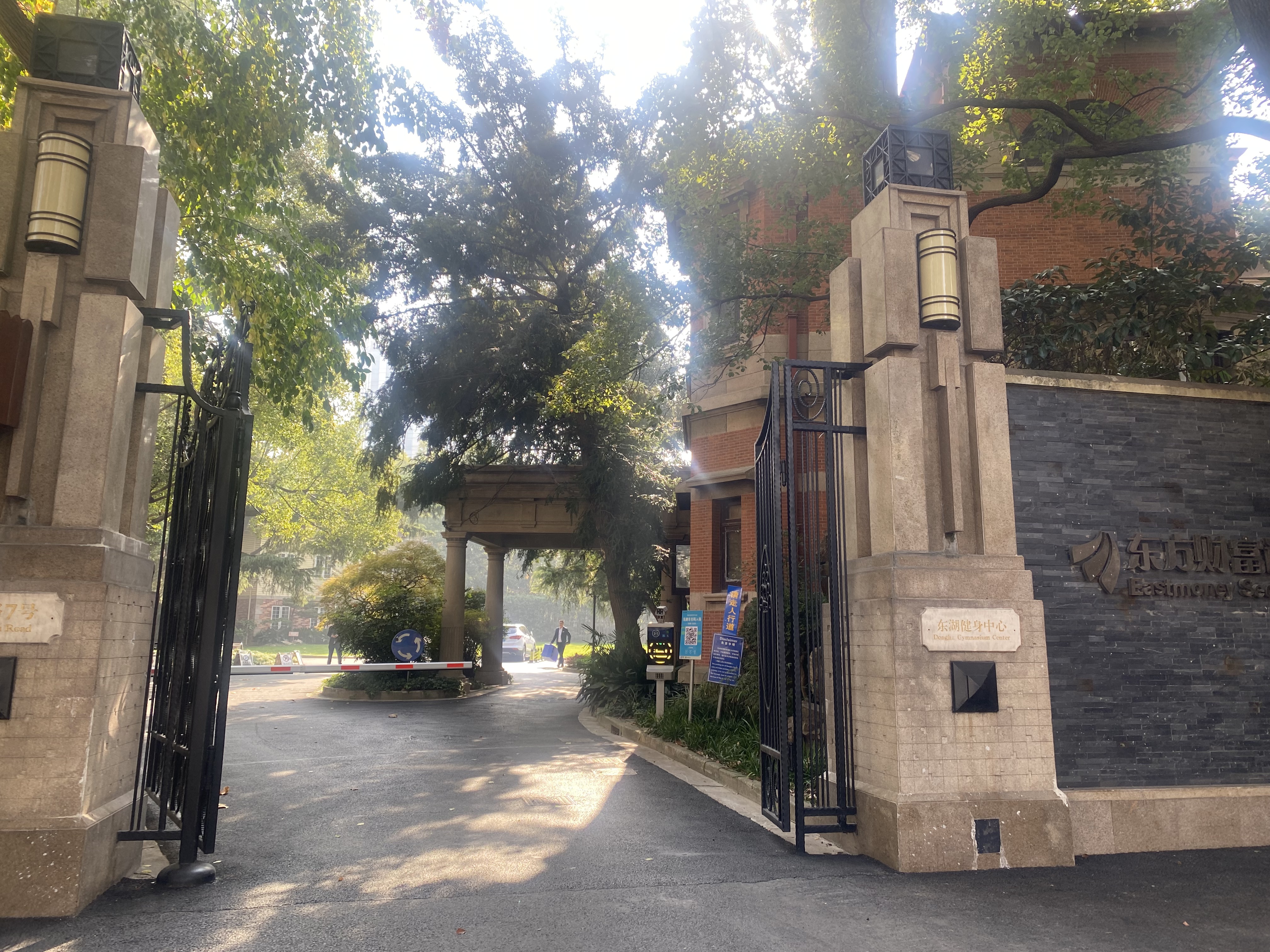
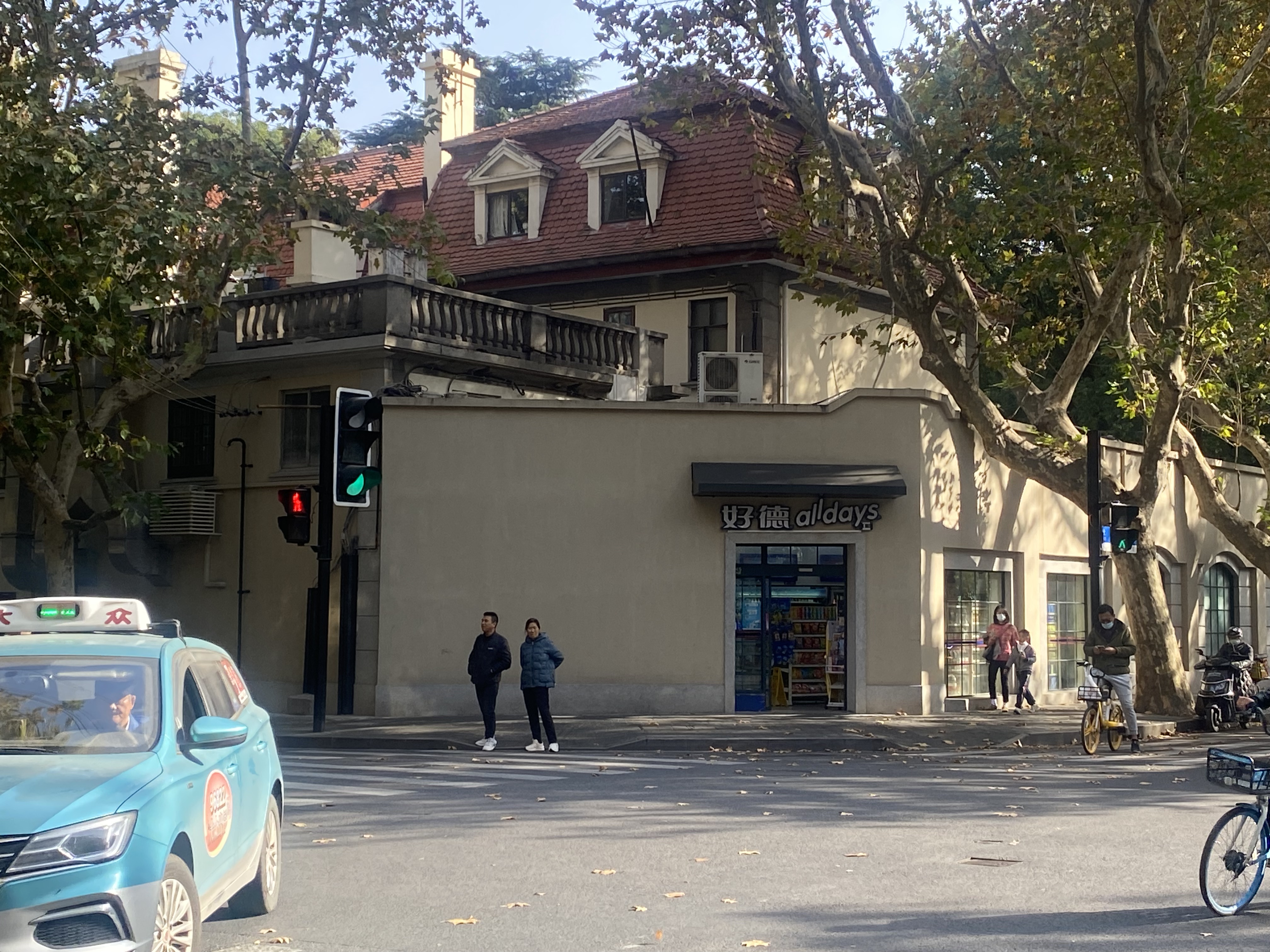
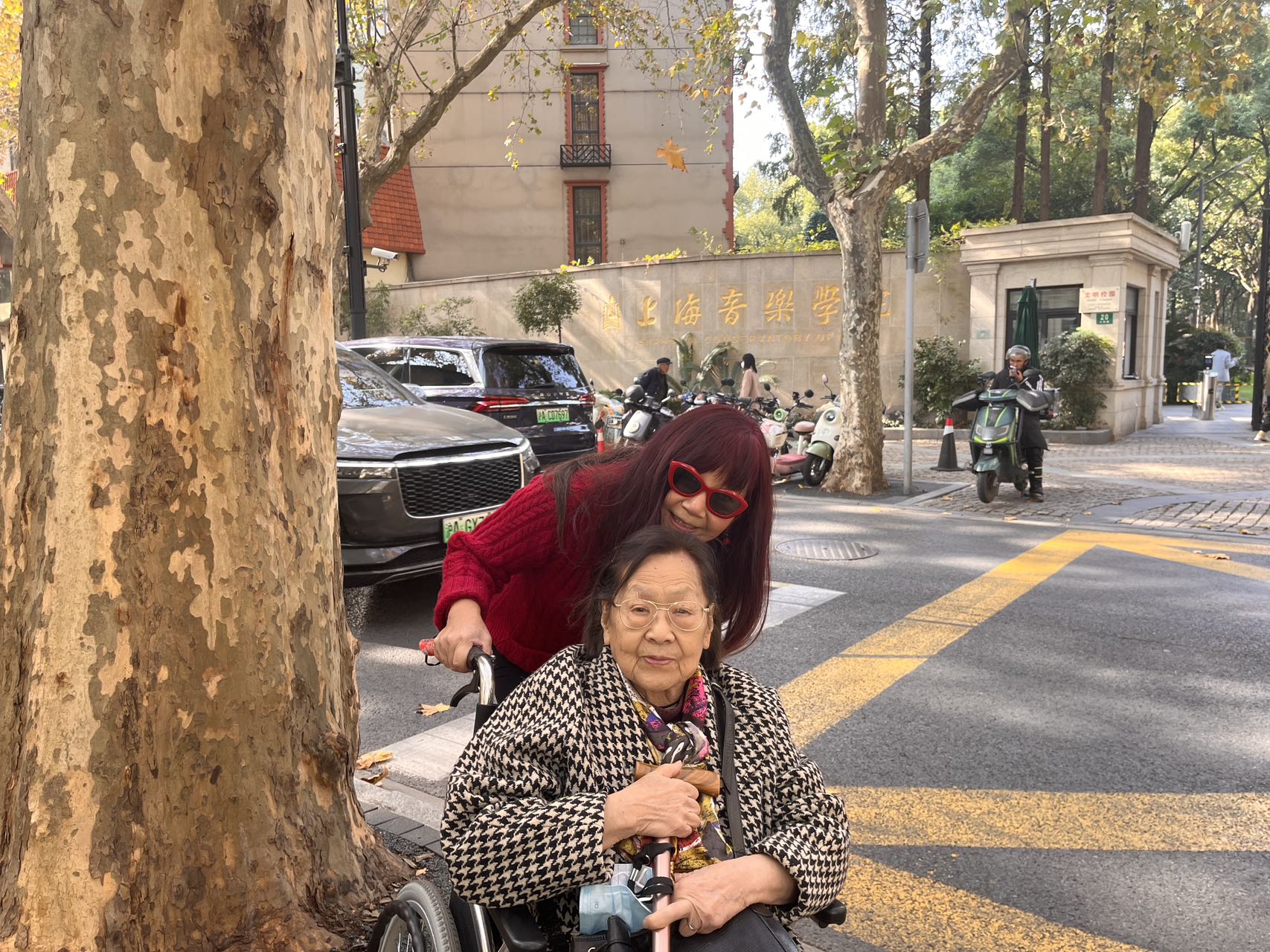
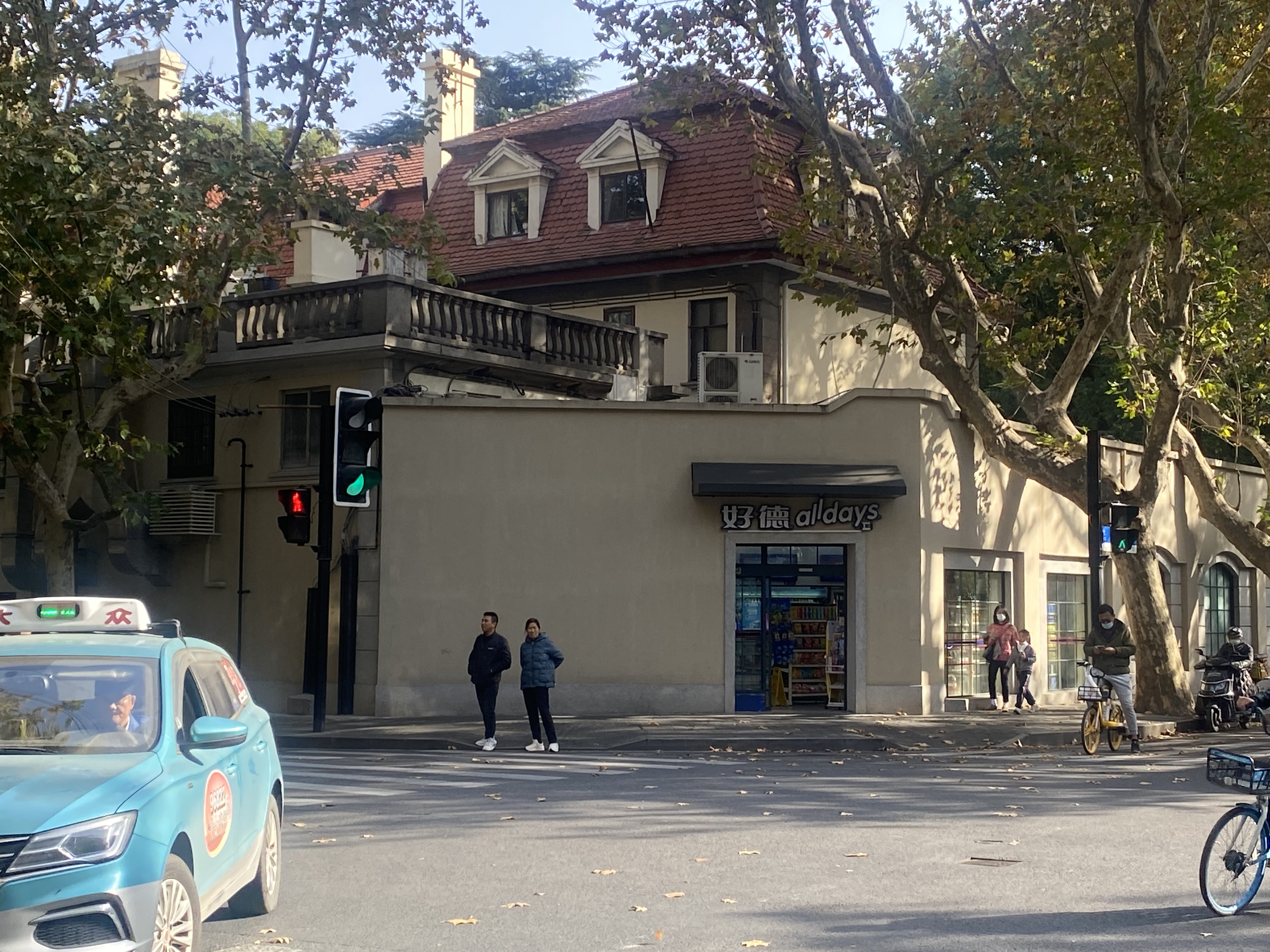
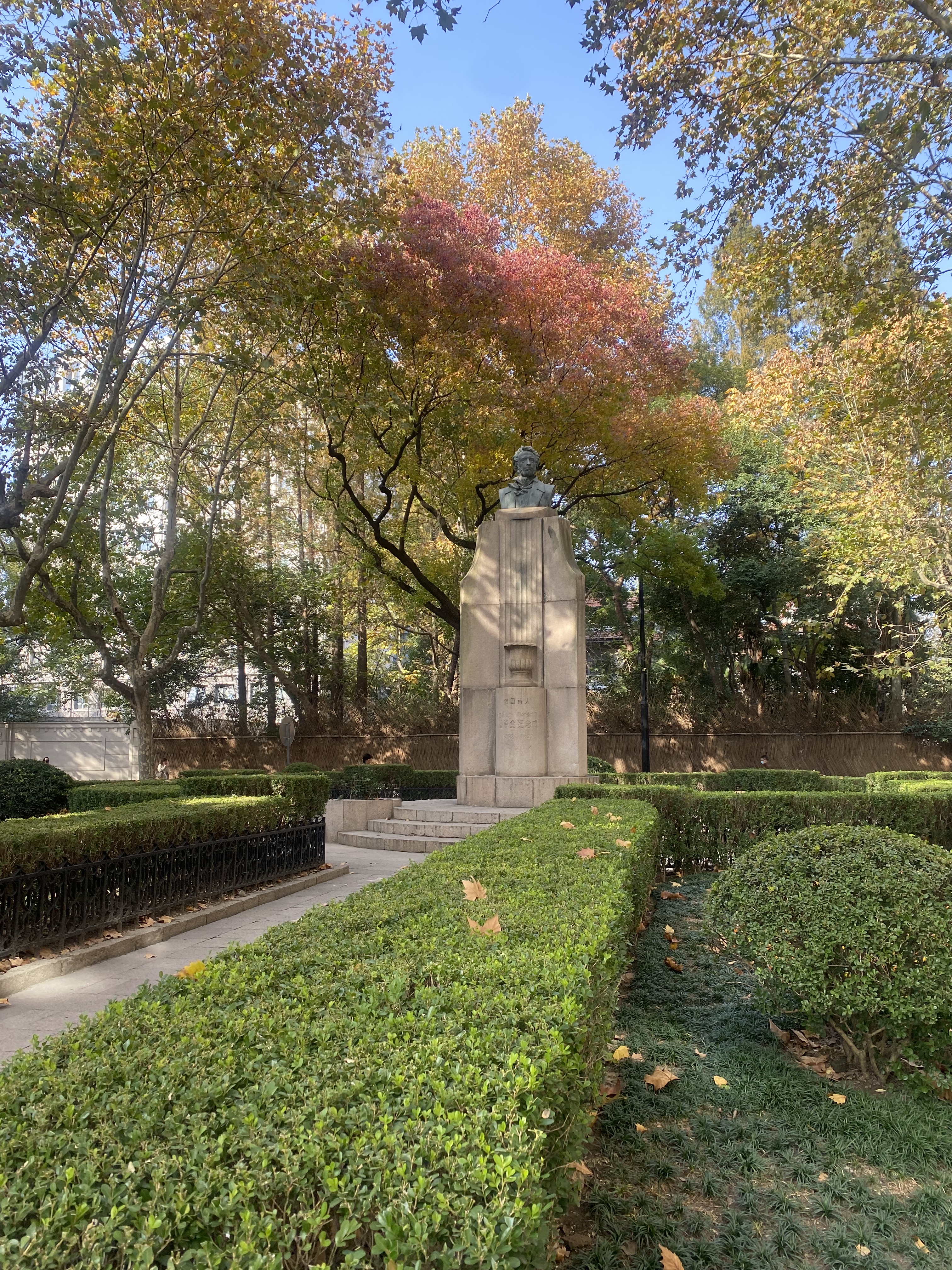
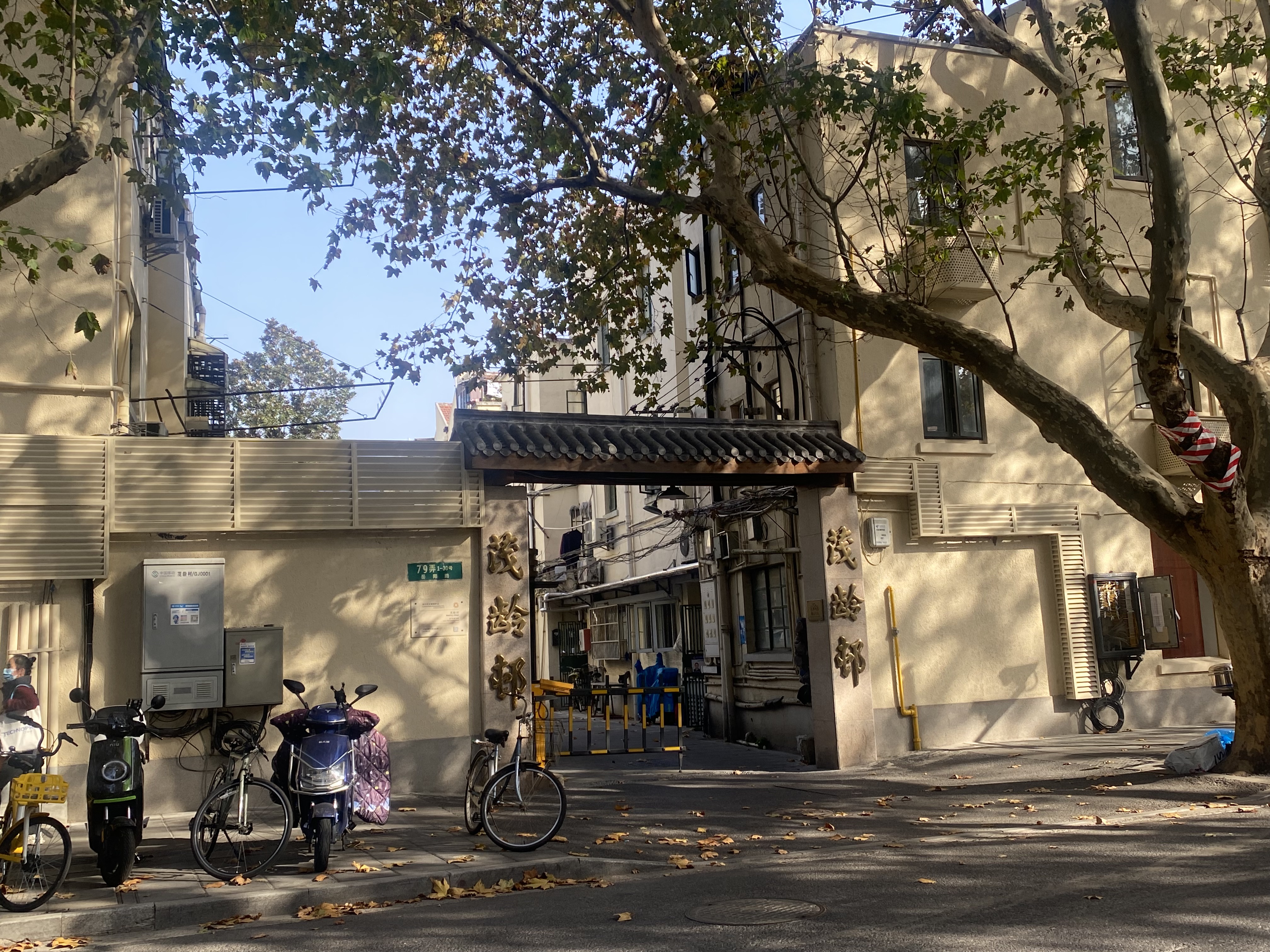
My sister and I took our mother through Yueyang Road, where we had lived for 14 years. There were former residences of celebrities of intellectuals. The century-old sycamore trees along the street in the late autumn really brought a romantic atmosphere to us. We used to walk by this street every day to go to our elementary school and middle school. We witnessed the giant Pushkin statue was knocked down by the Red Guards at the beginning of the Cultural Revolution. Alley 200 was the French-style garden houses where we once lived, and my mother asked us to take a look at our old home at No. 40. It was still there.
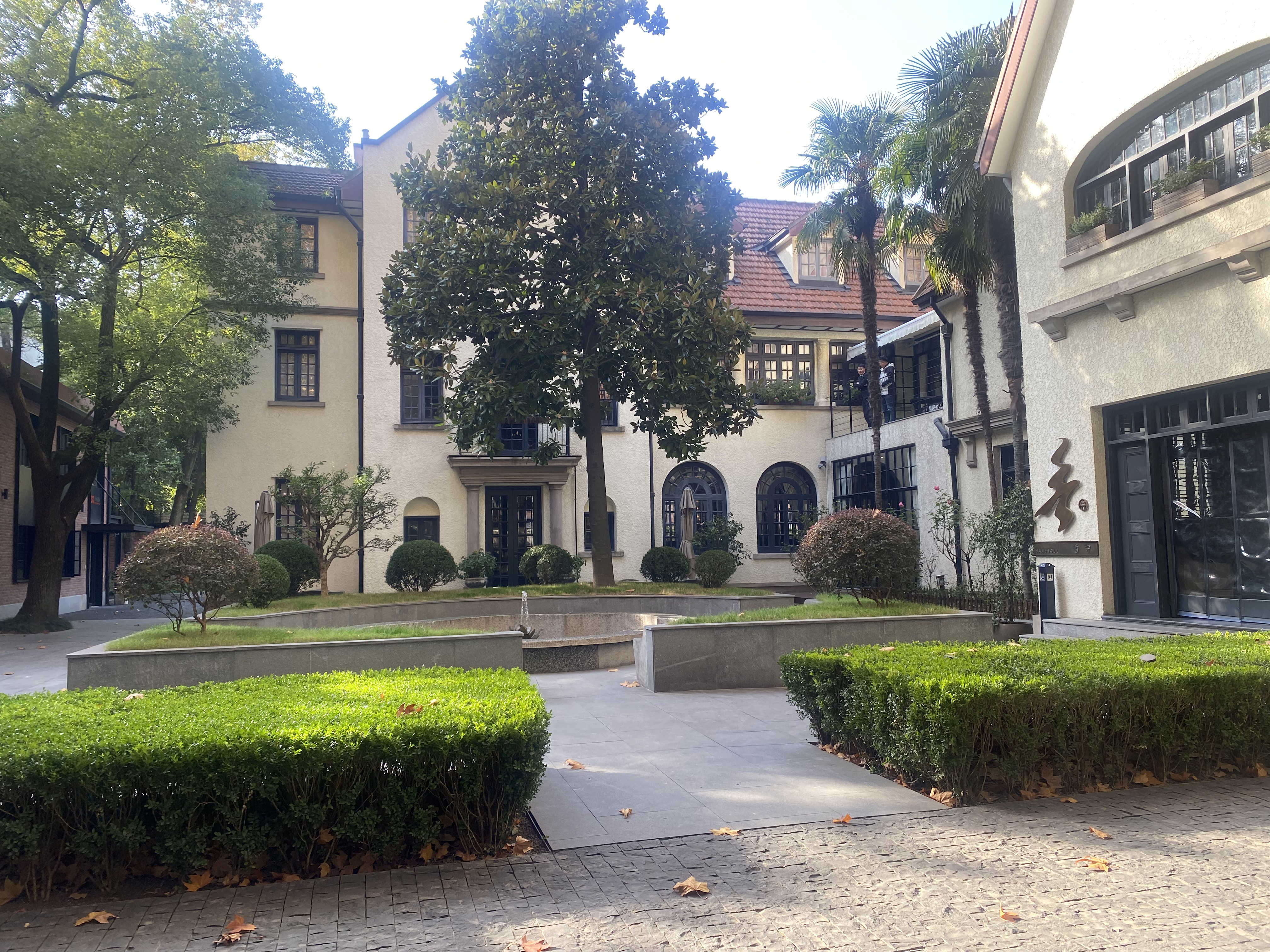
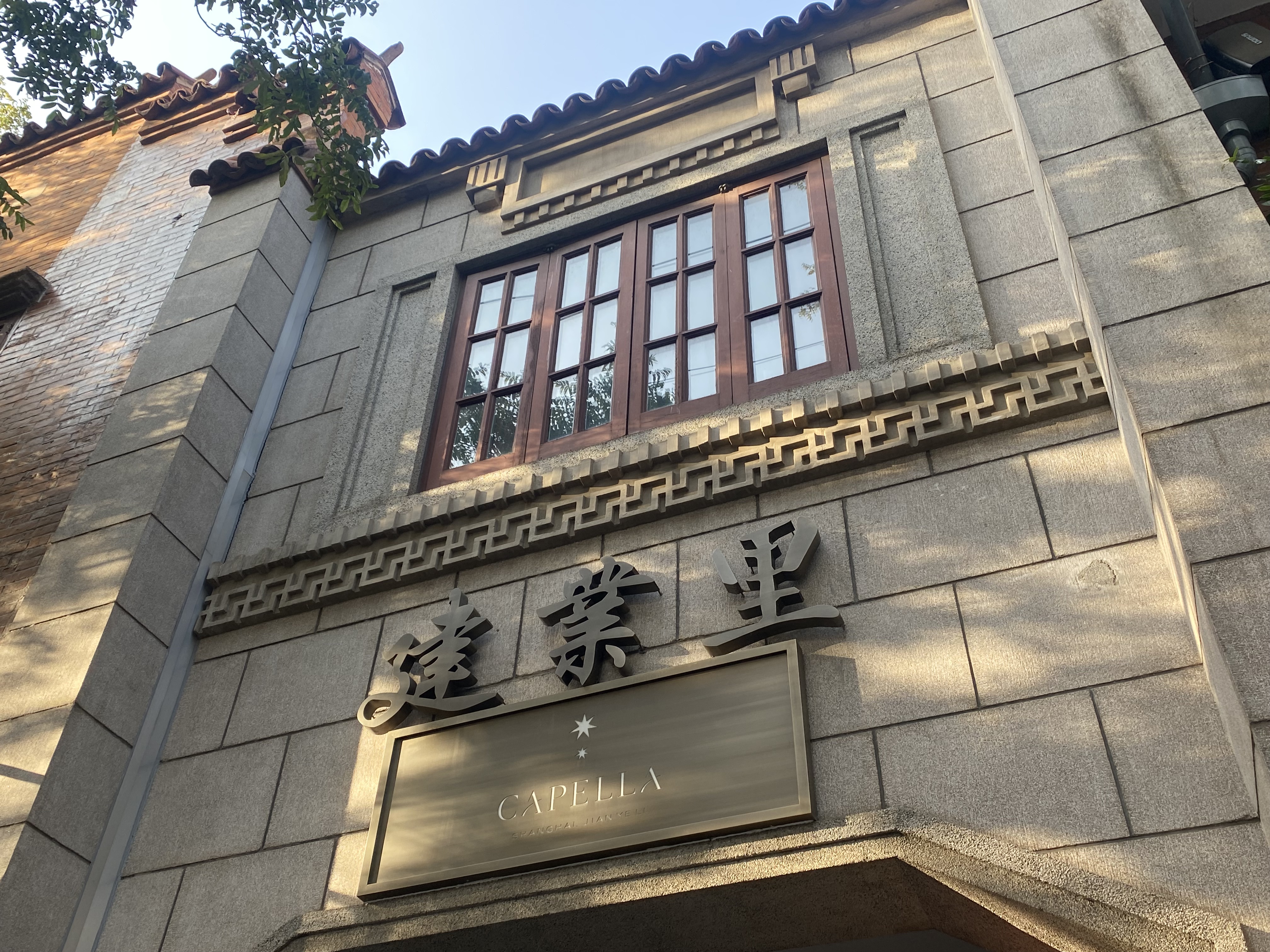
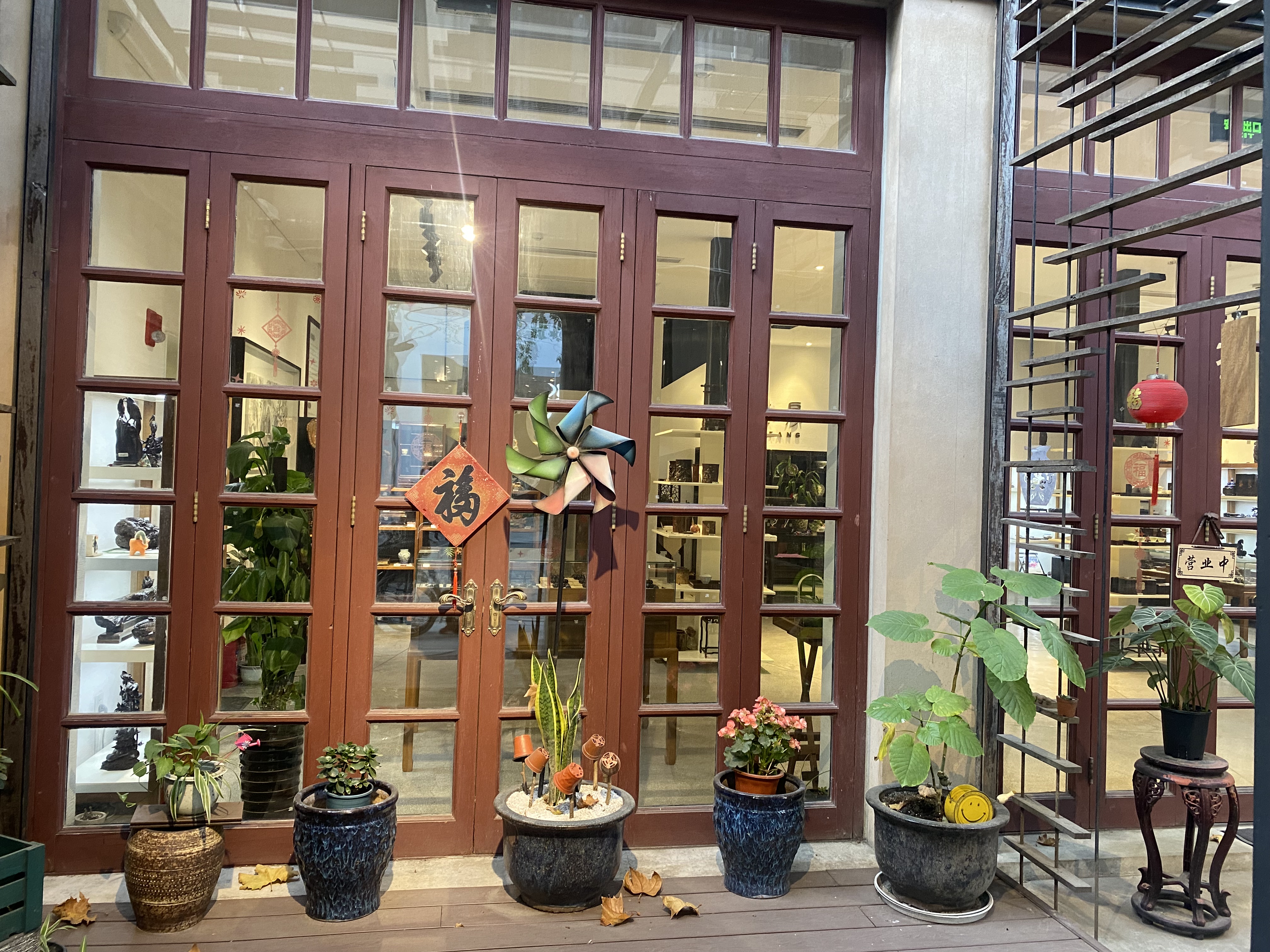
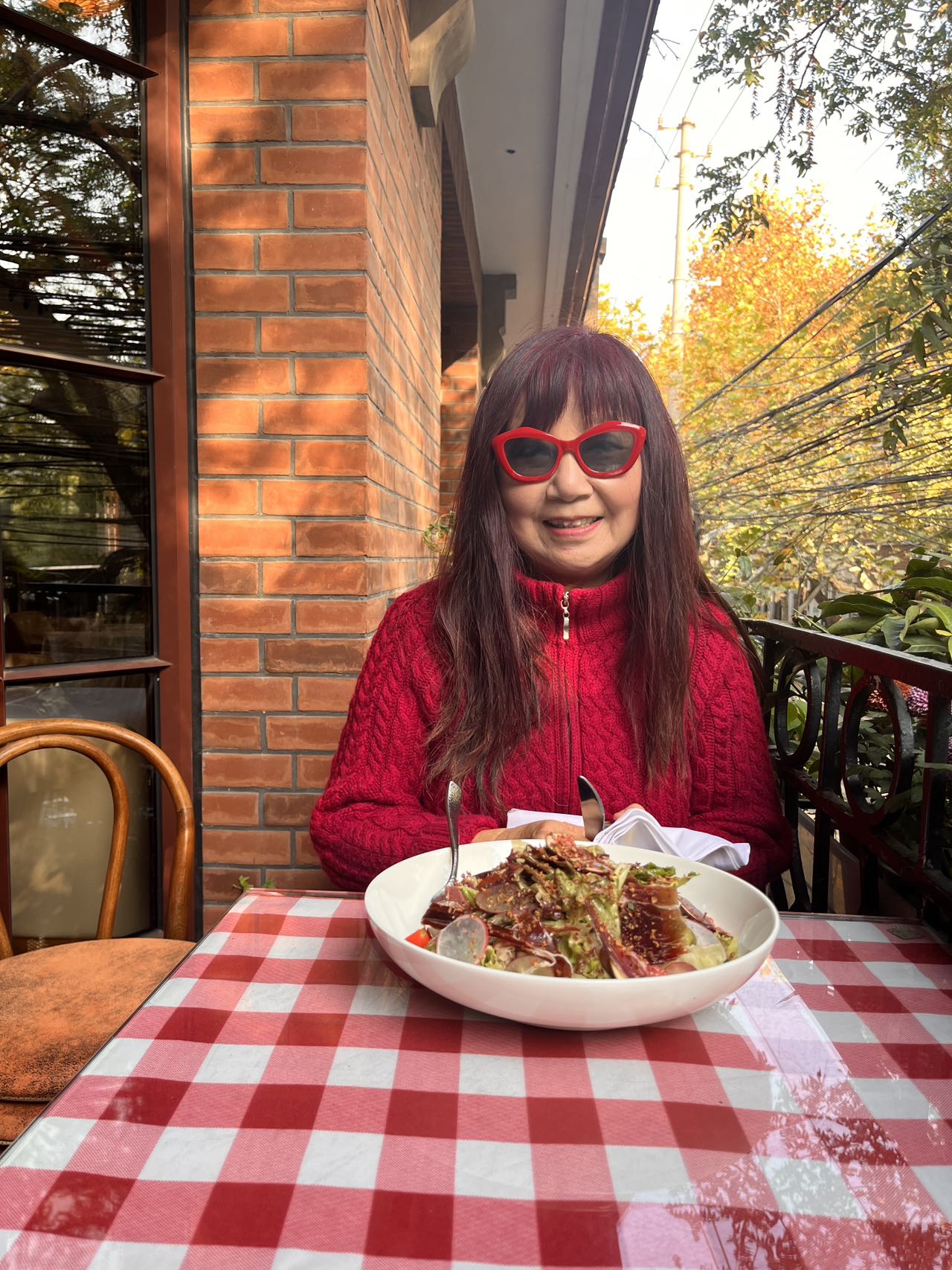
A golden phoenix flew out of the chicken coop! This “Jianyeli” used to be a shabby place when I was a child. We bought our produces from the “Xiao-cai-chang” (the outdoor market) there; we got our soy sauce from spice shop there; and we ate our “Da Bing You Tiao (Chinese scallion pancakes and fried dough sticks) there. Today, it has become a tourist attraction with its “Shi Ku Men” styled architecture. Sharing good memories with our mother at an exquisite Michelin-starred French restaurant…❤️❤️❤️ and letting her feel the difference of this very same location.
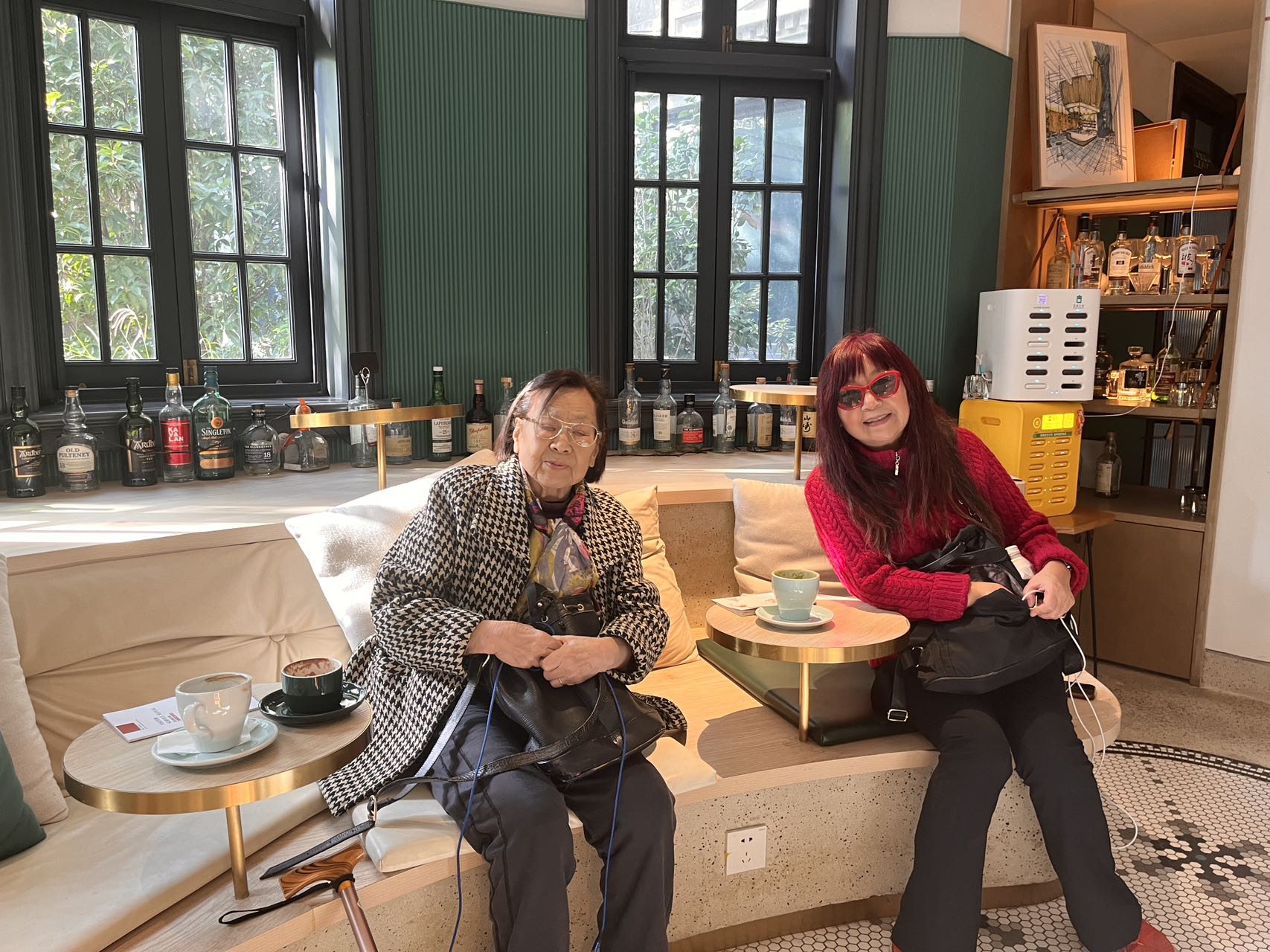
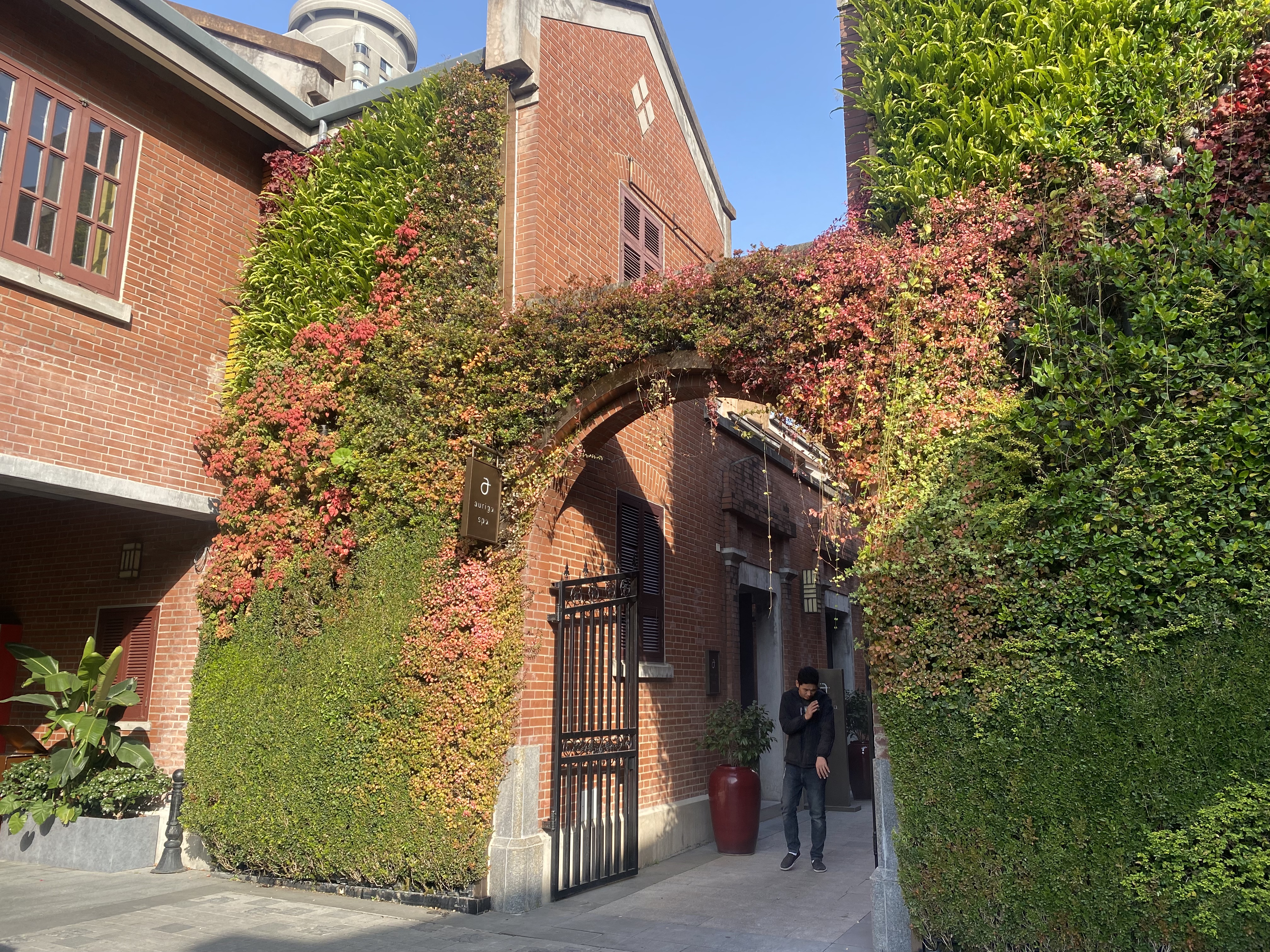
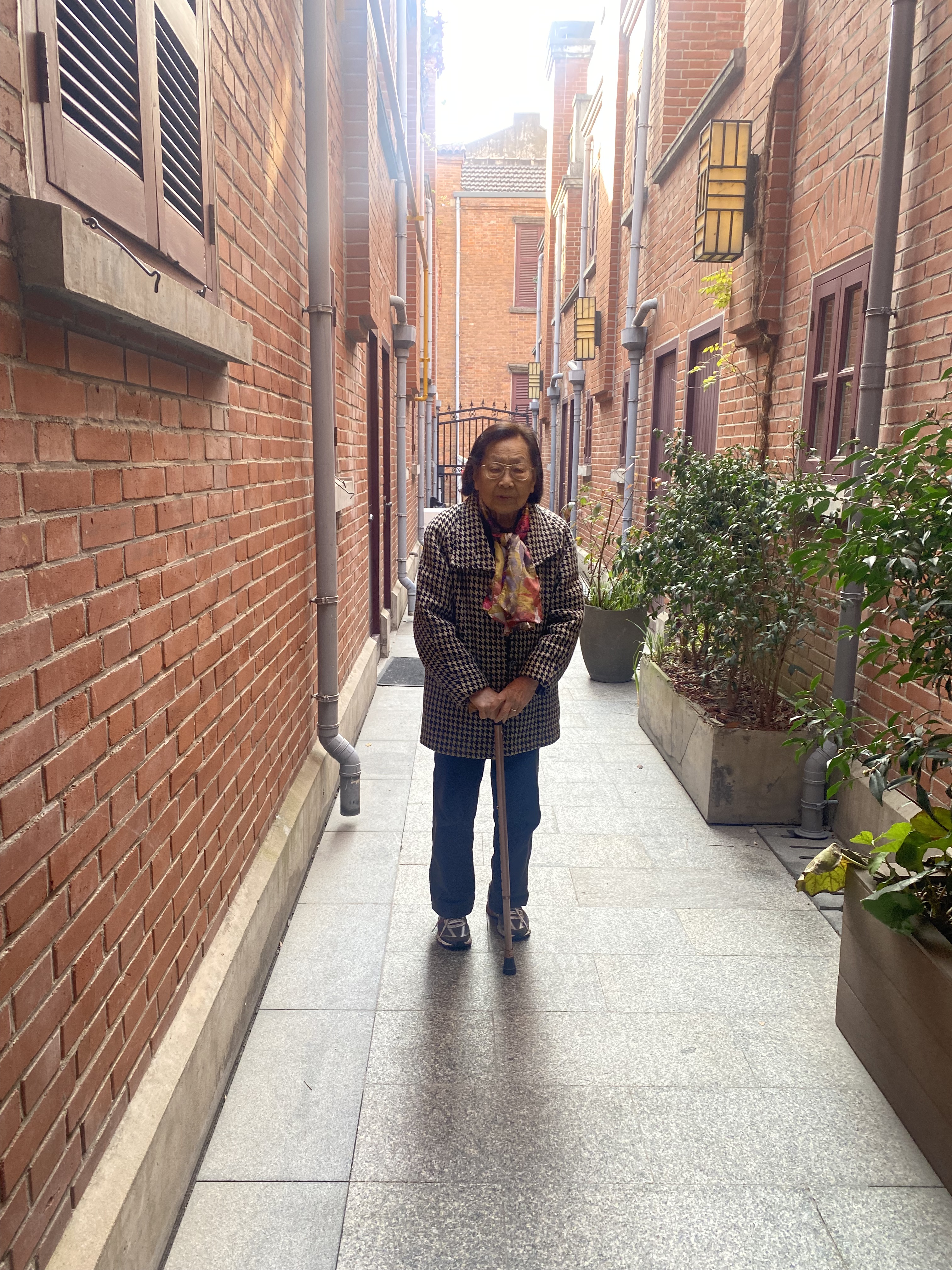
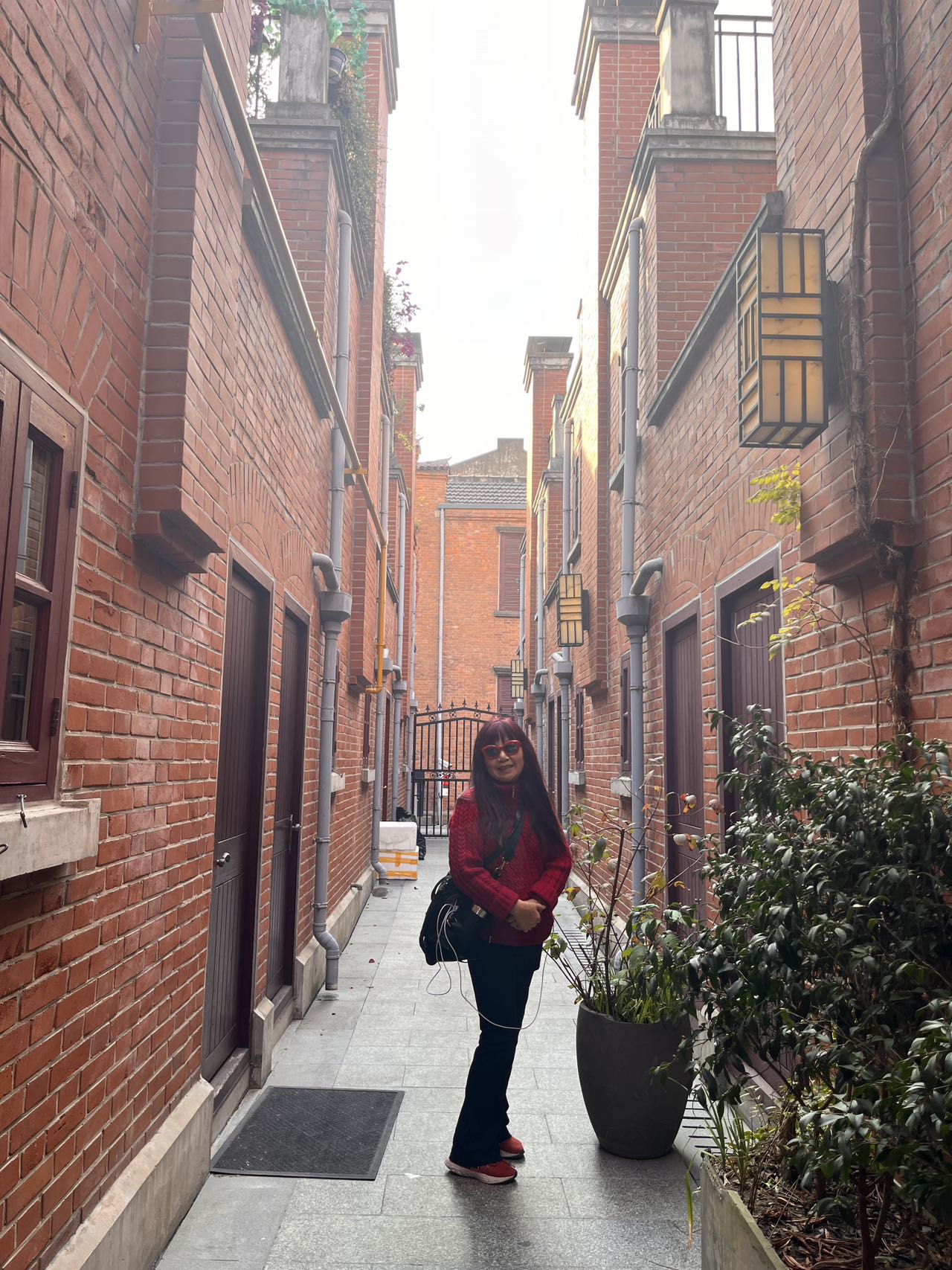
Next to “Jianyeli” is “Yiyuan” where my middle school teacher lived there.. My uncle’s high rising “West Lake Apartment” has changed colors from lake green to milky coffee. We used to visit my uncle’s family a lot.
Shanghai is a walking city, especially in French Concession.
We took our mother to the elegant Hengshan Road, we passed by a large-scale modern art exhibition curated by the Taiwanese pop singer Jay Chou. It was a very stimulating event. There were works from young avant-garde artists from Europe, United States as well as local Chinese artists. Quite impressive!
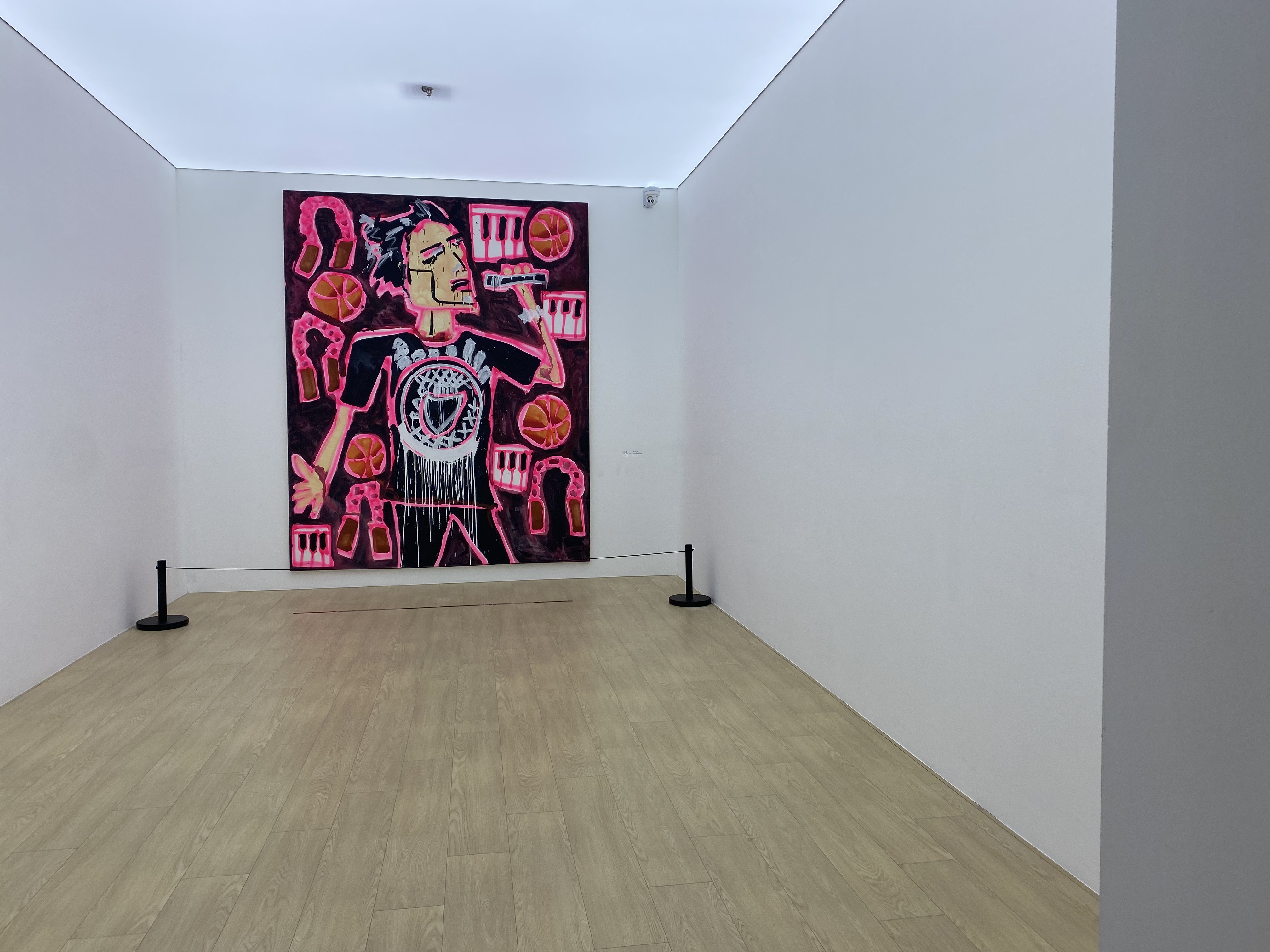
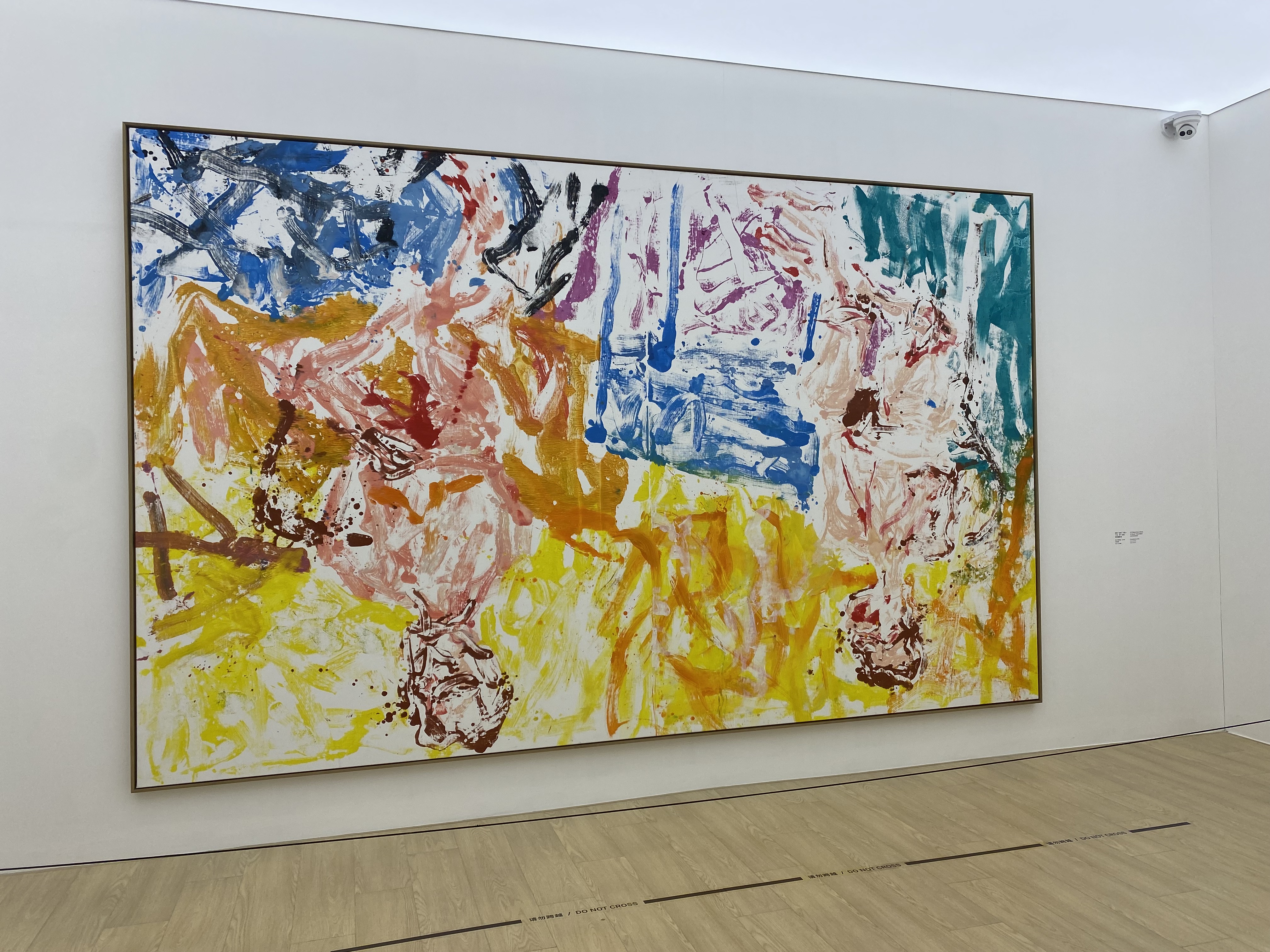
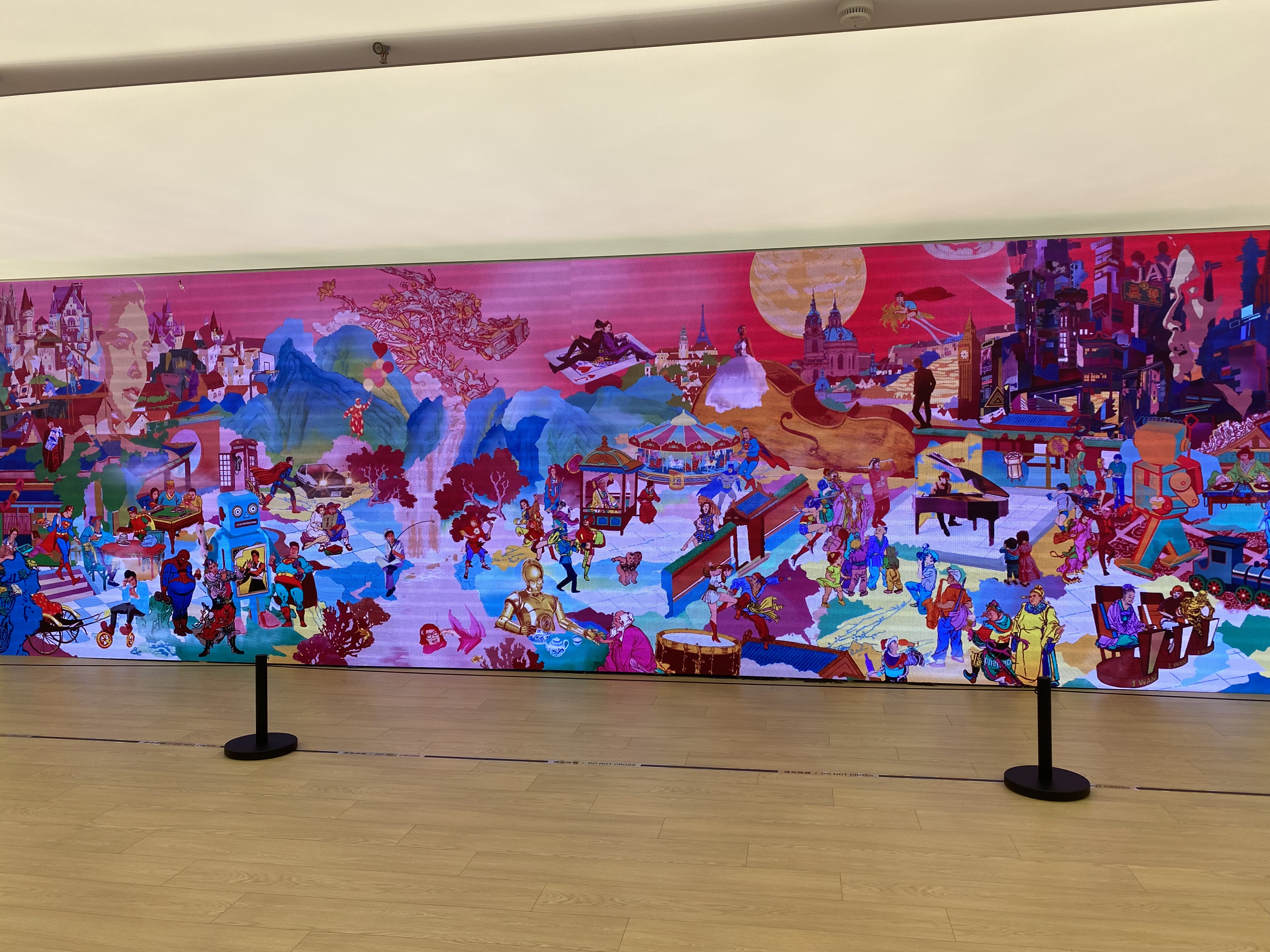
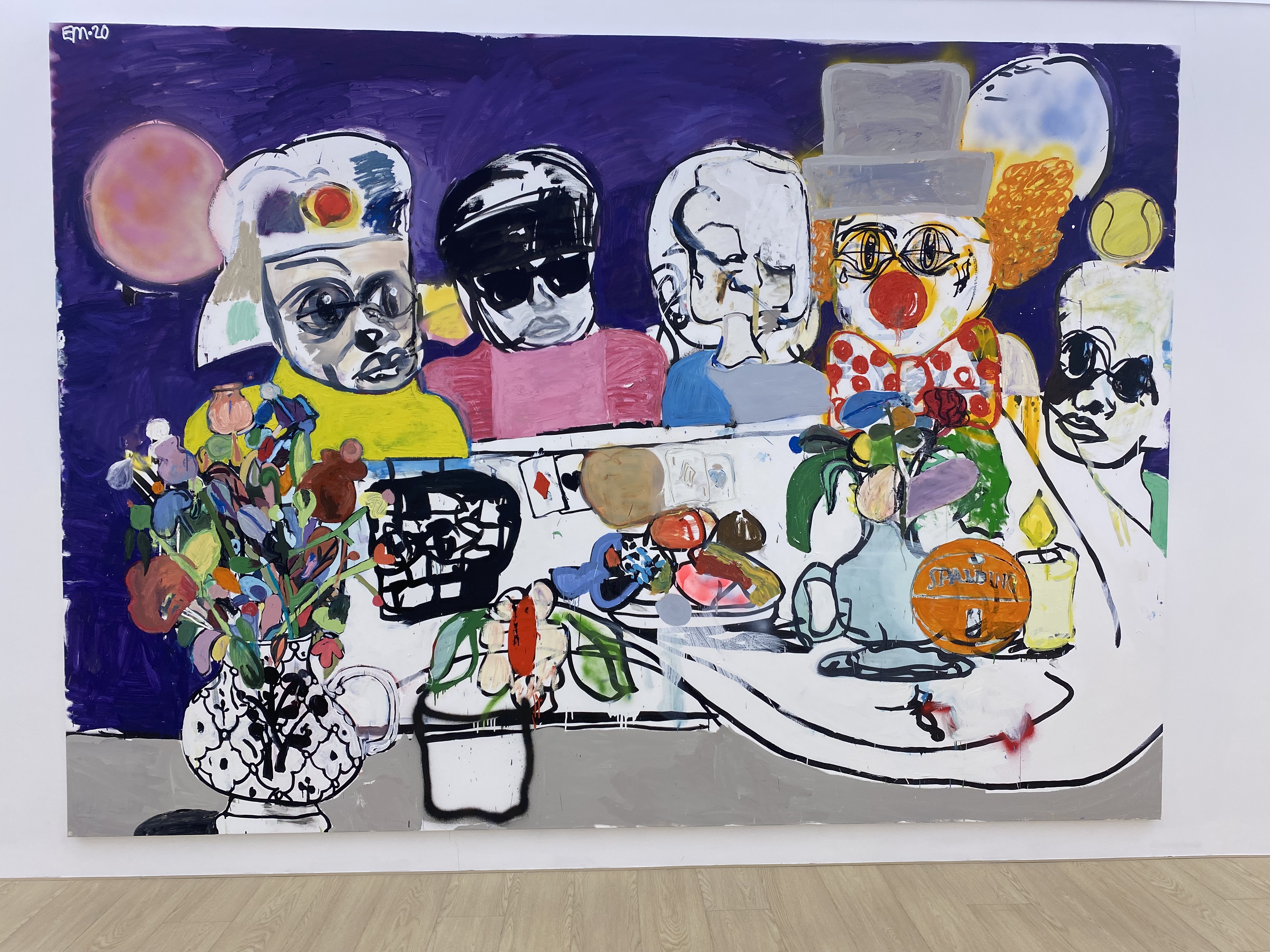

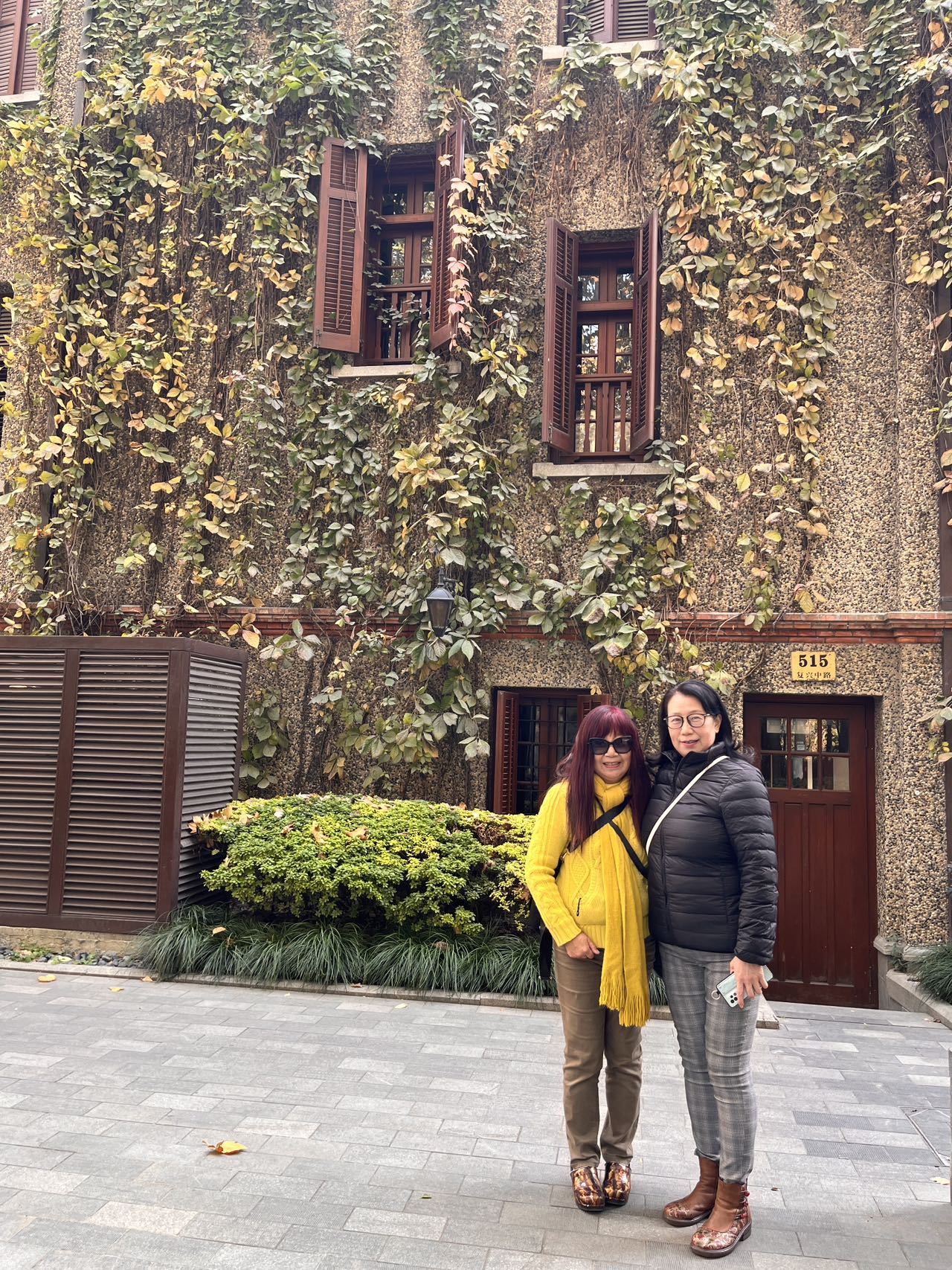
DAY 4: Sinan Road has gone through vicissitudes over the time. It was the ideal choice for artists to settle here. Revolutionaries also had such aesthetic tastes. Zhou Enlai, Sun Yat-sen, Mei Lanfang (the famous Peking Opera singer), and Western musicians all lived here. Sinan Road in autumn adds a layer of romance. These century-old buildings really give people a sense of fantasy, especially for mother’s generation…❤️❤️❤️🍁🍁🍁
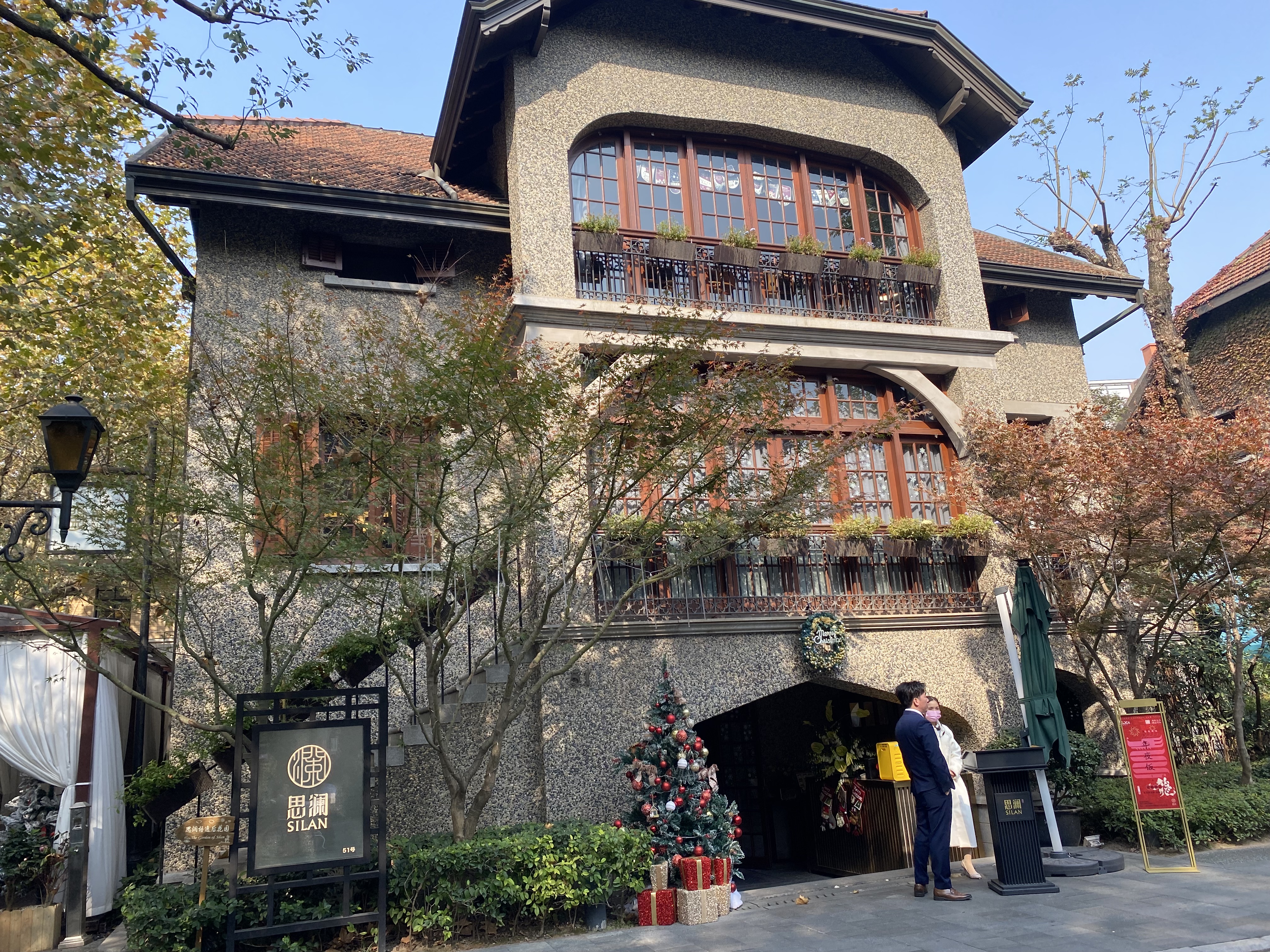
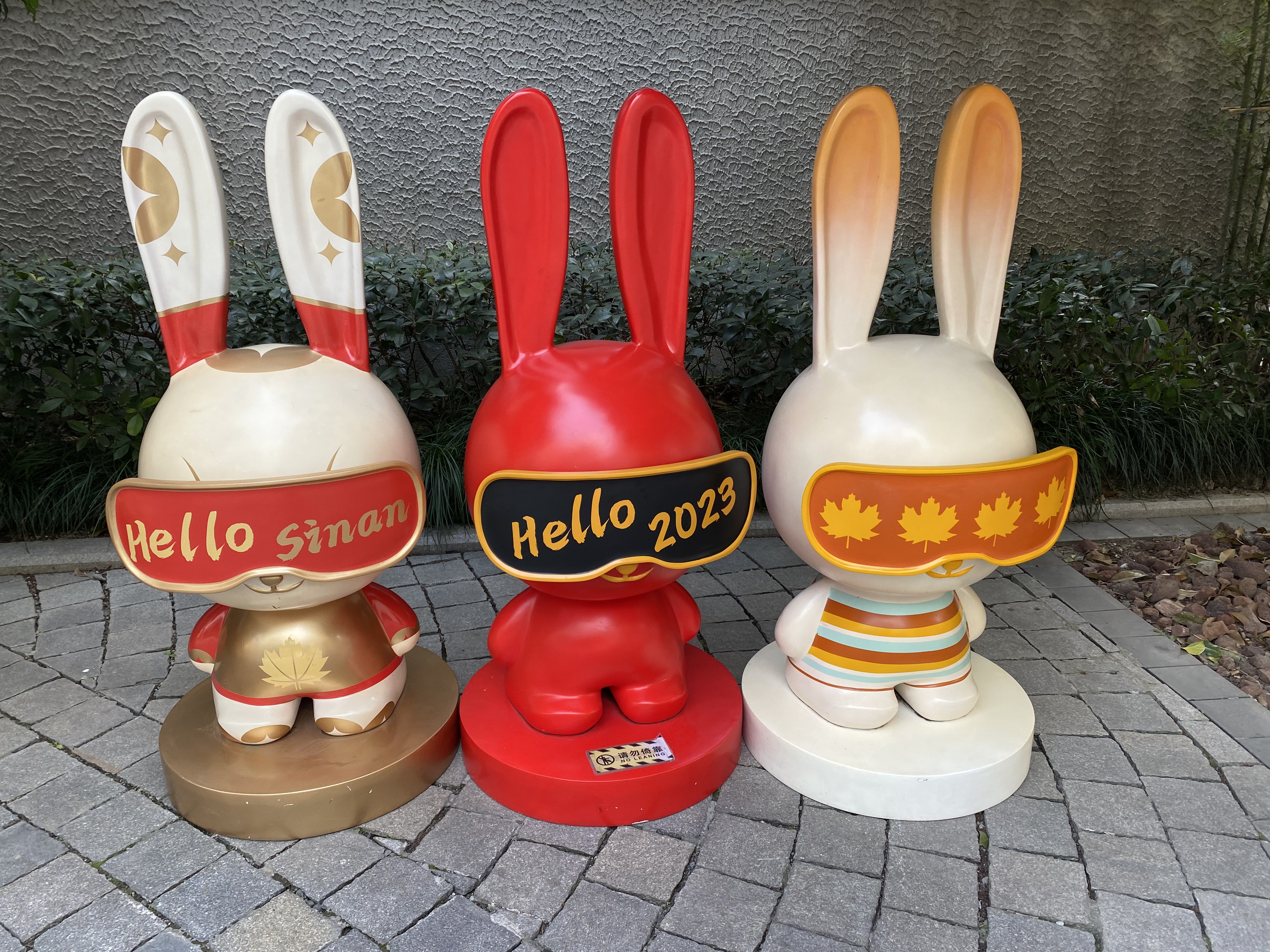
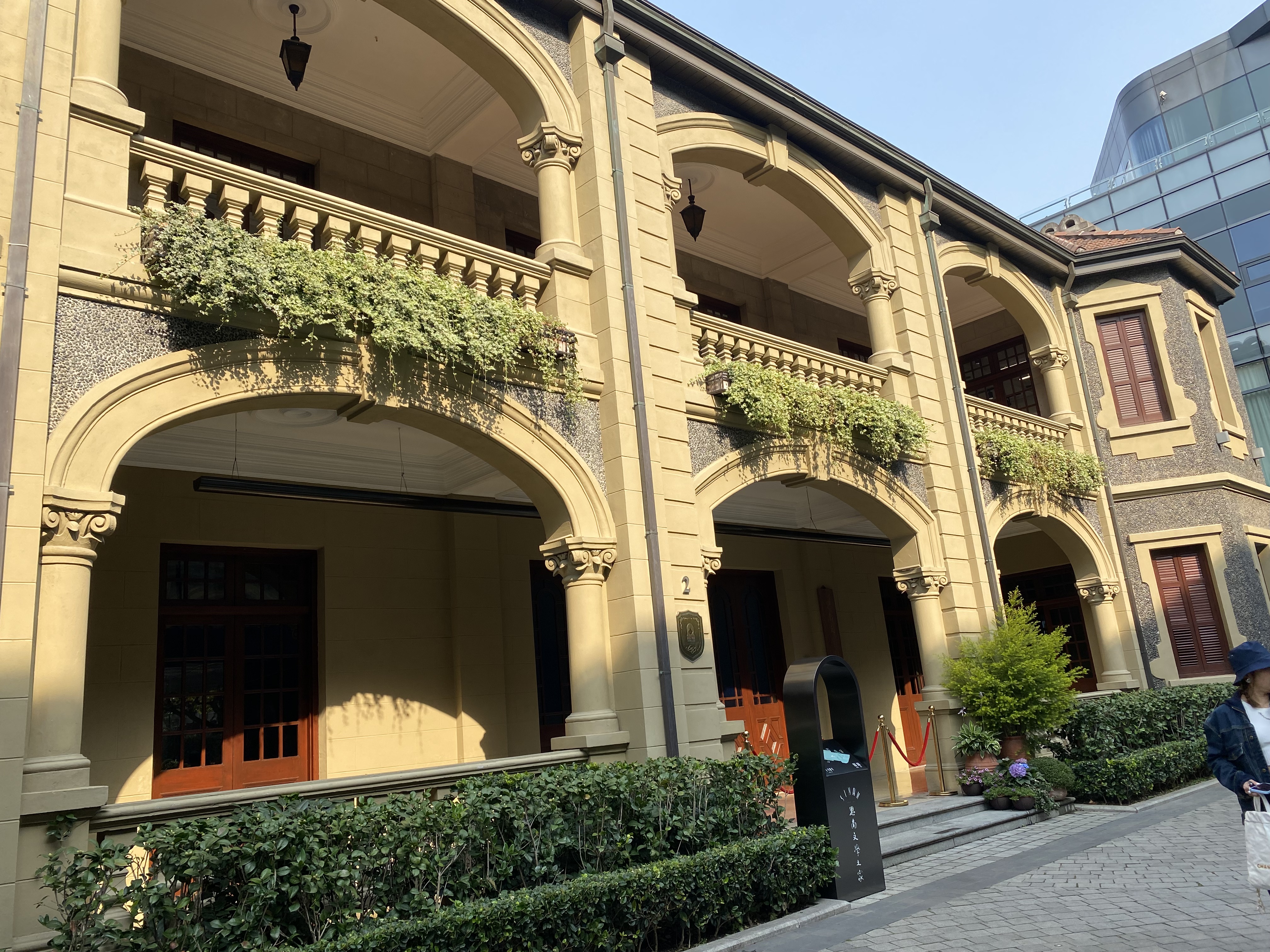
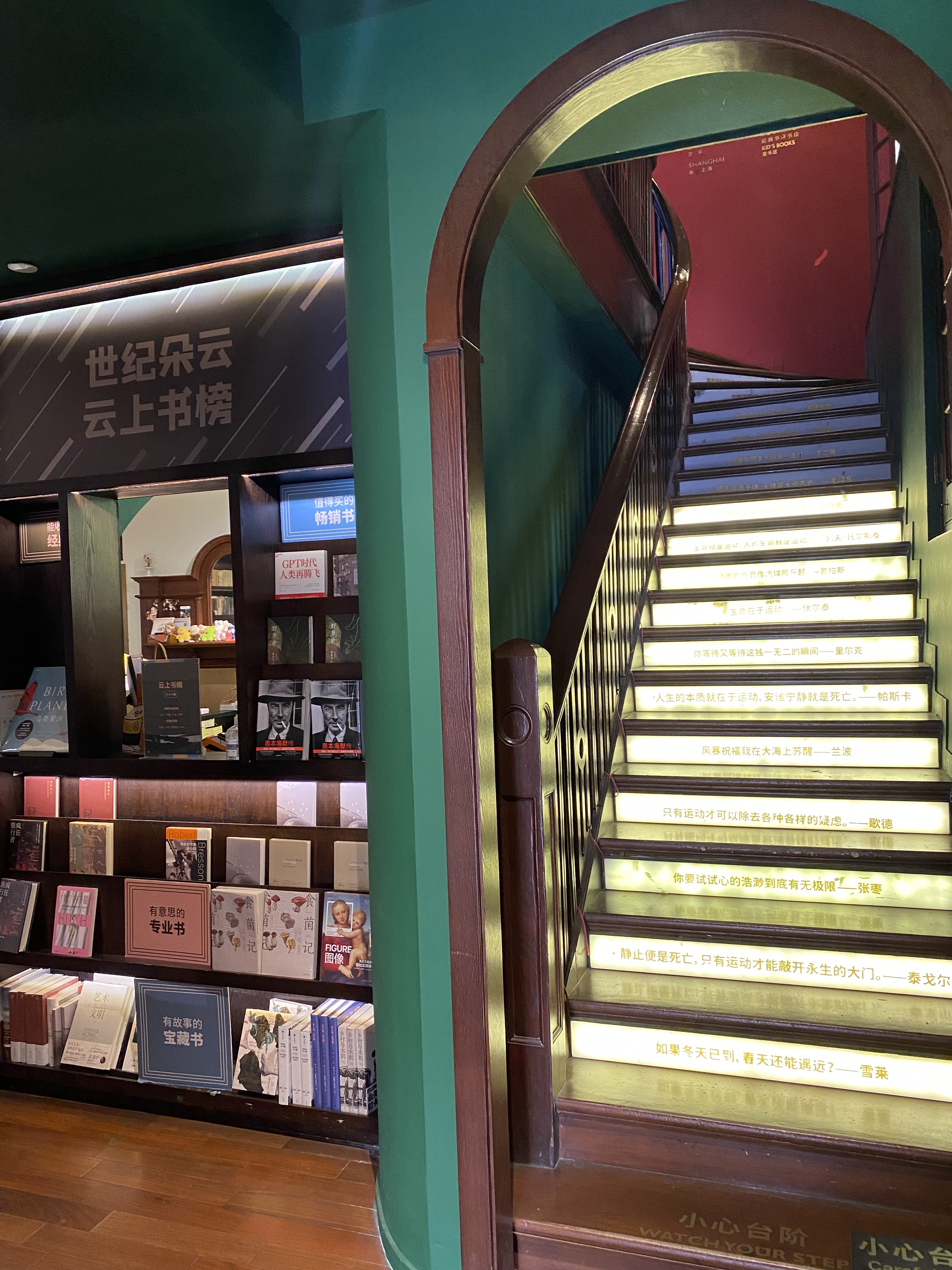
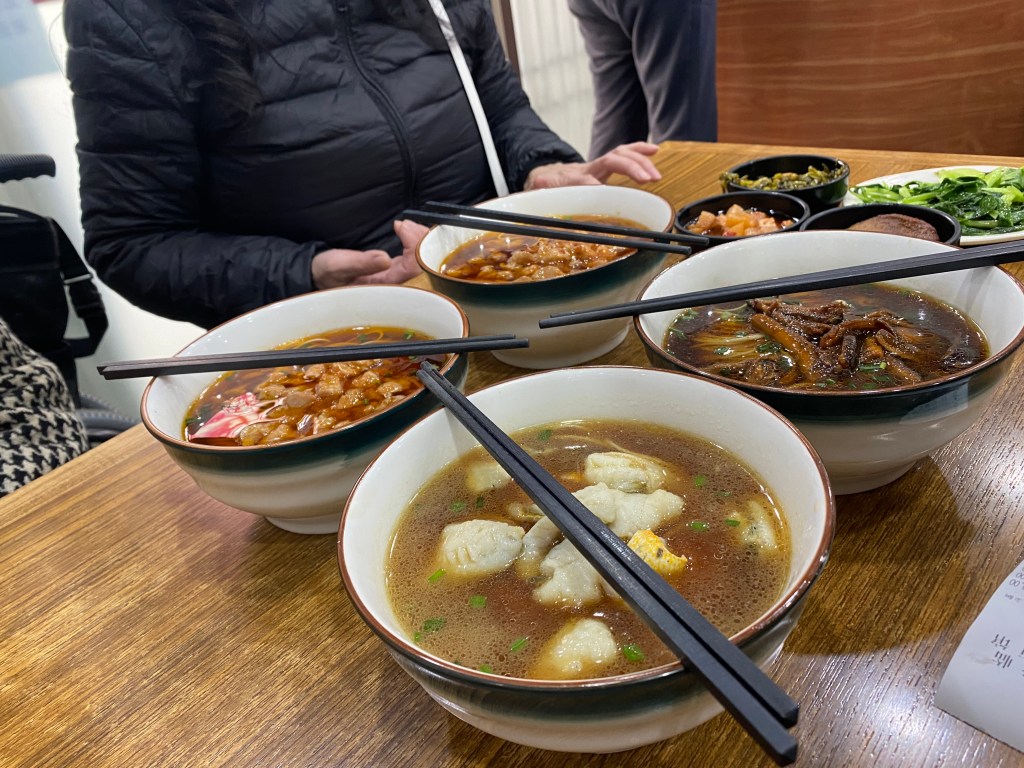
We had our lunch at little Ah Niang’s Noodle Restaurant on Sinan Road. It was so crowded that people from all over the world come here. What I want is yellow croaker noodle soup.
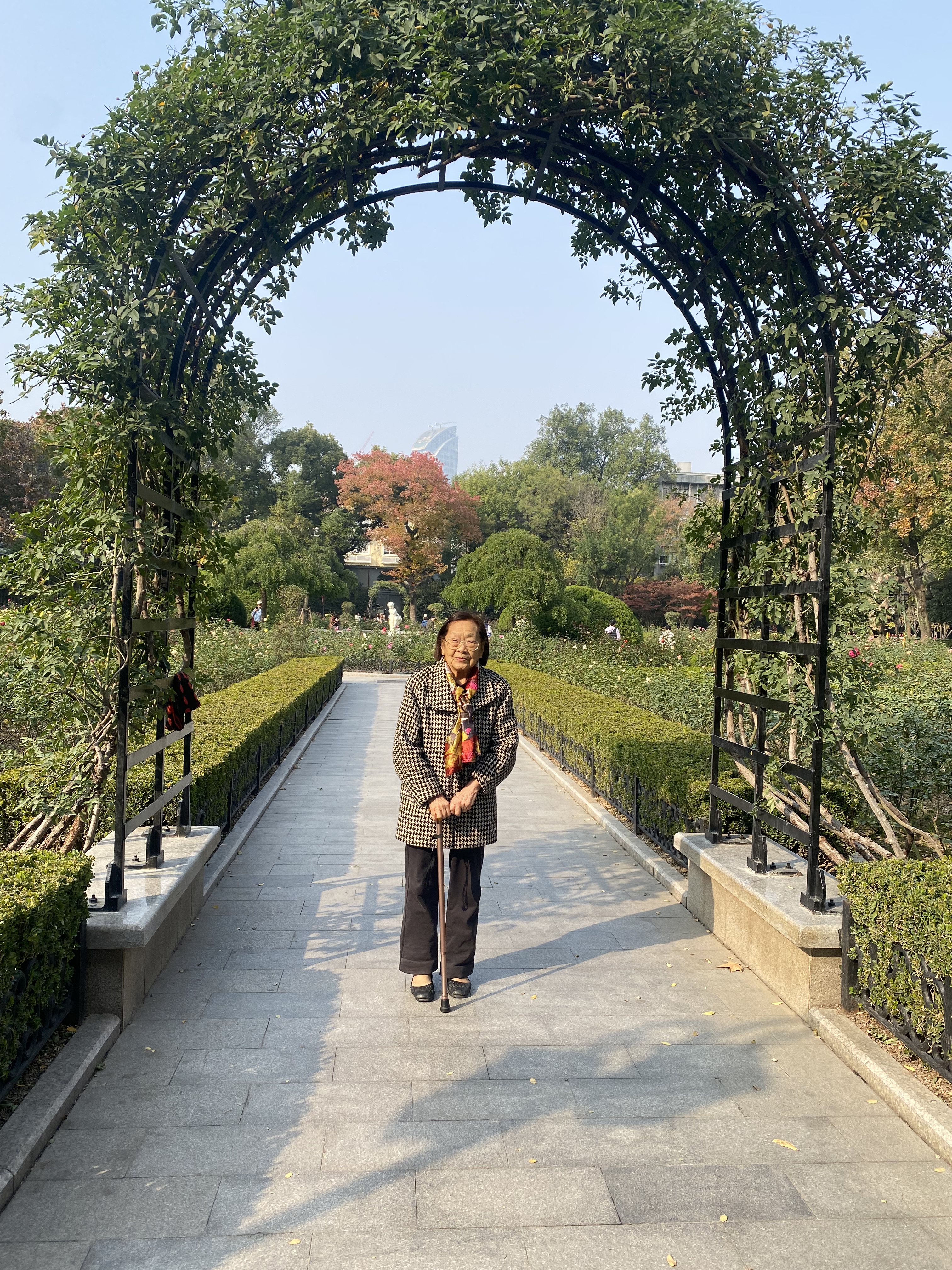
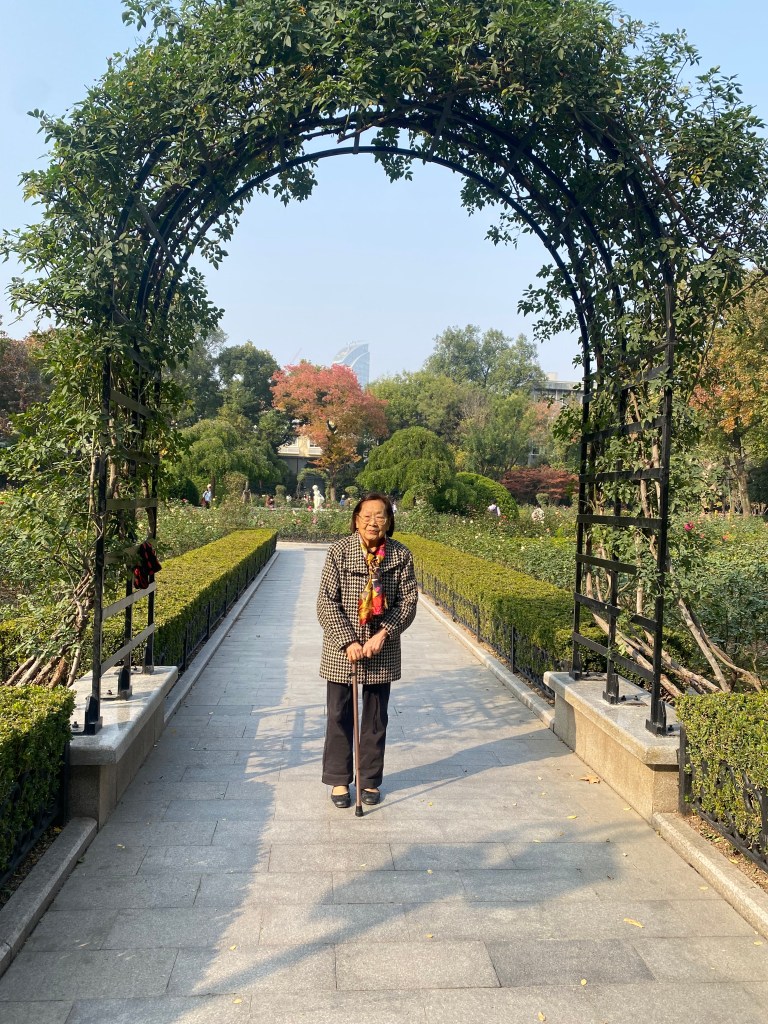
Fuxing Park used to be a place where “Chinese and dogs were not allowed” during the colonial period, now it has become a sea of flowers.
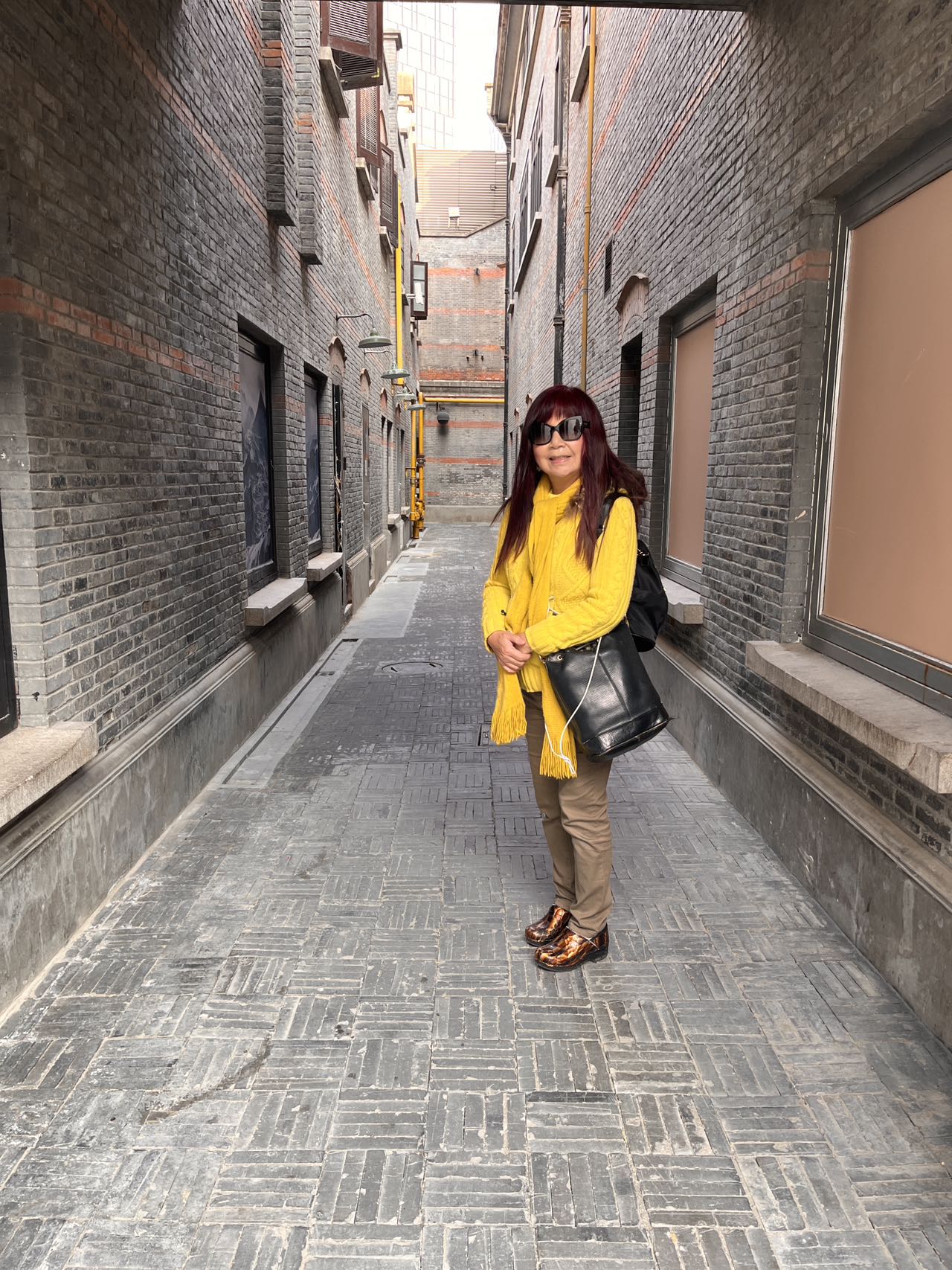
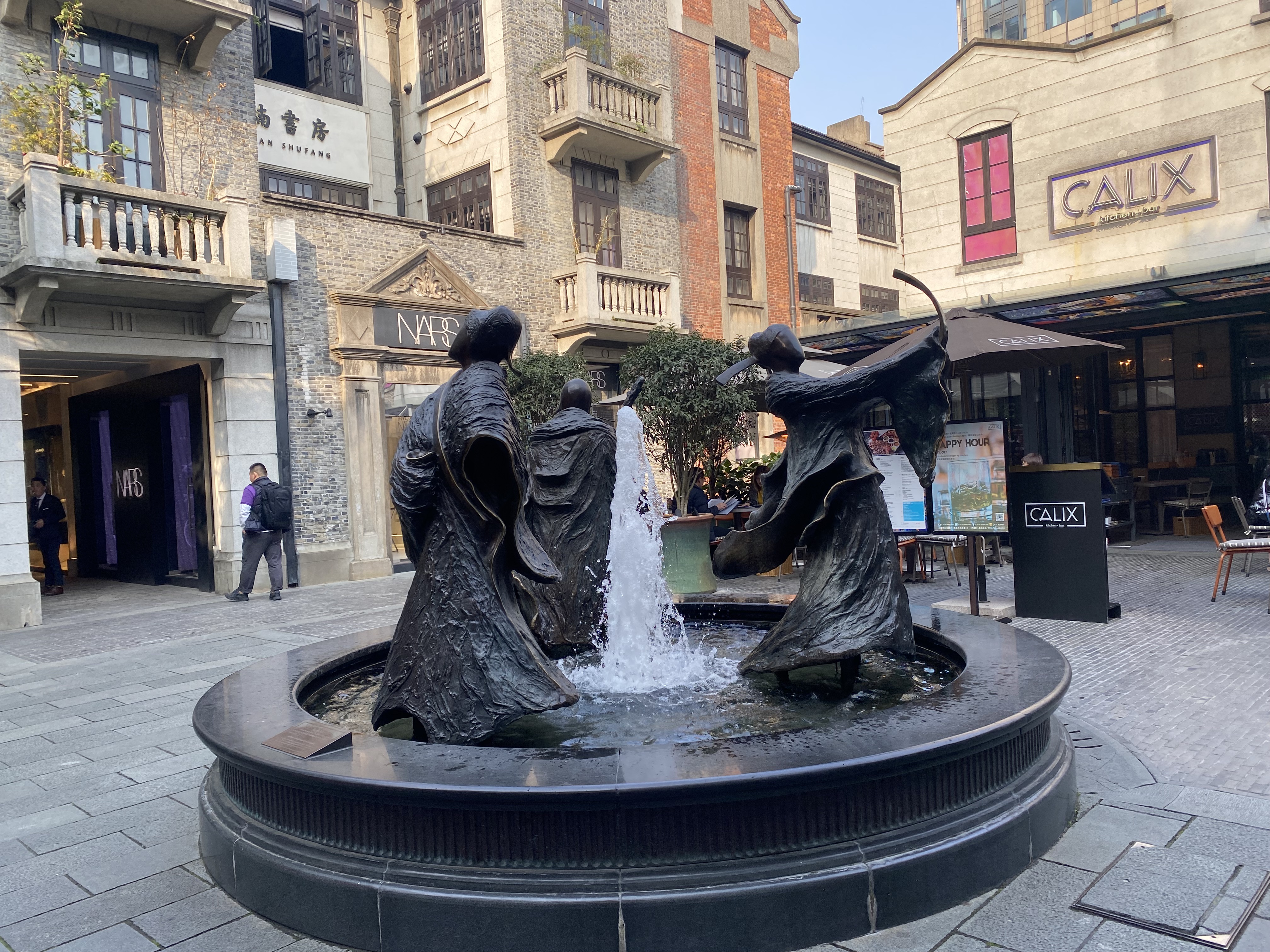
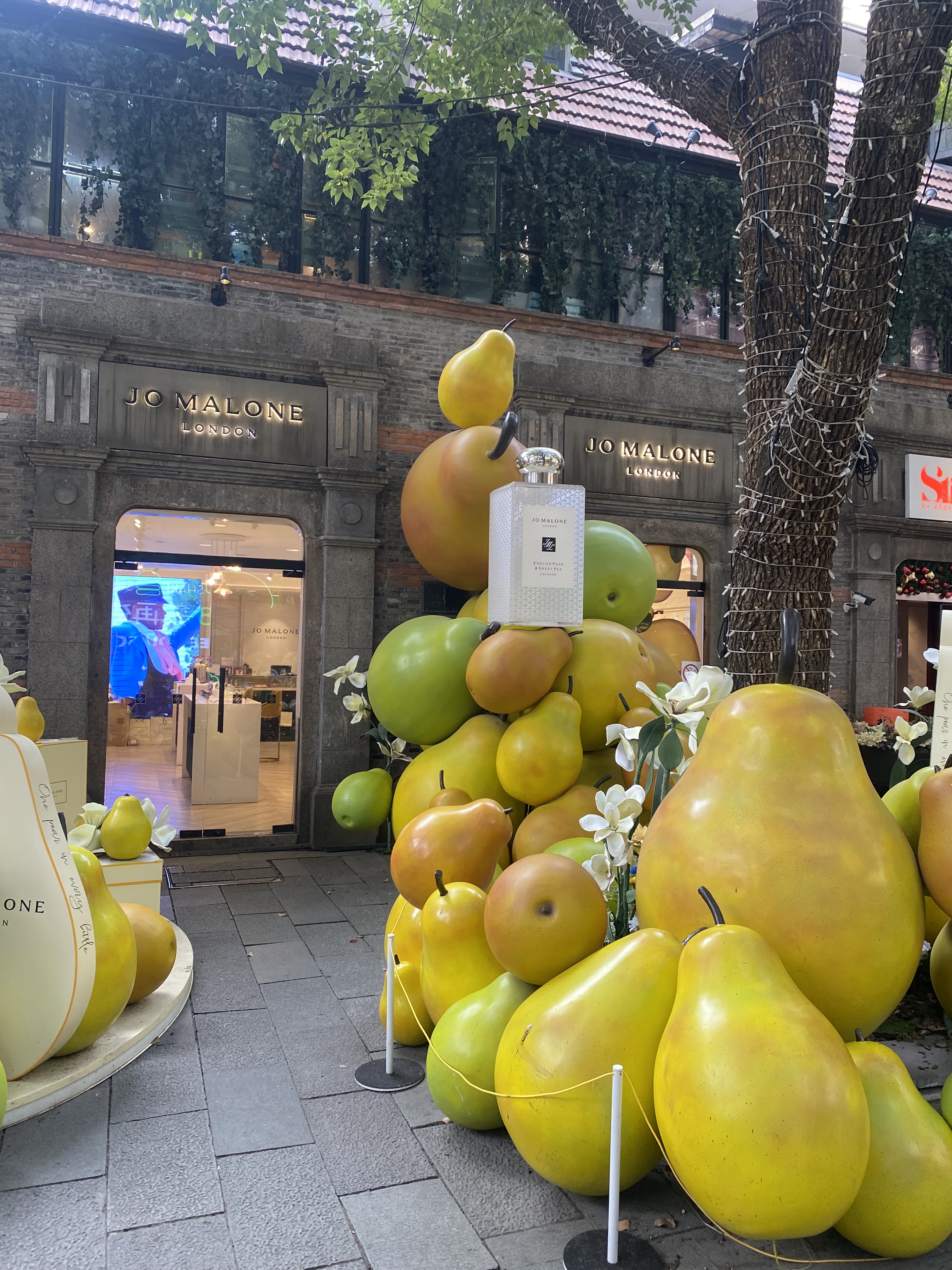
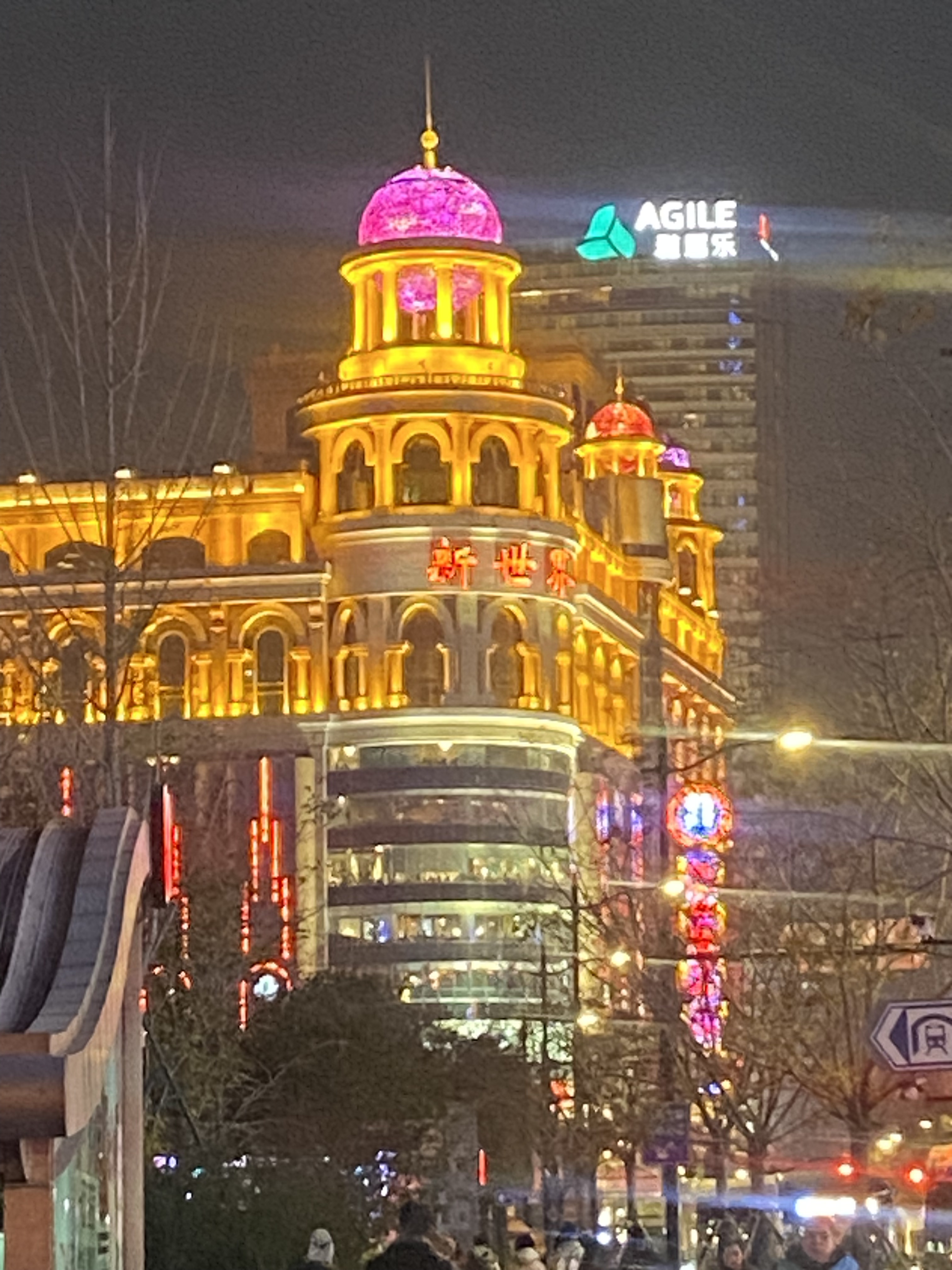
Long time no see —- Xin Tian Di (The New World)! I came here to rekindle my old dream – to visit the “Shikumen Museum” (which I liked very much, I visited it at least twice before). It’s a pity that the museum had moved to another location.
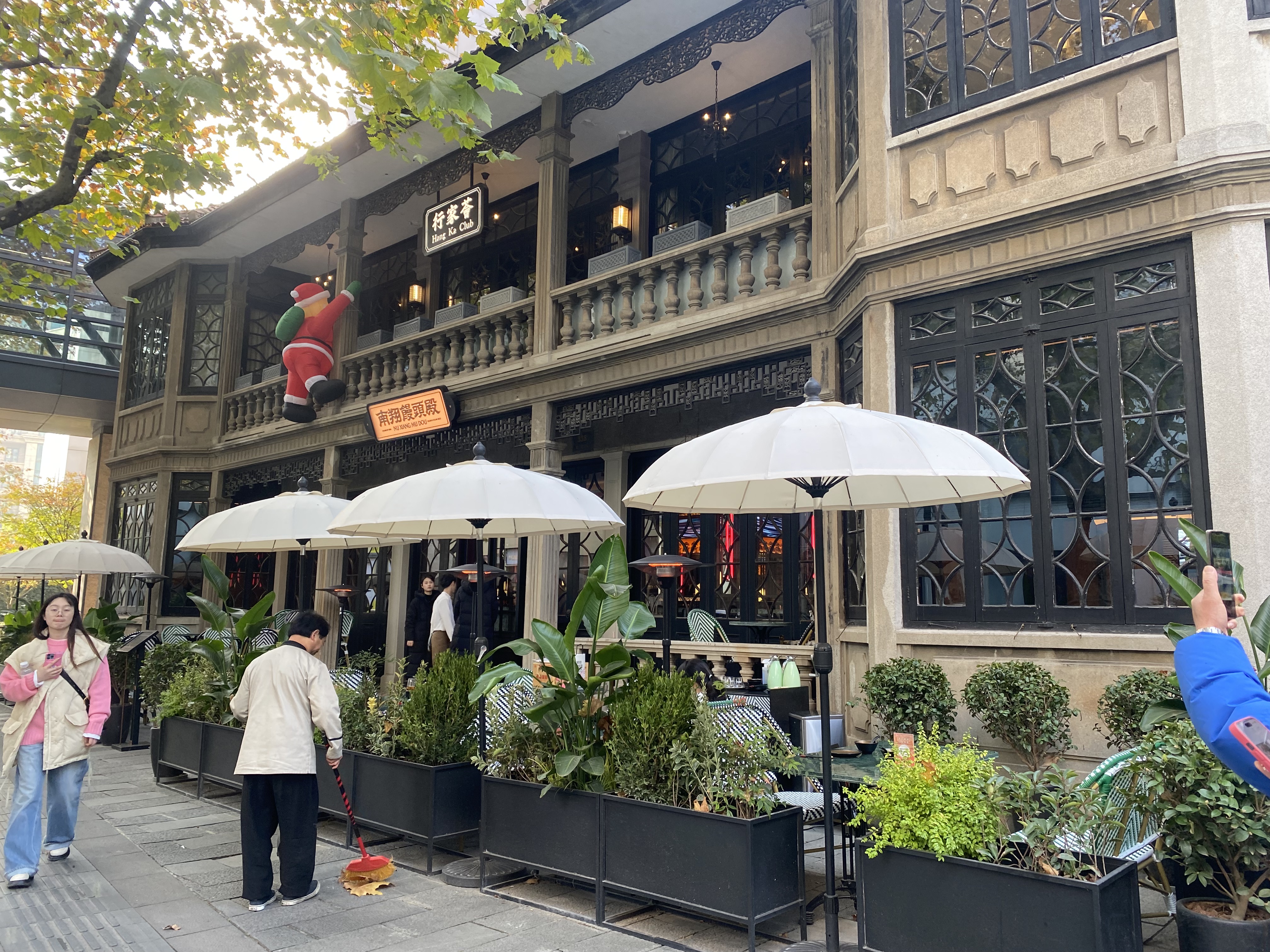
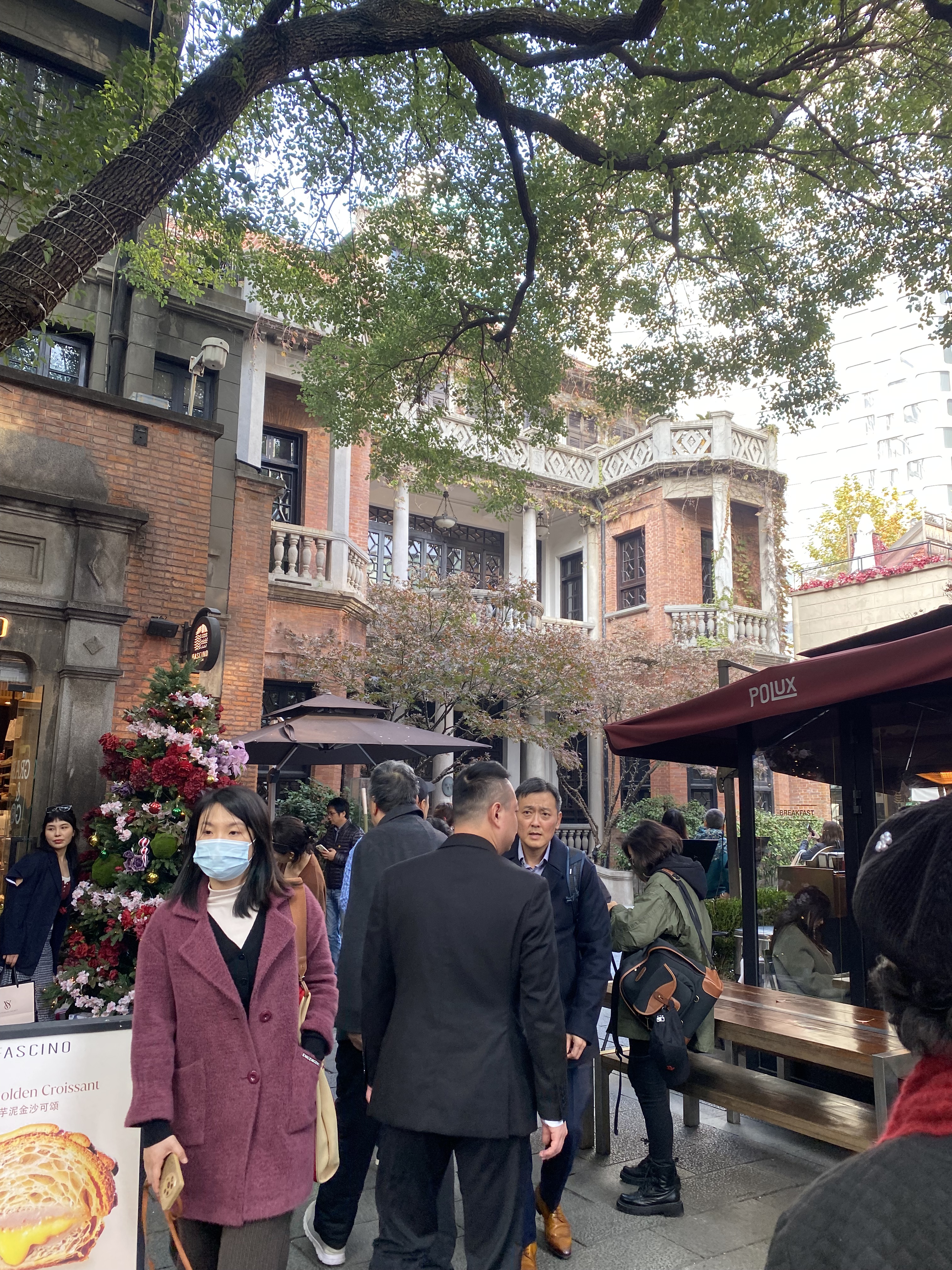
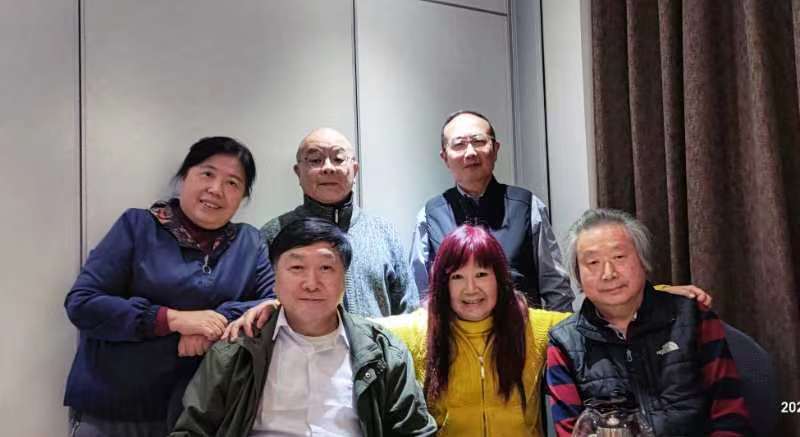
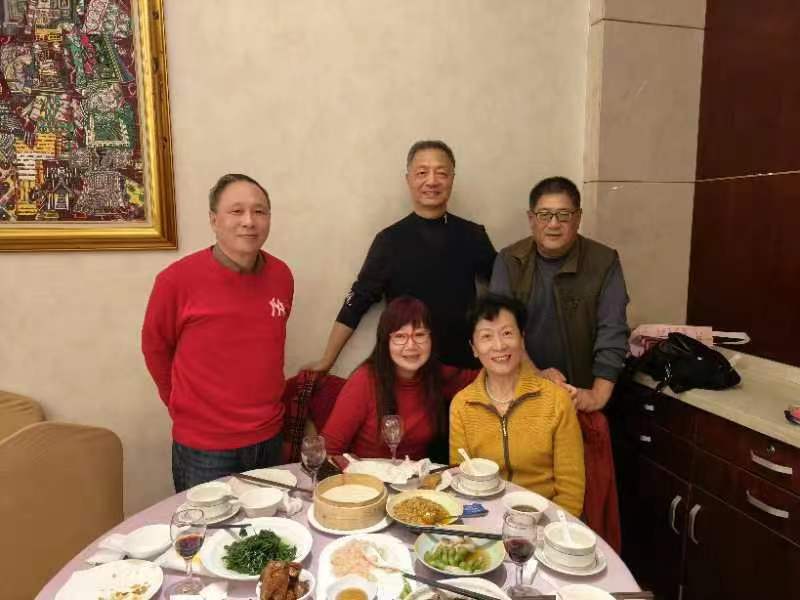
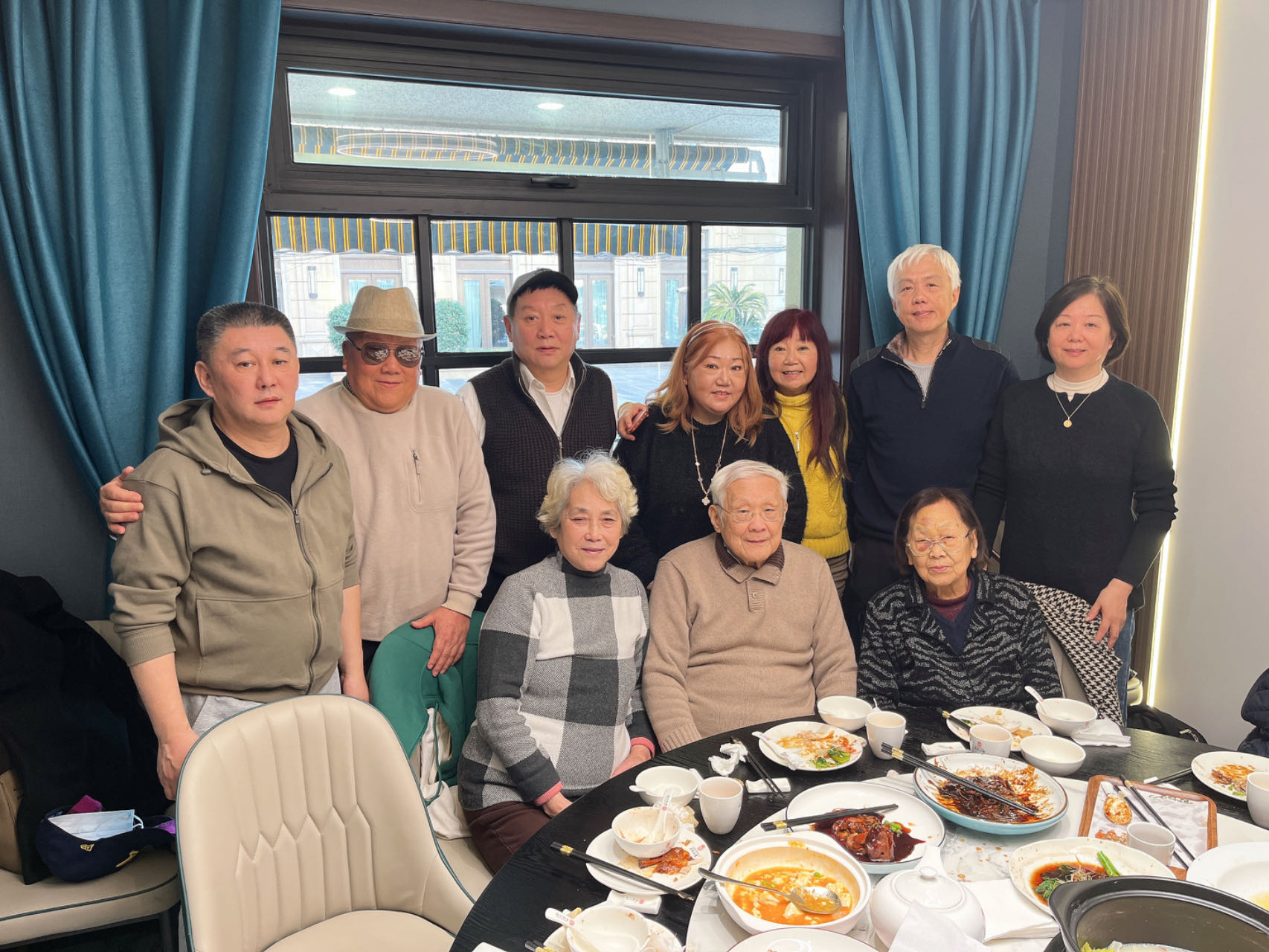
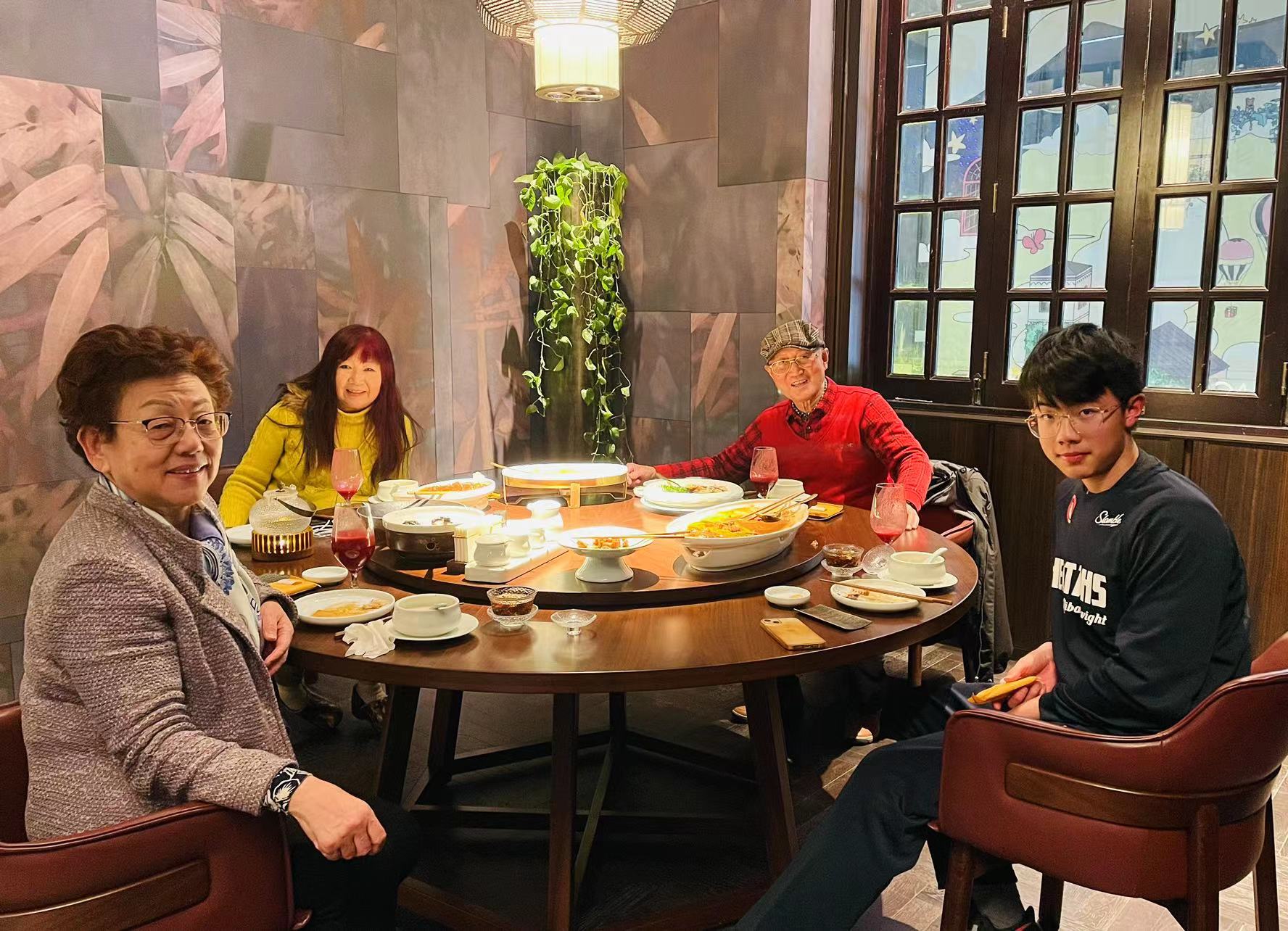
During evenings, I was occupied with gatherings with my elementary school friends, high school friends, Conservatory friends, relatives, farm friends. They invited me to the delicious banquets, mainly Shanghai cousins…They were extremely hospitable! I was blessed to have so many friends from different periods of my life.
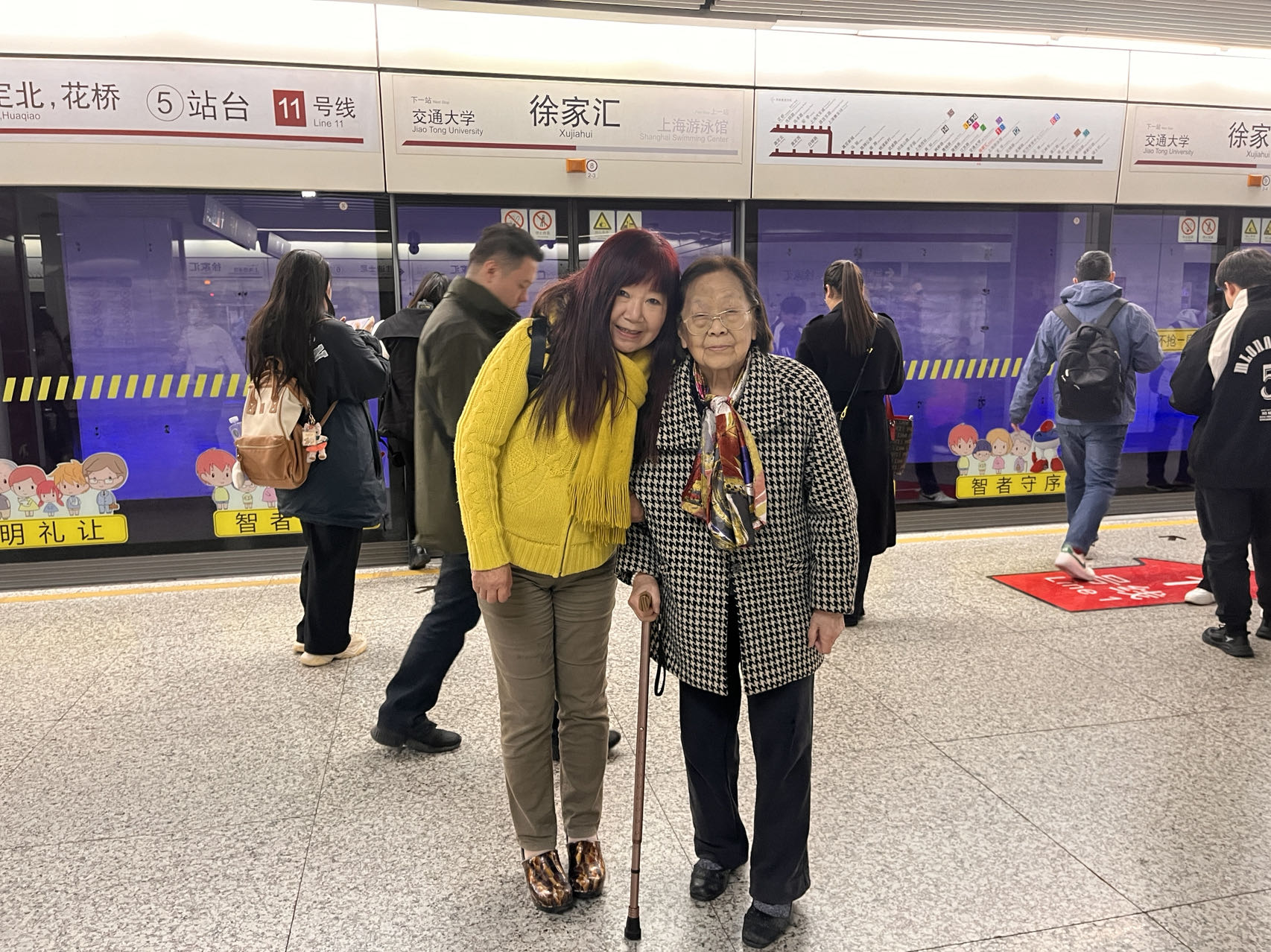
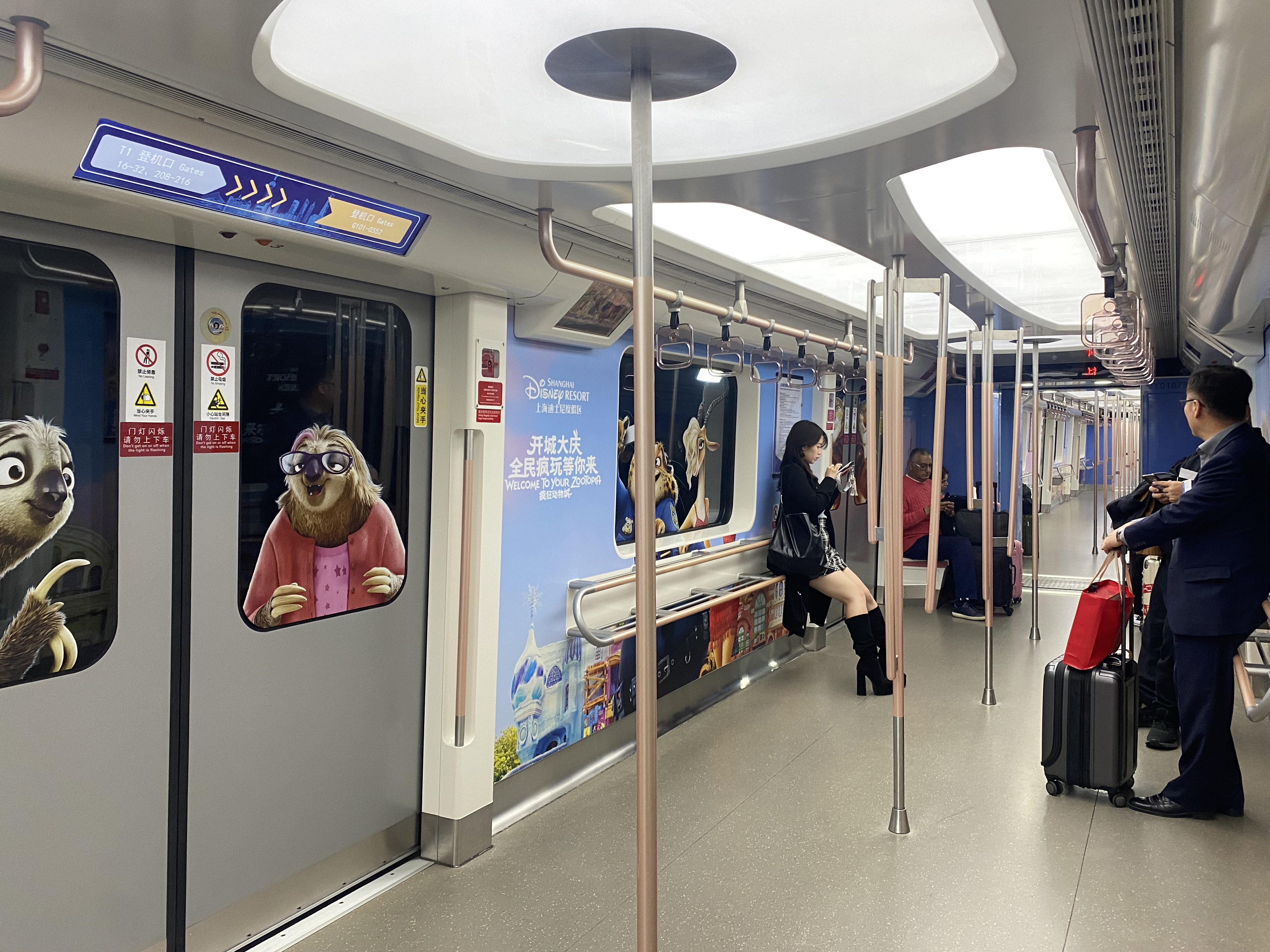
Shanghai’s public subway system is incredible! The government spent a lot of money on infrastructure. There are 14 different subway lines in Shanghai now. There are all marked bilingual (Chinese and English). The announcement on the train comes 3 languages: Mandarin, English and Shanghai dialect.
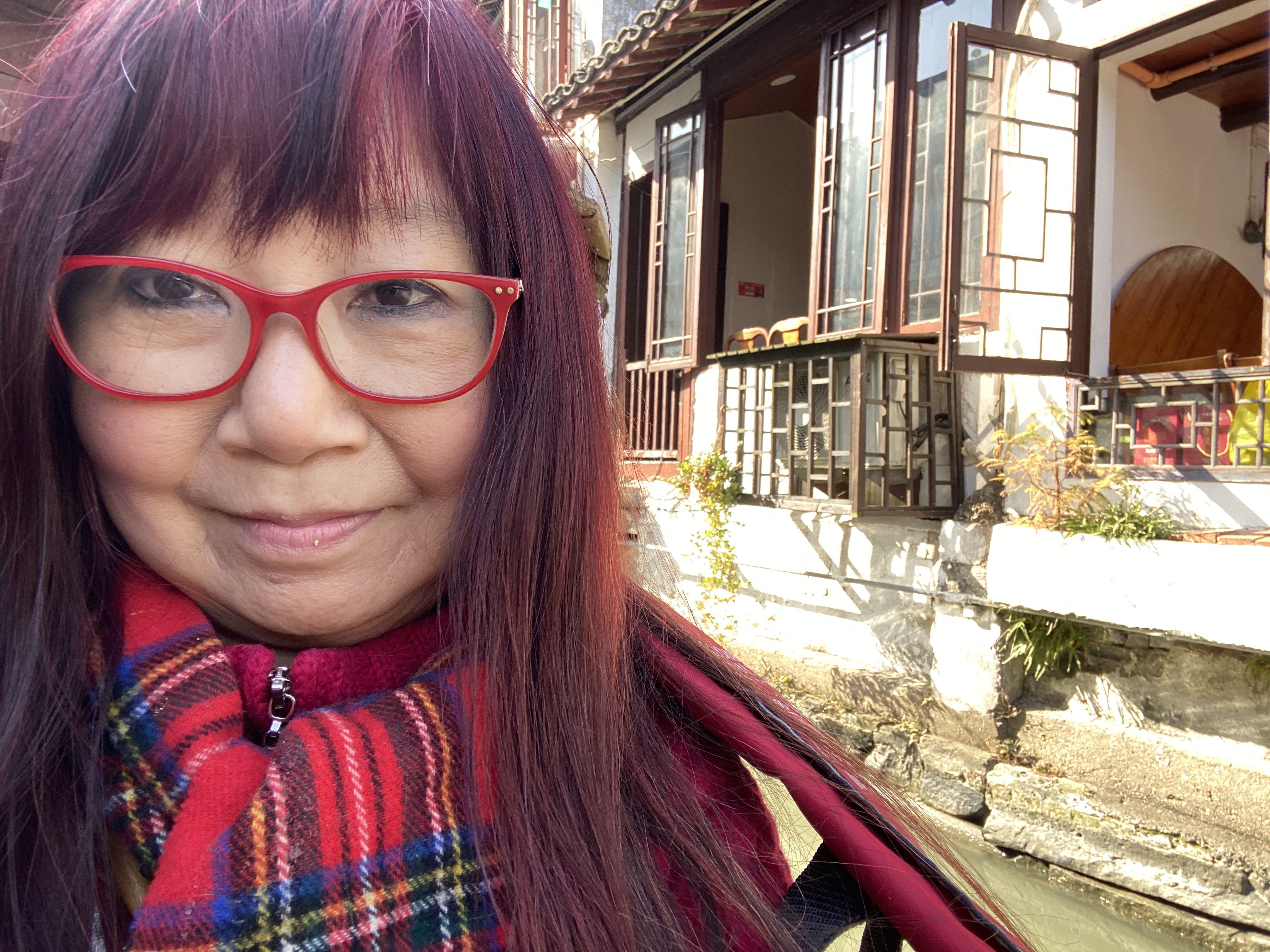
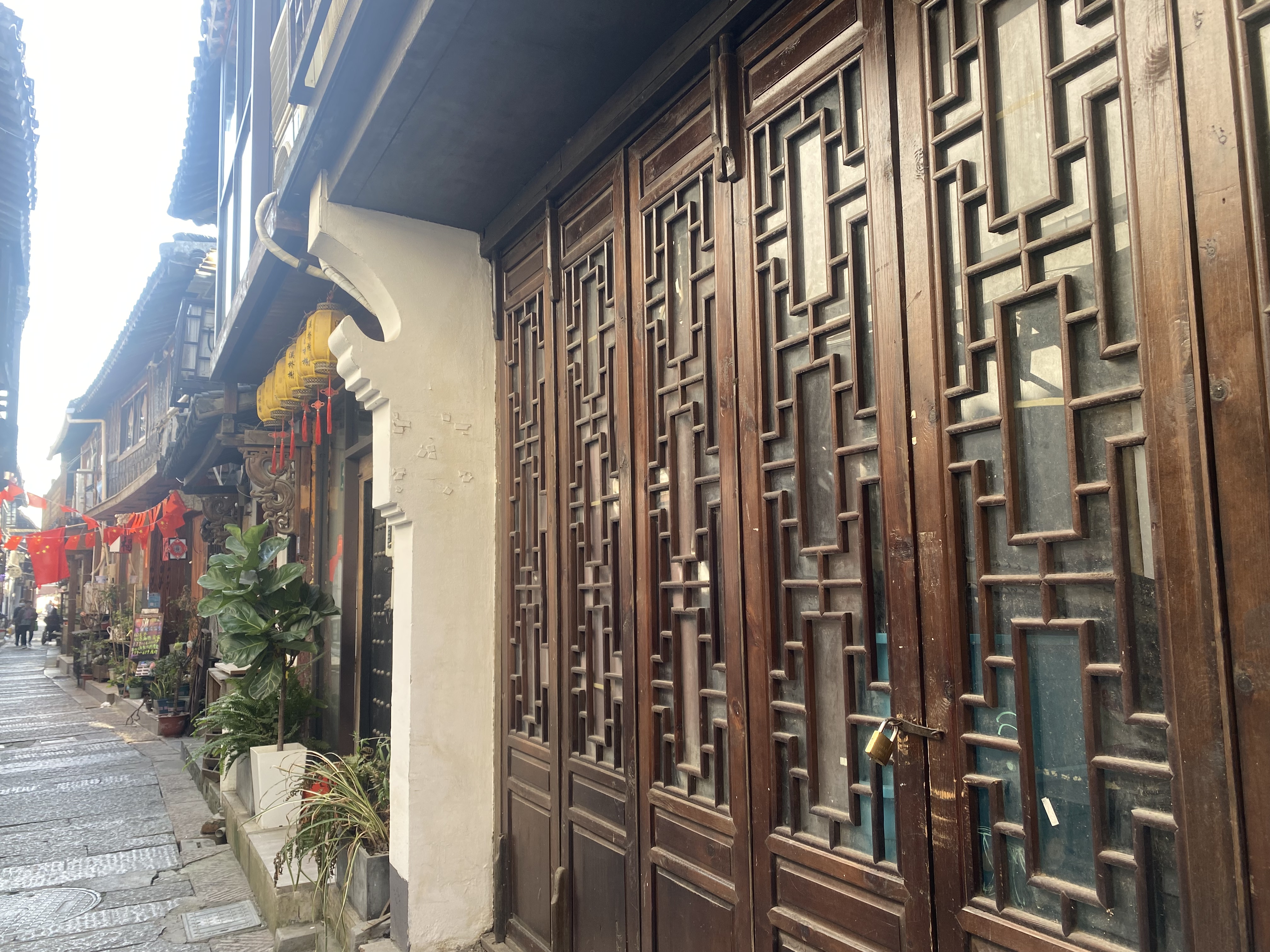
DAY 5: After taking a 2-hour subway and bus ride, I arrived at “Zhujiajiao”, an ancient small village with a history of nearly 800 years. Like Suzhou, It is a kind of “Venice of the Orient”, very picturesque: small stone bridges over cross winding canals, oarsmen rowing boats. Sauntering on narrow lanes, going through small shops which sell local hams, pickled vegetables, flavored melon seeds etc. It was a very enjoyable experience. I had a bowl of wontons on the shore, fully wallowing in the local flavor and beautiful scenery of the countryside…🌹🌹🌹
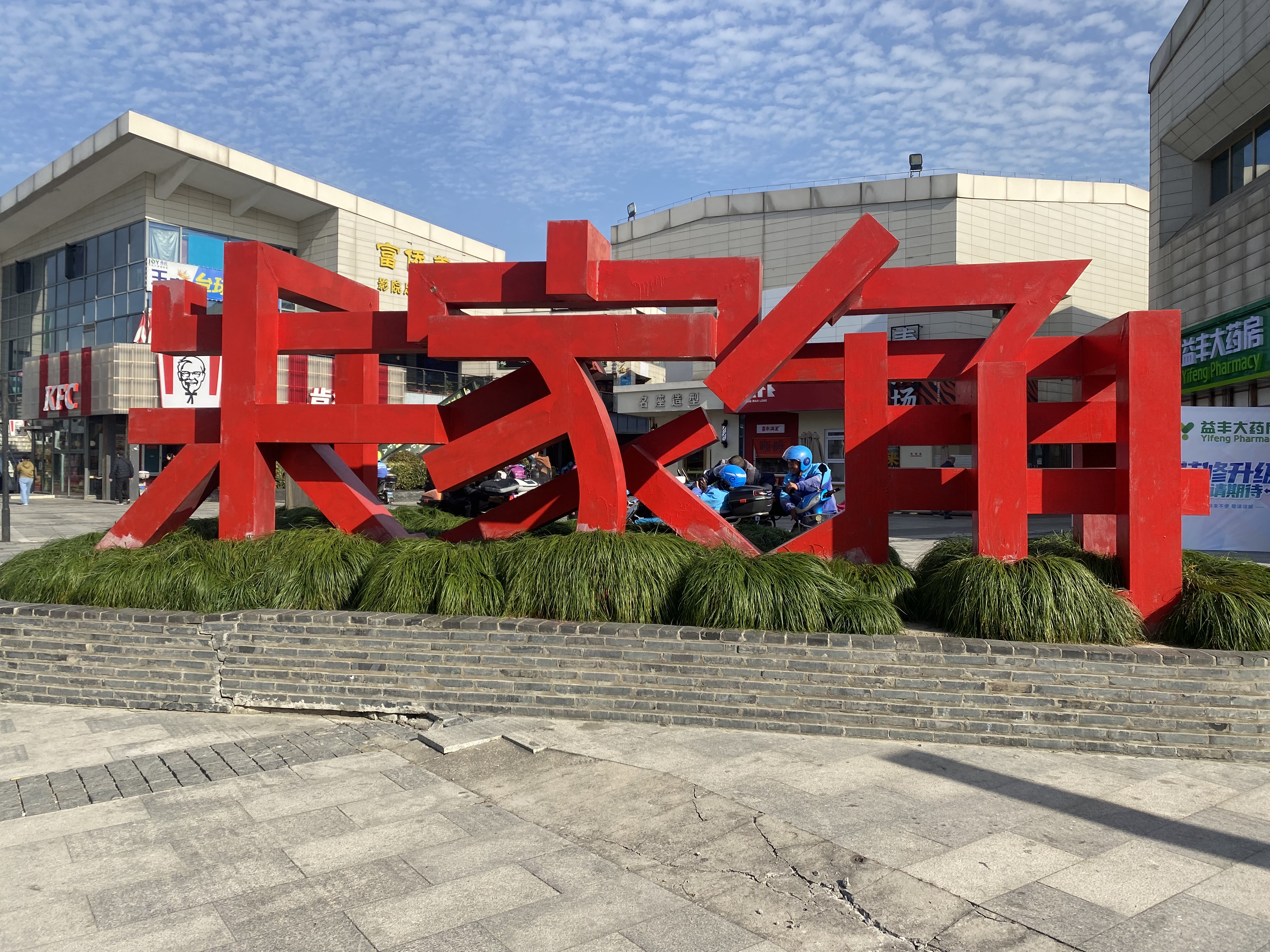
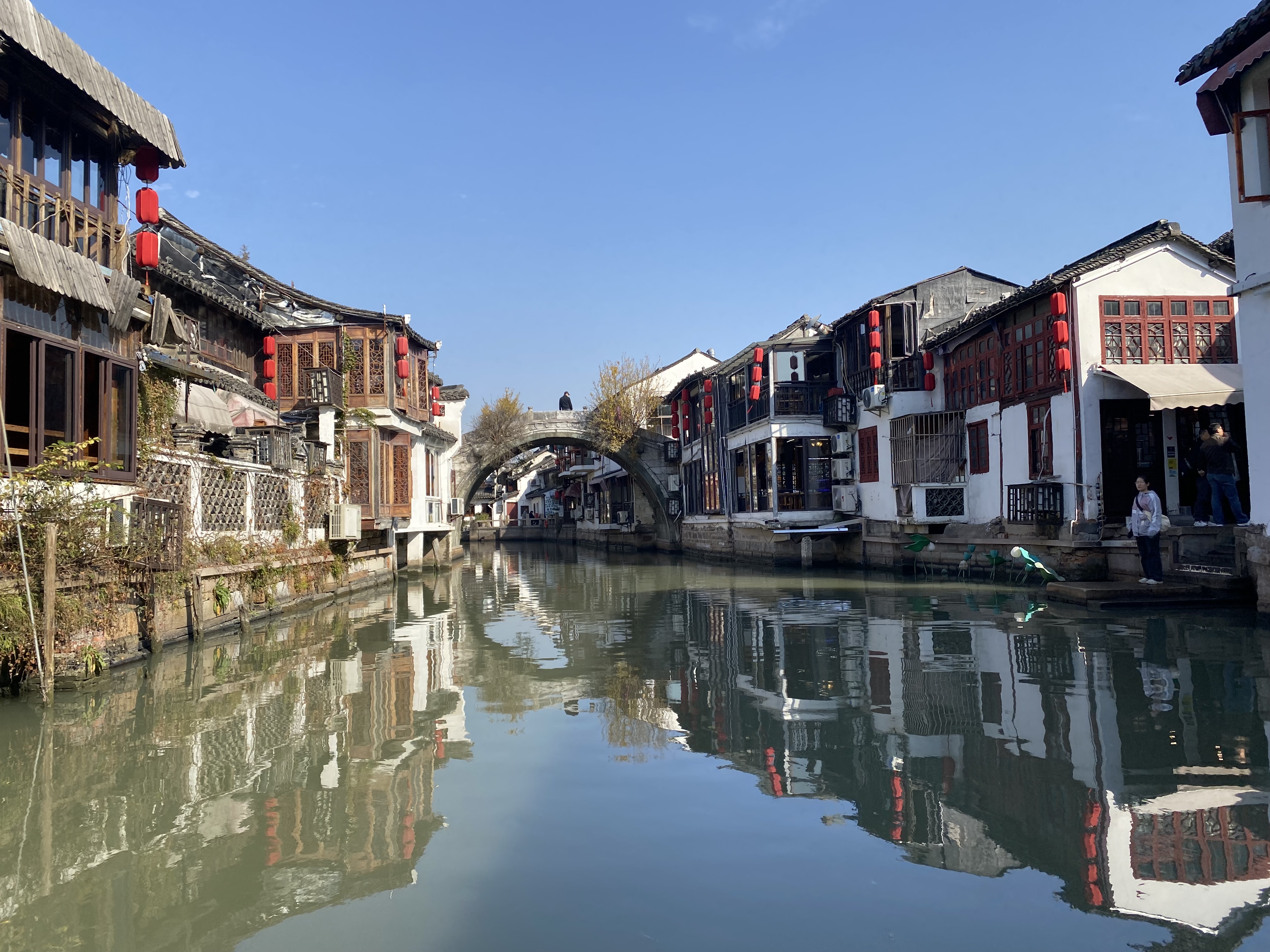
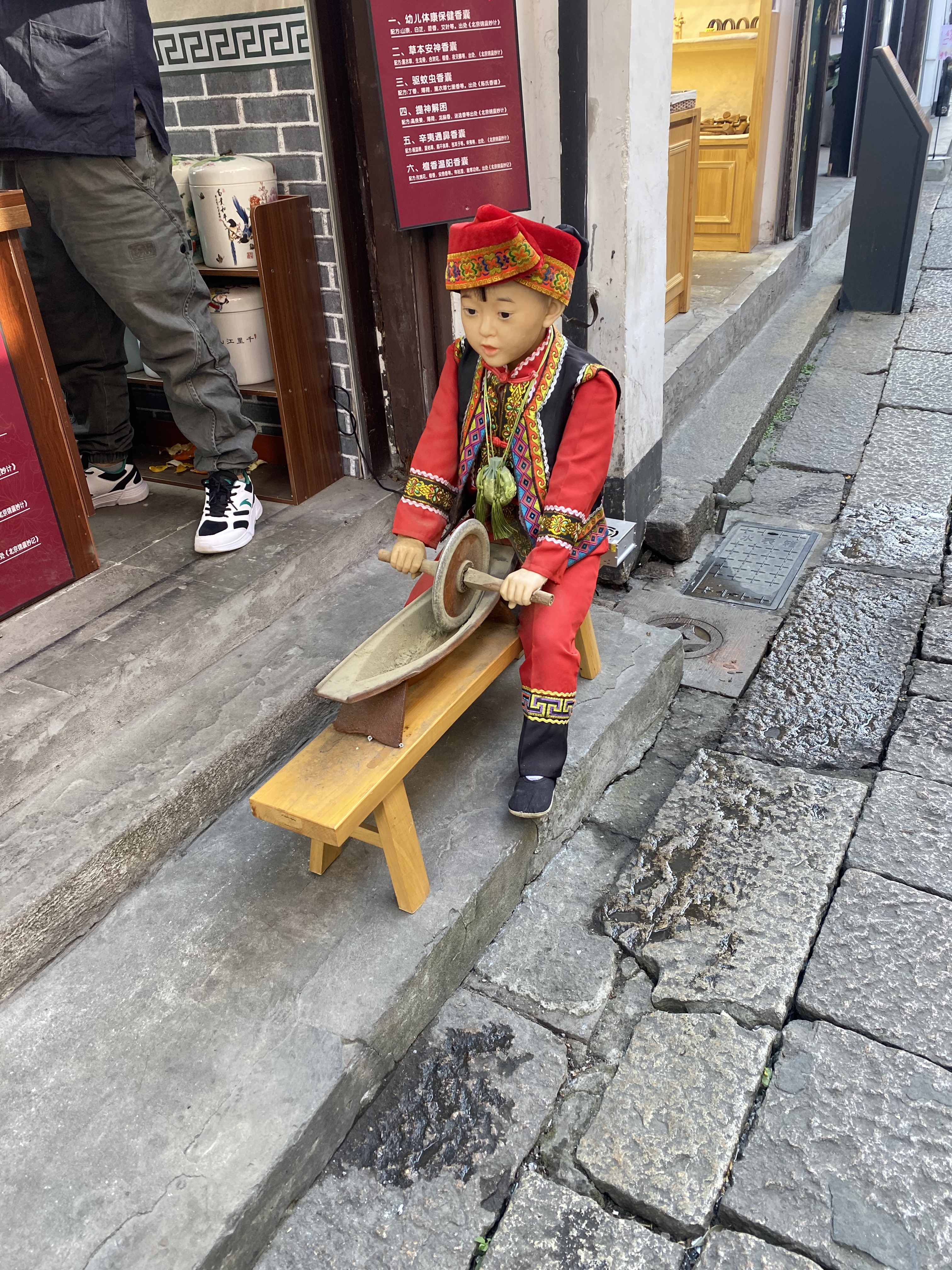
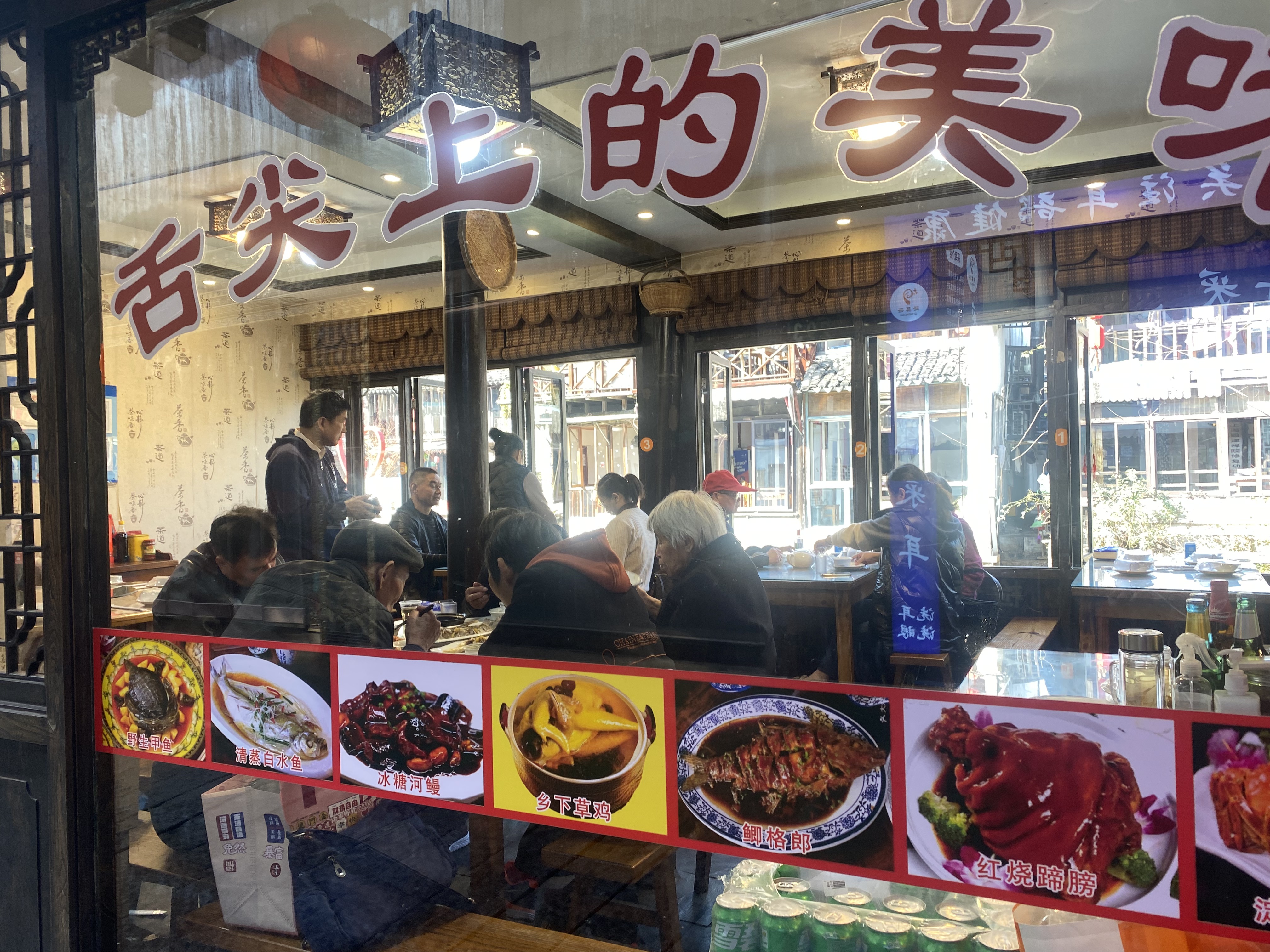
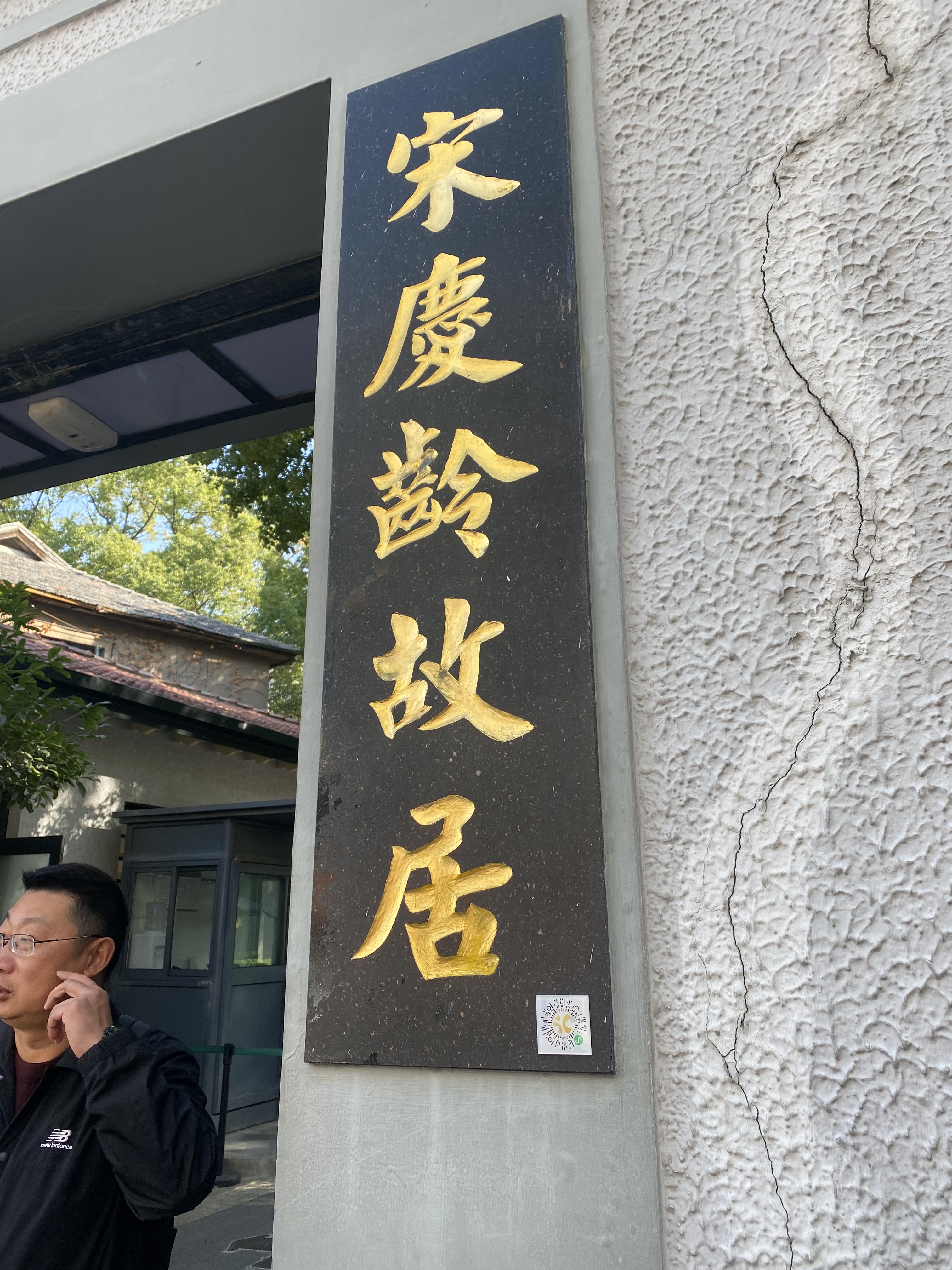
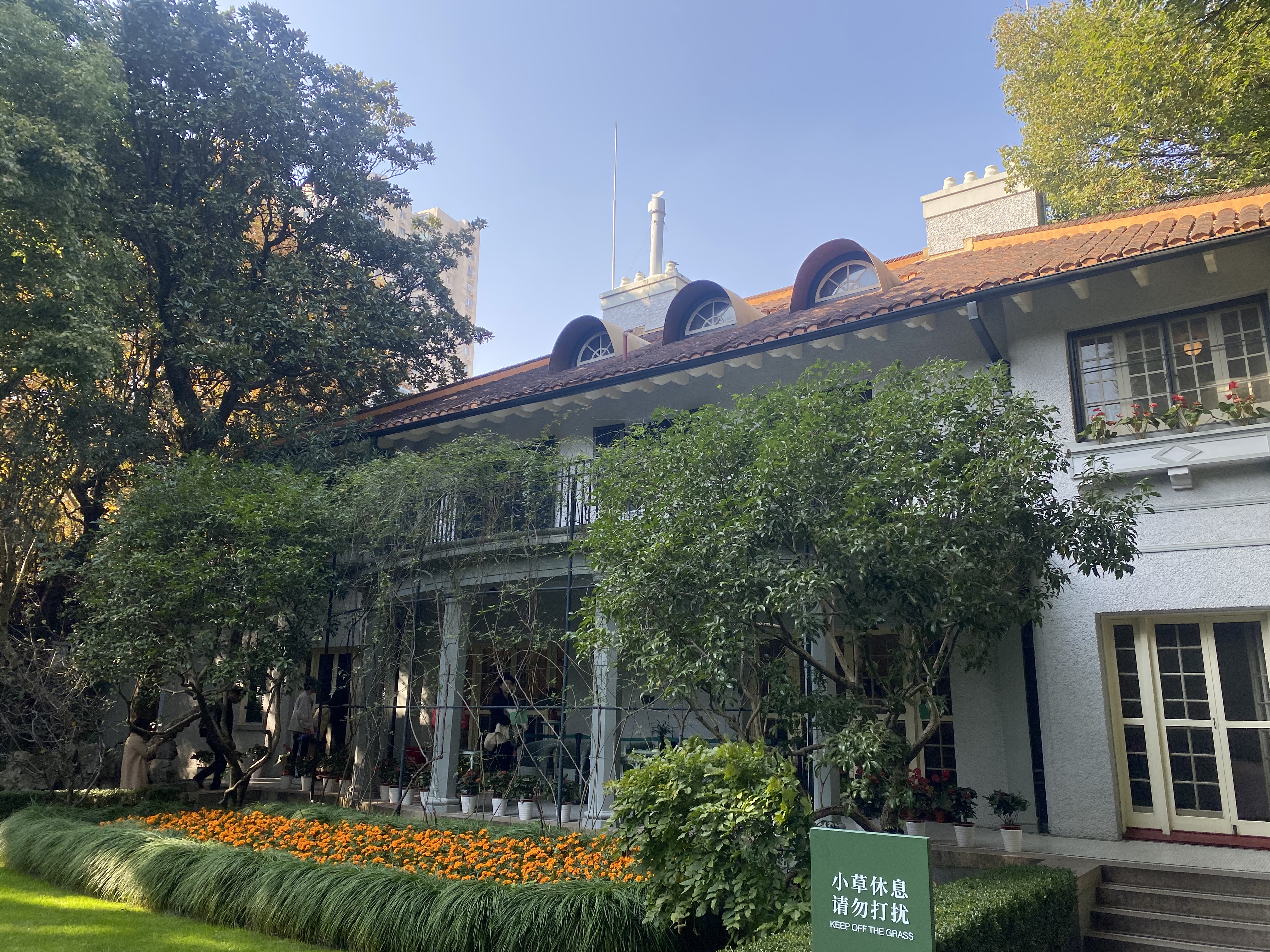
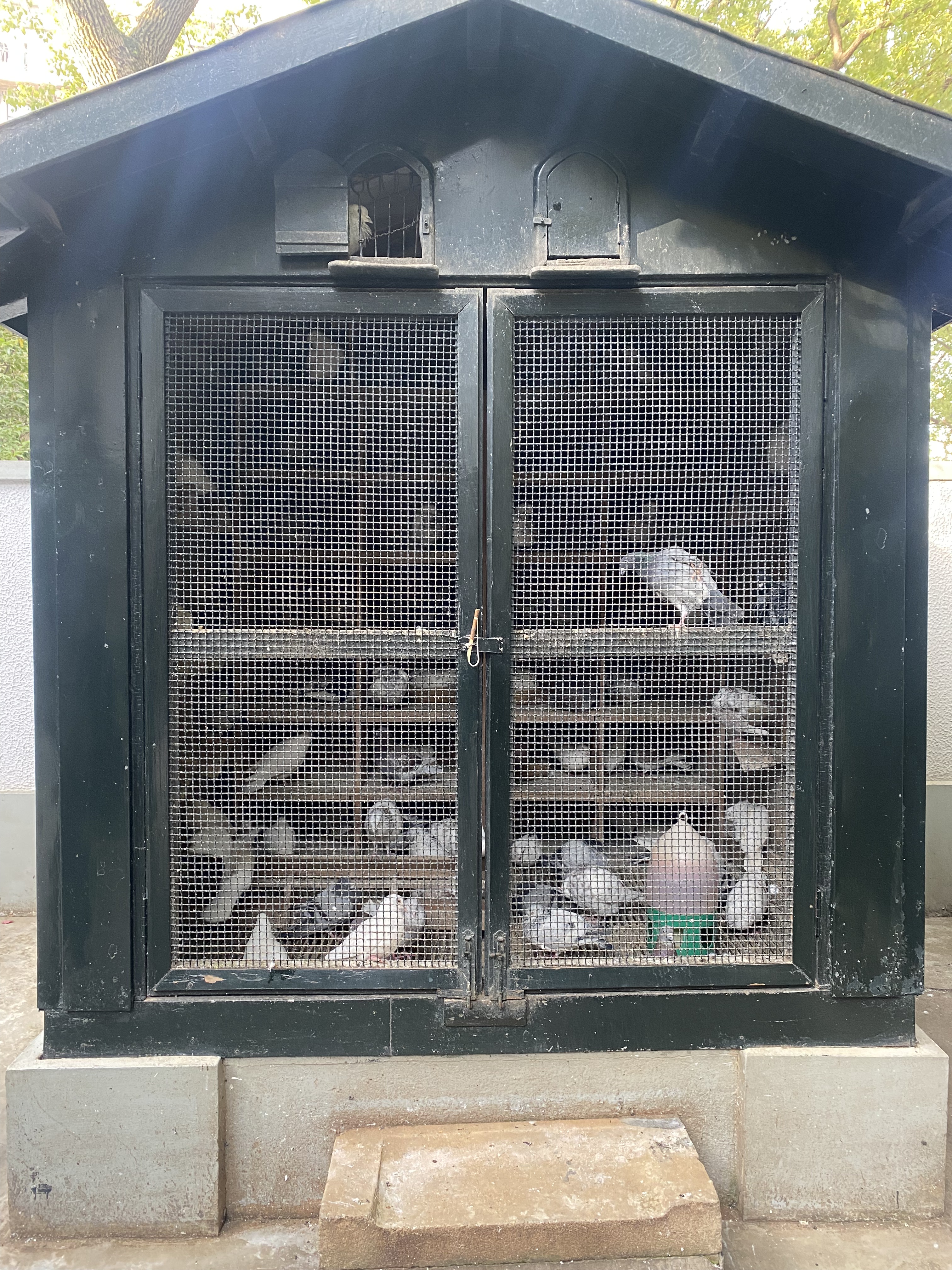
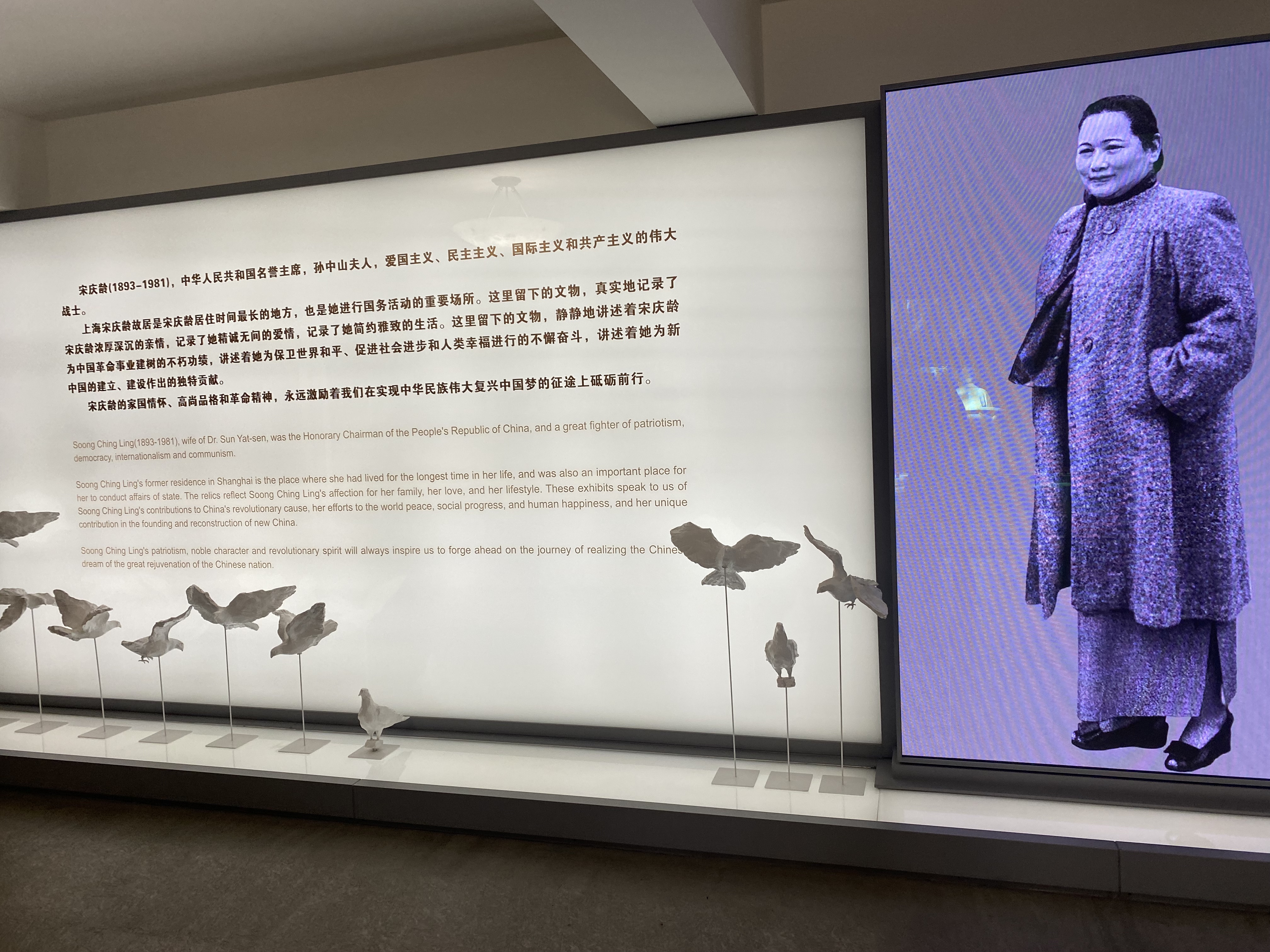
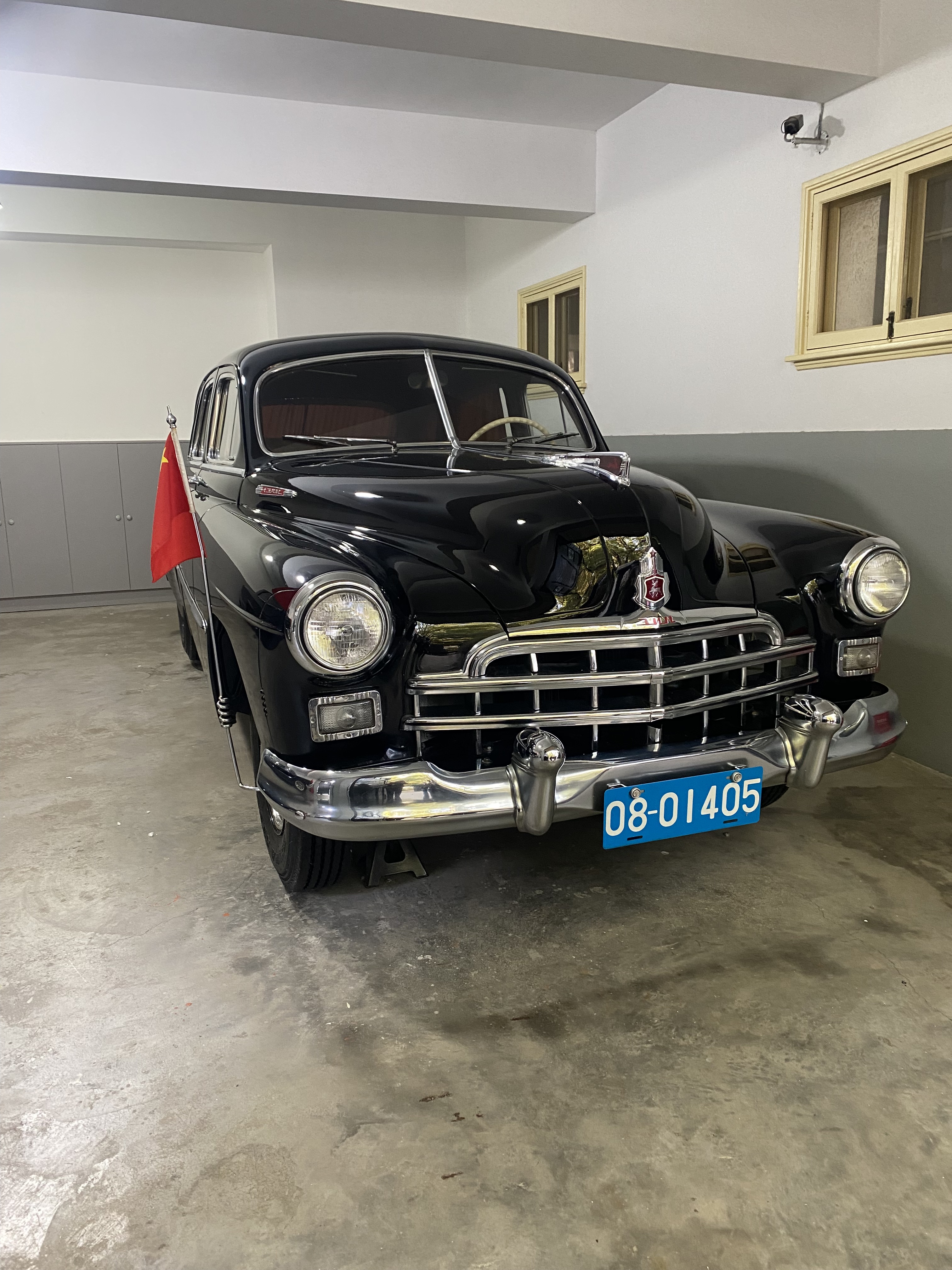
On the way back from “Zhujiajiao”, the subway stopped at Shanghai Jiaotong University (one of the best scientific universities in China). It has a Chinese-style facade. Further ahead, I came to the Wukang Mansion. Diagonally opposite is the former residence of Soong Ching Ling (Sun Yat-sen’s widow) where she lived for 30 years. I went in to take a look. Her quiet two-story French-style garden house had very Western-style furnitures and tasteful furnishings. There was a piano there. Unfortunately, photography was not allowed. According to the guide, this villa now costs 200-300 million RMBs. In the garage, there was the car given by Stalin. Mao Zedong and other important national leaders had been socialized here.
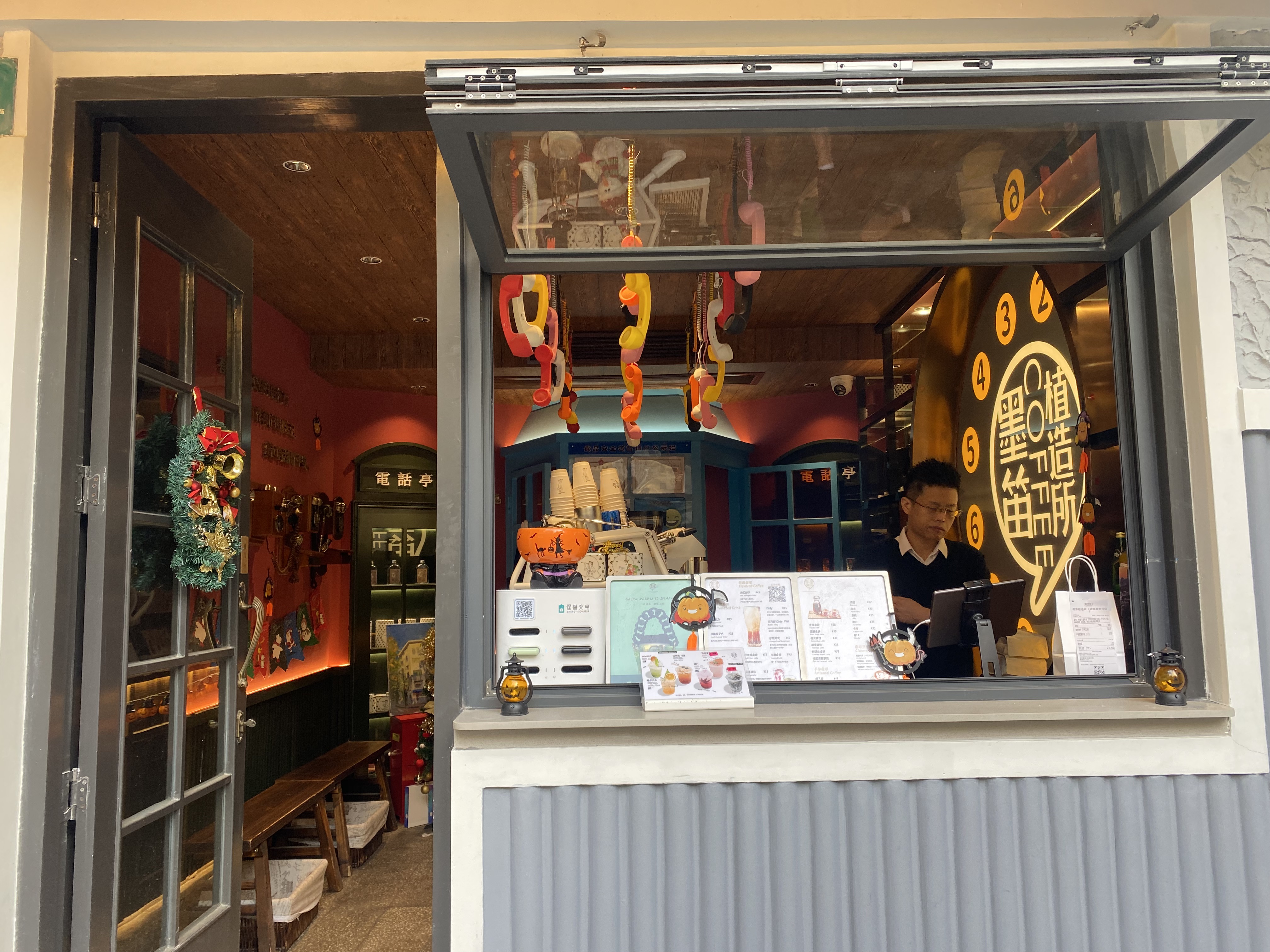
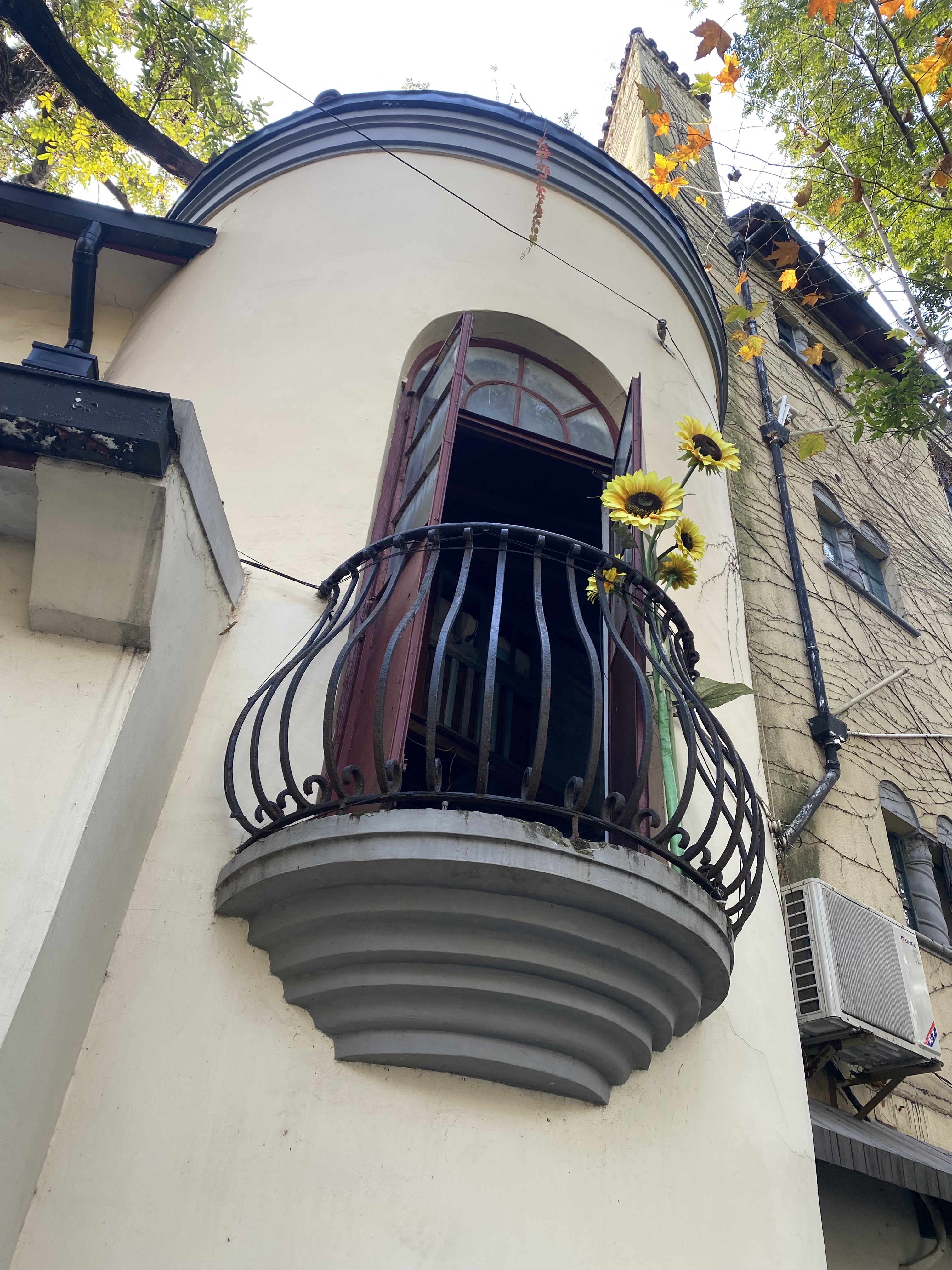
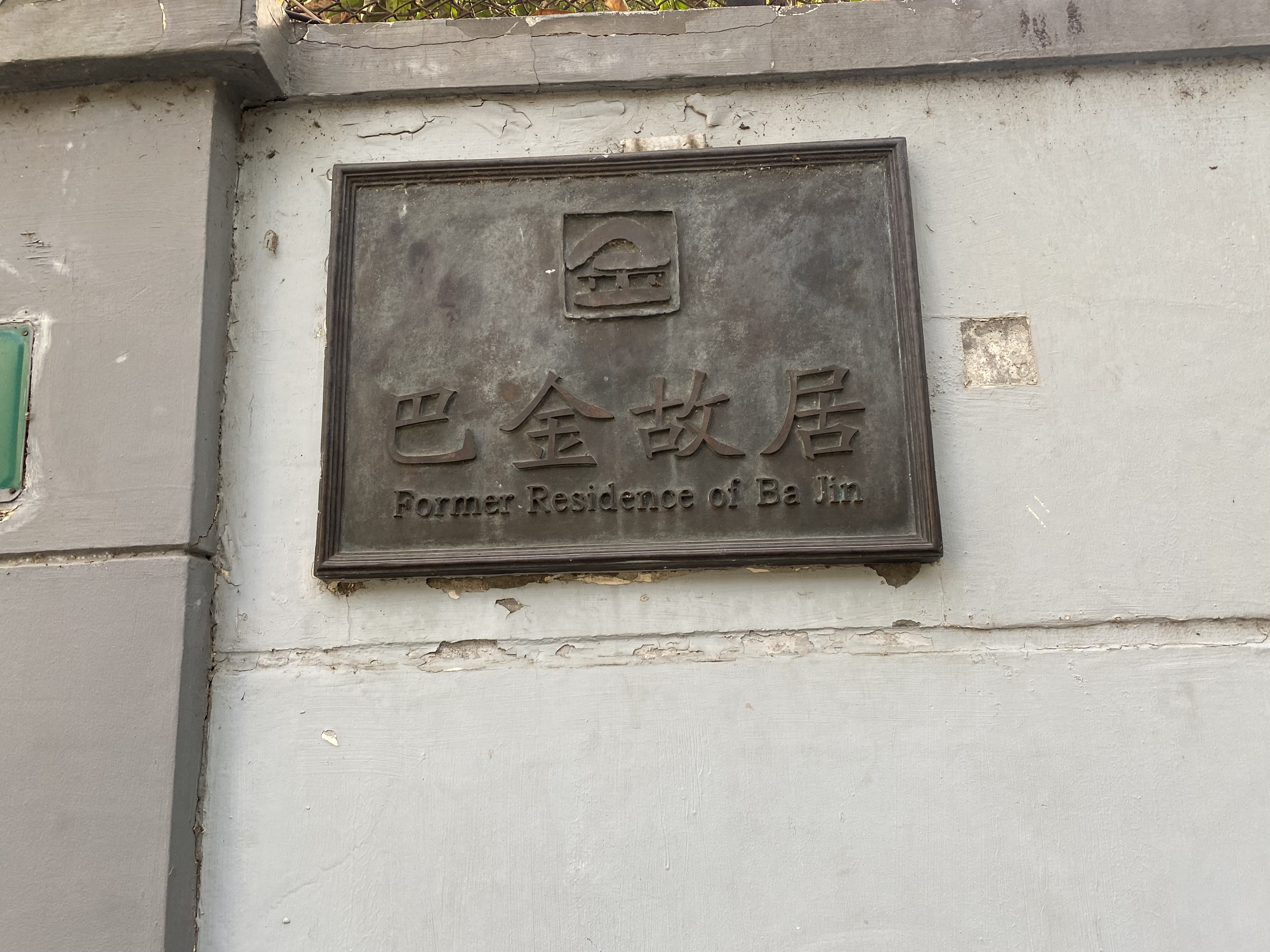
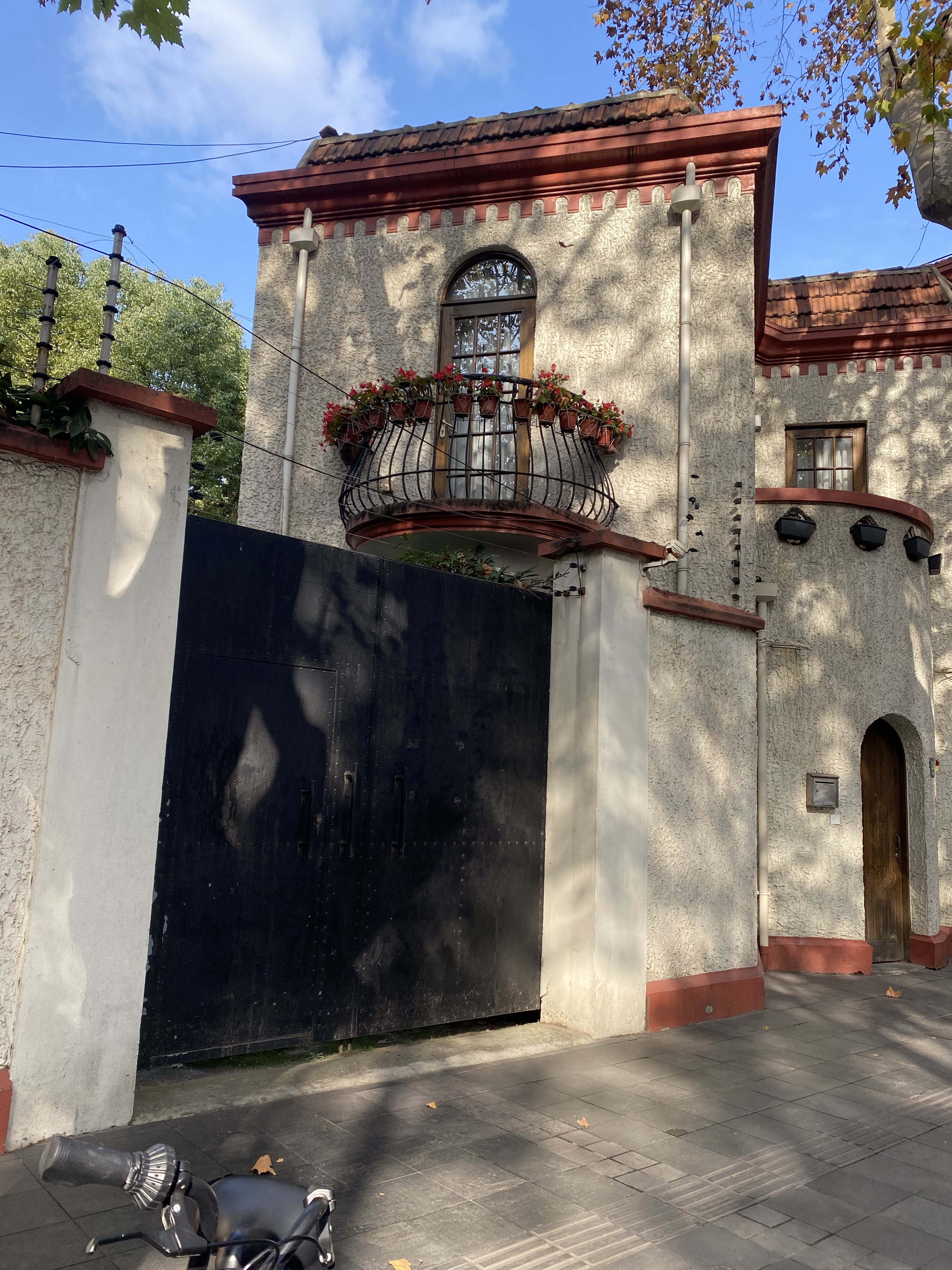
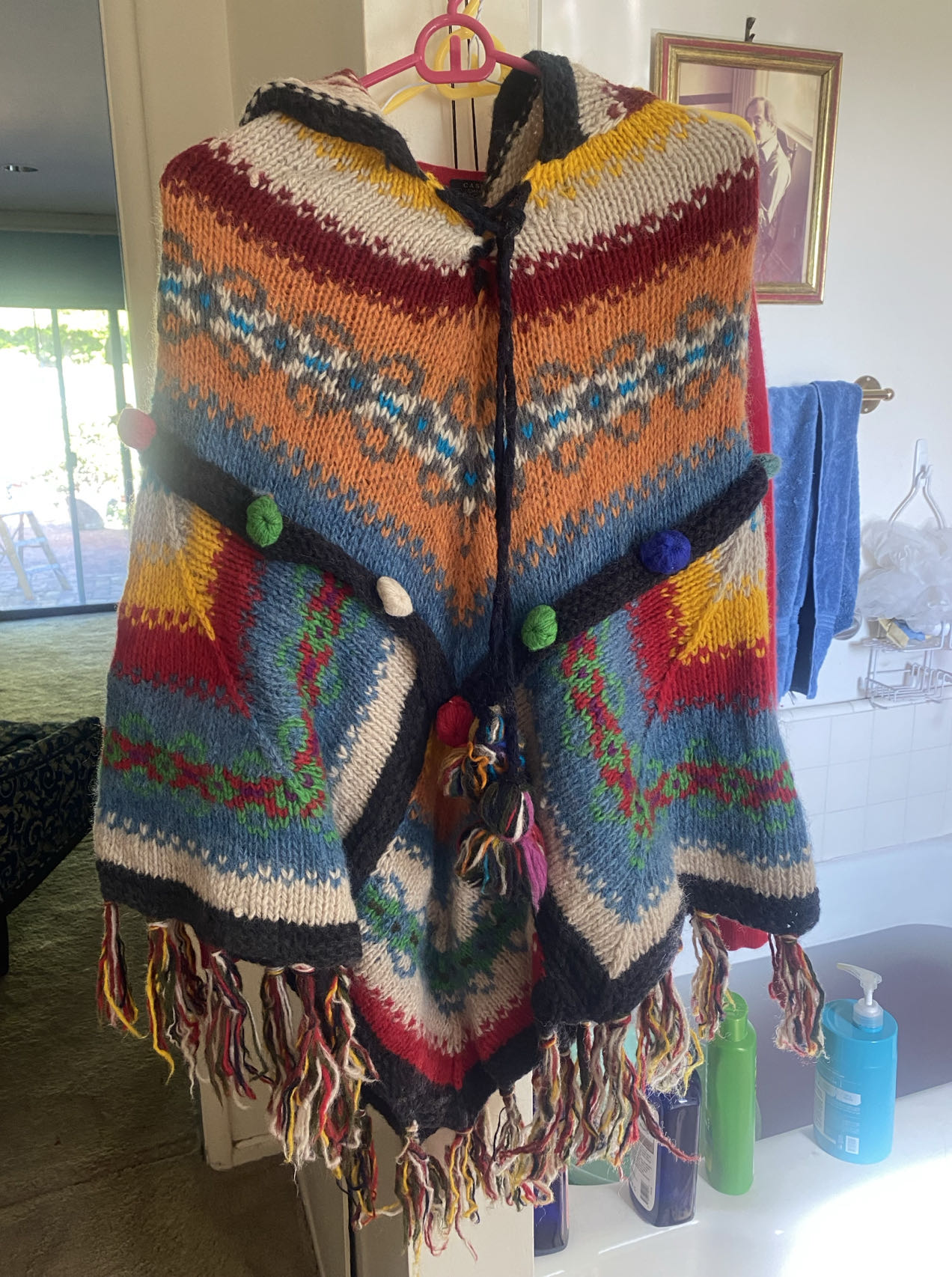
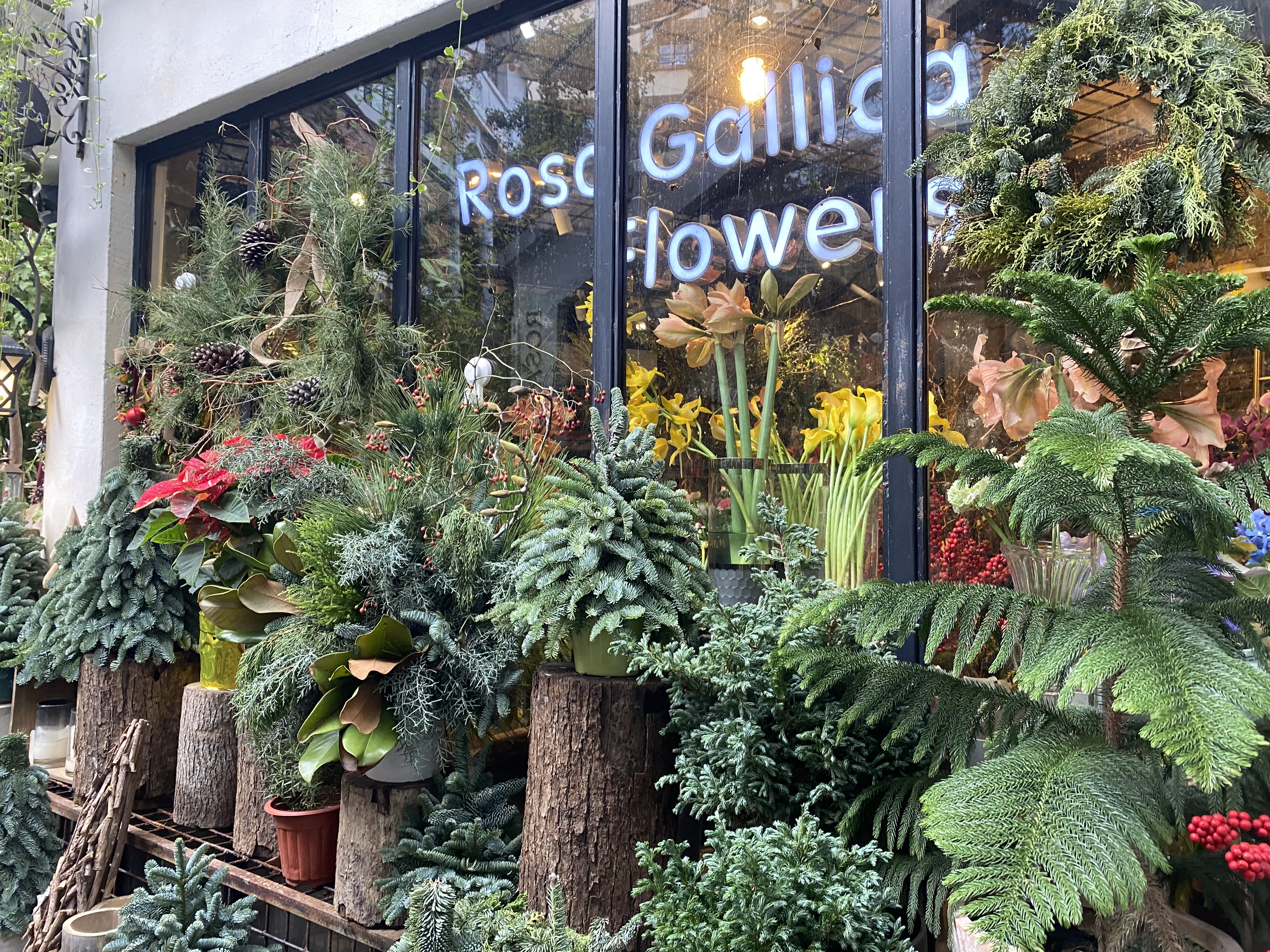
DAY 6: The Wukang Road next to our temporary apartment is one of my favorite streets in Shanghai. It is very charming. Every 10 steps is the former residence of some celebrities in Shanghai. I pushed the wheelchair for my mother and let her fully enjoy all the details of this quaint street. We passed by the former residences of Ba Jin (the writer), Zhao Dan (the movie star), Ke Ling (the writer) and other famous people. Romeo-styled exquisite balconies abound… Small coffee shops and boutiques were decorated to my taste. I bought a hand weaved woolen cloak. We also made a small detour on the way to “Fuyuan”, Alley 20 on Hunan Road, where we lived during our childhood. Across the street there was the original site of the Shanghai Symphony Orchestra. I went there to watch the rehearsals when I was a child.
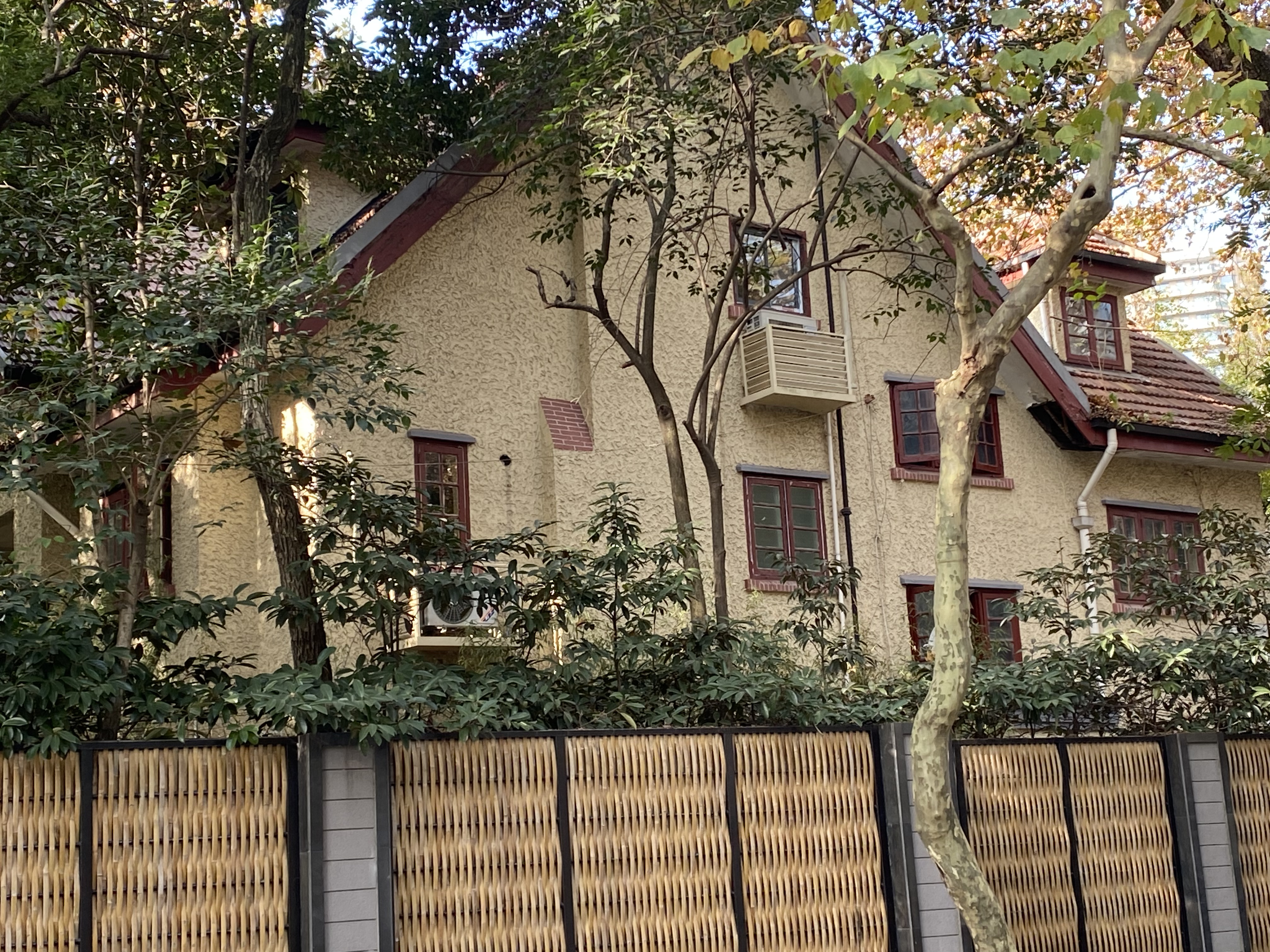
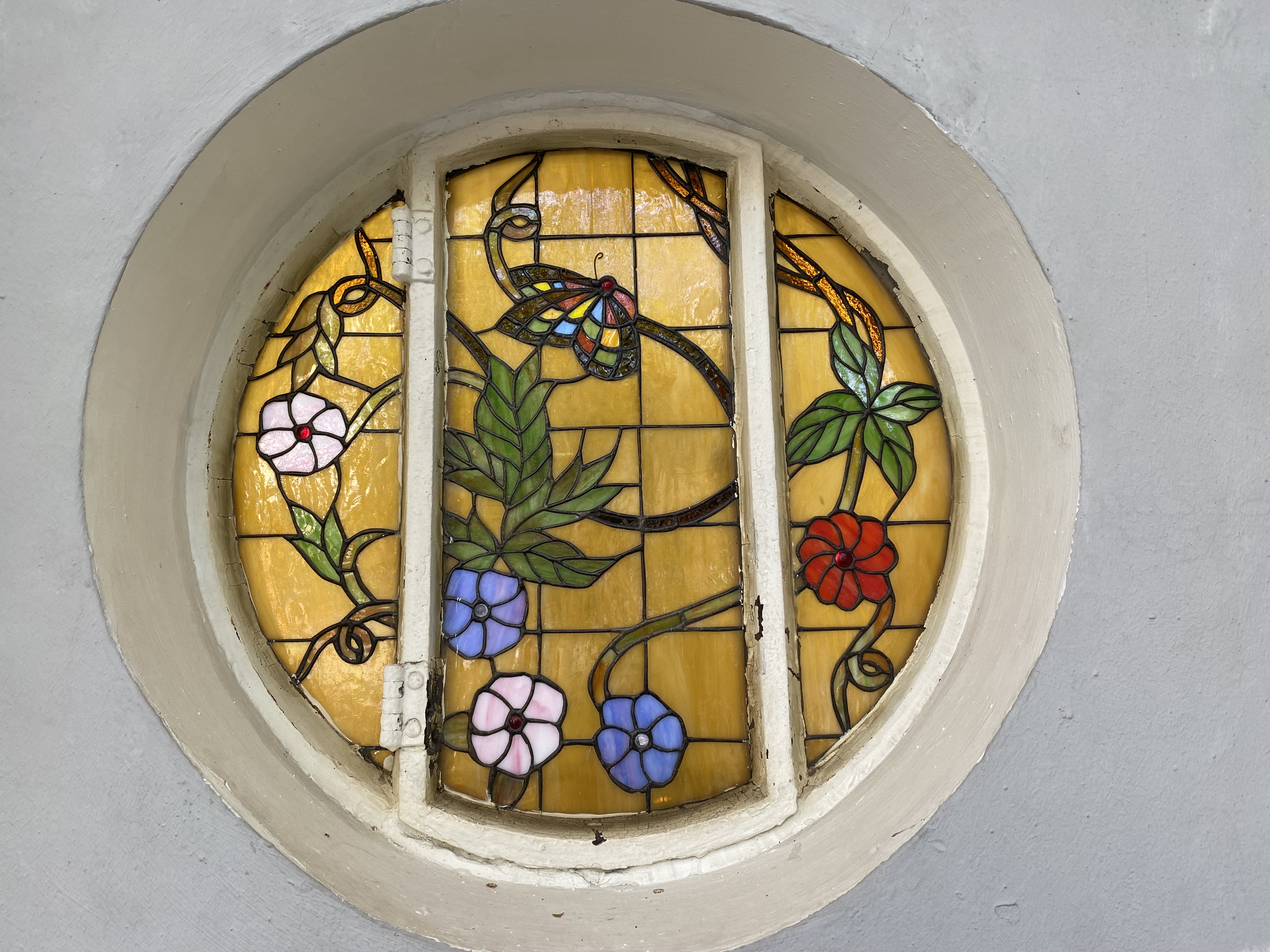
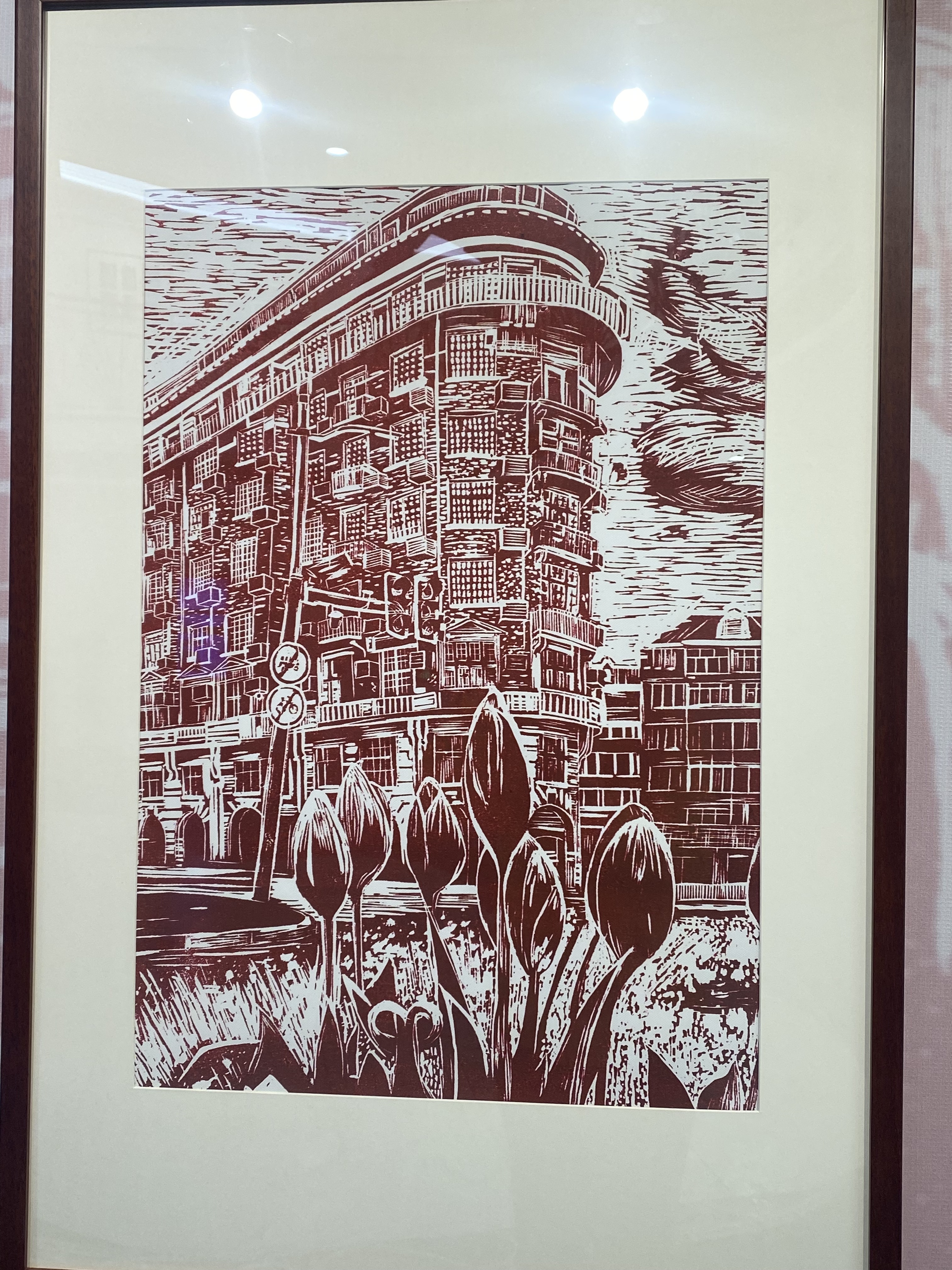
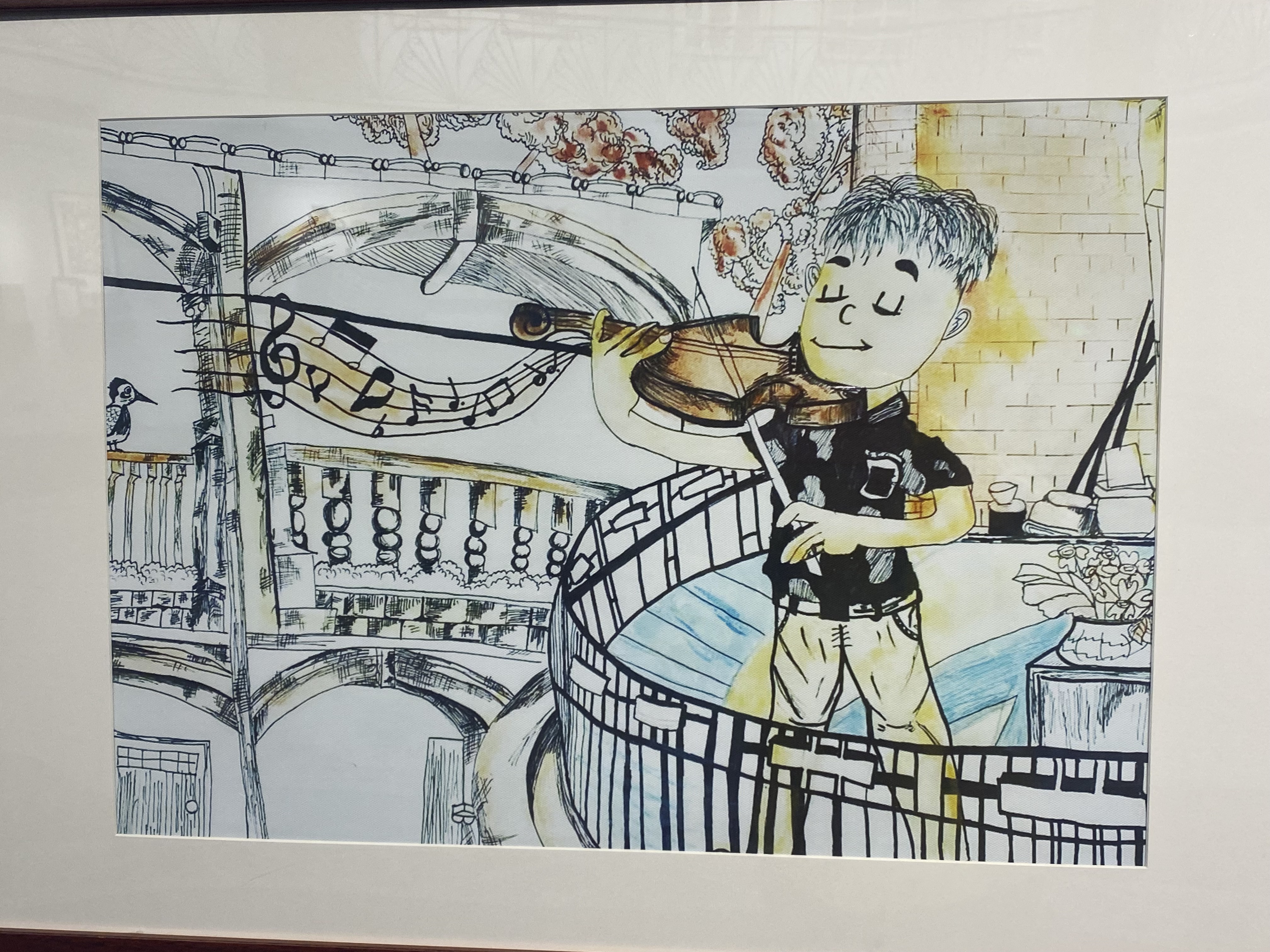
We also came cross a youth art exhibition passed on the theme of “the Wukang Mansion”. It was held in a small two-story villa. During the Cultural Revolution, at least 10 people jumped out of their windows to suicide to escape the unbearable persecutions by the Red Guards.
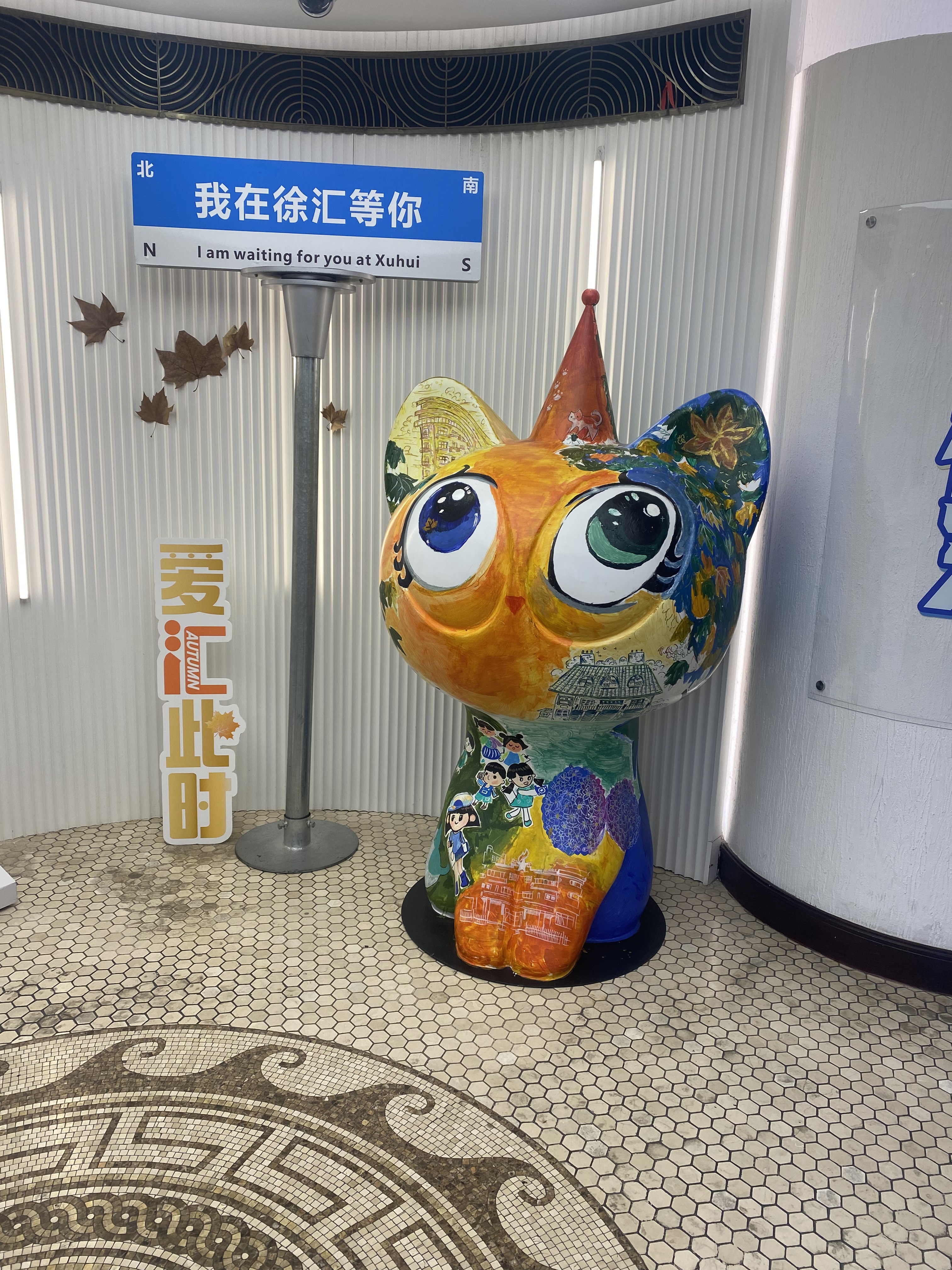
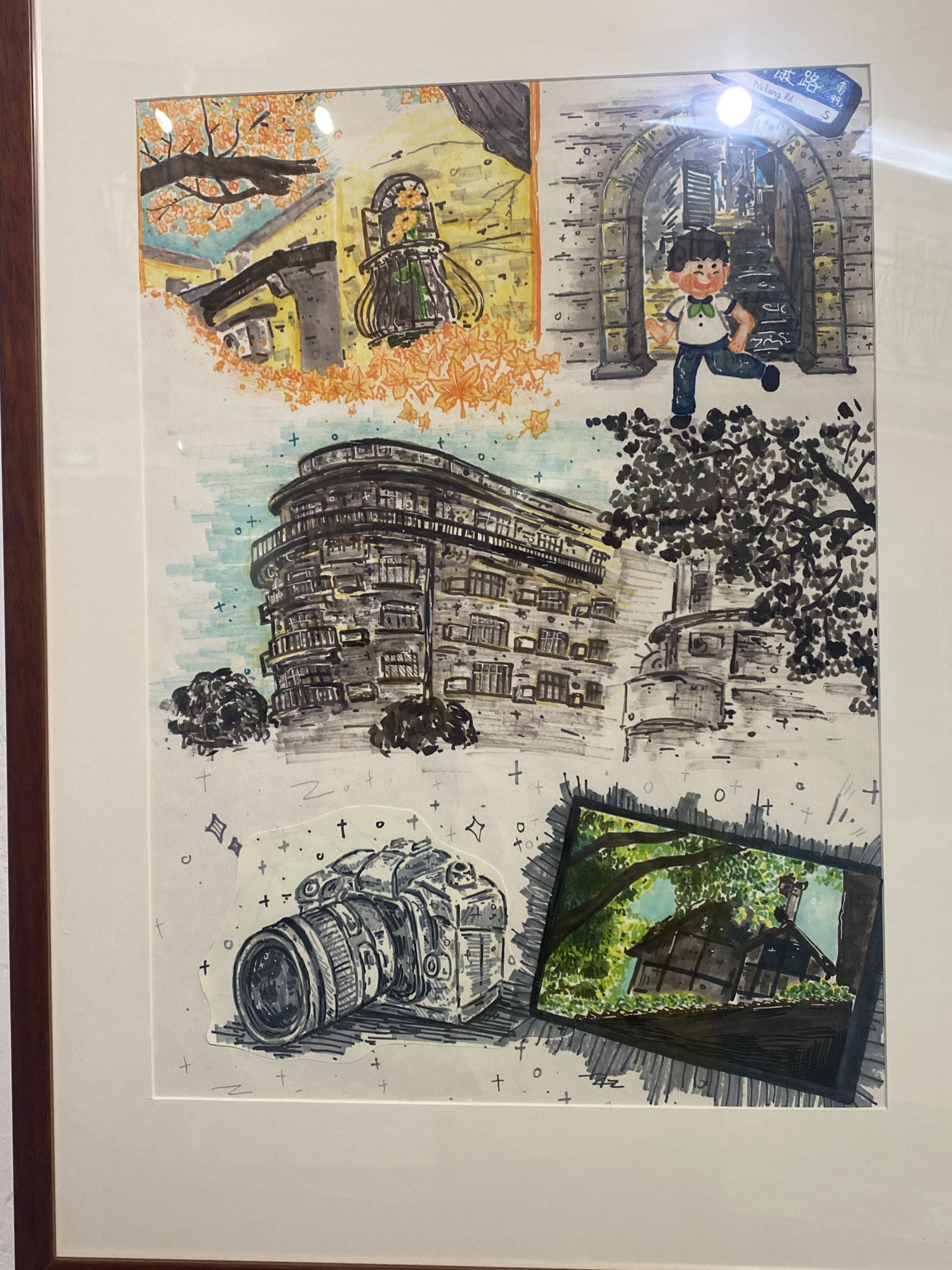
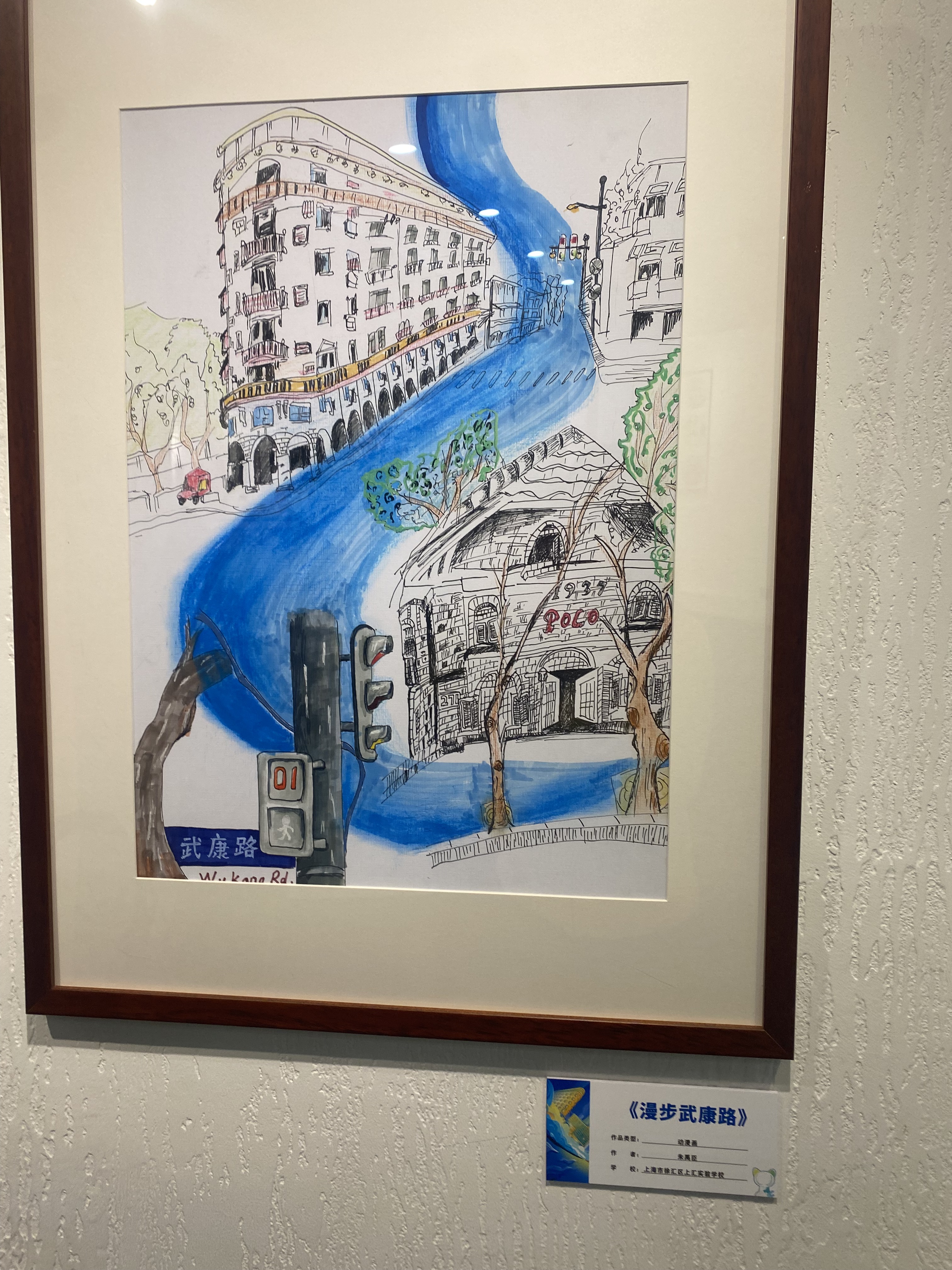
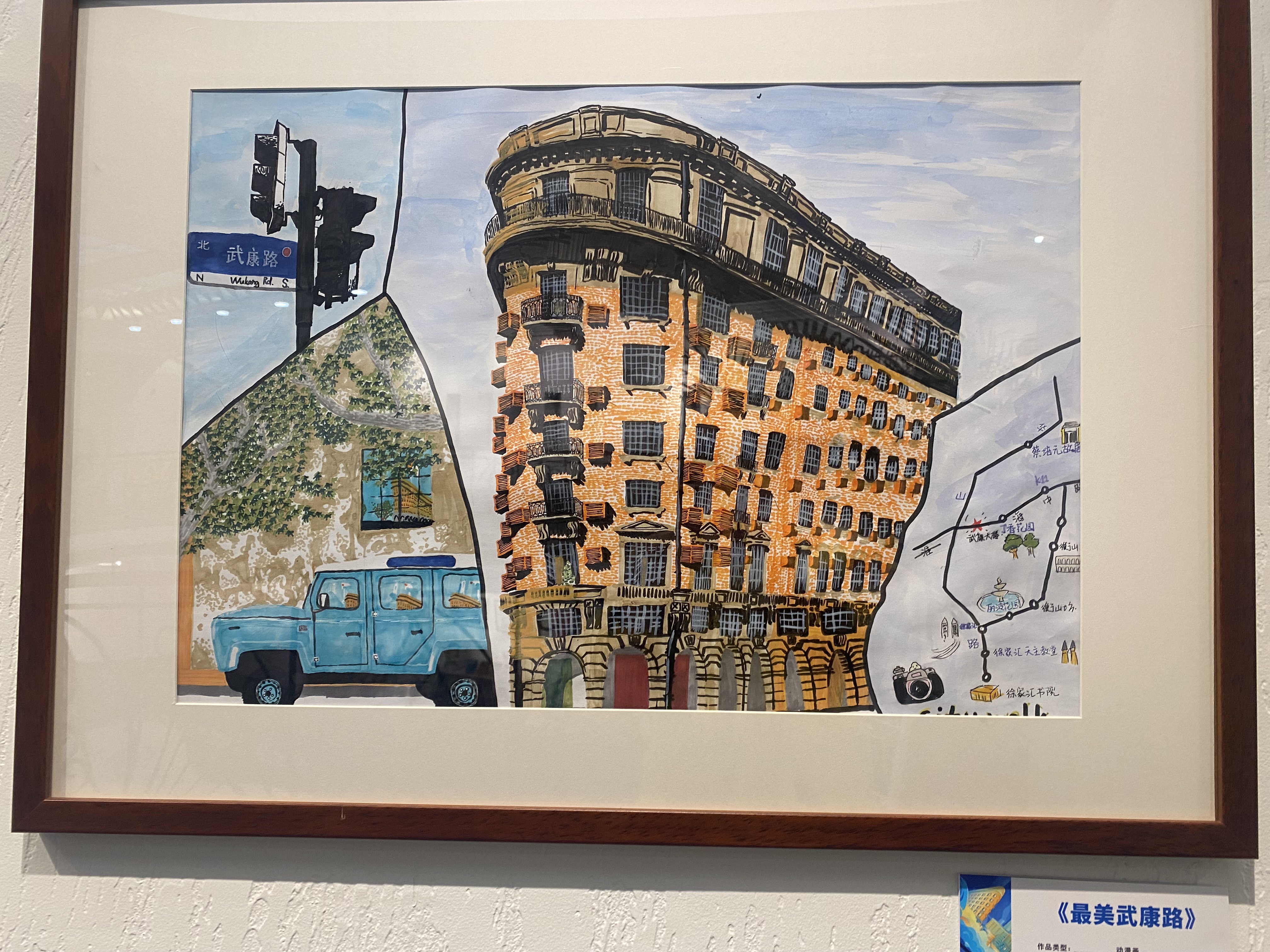
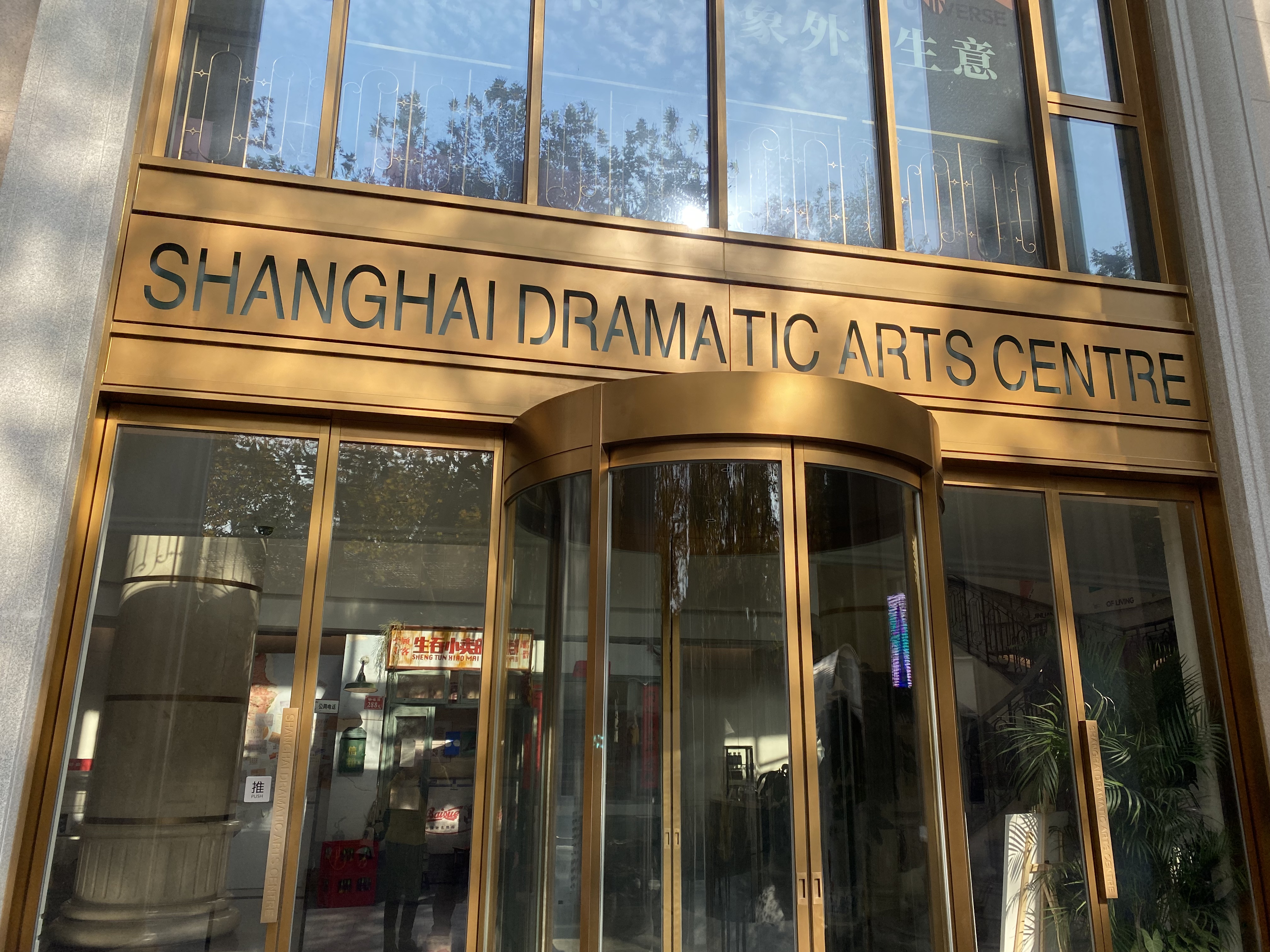
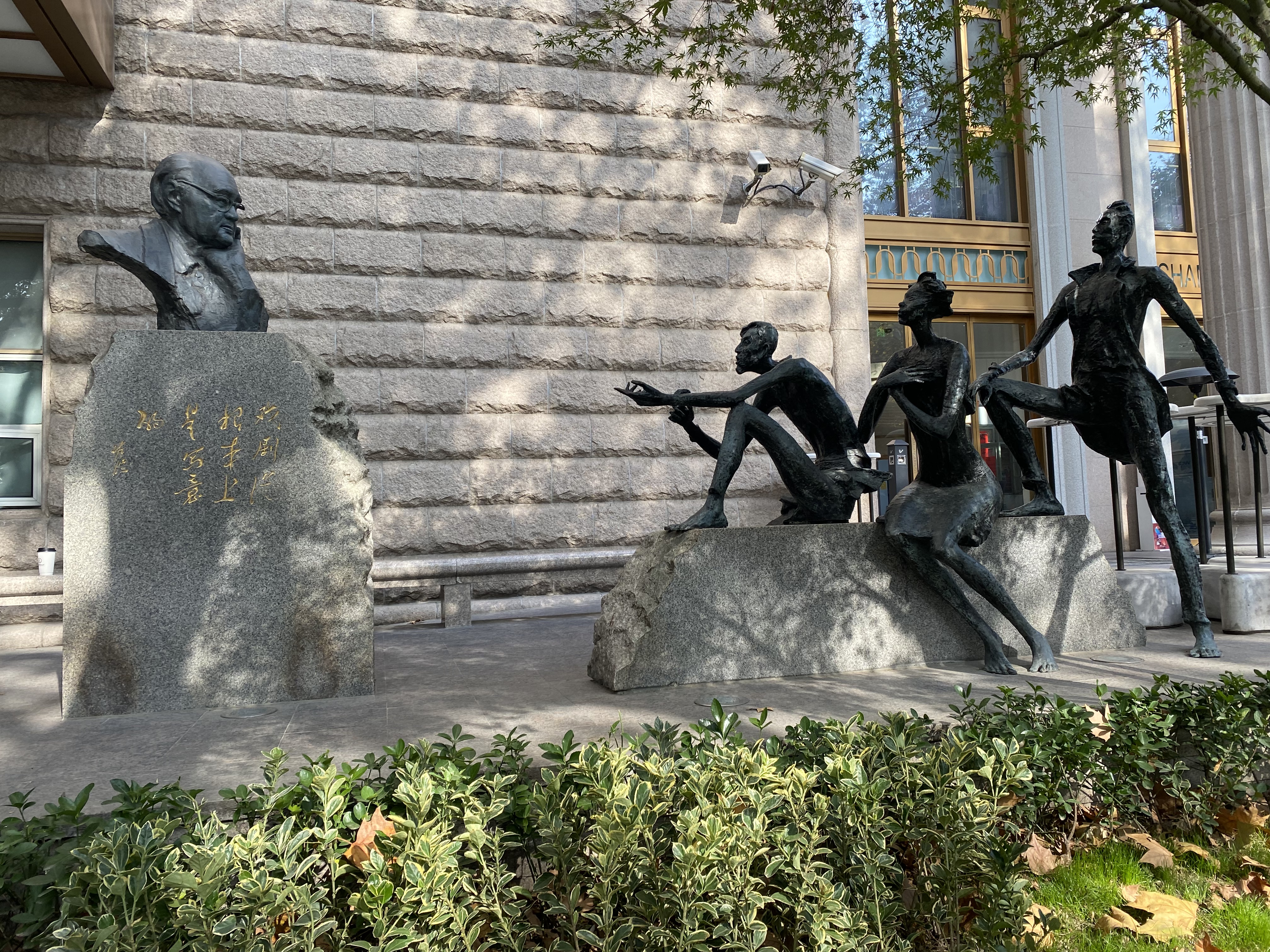
Walking further, we arrived at the Shanghai Drama Center. My high school classmate is a famous drama actor here
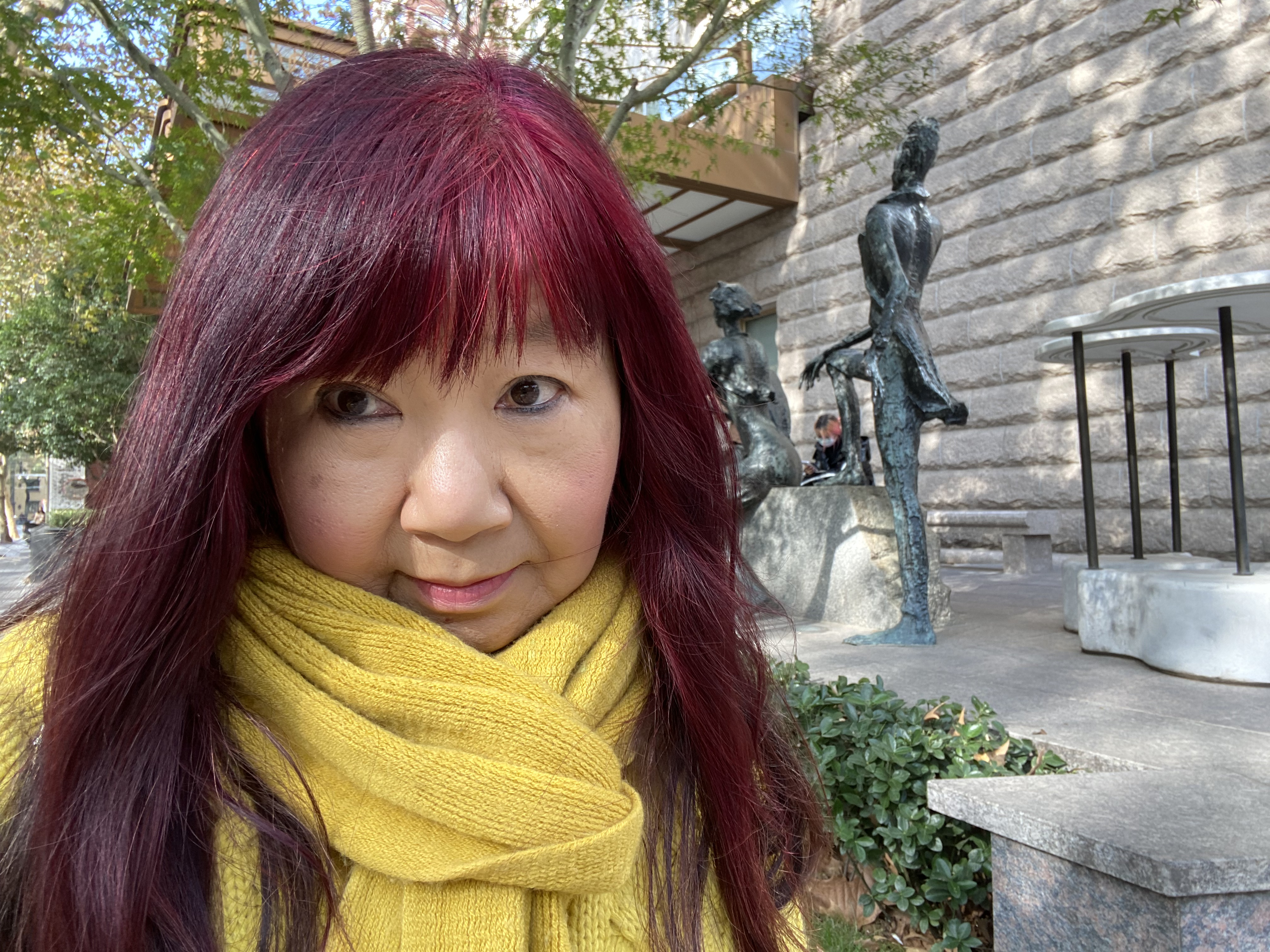
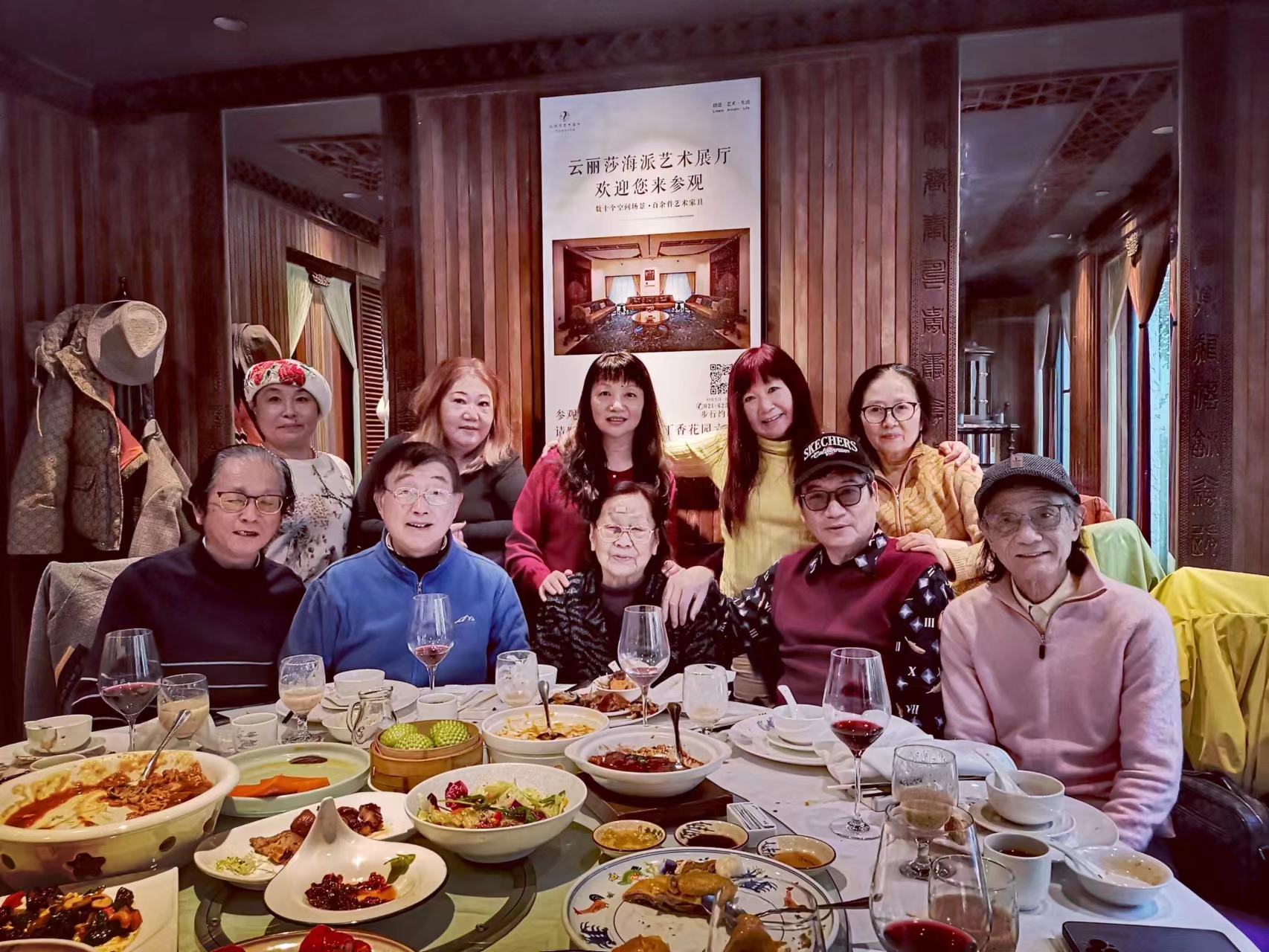
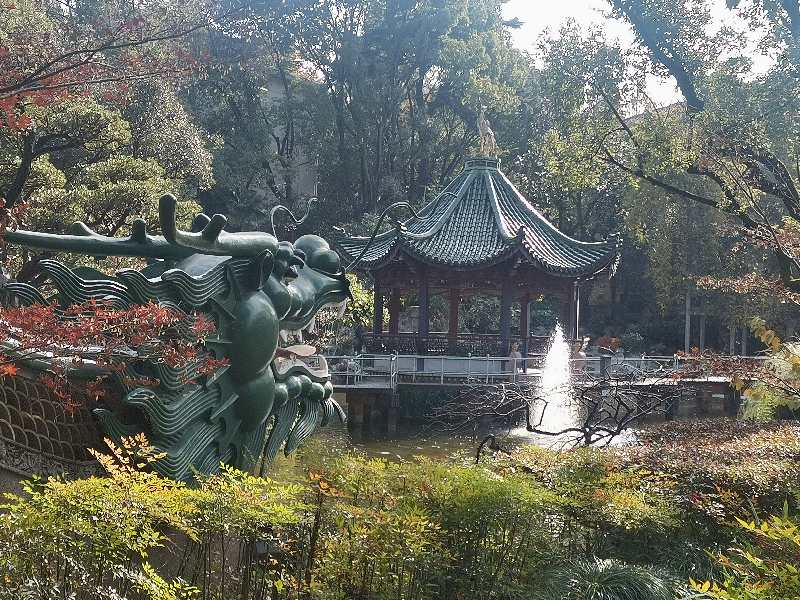
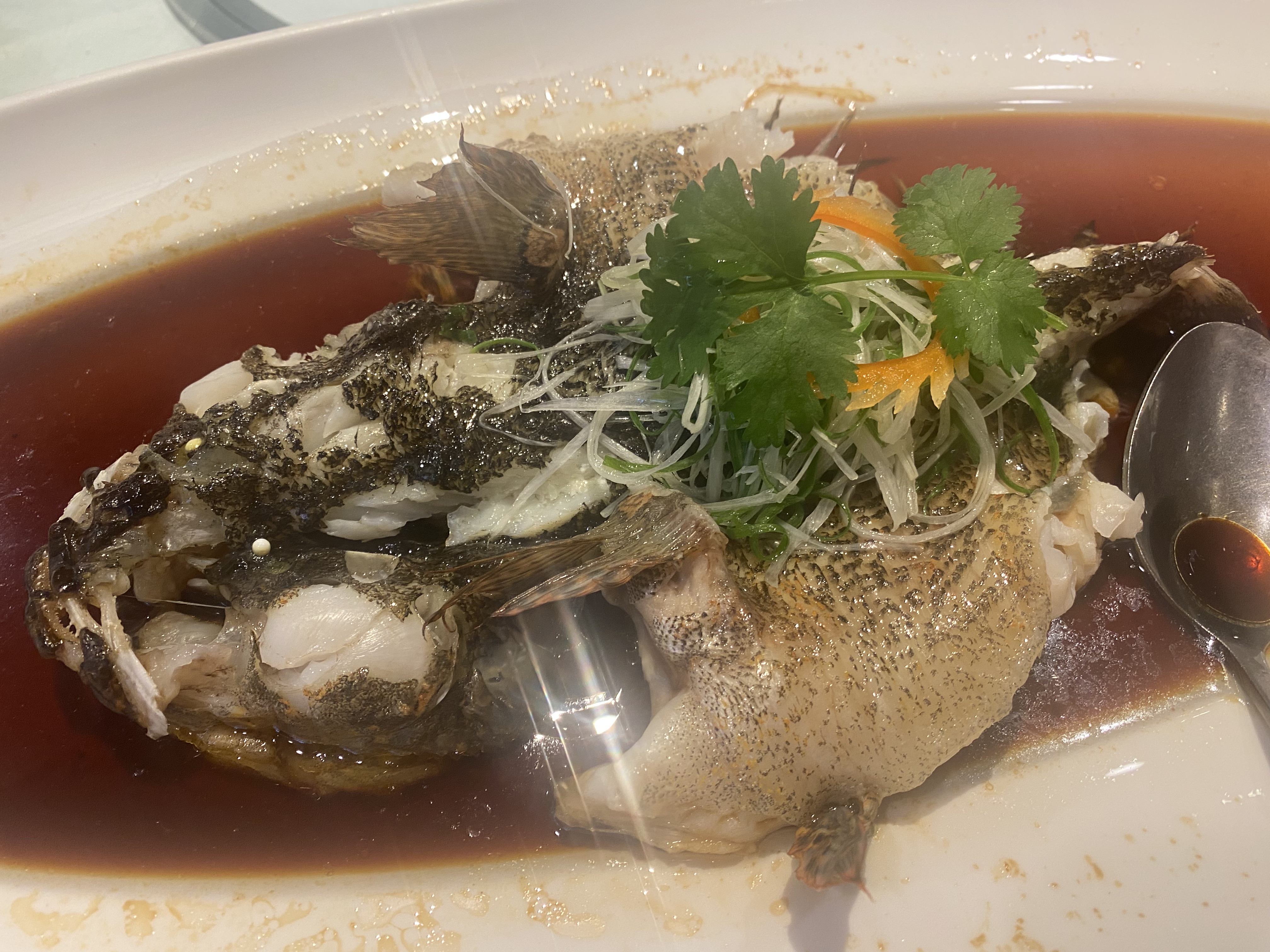
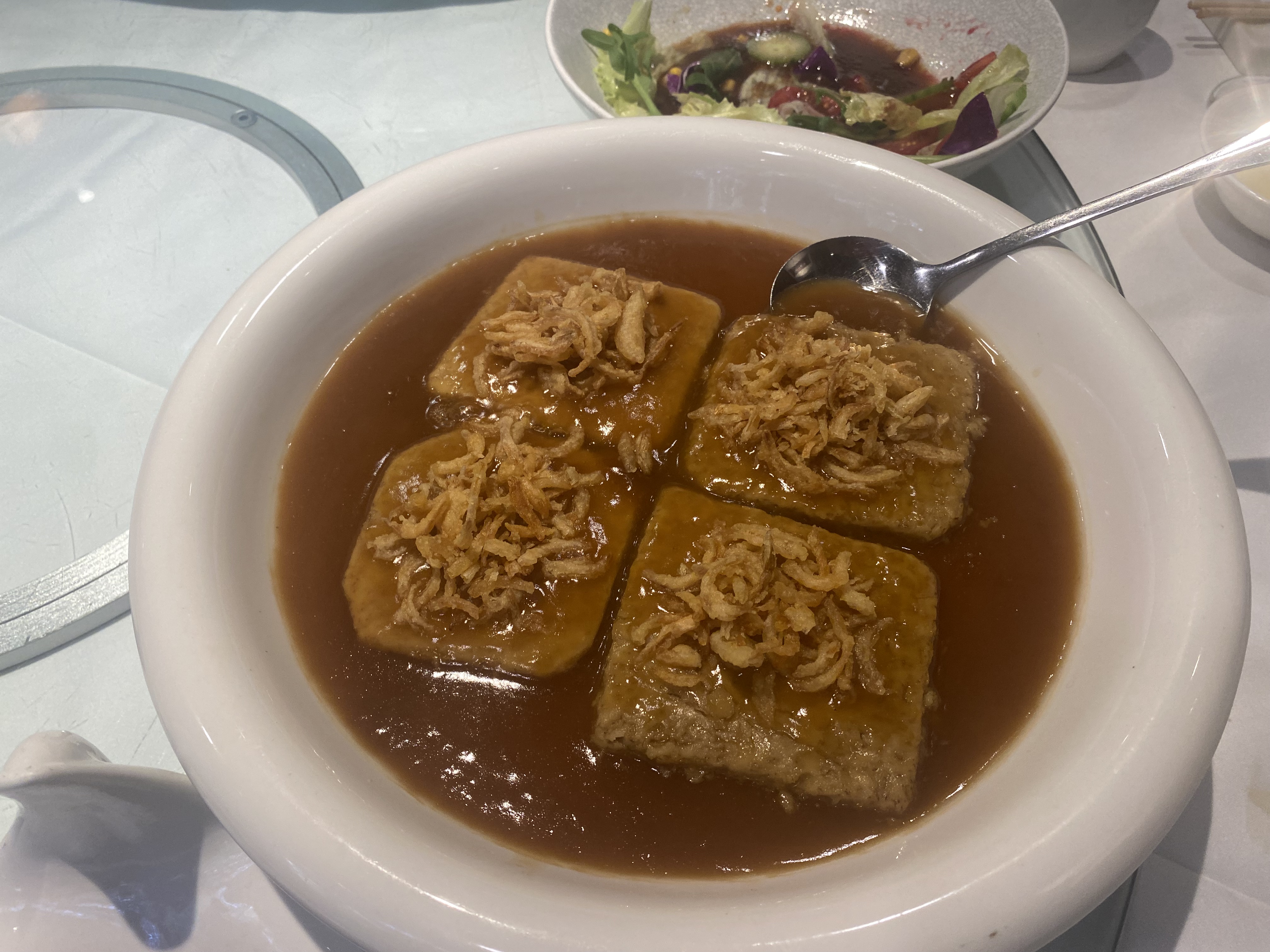
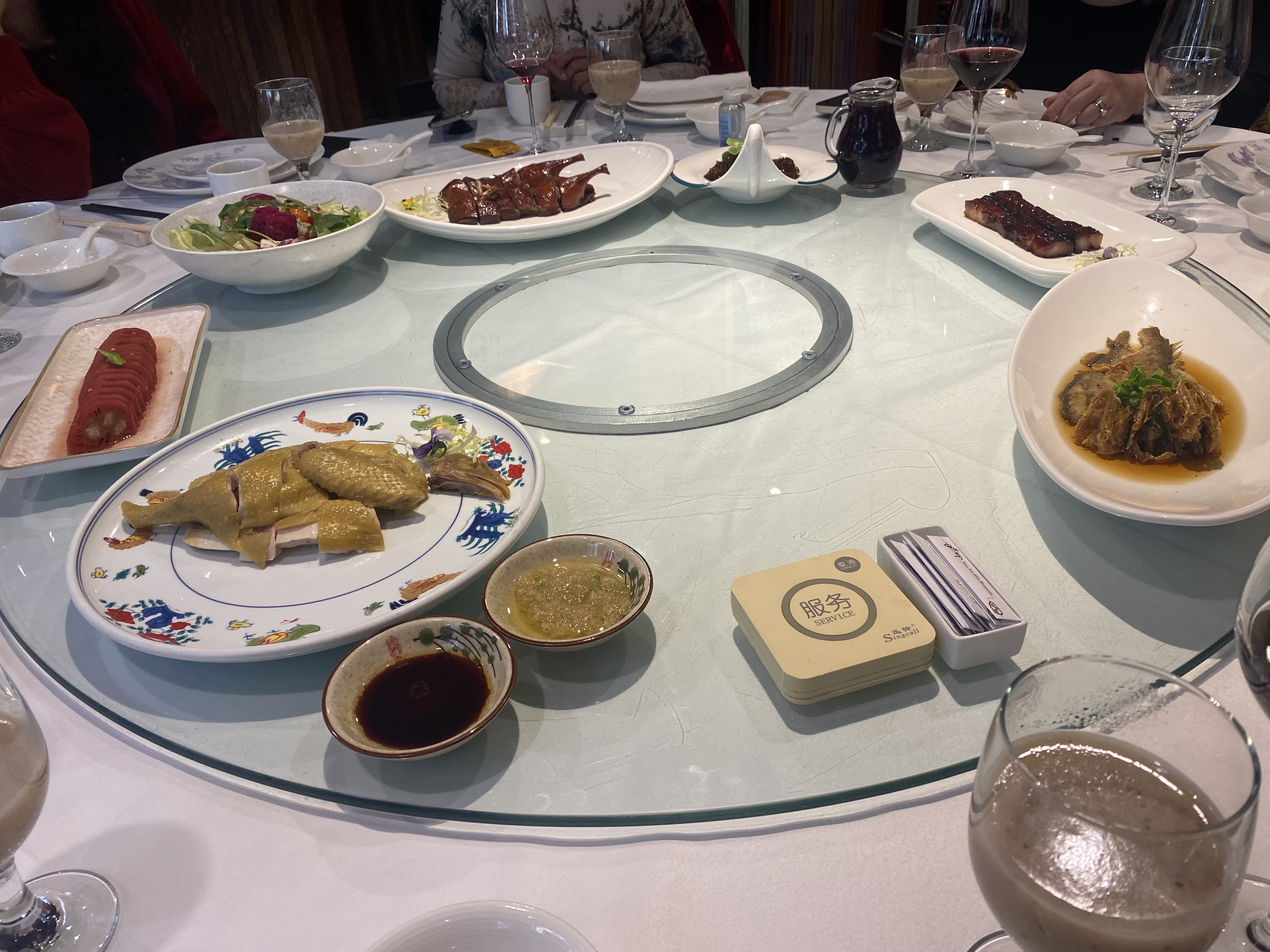
My mother has helped many musicians throughout her life. Her radio DJ friend hosted a spectacular banquet for us and her old friends in Shanghai at the mesmerizing “Lilac Garden” which was the former residence of Li Hongzhang’s seventh concubine. Every course was a piece of art. I remember, when we were children, we always felt that the “Lilac Garden” was a very mysterious place…
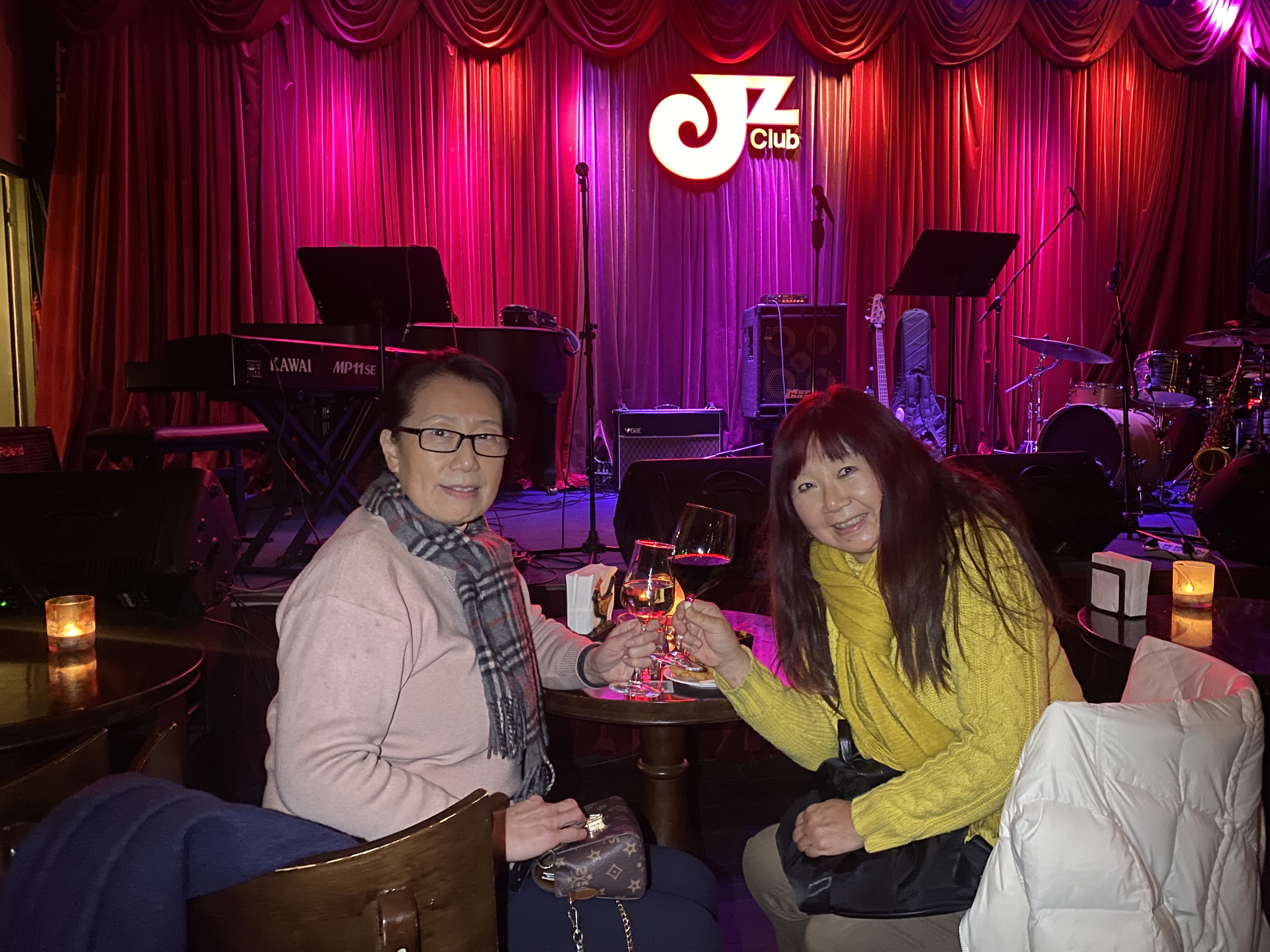
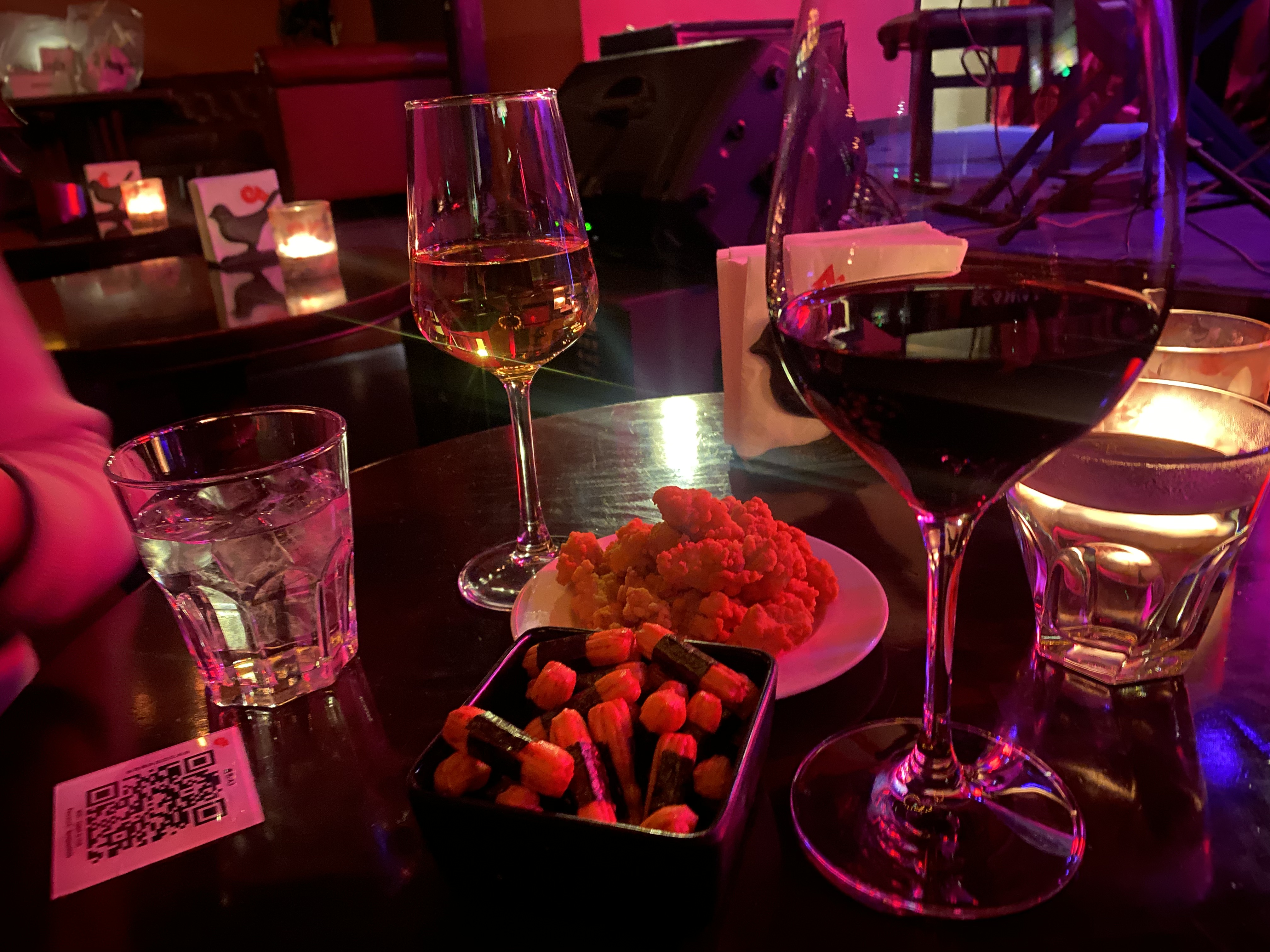
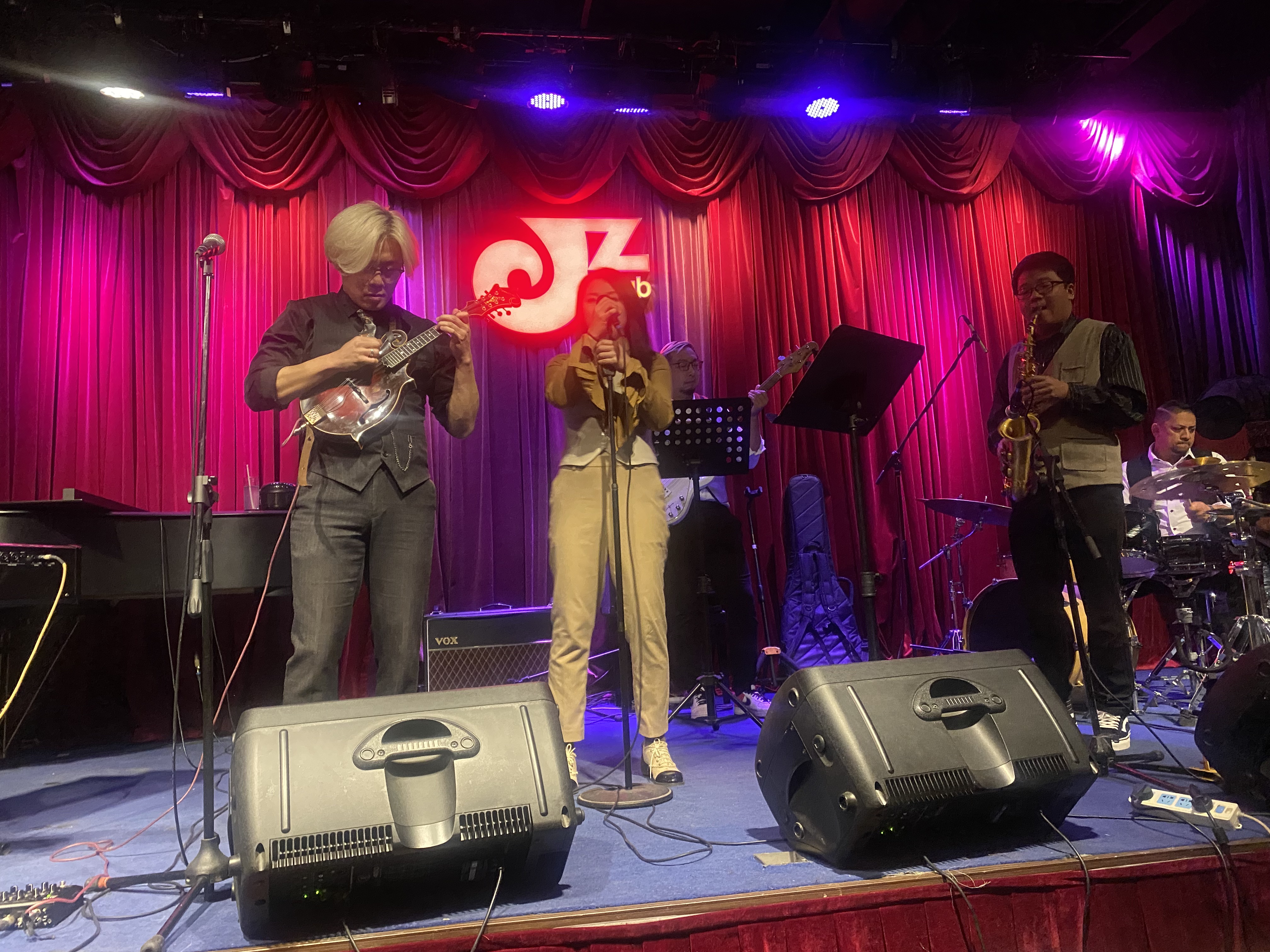
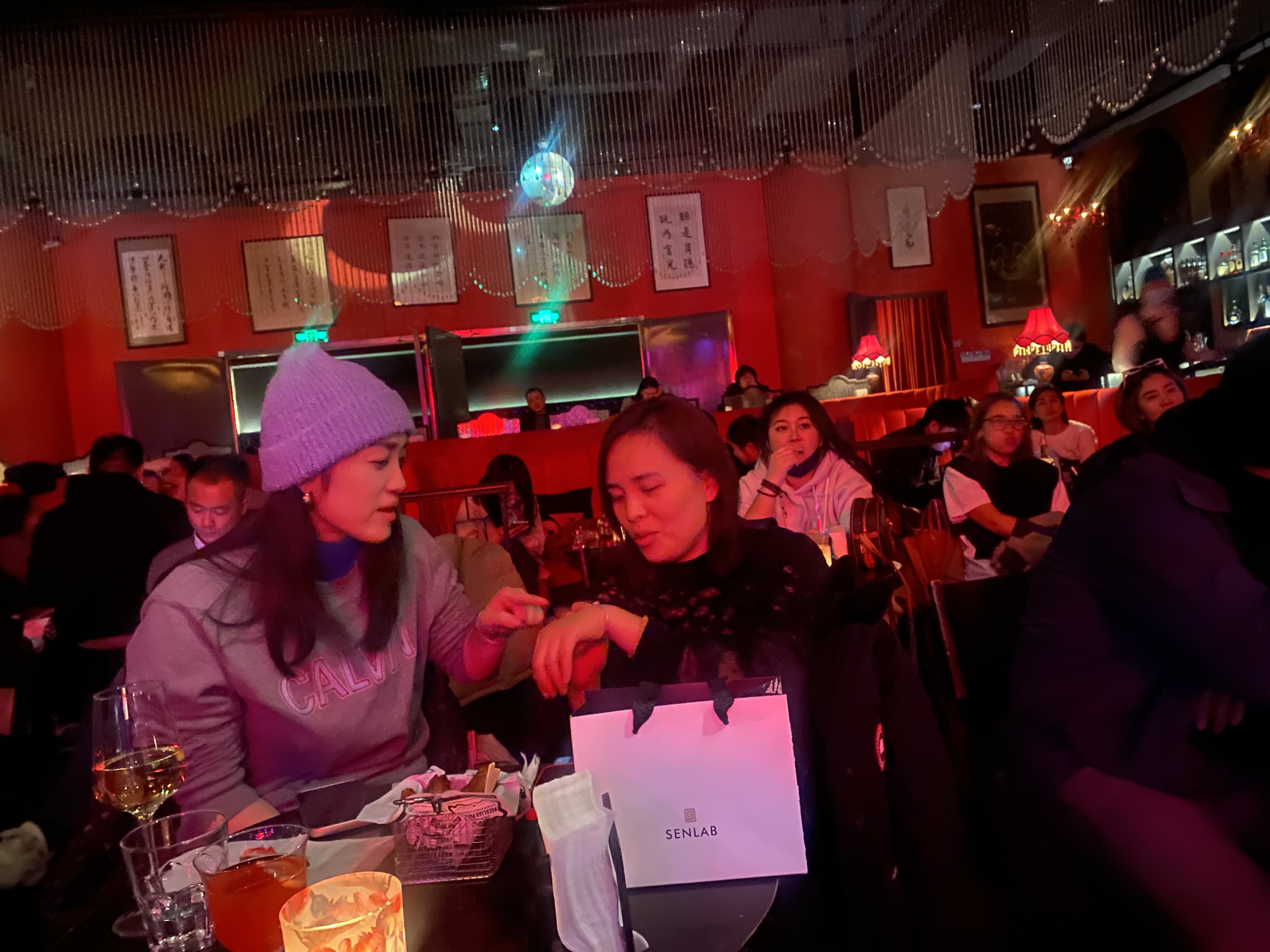
In the evening my childhood friend introduced me to a jazz club on Julu Road. The jazz band was called “New American Bluegrass”. It was amazingly good to my surprise. Among the band made from 6 musicians, 2 graduated from the Berklee College of Music in Boston, the best jazz school in America. The mandolin and saxophone players were especially good! The cabaret singer was apologetic about her hoarse voice due to a cold. The ambience in the club brought me back to Berlin…
DAY 7: On a chilly early morning I took the subway to Hongkou District to visit the famous Jewish Museum. The familiar violin solo melody of John Williams’ Schindler’s List accompanied video footage on the giant screen by the entrance immediately grabbed my attention. During World War II, Shanghai received 20,000 Jewish refugees from Europe who fled the Nazis. The museum vividly presented the hard life of Jews in Shanghai during the war-torn years. This museum is well worth visiting and highly recommended! 👍👍👍
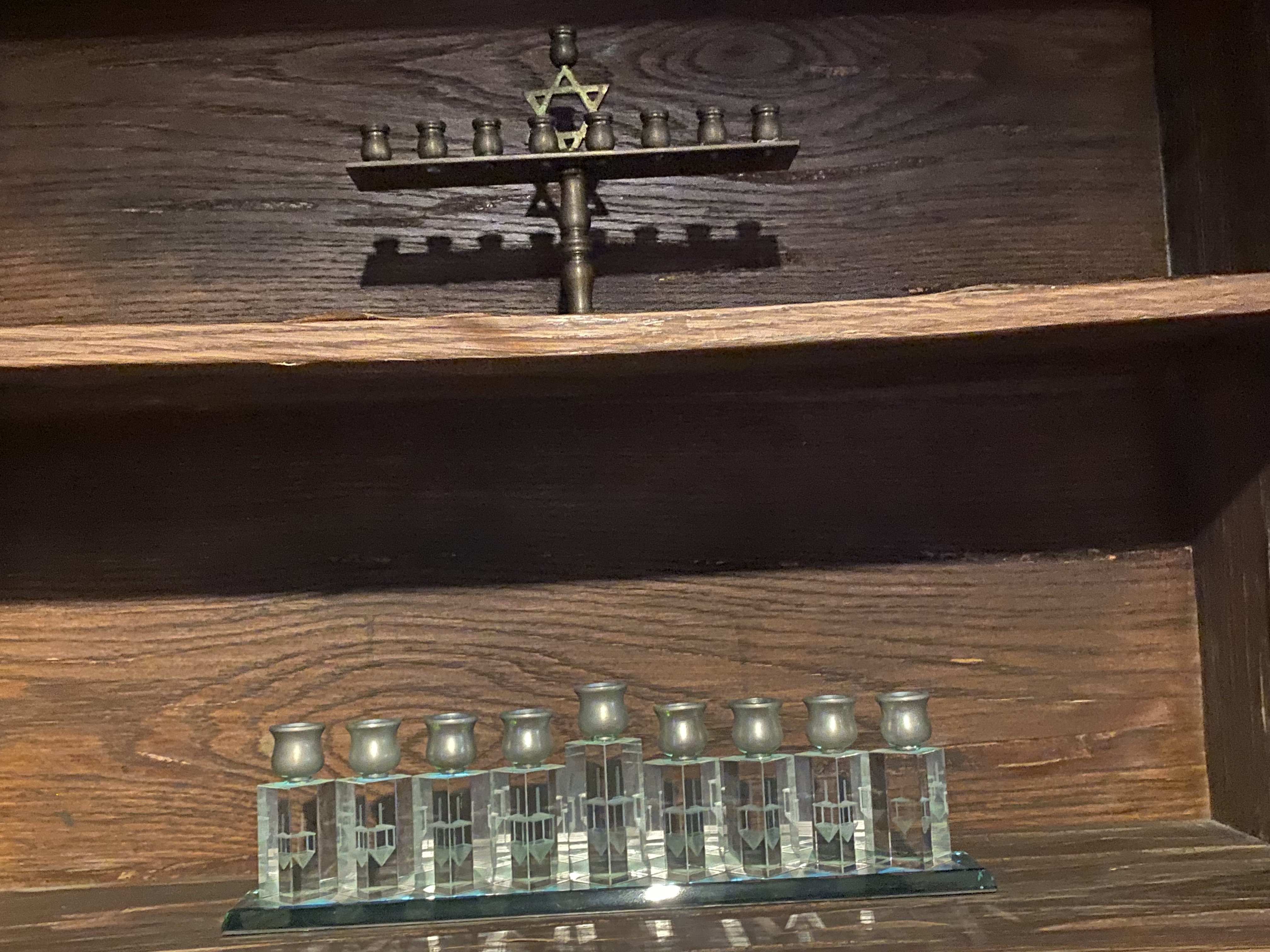
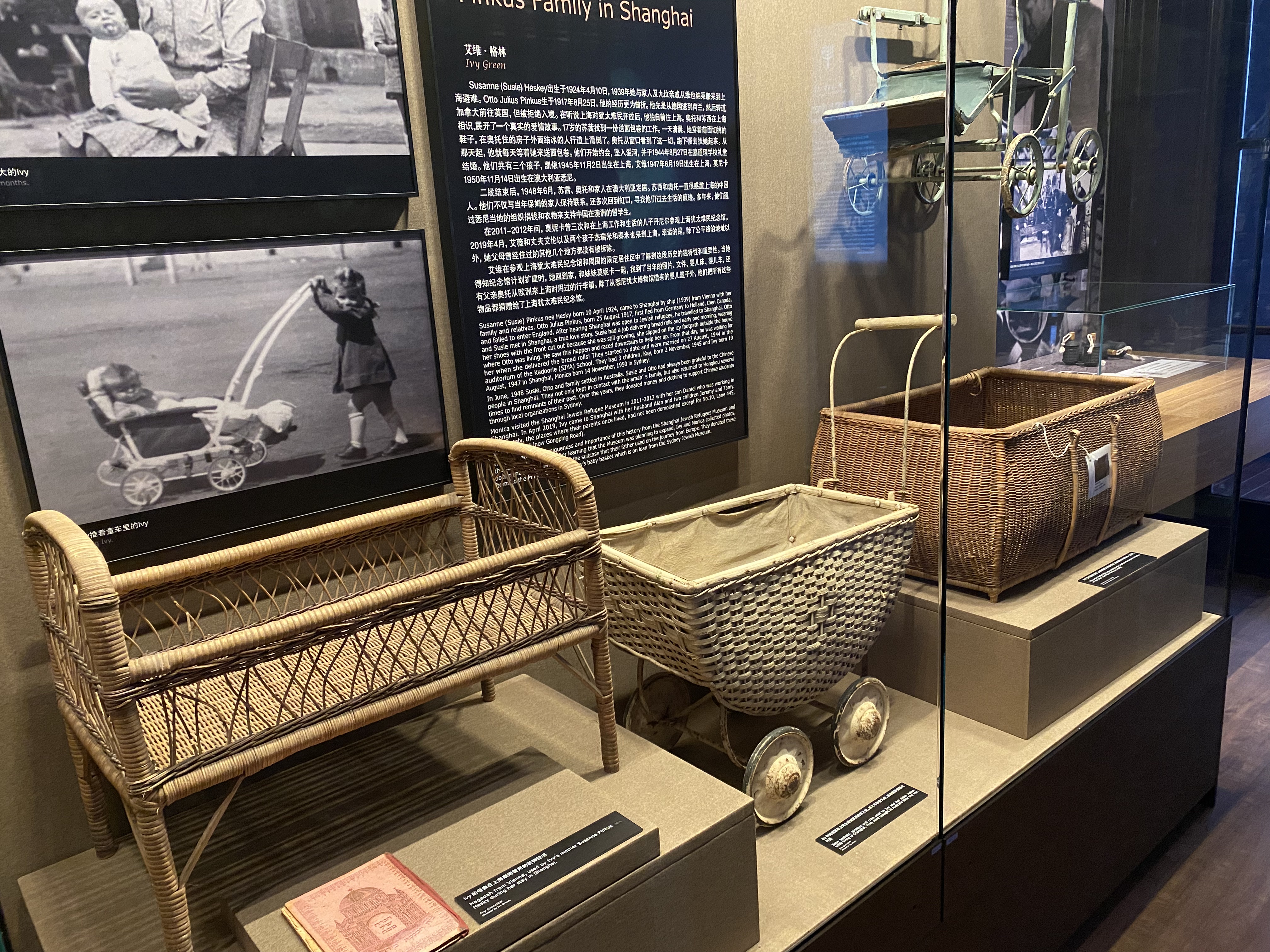
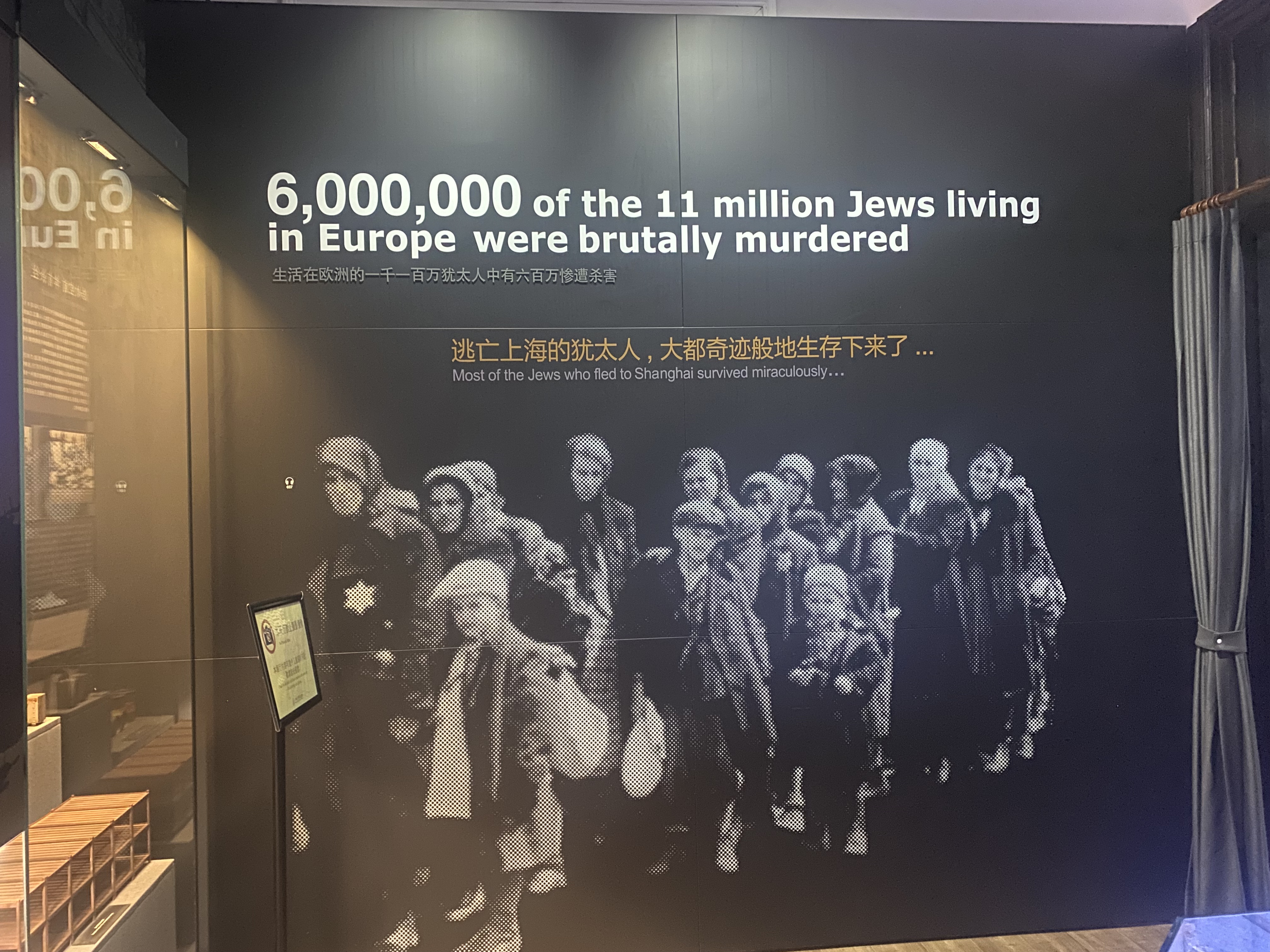
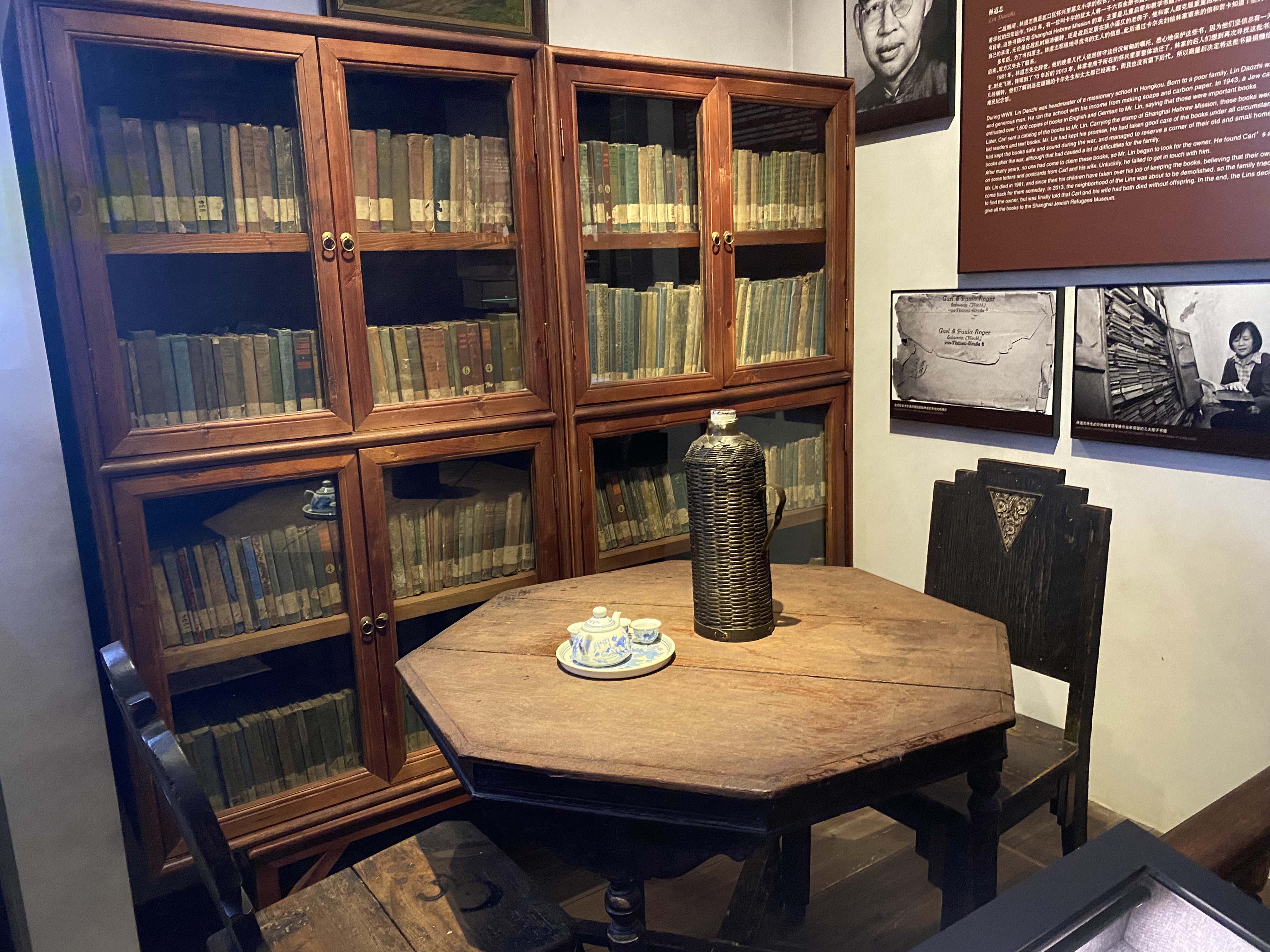
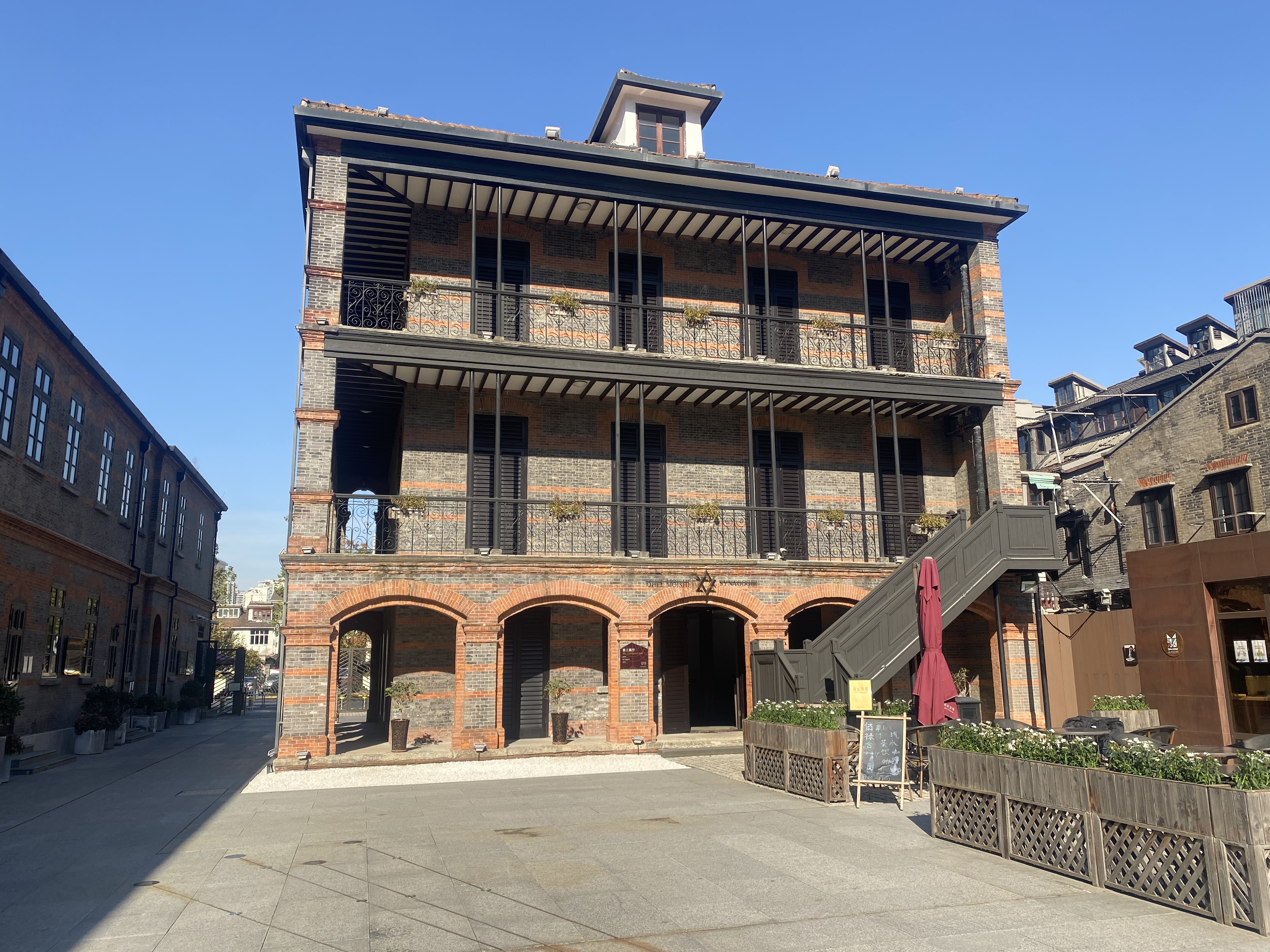
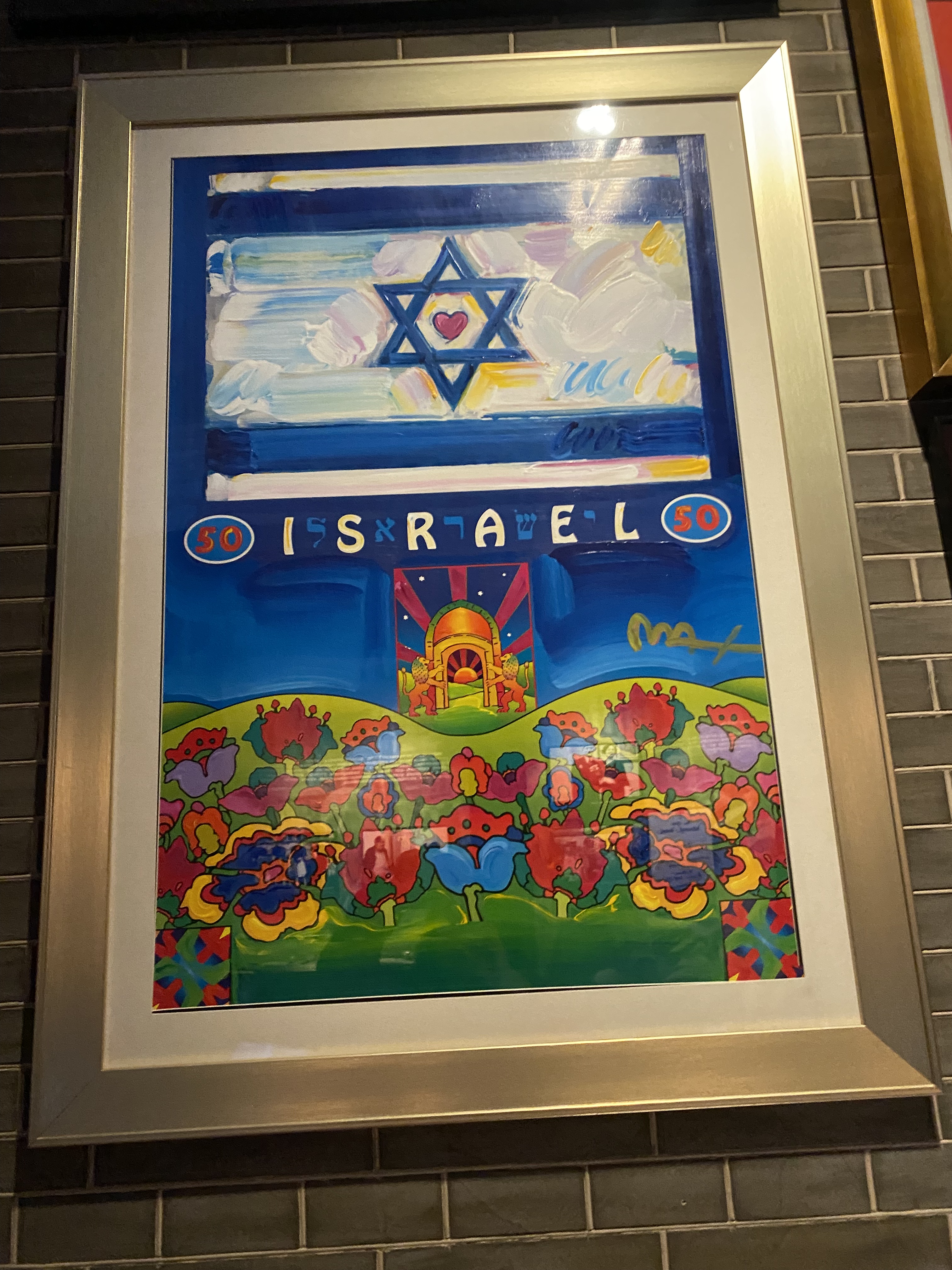
In Shanghai, Victor Sassoon, the owner of the Peace Hotel, and Elly Kadoorie, the owner of the Municipal Children’s Palace, were all Jews. Shanghai Jewish Museum taught me a lot about the relationship between Jewish people and Shanghai People. After visiting, I wrote a sincere message at the memory book of the museum…
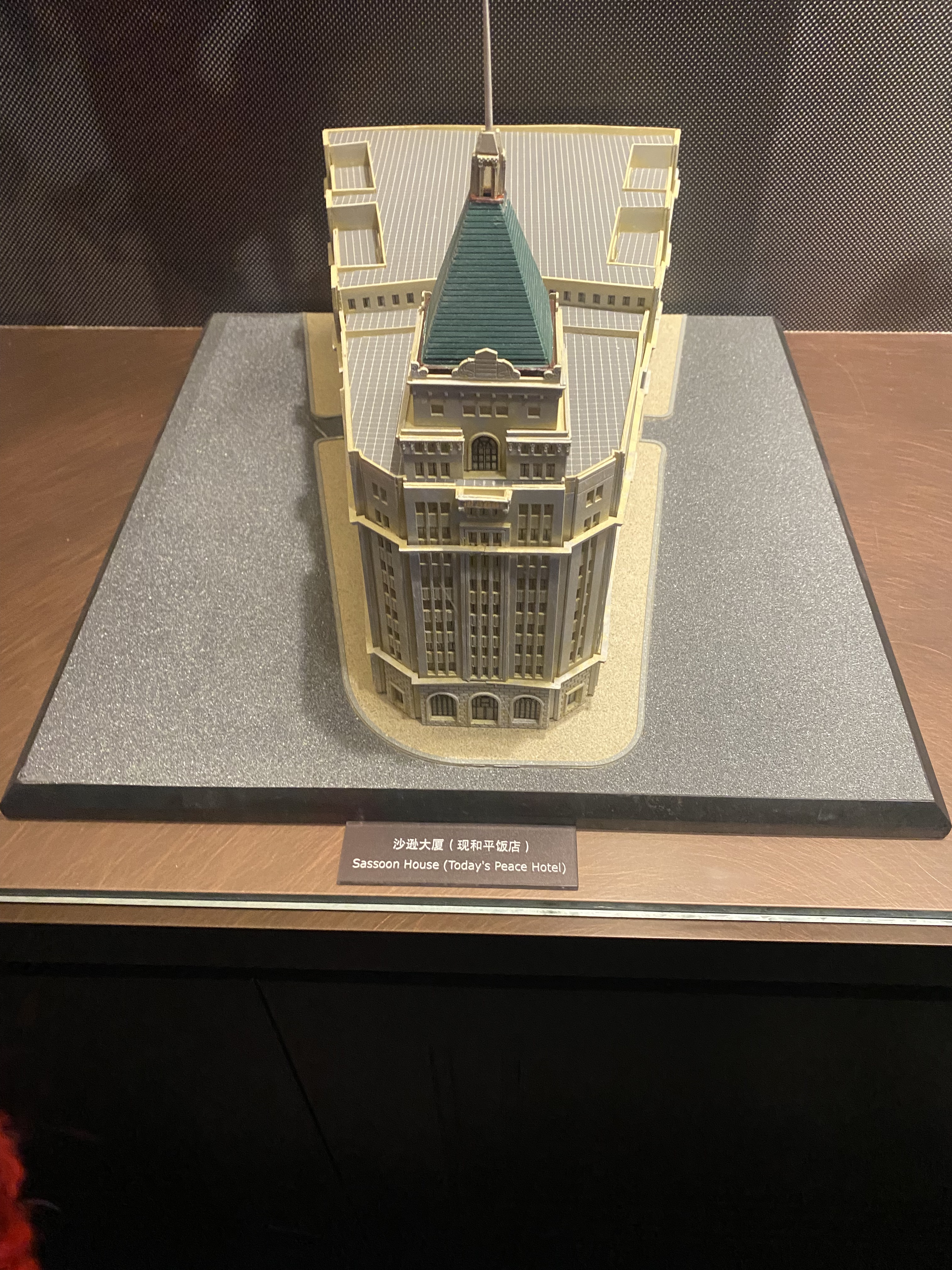
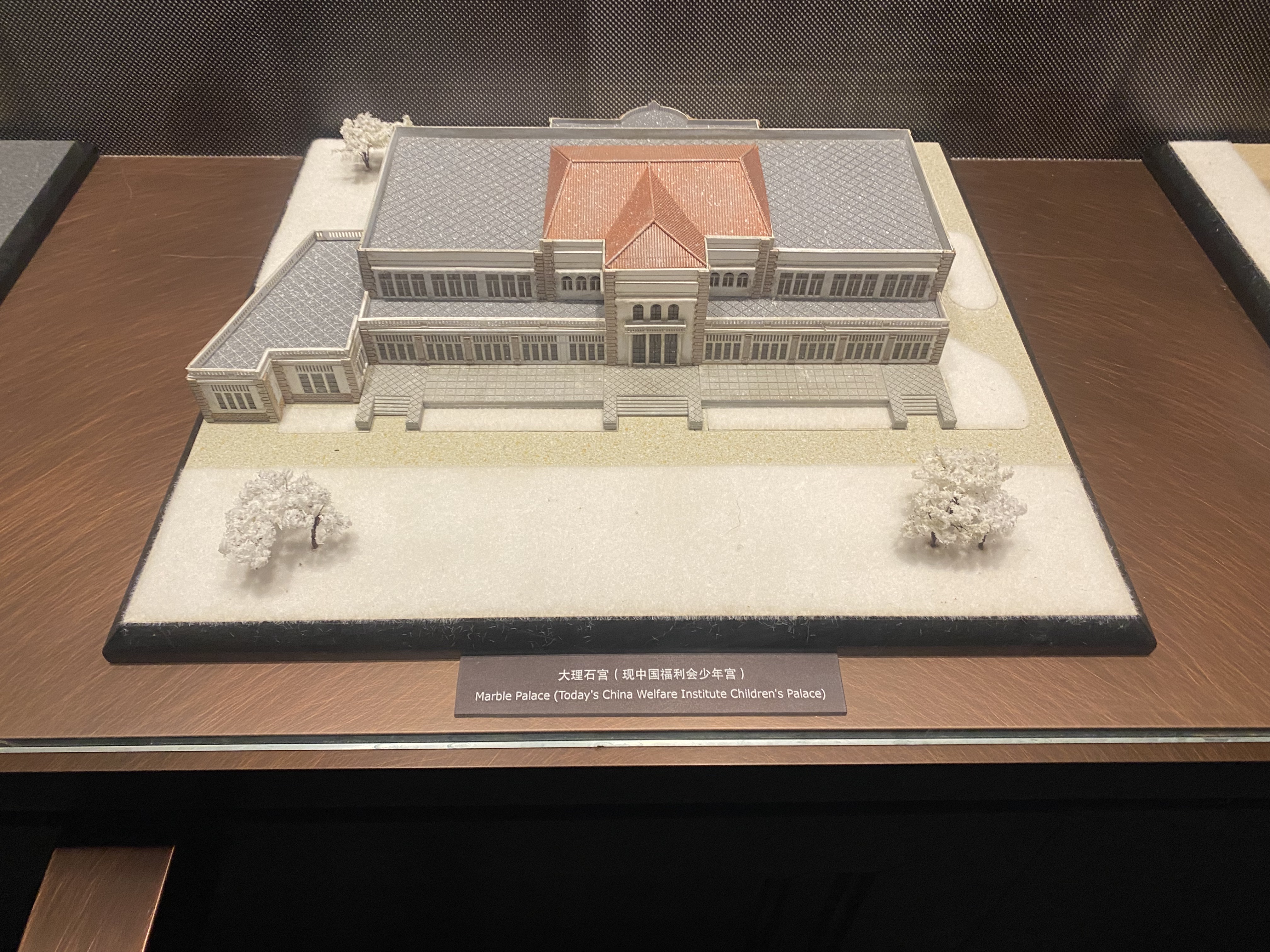
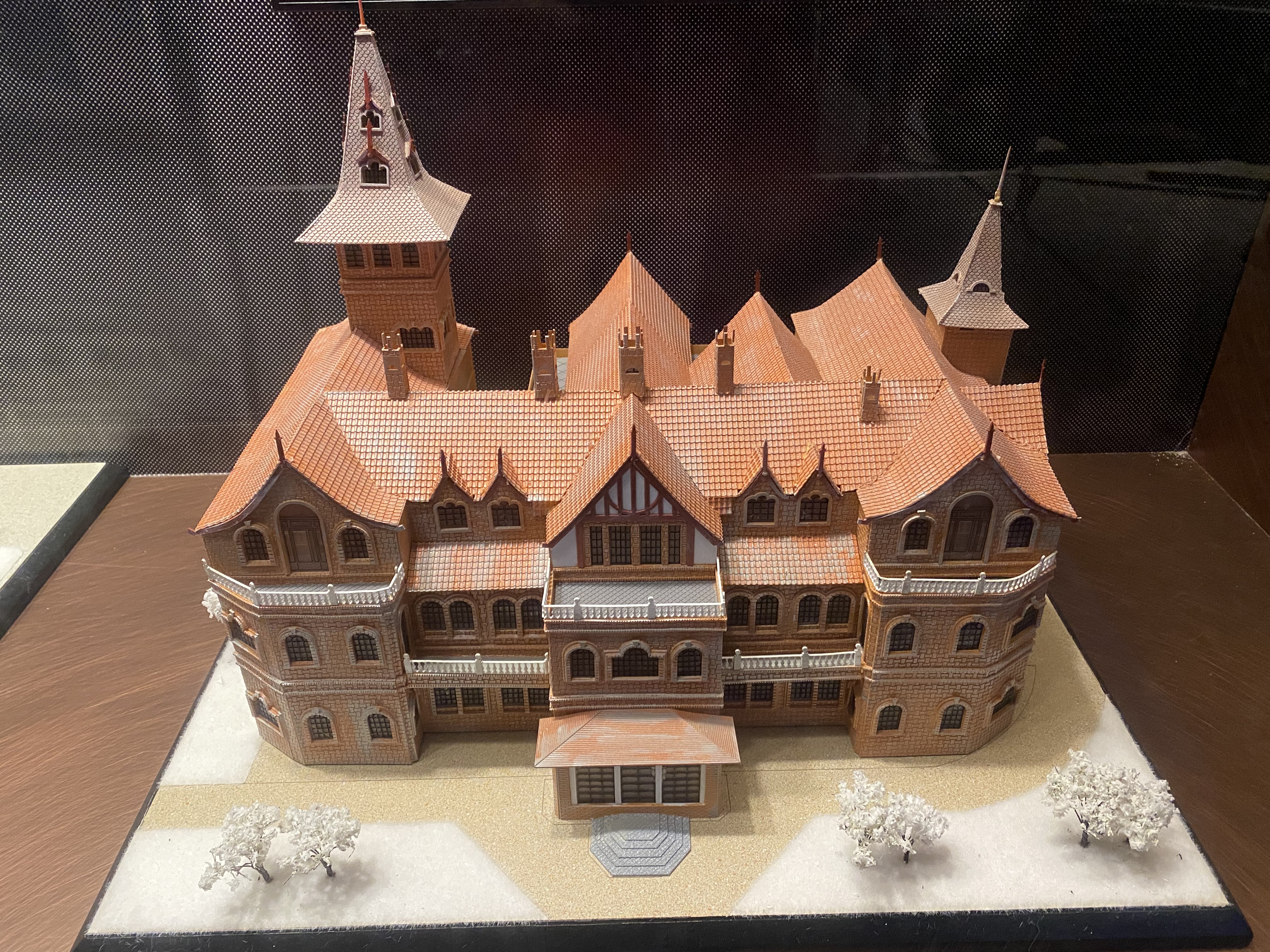
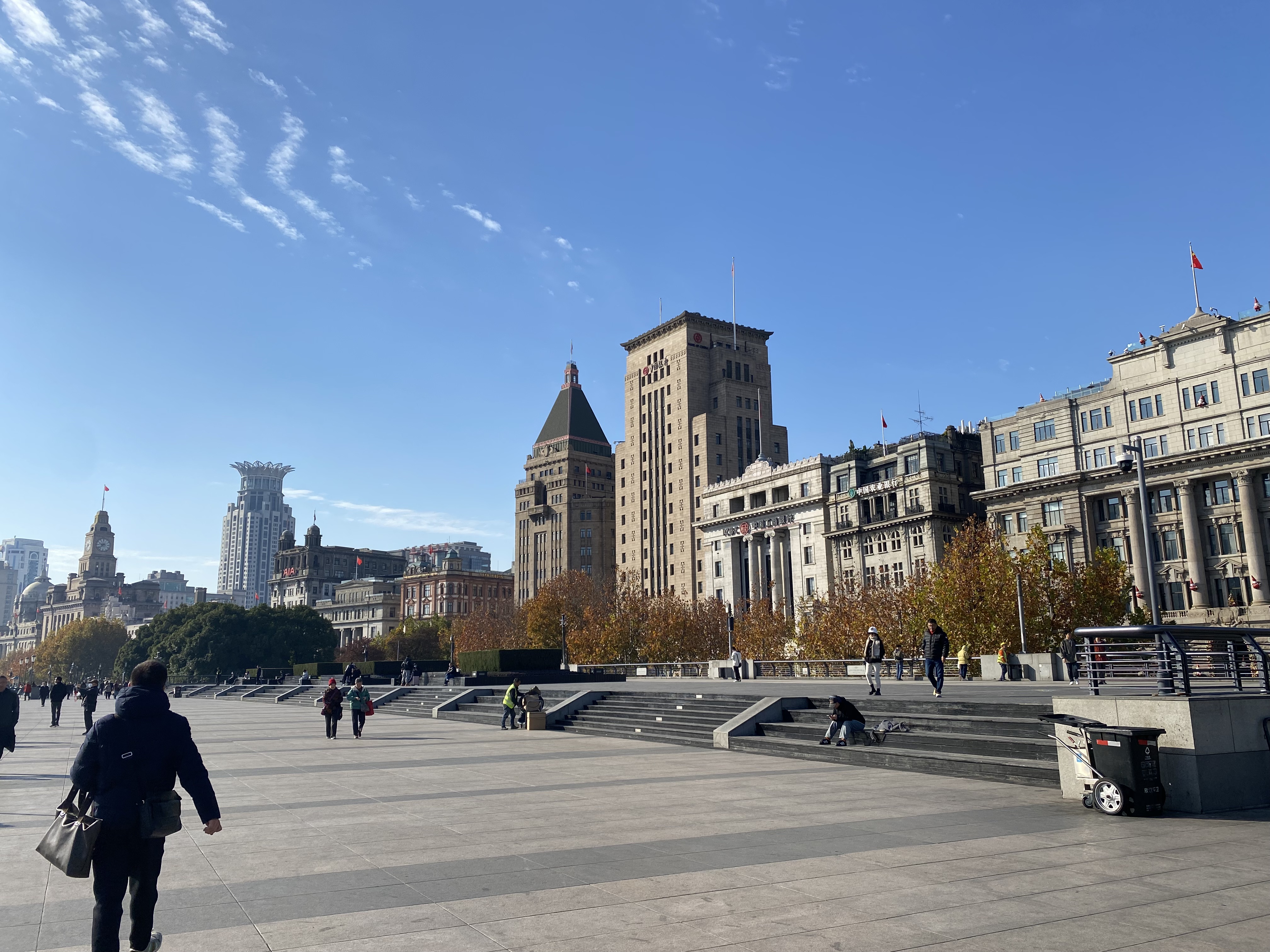
The Bund, the former Shanghai International Settlement, which runs along the western bank of the Huangpu River. It has nearly 2 hundreds of years of vicissitudes. It is the showcase of architecture of eclecticism: particularly Gothic, Baroque, Neoclassical, Romanesque, Art Deco, and Renaissance architectures. I especially like the art deco architectural style here. The famous Peace Hotel (Sassoon Building) is especially enchanting. I remember as a building with a green hat when I was a child. Before I left China 37 years ago, I came here to practice my English with a group of foreigners. I had a great memories here…Years ago, when my father was alive, I took him and my mother to the Peace Hotel to listen to the “Old Men Jazz Band”. It’s a perfect place to learn Shanghai history. Nostalgia for Old Shanghai has long held a fascination for Chinese and Hollywood filmmakers. It is the movie sites for many movies, such as Steven Spielberg’s Empire of the Sun and Zhang Yimou’s Shanghai Triad. This time we took our mother enjoying the afternoon tea and the band while watching people waltzing. Peace Hotel is full of charms. It’s ready for Christmas with beautiful decorations.
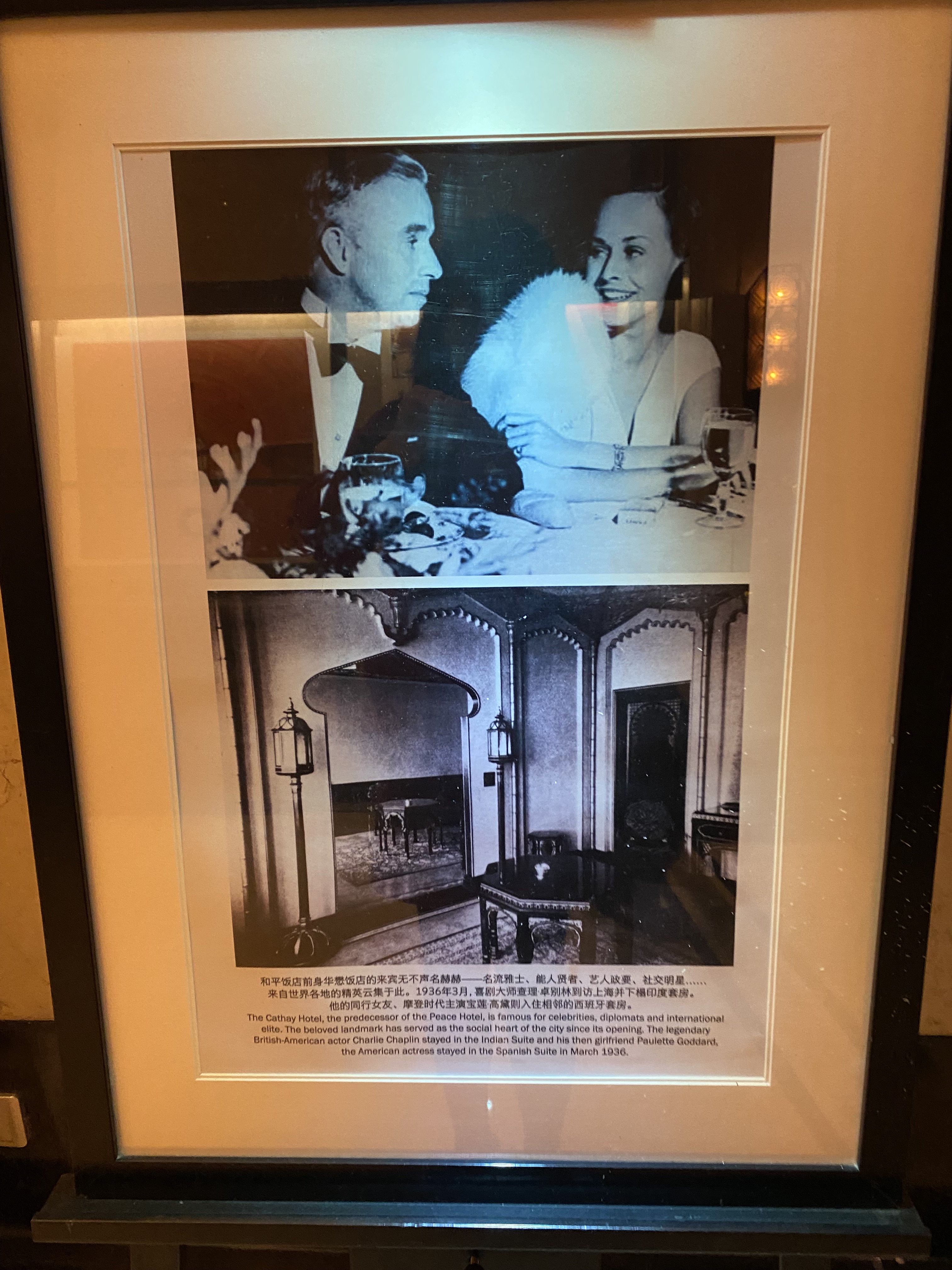
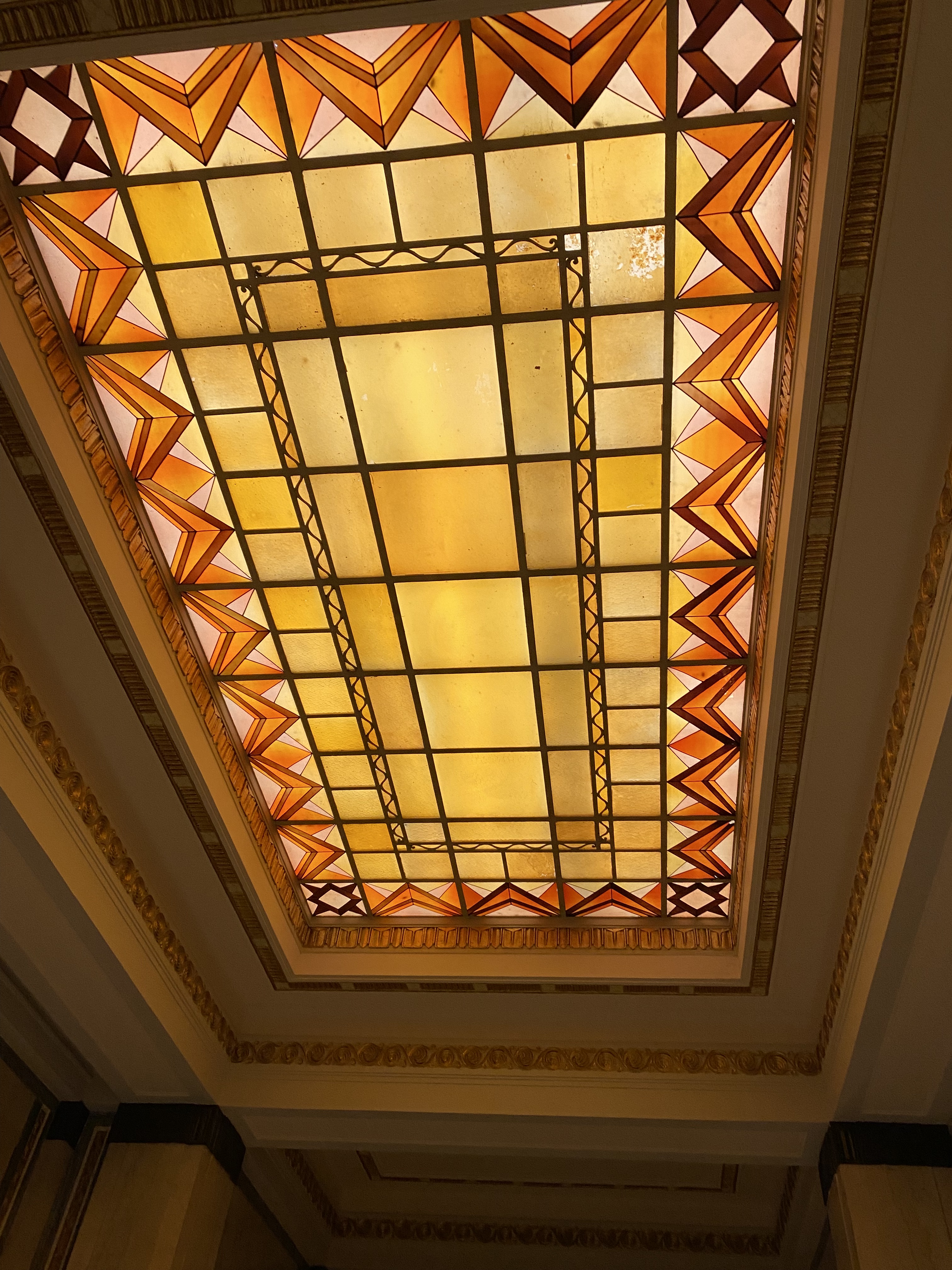
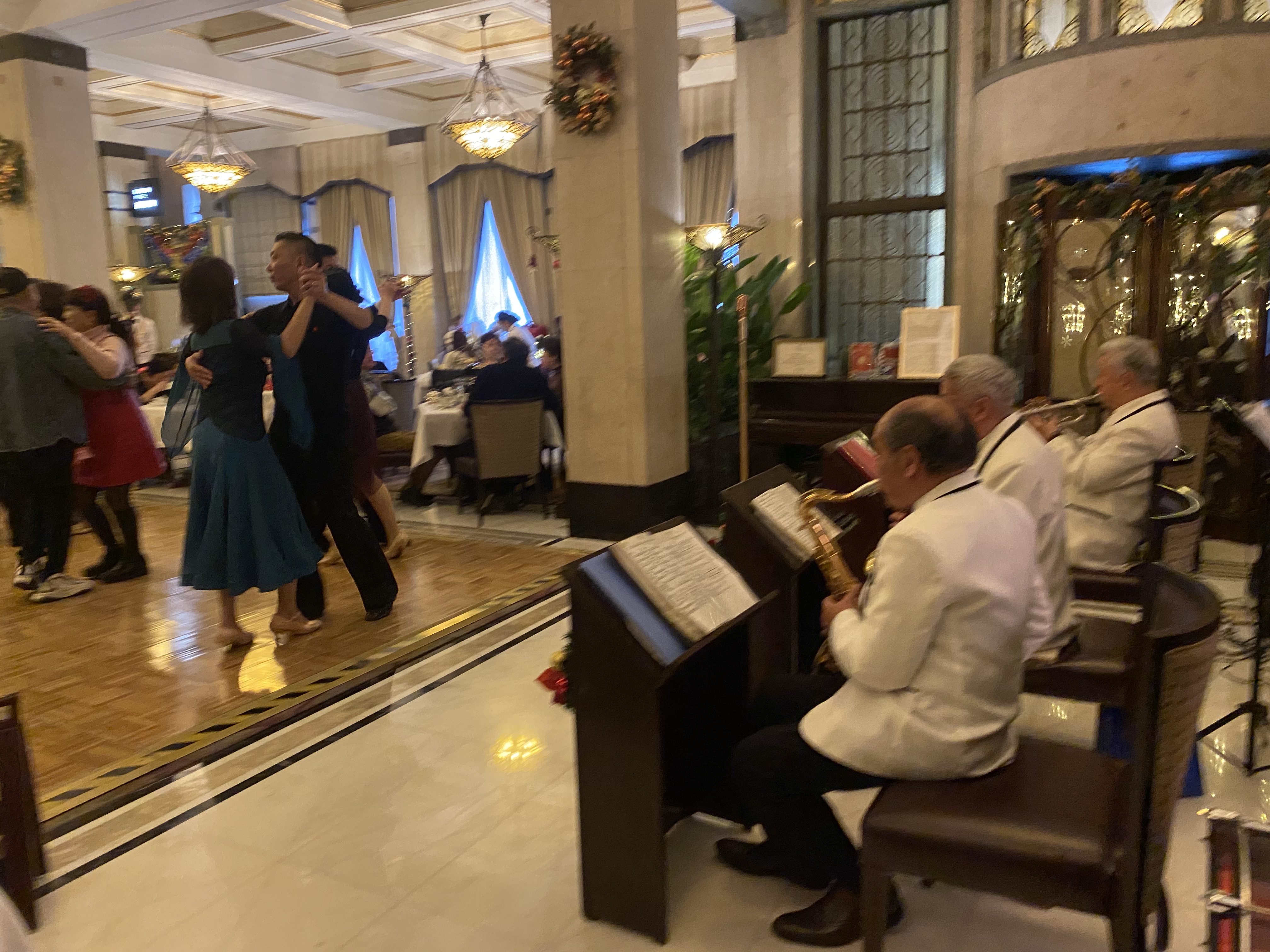
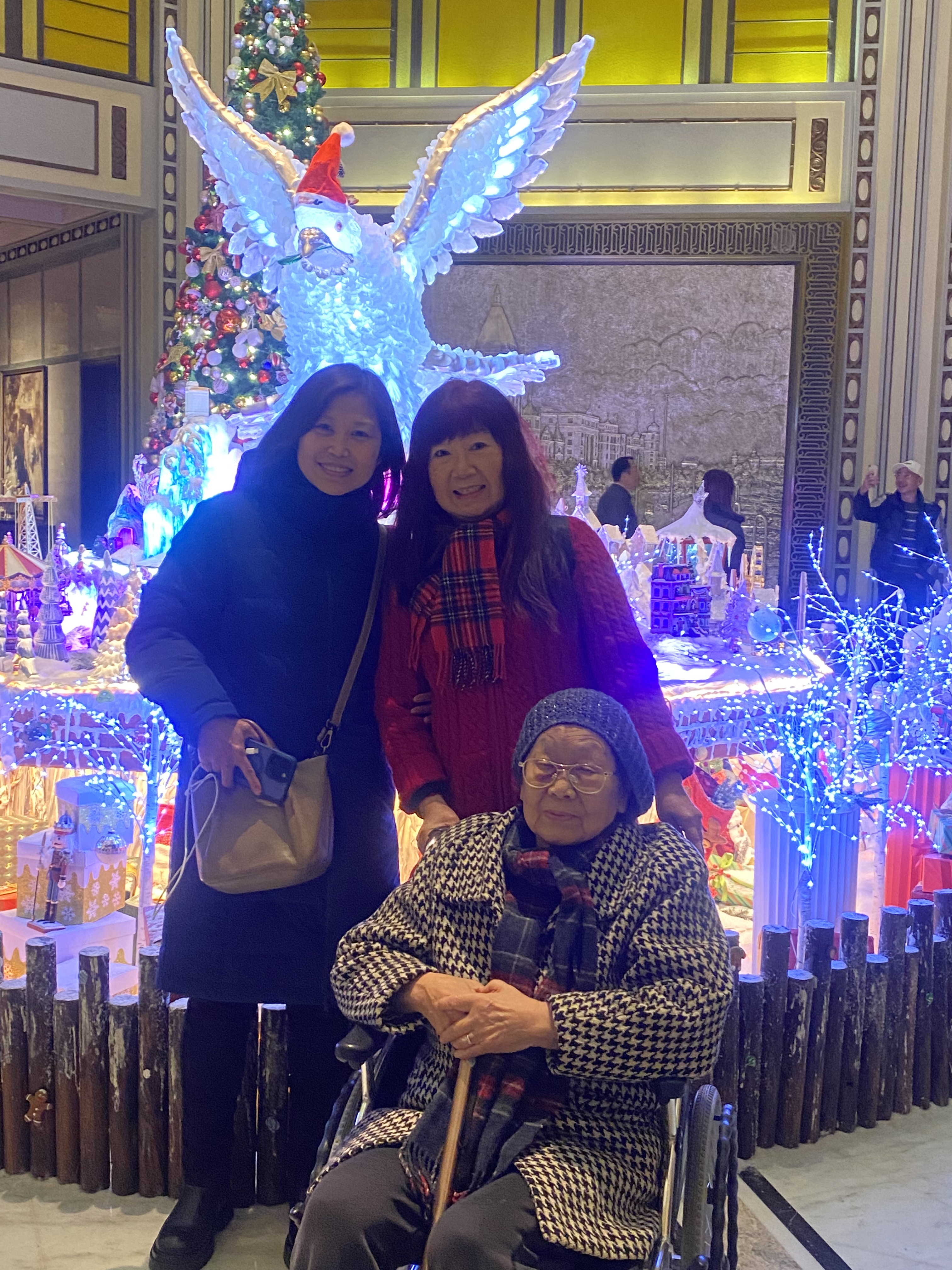
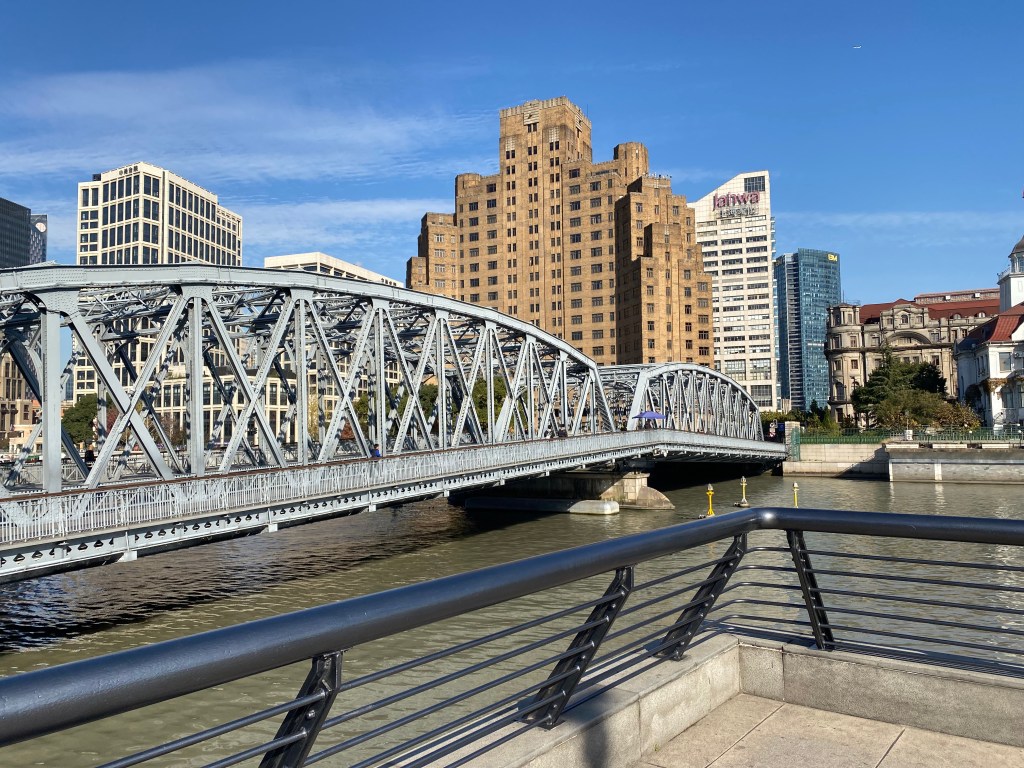
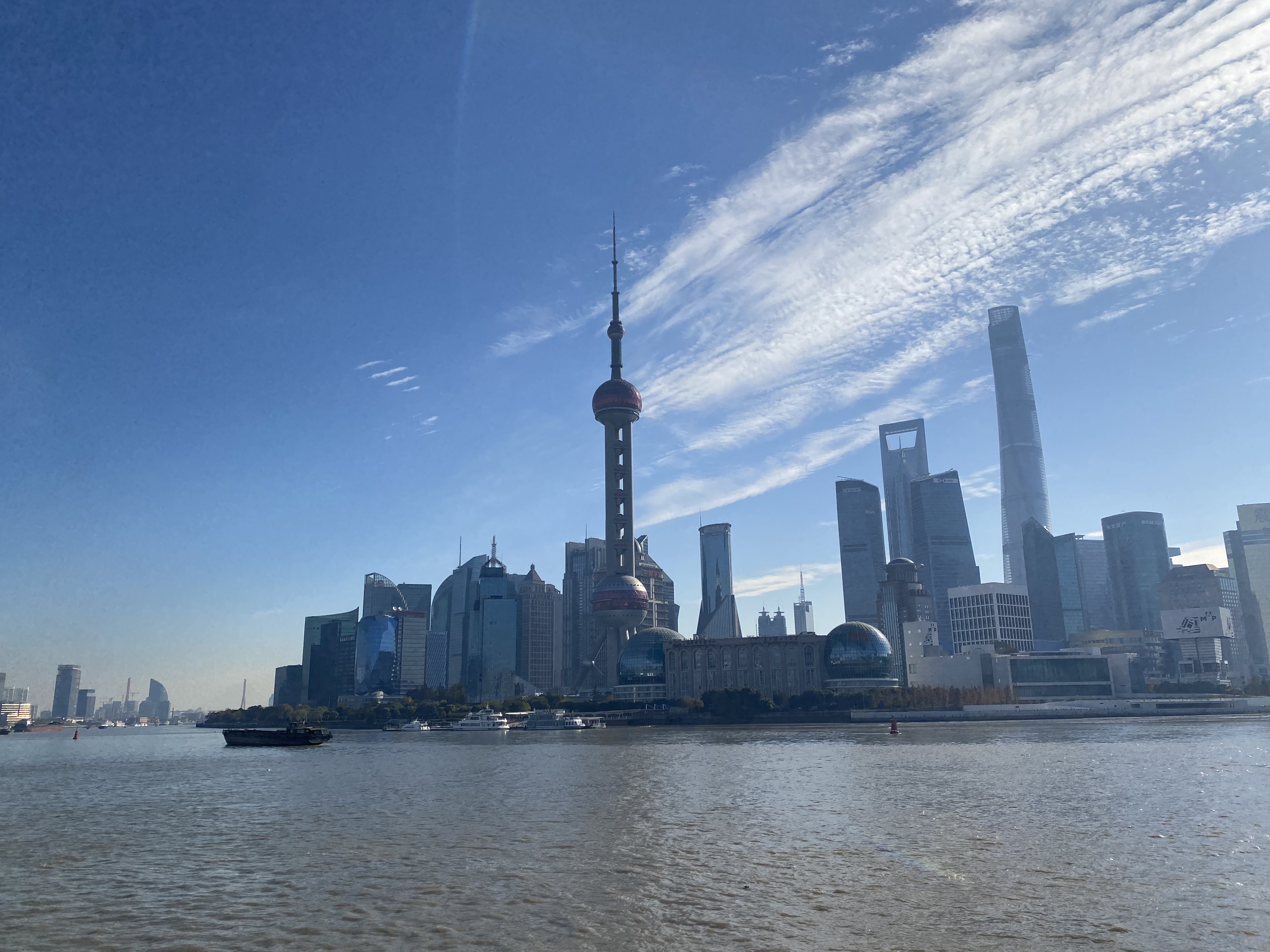
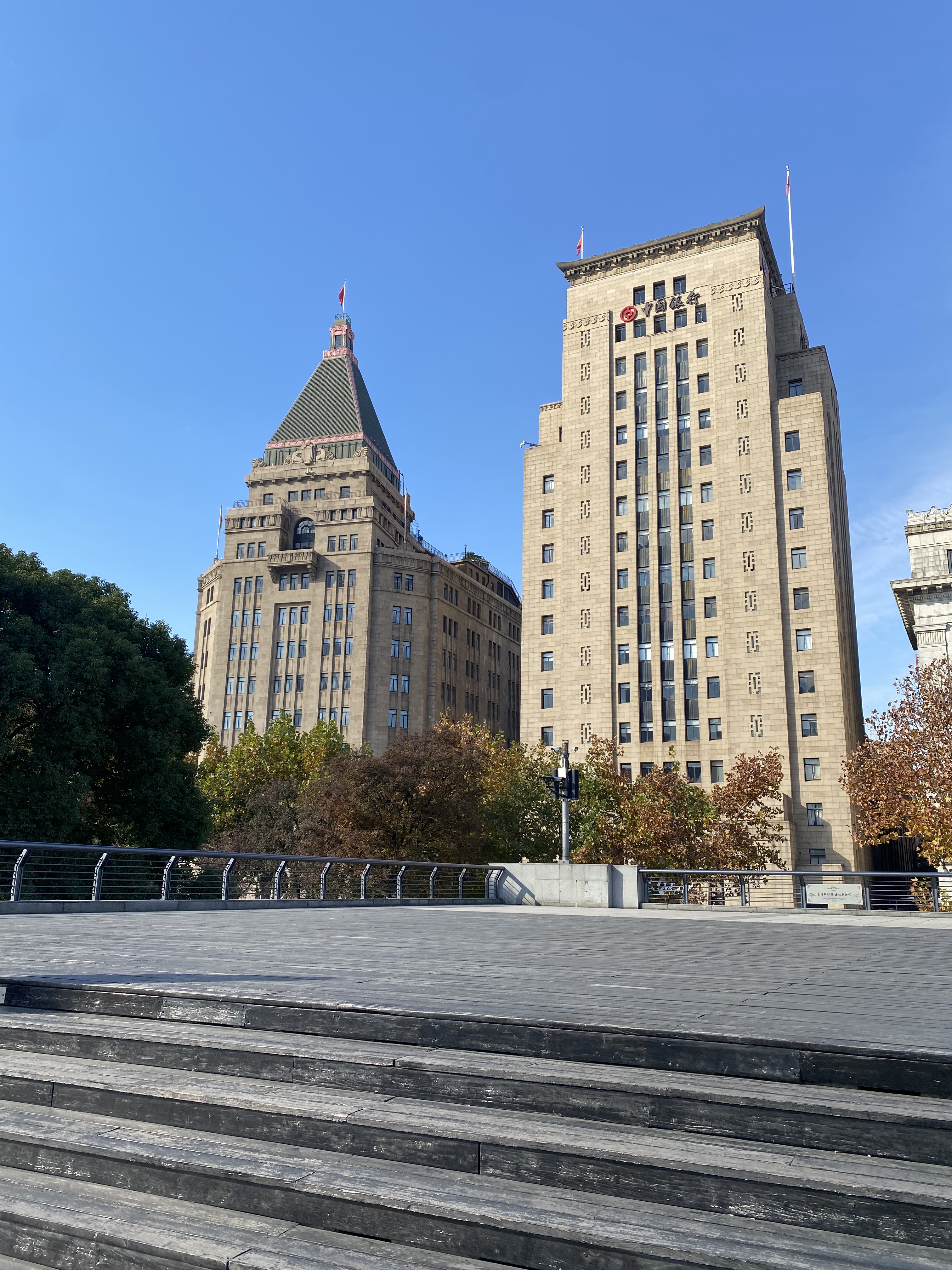
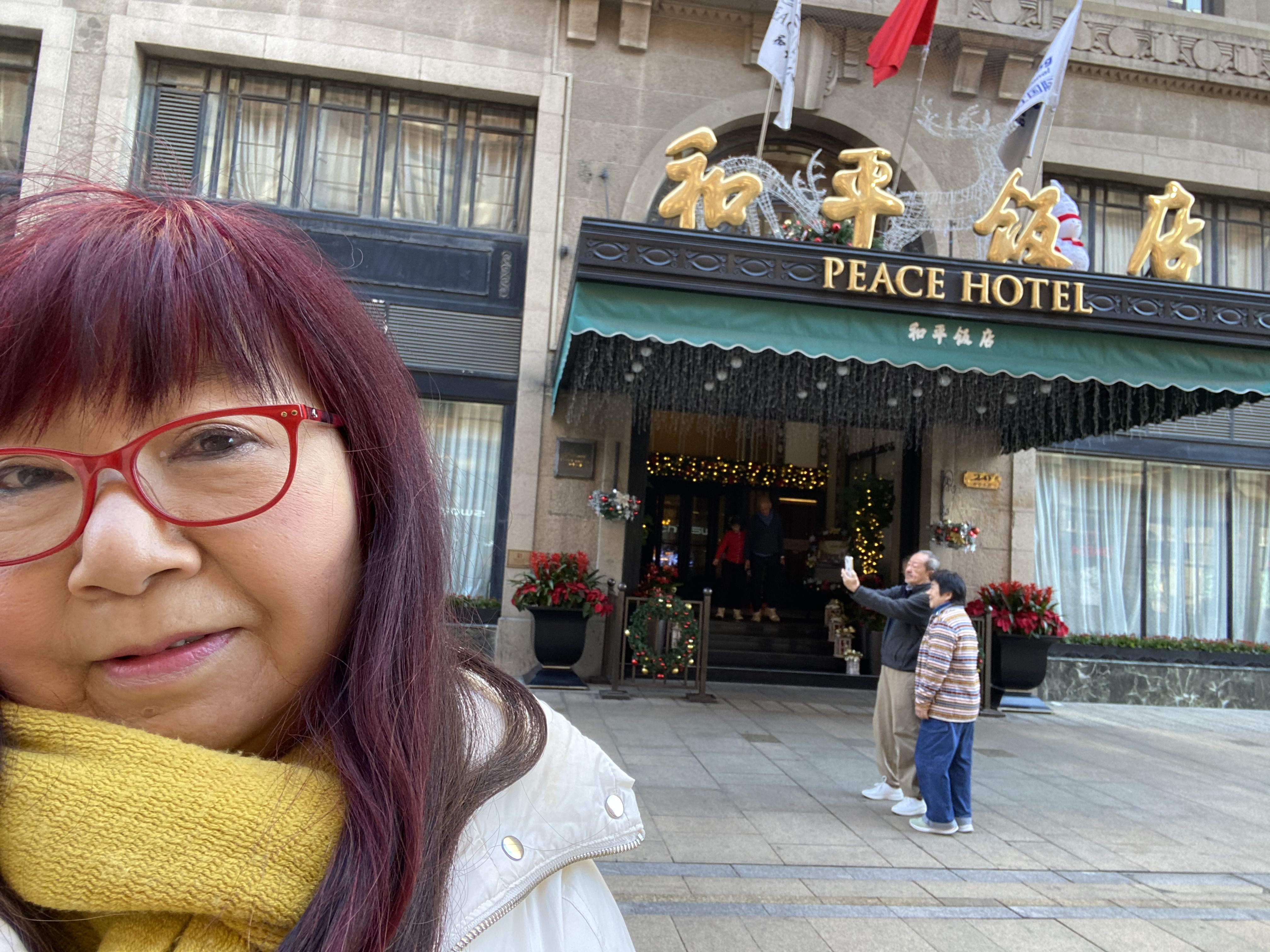
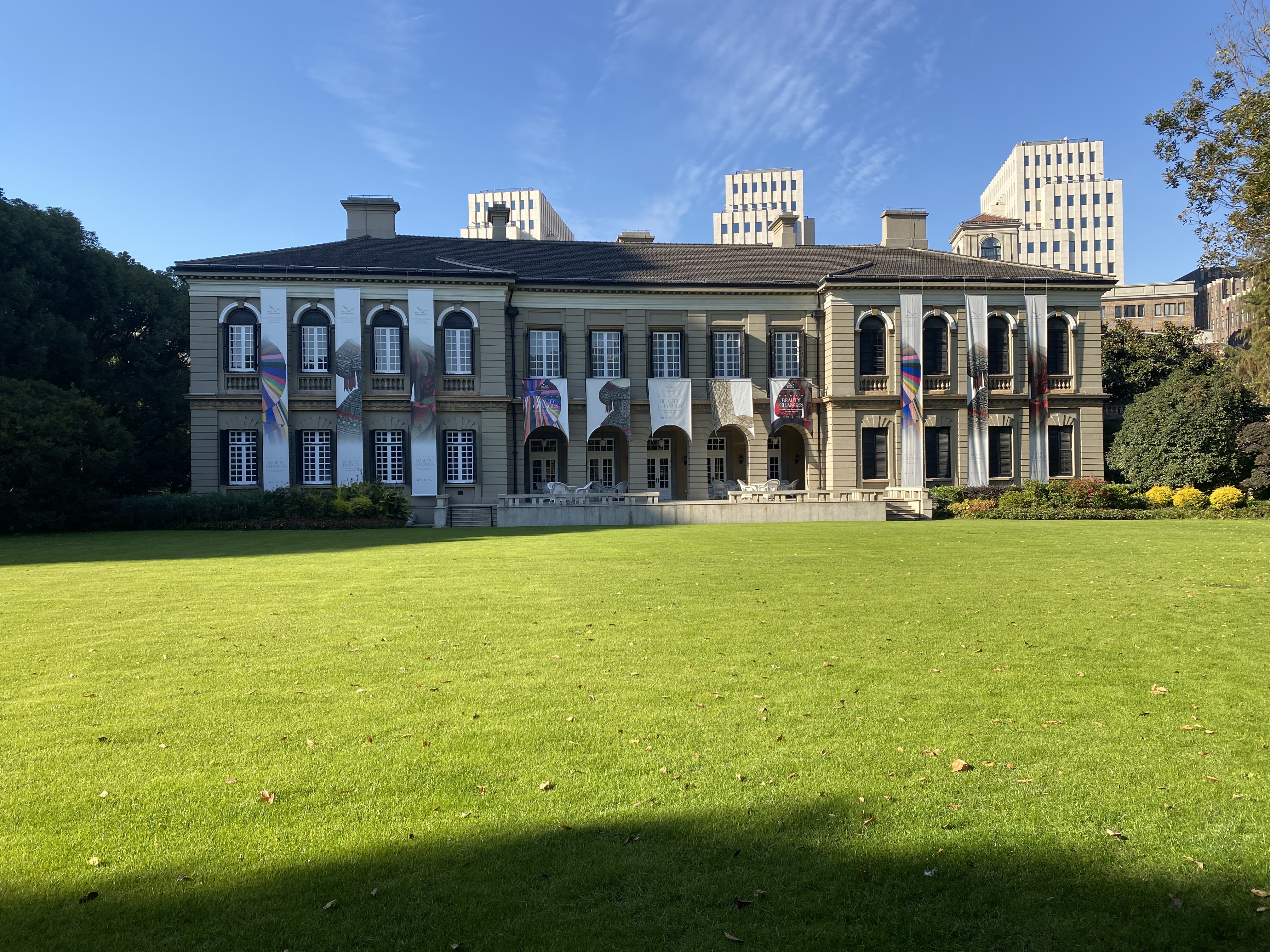
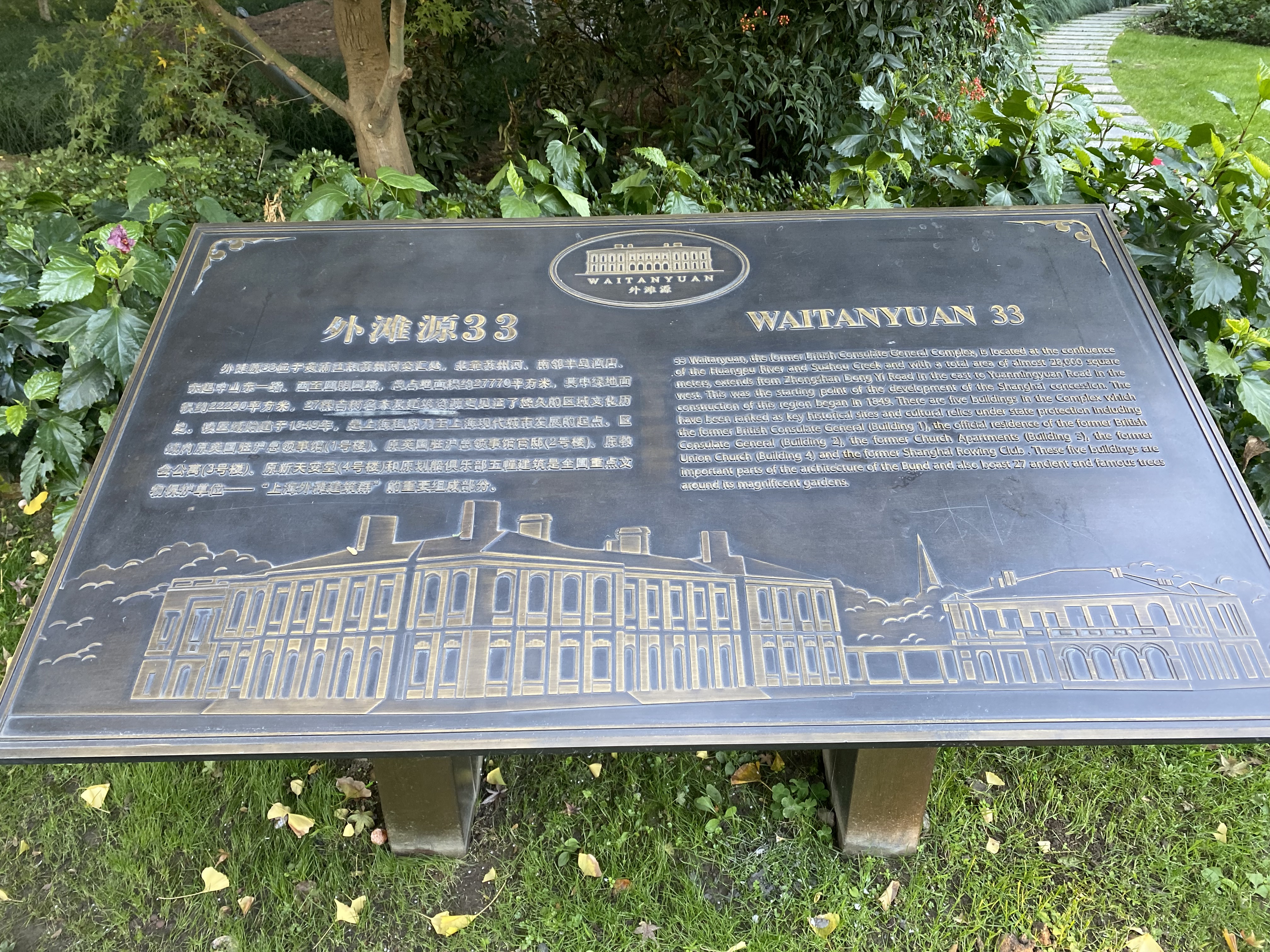
The former site of the British Consulate and then the Seamen’s Club is a big brown attractive villa. Broadway Mansions accompanied by the distinctive white Waibaidu Bridge also has gone through ups and downs. I still have the photo my father took me and my brother in front of the building when we were children.
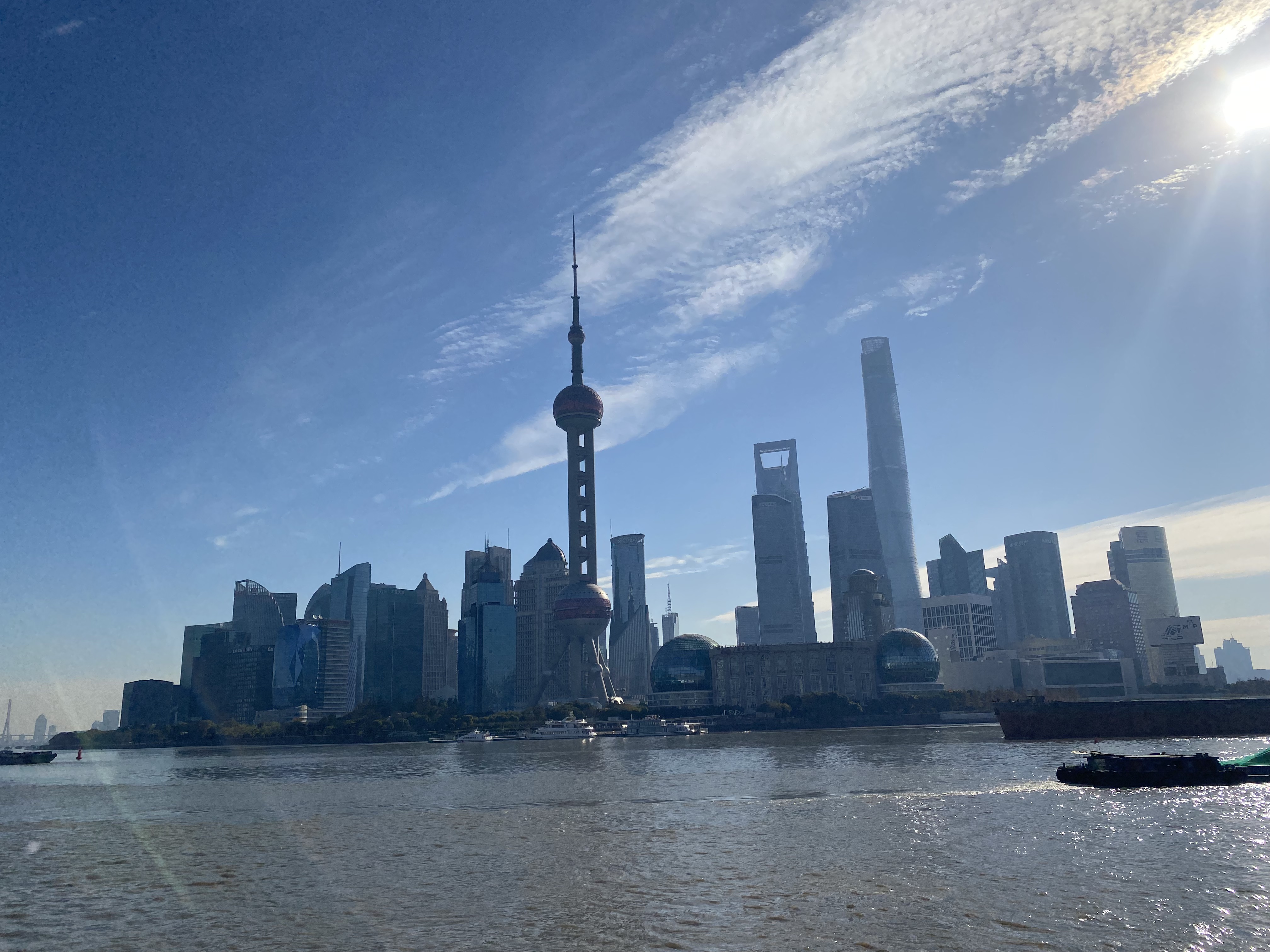
The buildings on both sides of the Huangpu River compete with each other. Two hundred year old European style on the west side of Huangpu River faces the newly built modern skyscrapers of 21st century in Lujiazui in the Pudong District. I remember during my childhood, we had to take a ferry to the other side of the river,
After the Peace Hotel, we took a taxi back to the French Concession. I pushed my mother’s wheelchair and continued with the nostalgia… There used to be a Western restaurant called “Swan Pavilion” at the intersection of Donghu Road and Huaihai Road. I still remember the taste of the borscht bread and the country stew. There is also the Donghu Cinema where showed three-dimensional movies. I used to go there all the time. Bill and I once stayed at the “Donghu Hotel” and we liked it very much. There were bars, cafes, and massage parlors everywhere.
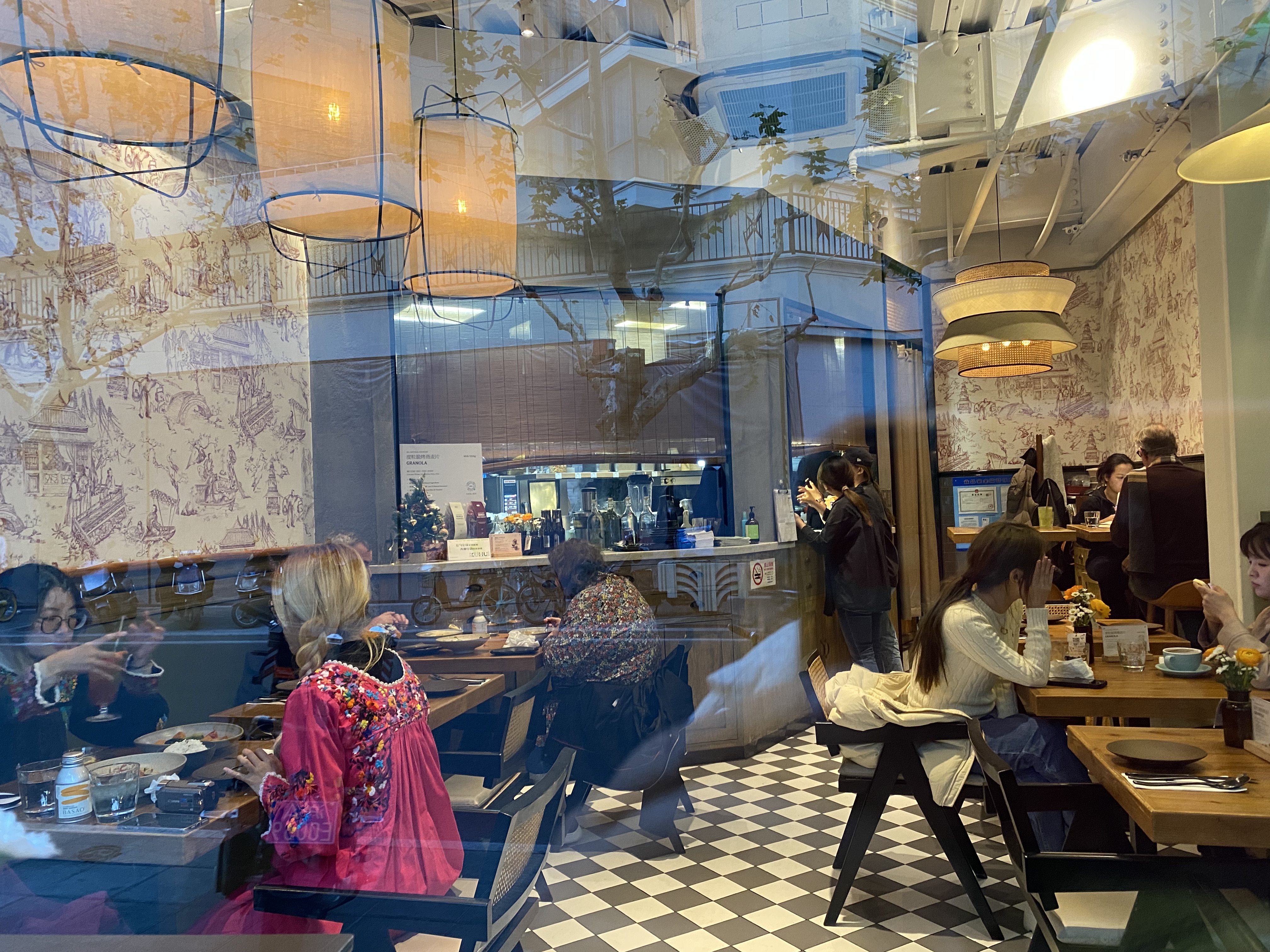
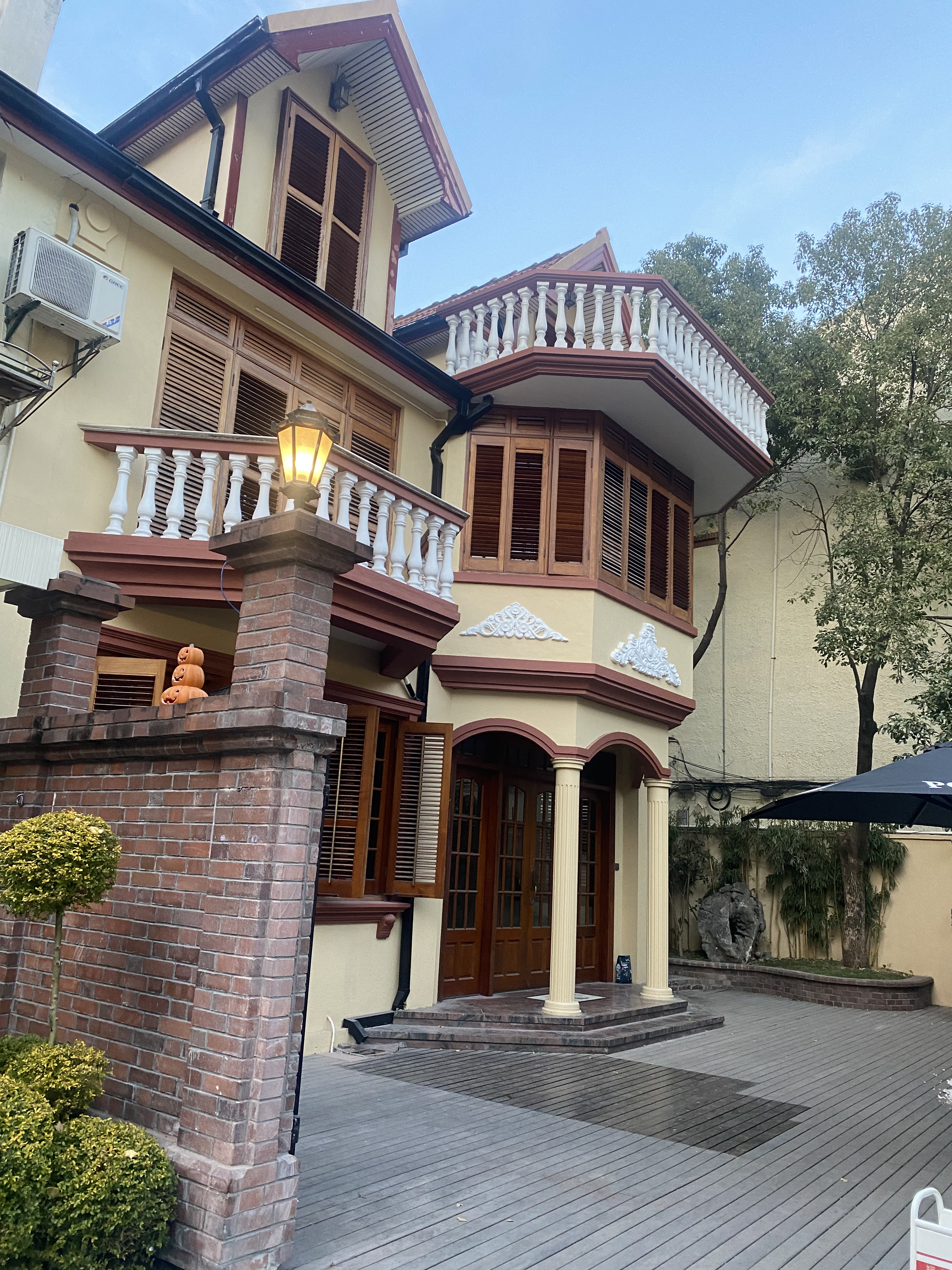
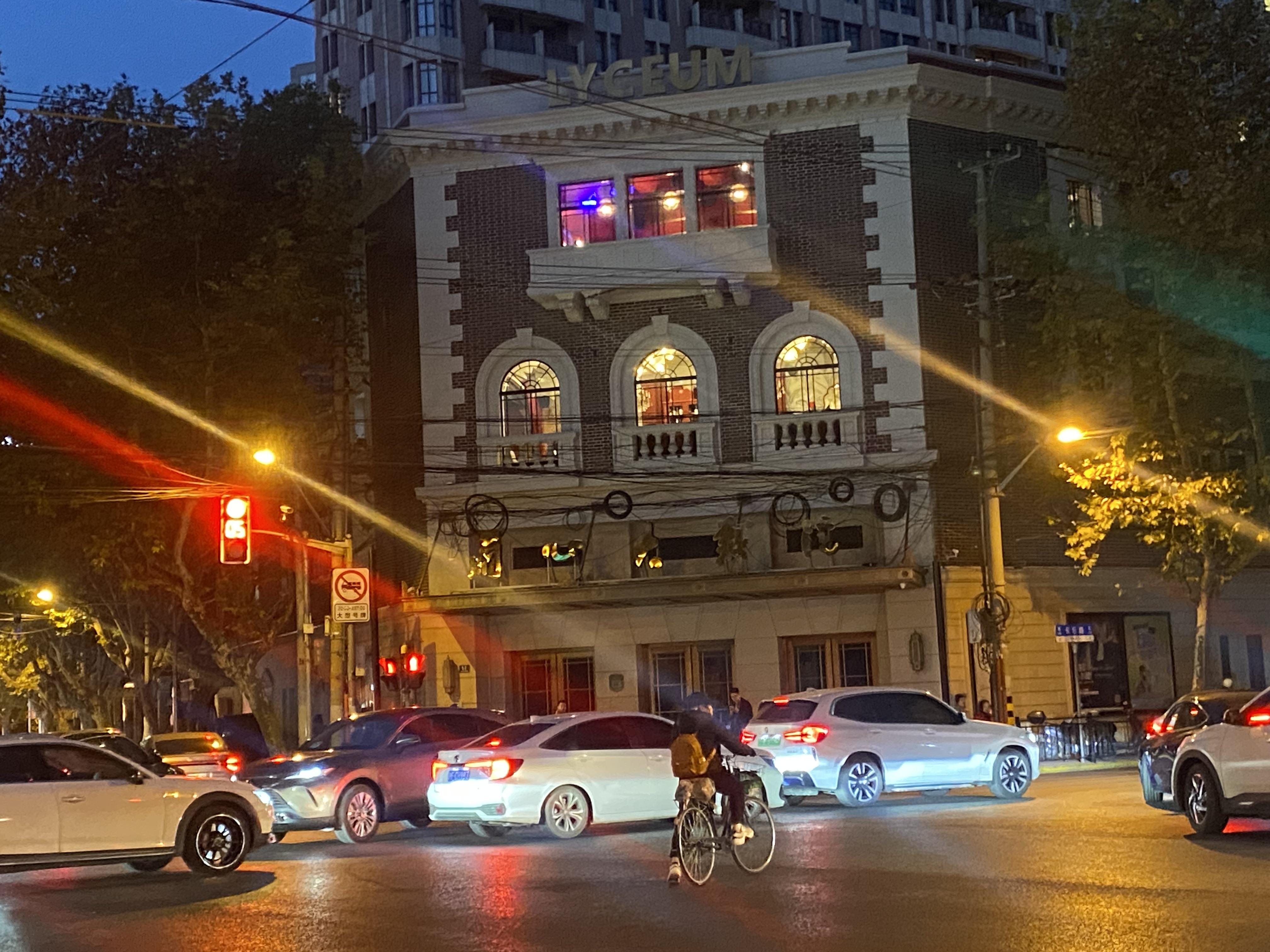
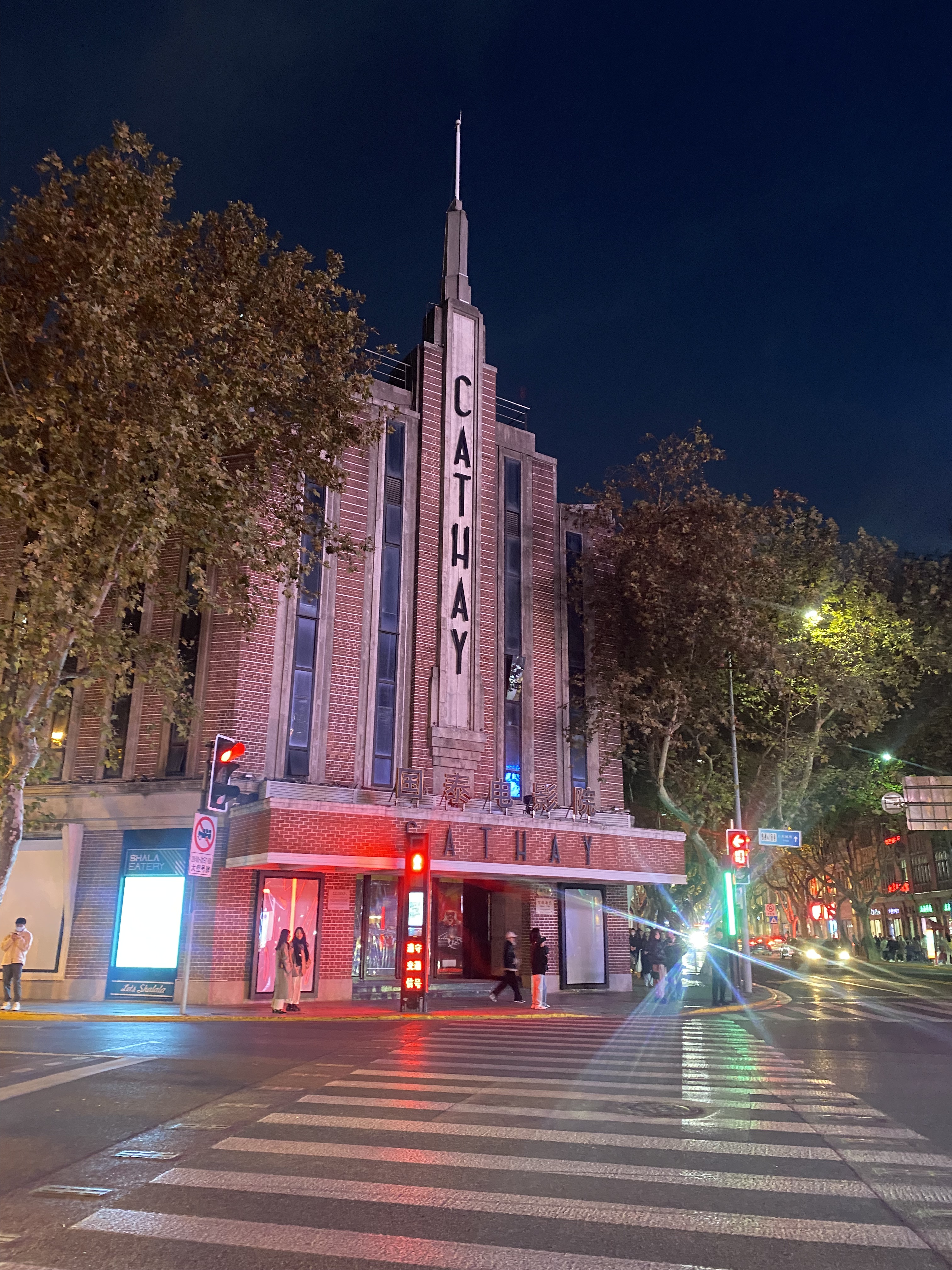
As we walked, the sky got dark, we passed by old ”Lyceum Theatre” and the Jinjiang Hotel (the hotel where Nixon stayed in 1972, the beginning of the establishment of diplomatic relations between China and the United States, and the signing of the famous “Shanghai Comunnique”). Lastly we went the art deco–style “Cathay Cinema” which was one of the first movie theaters in Shanghai. The theater was a favorite of Shanghainese author Eileen Chang.
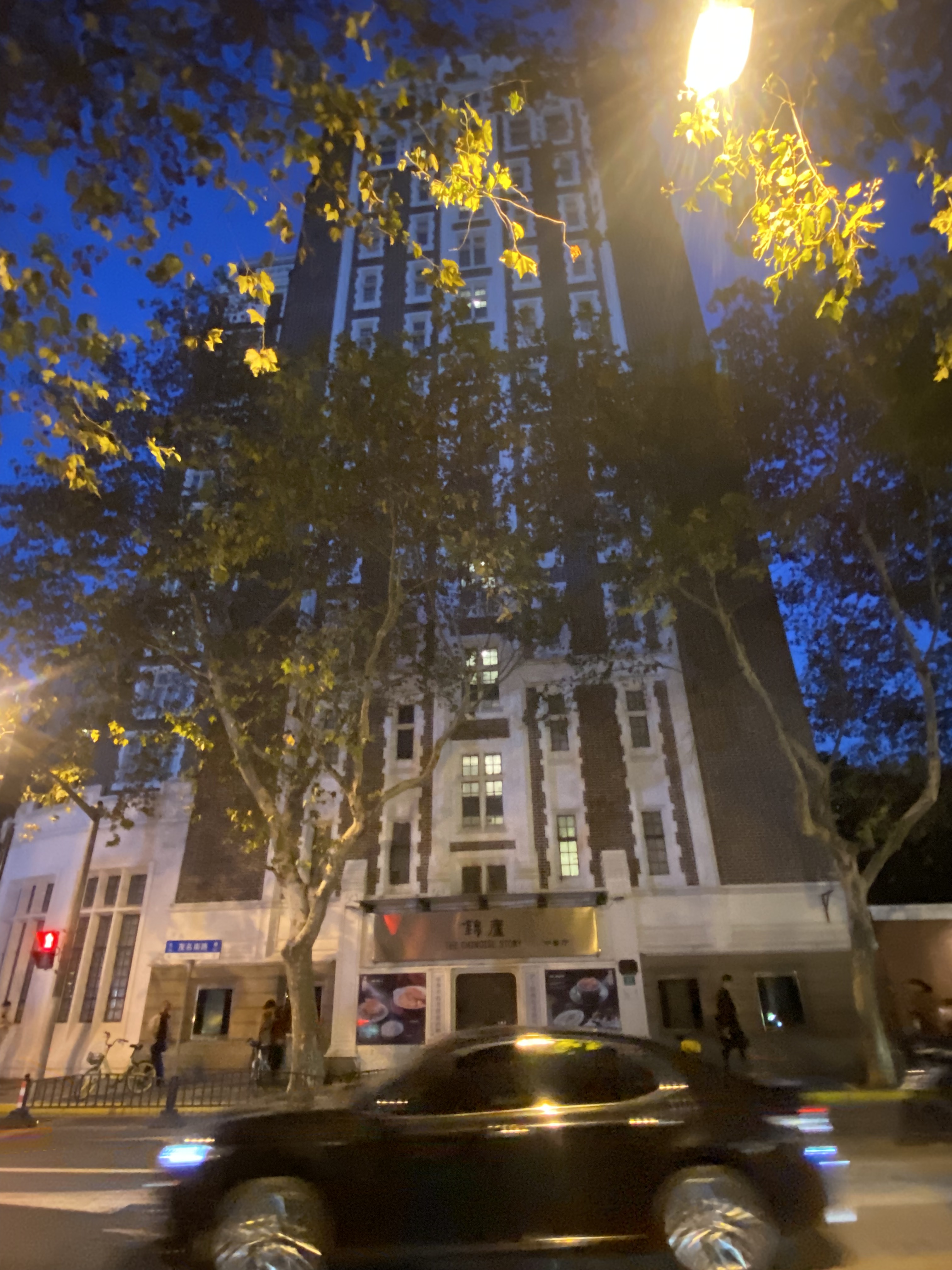
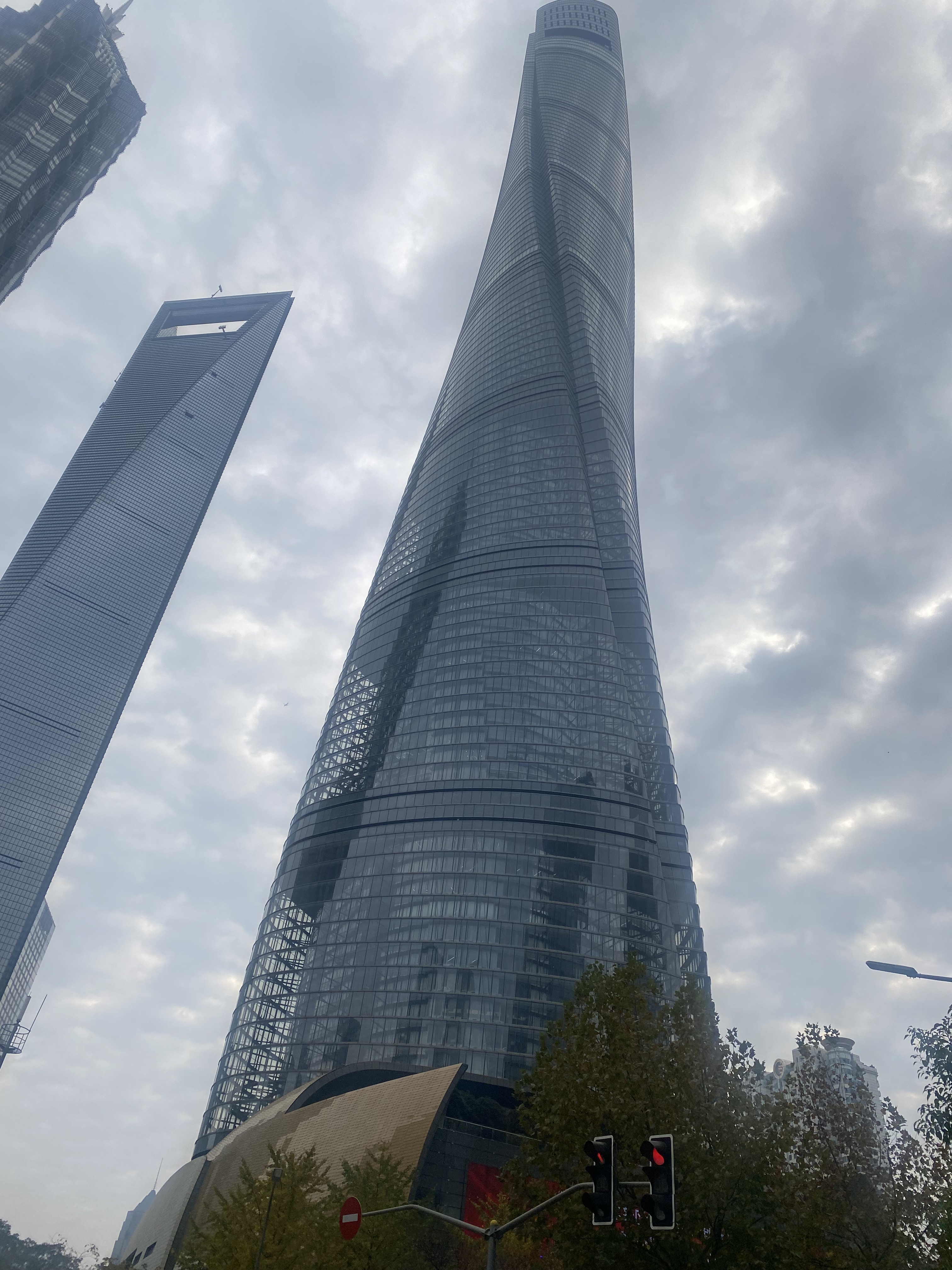
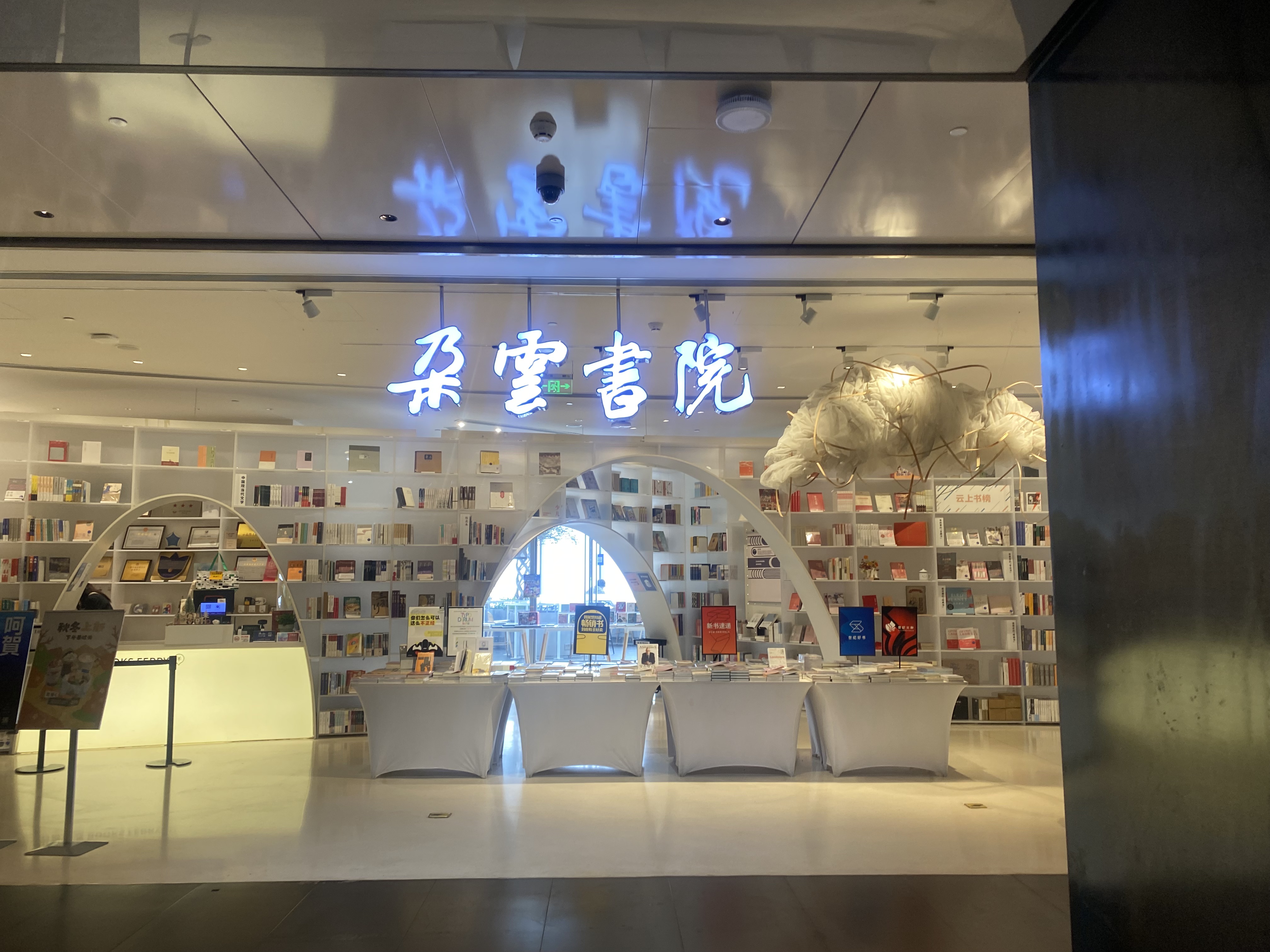
DAY 8: I took the subway to Lujiazui, Pudong early in the morning. Thanks to my friend for recommending “Duoyun Books”. After queuing for an hour, I arrived at this breathtaking bookstore above clouds. The store is located literally above the clouds, on the 52nd floor of Shanghai’s tallest building, Shanghai Tower. At 239 metres (784 ft) it is also China’s highest bookstore. The concept is a complete cultural complex that in addition to the bookstore includes a lecture room, exhibition space, a café, a 52-metre (170-ft) bar, a restaurant and a large rooftop garden. The store inventory consists of 60,000 books and 2,000 other reading-related products. It is a such a stunning experience to overlook the 360-degree view of the Shanghai Huangpu River in the coffee and book smell…👍👍👍The only drawback is that today is a cloudy day. 🥹🥹☺️This is not only a bookstore, but also an art gallery and a “museum” displaying artworks…I highly recommend this “Duoyun Books” in the clouds! 👍👍👍You can find anything here: music, art, history, and life books are all-encompassing and have everything you need. It’s huge!
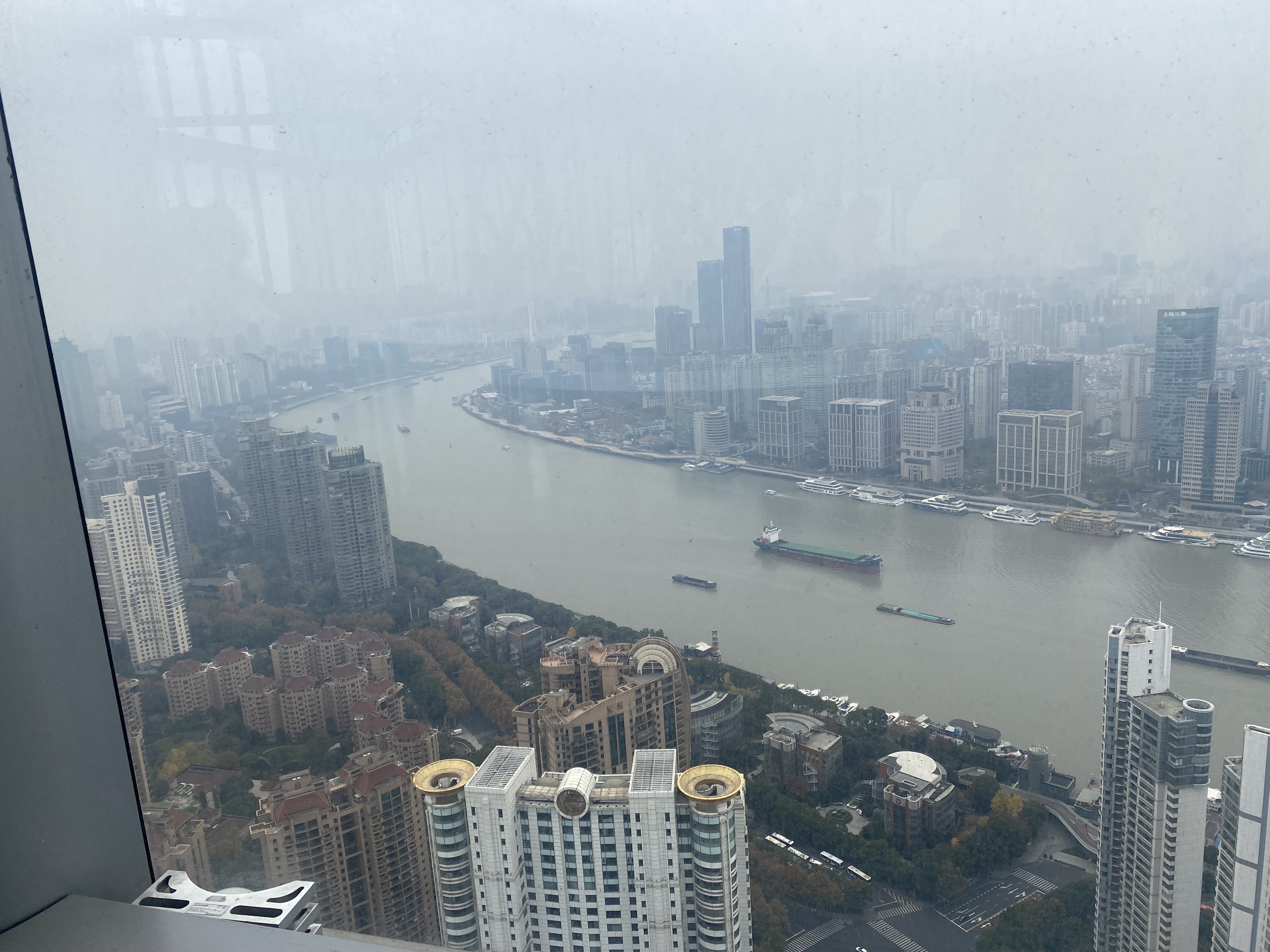
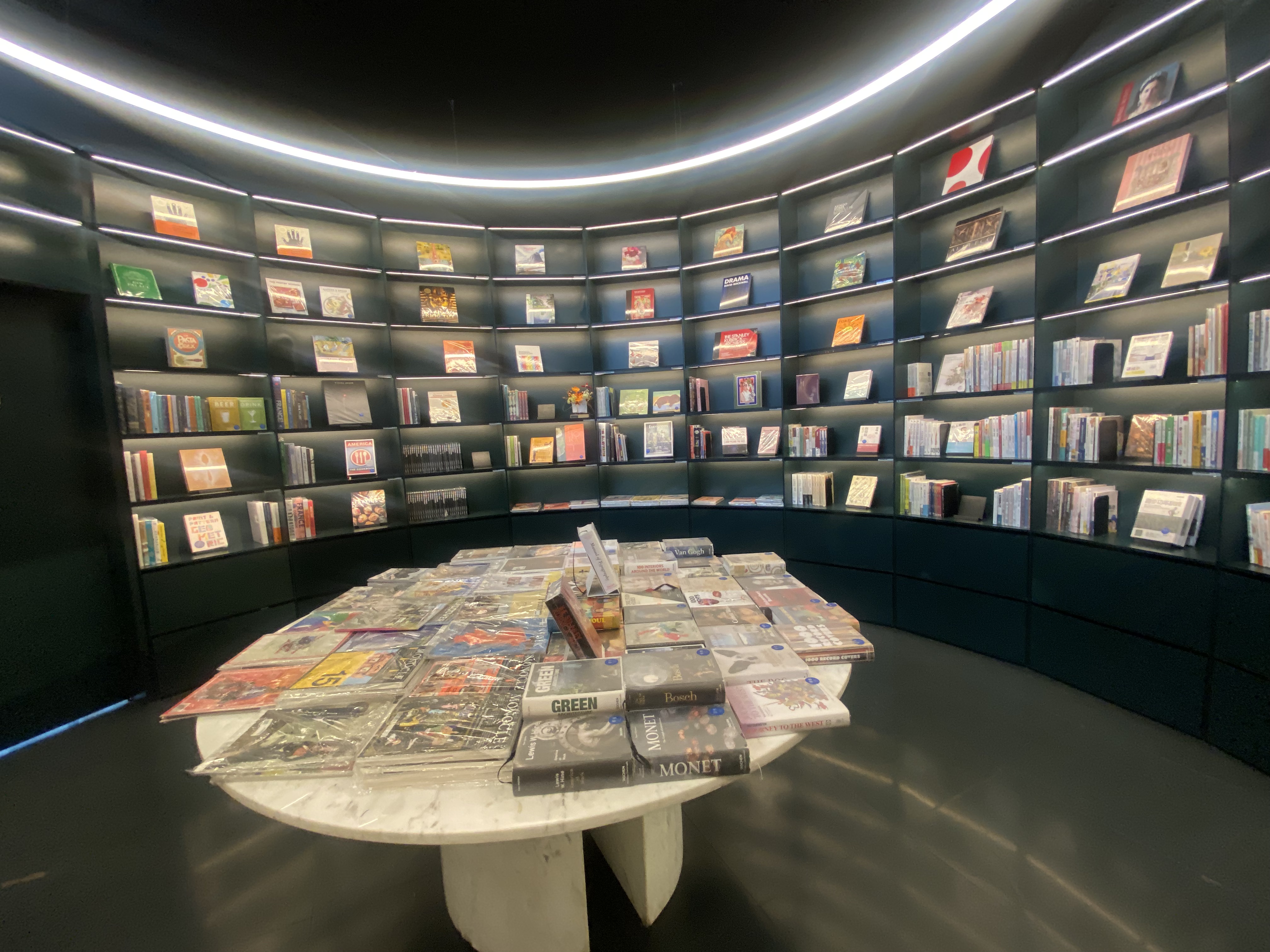
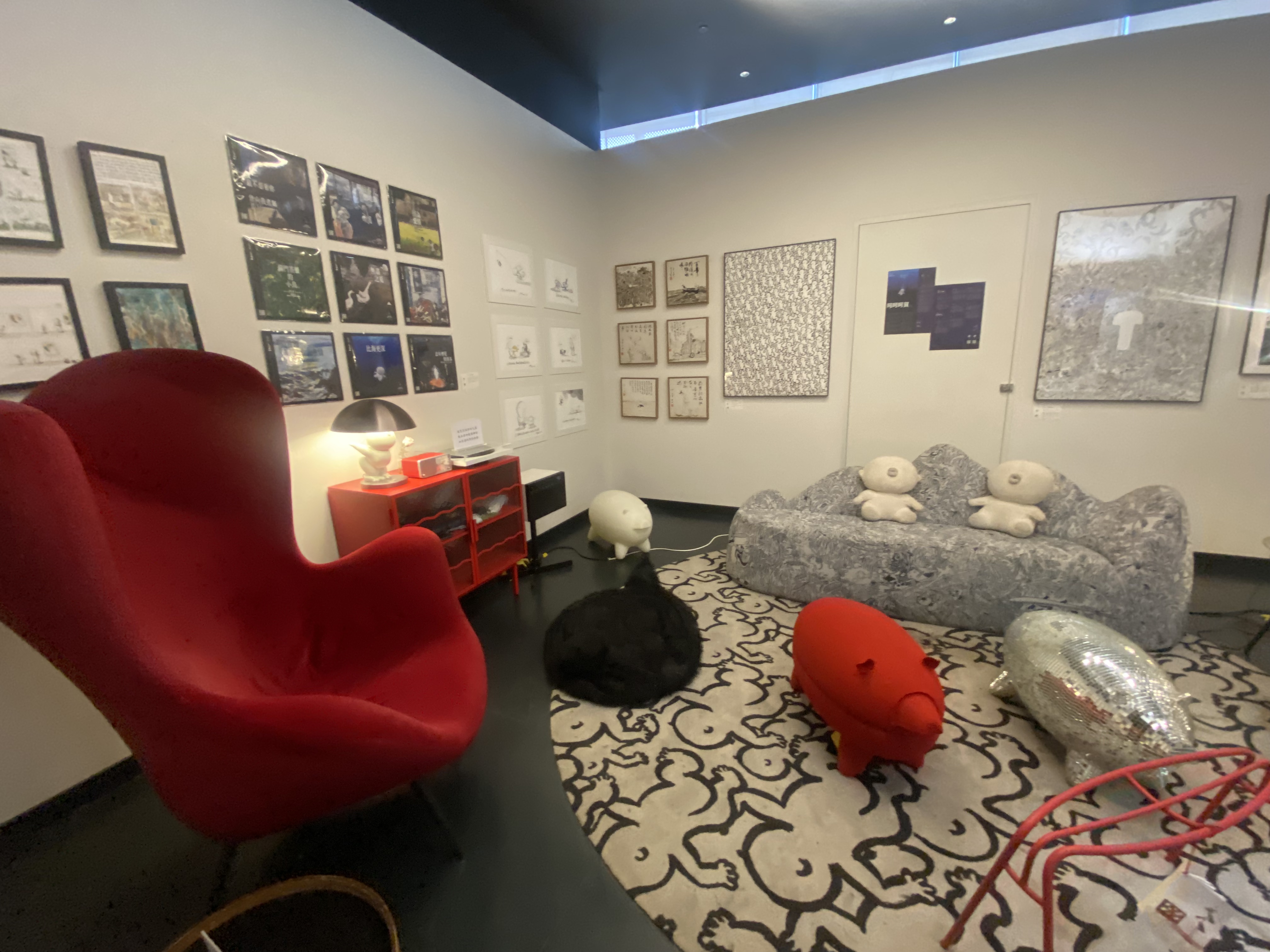
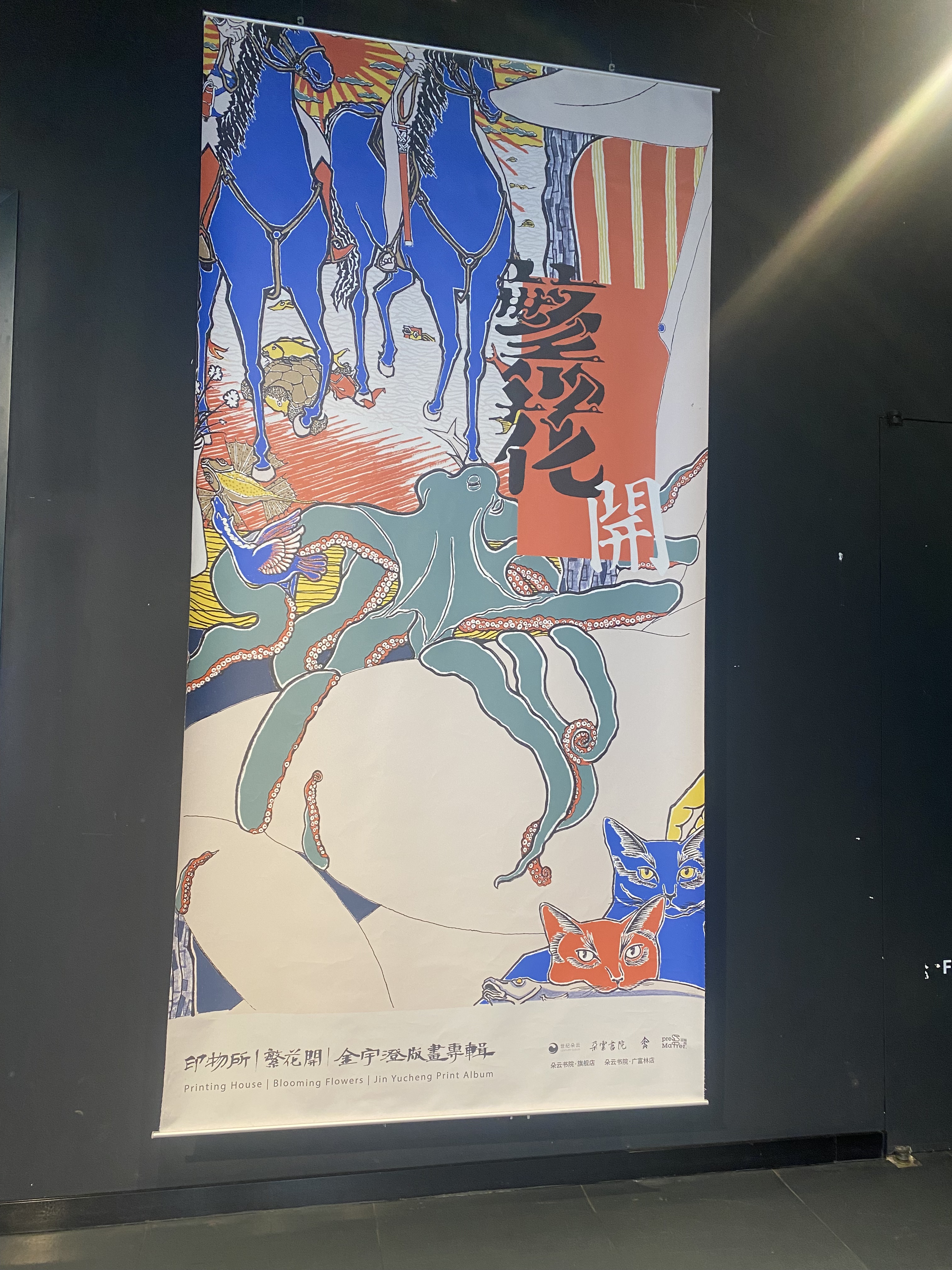
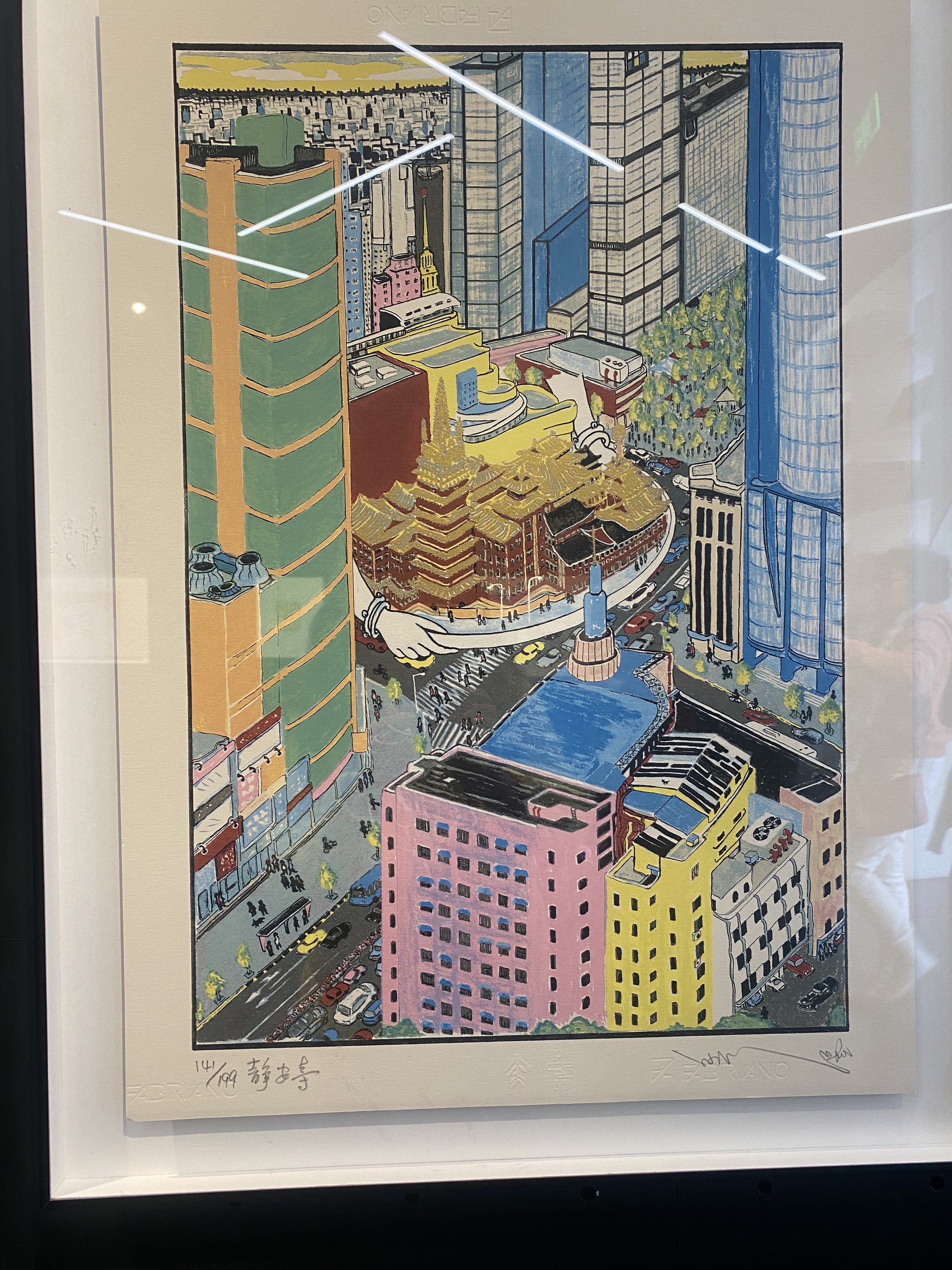
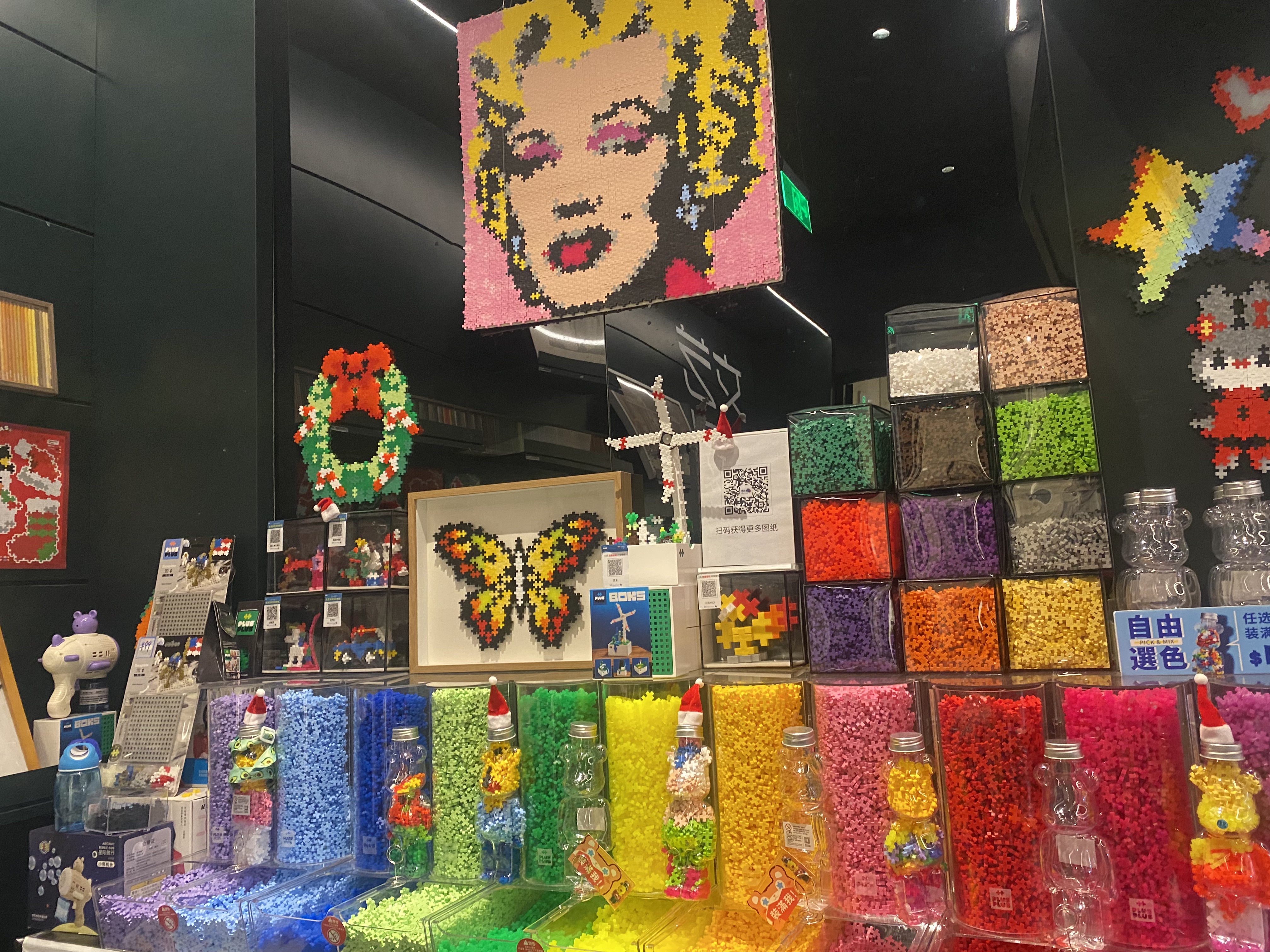
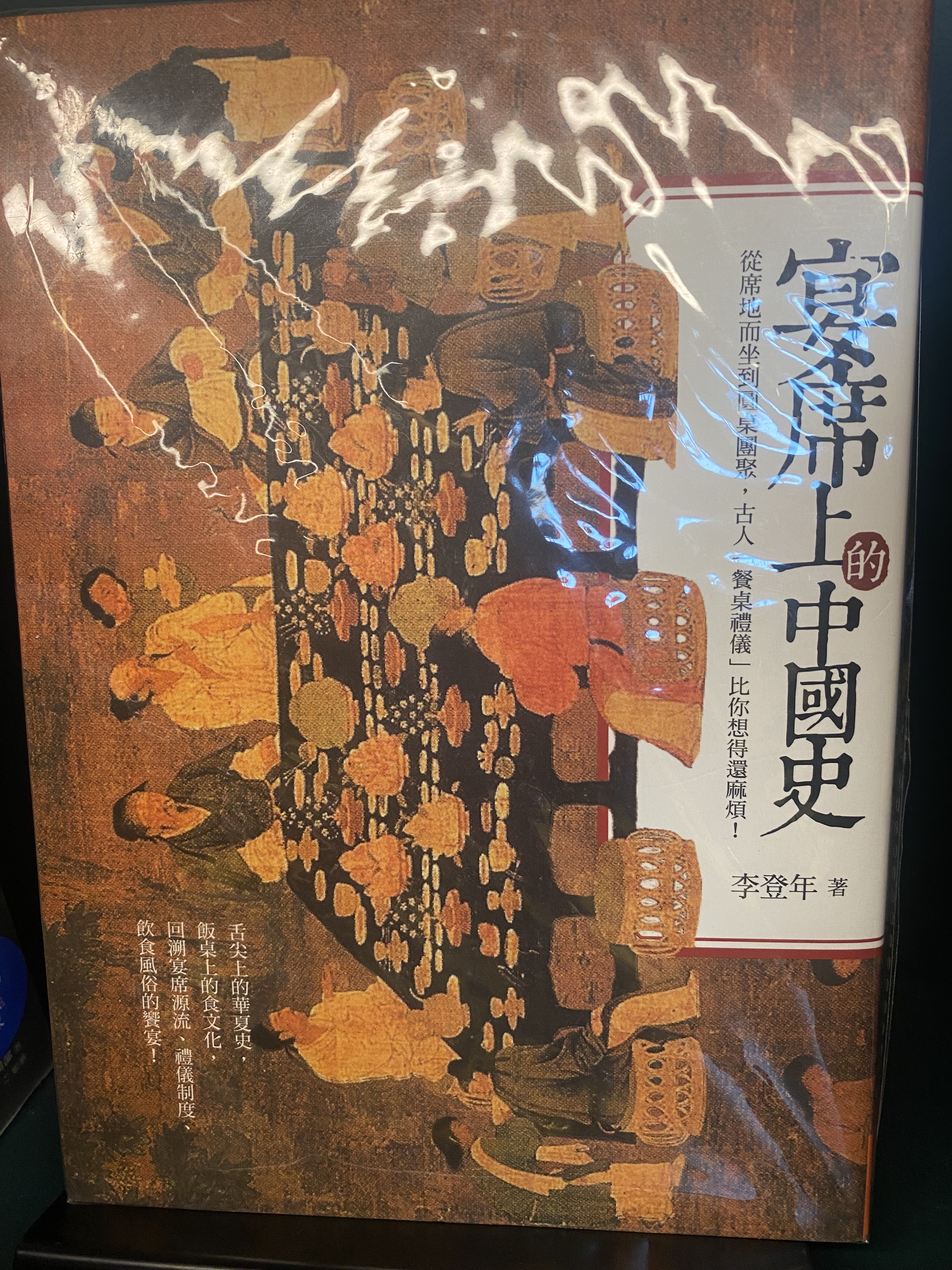
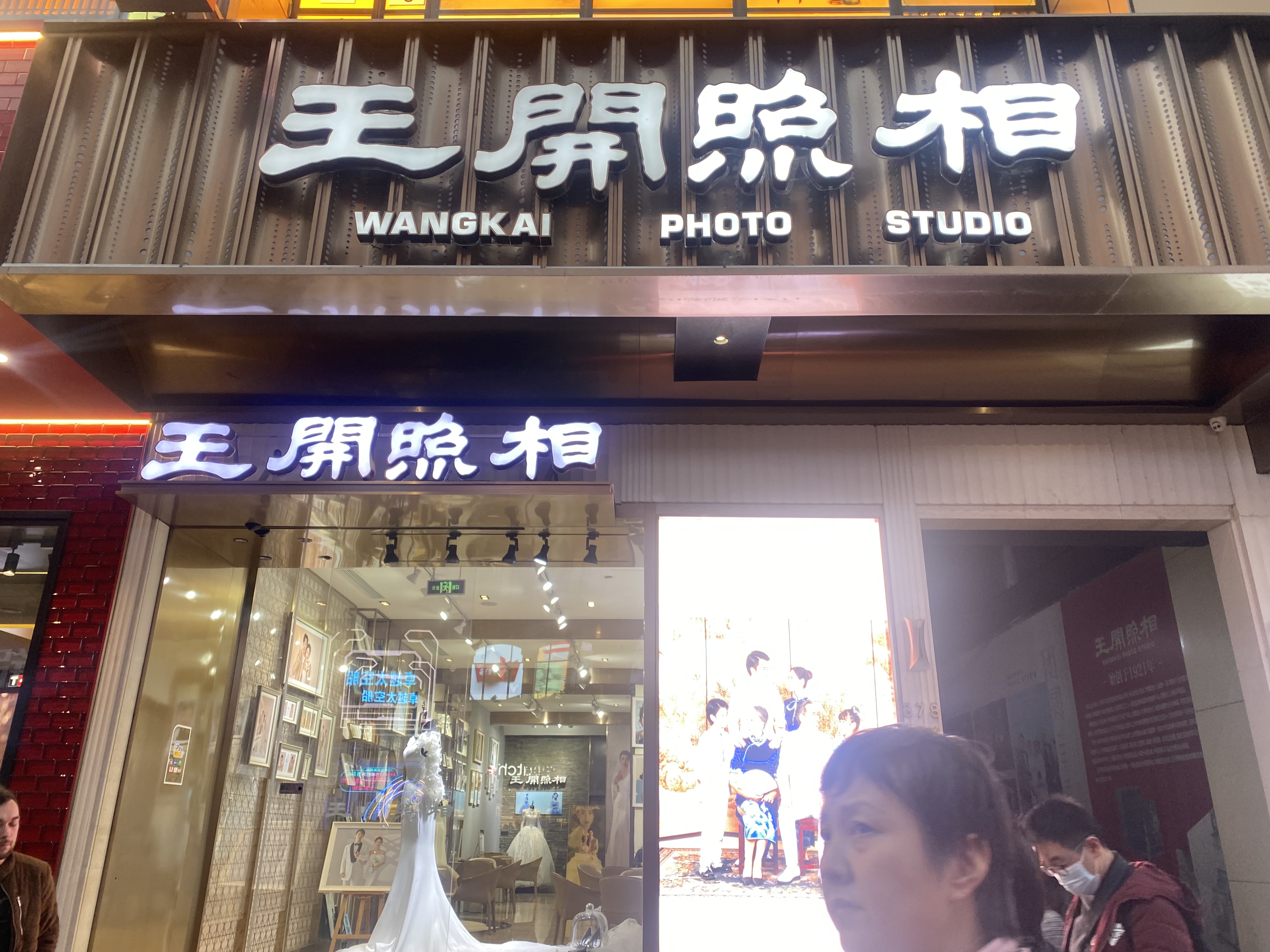
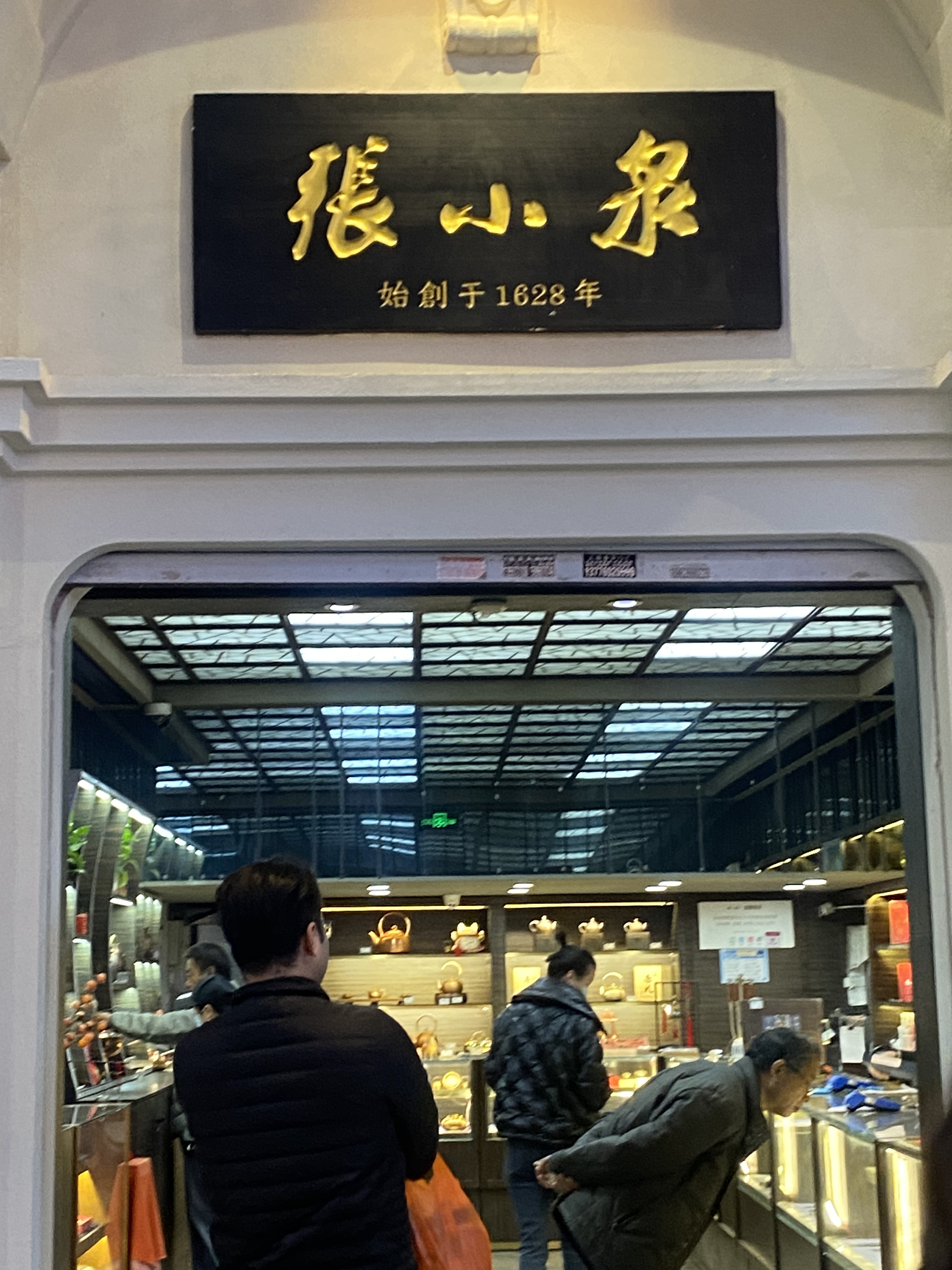
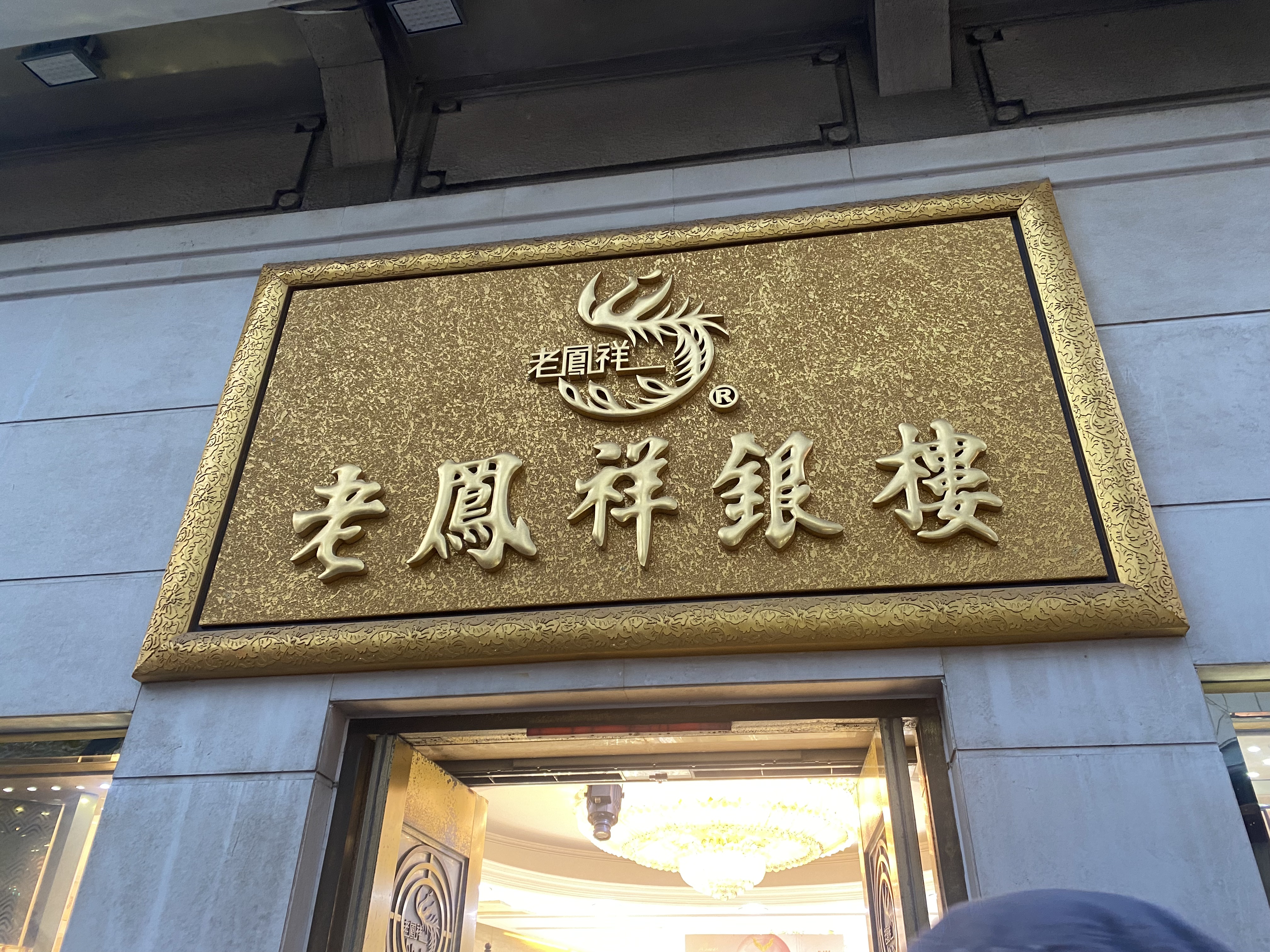
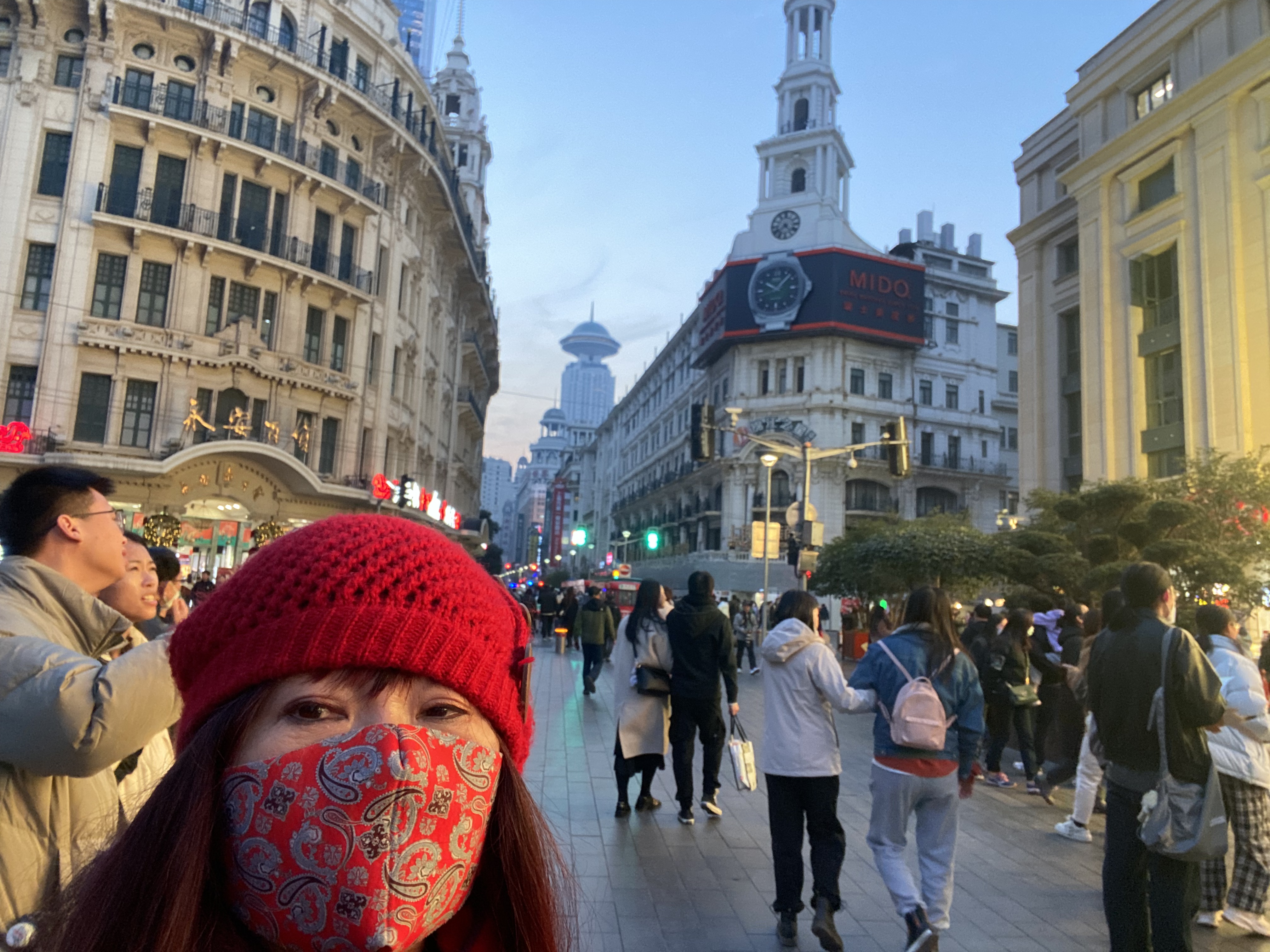
From the “Peace Hotel”, I continued westward to the bustling Nanjing Road, which is blinked with neon lights and varieties of entertainments. When I was young, we went in groups with friends. The century old vintage shops are still there, such as Wang Kai Photography Studio, Zhang Xiaoquan Scissor Shop, Maochang Optical Shop and other time-honored brands brought a lot of memories back During that time, it was also extremely happy experience to go to the “No. 1 Department Store” and take the escalator ride…It was so much fun! ❤️❤️❤️
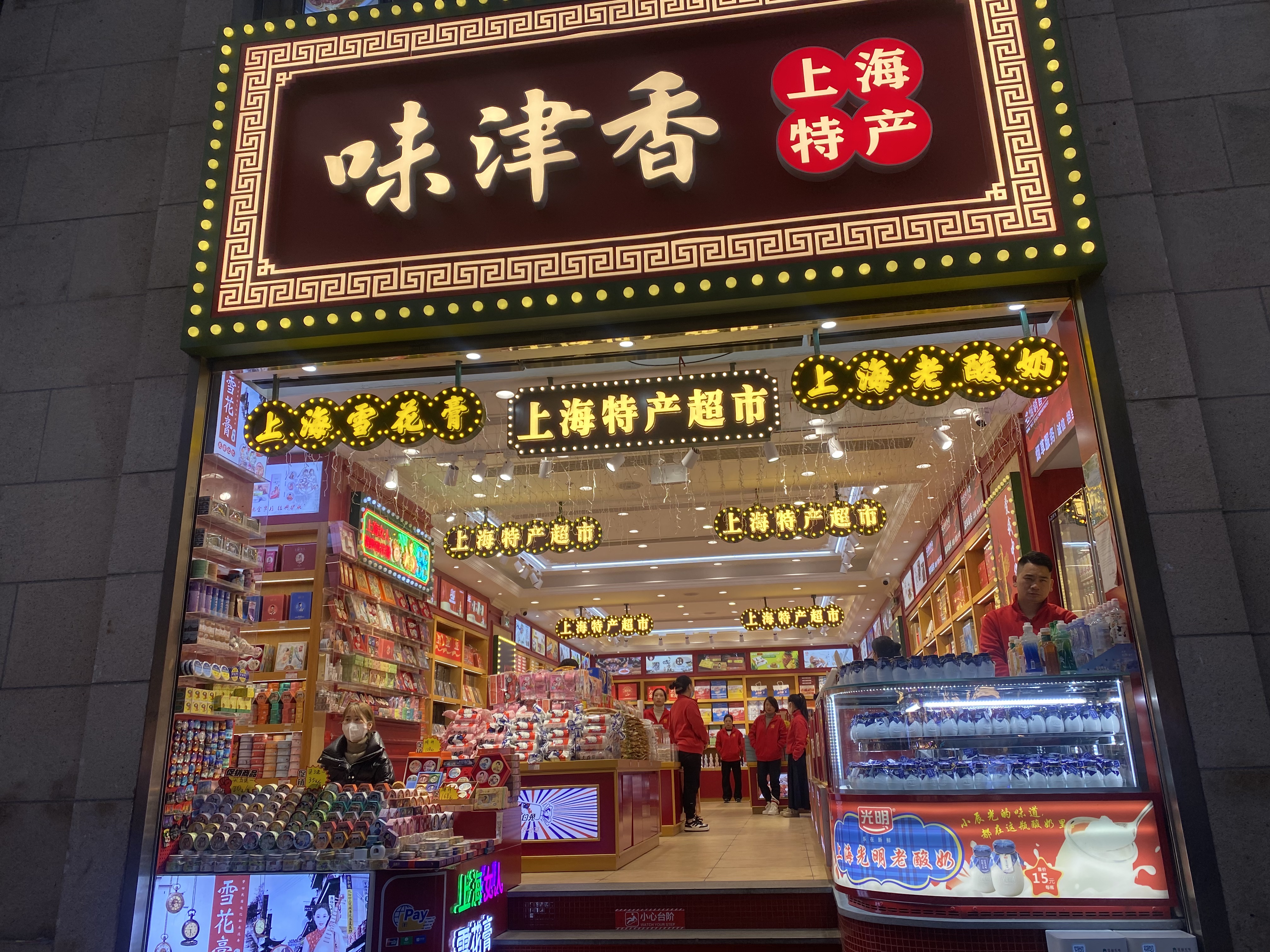
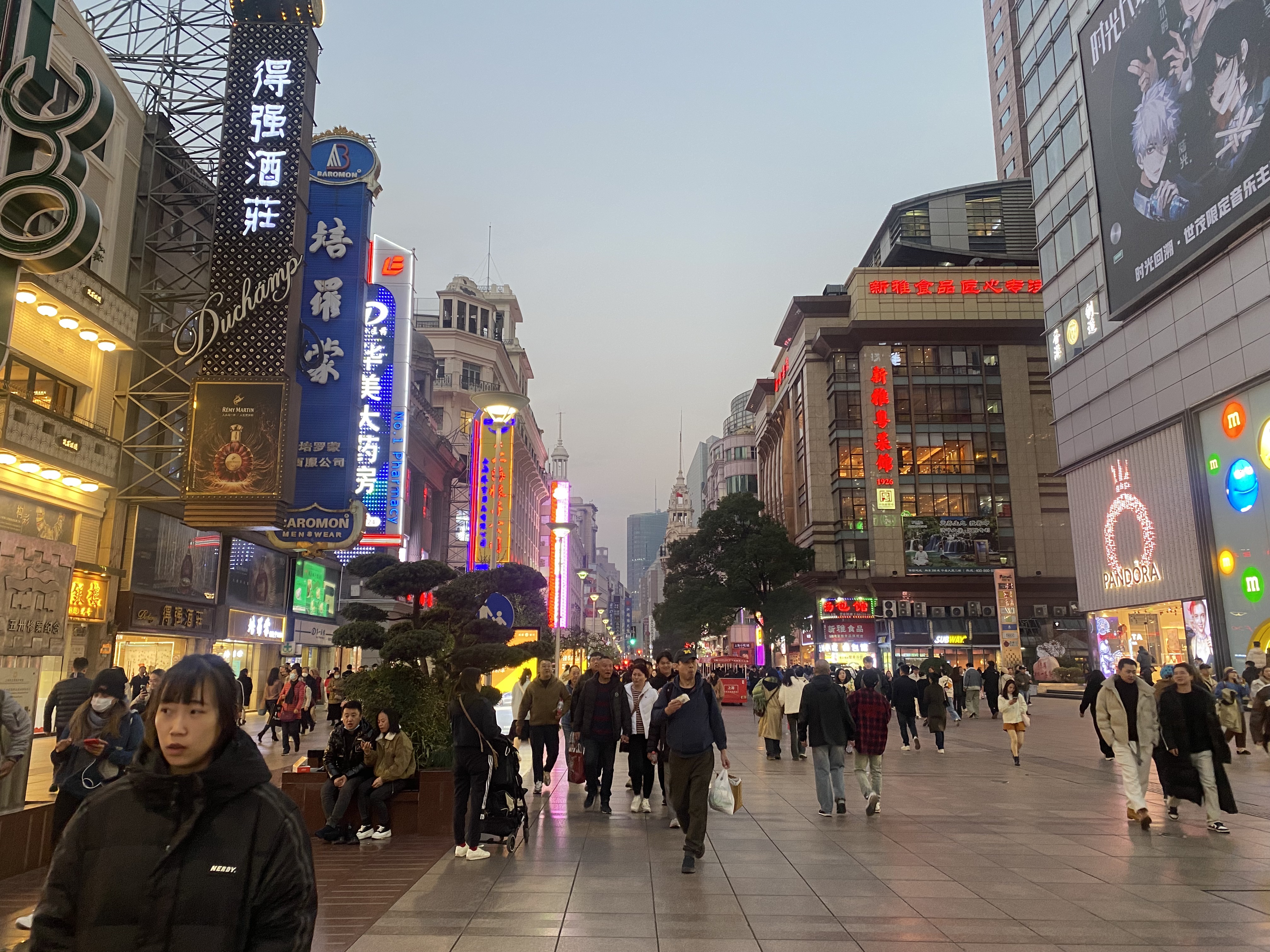
Here are the lyrics of an old popular song about the night life in Shanghai:
“Shanghai nights, Shanghai nights, you are a city that never sleeps
Bright lights, sounds of cars, singing and dancing
Just seeing her smiling face, who knows of her inner sorrow?
Nightlife is just as important as food, shelter and transport
Alcohol doesn’t make people drunk, they make themselves drunk
Troubled sky and earth, wasted youth
The hazy light of dawn makes everyone’s eyes tired
The soul returns with the turning of car wheels
She finds a new world, not a new environment
The aftertaste of nightlife like waking from a dream”
There are 2 dinner parties almost every day. I have endless topics to talk about with my old friends who are traveling together… Shanghai local food is really delicious! 👍👍👍
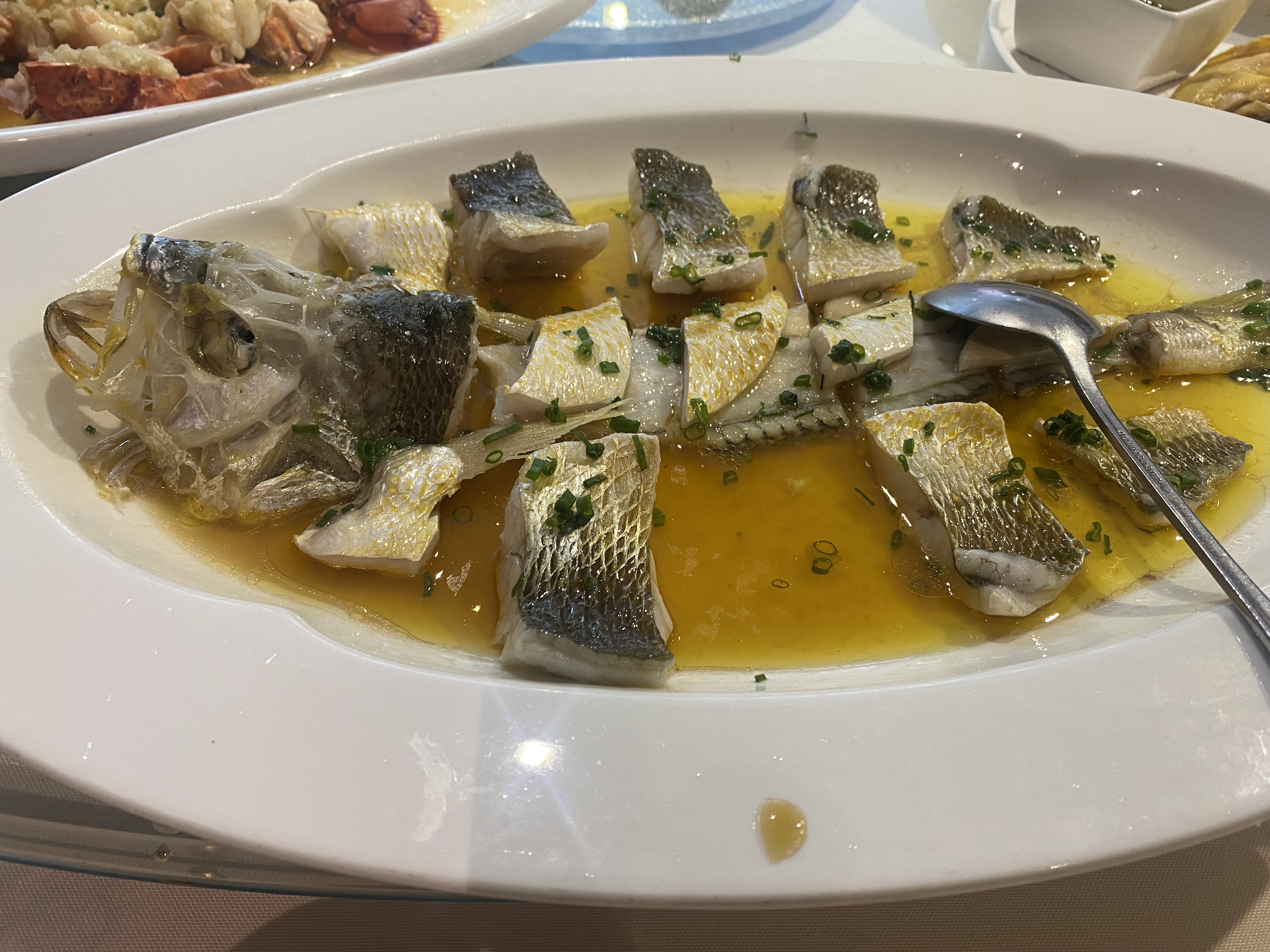
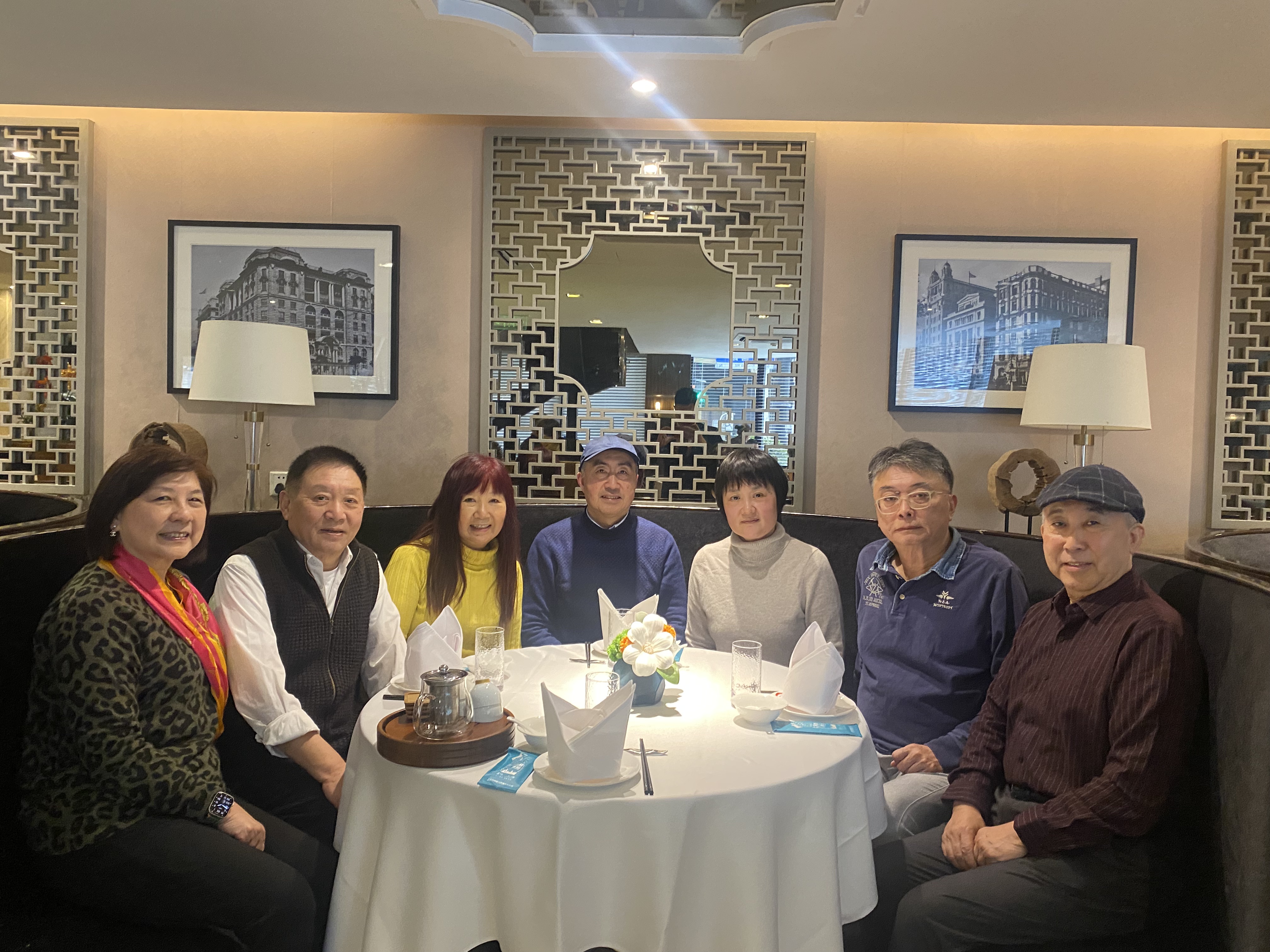
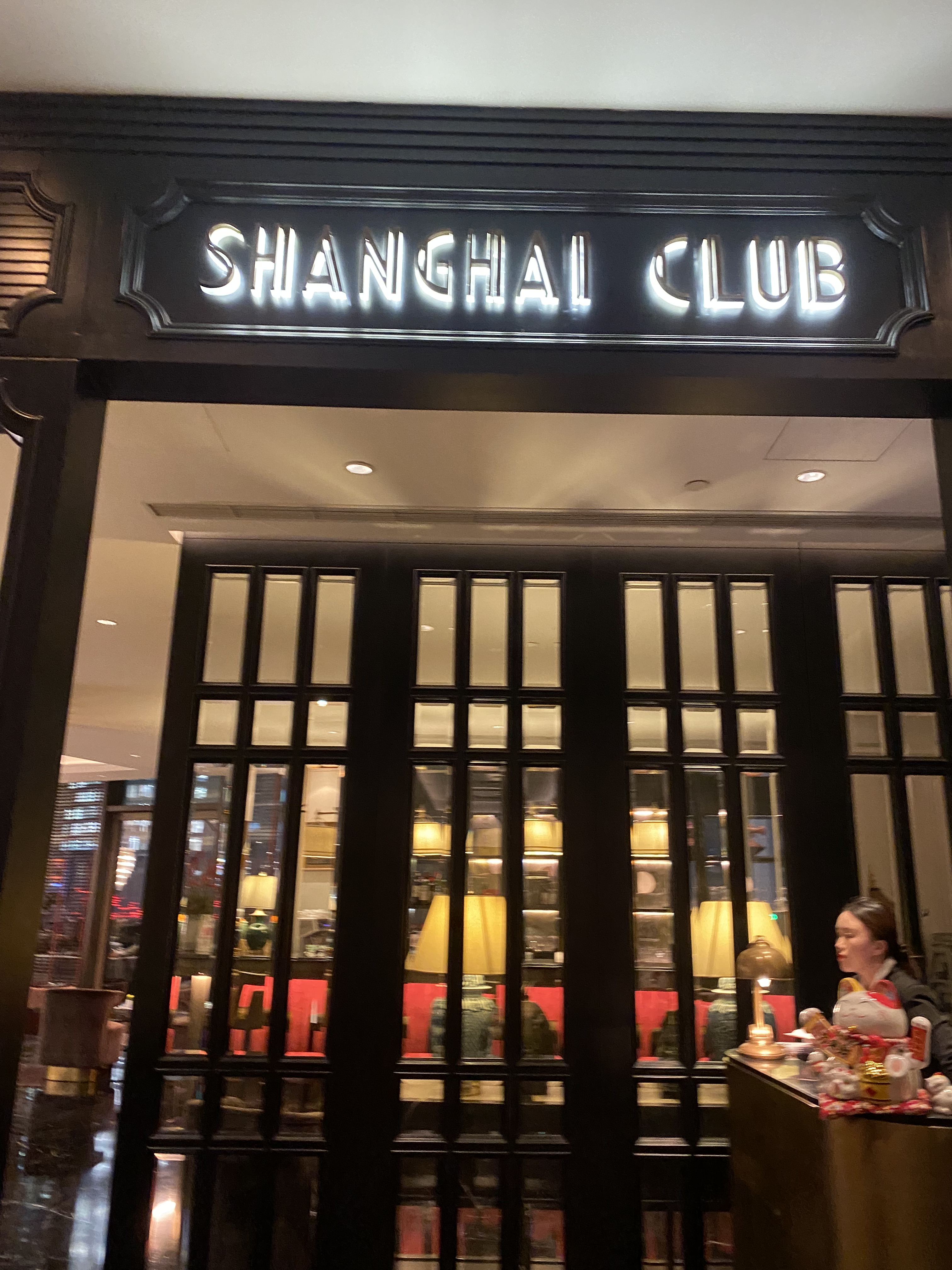
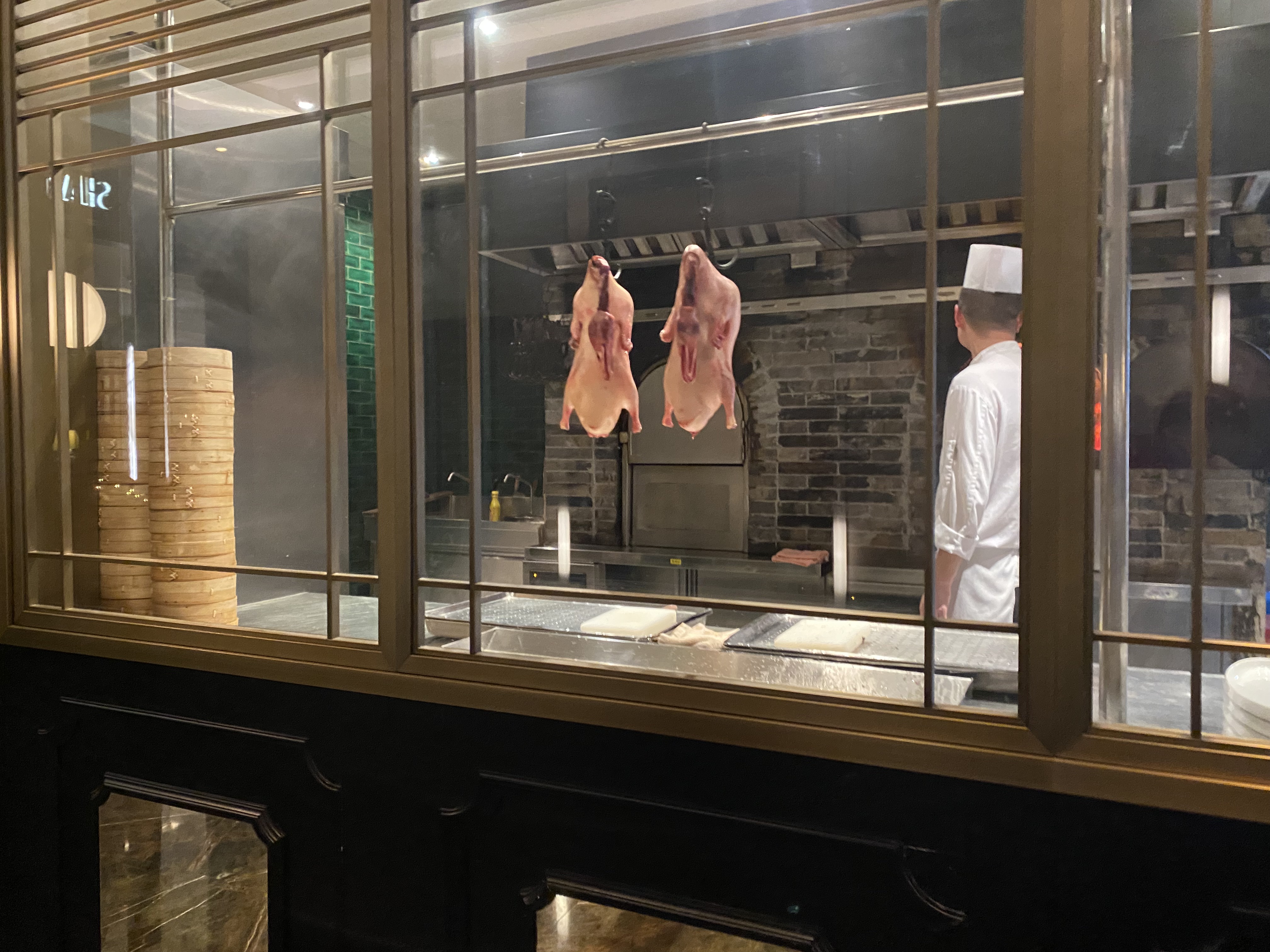
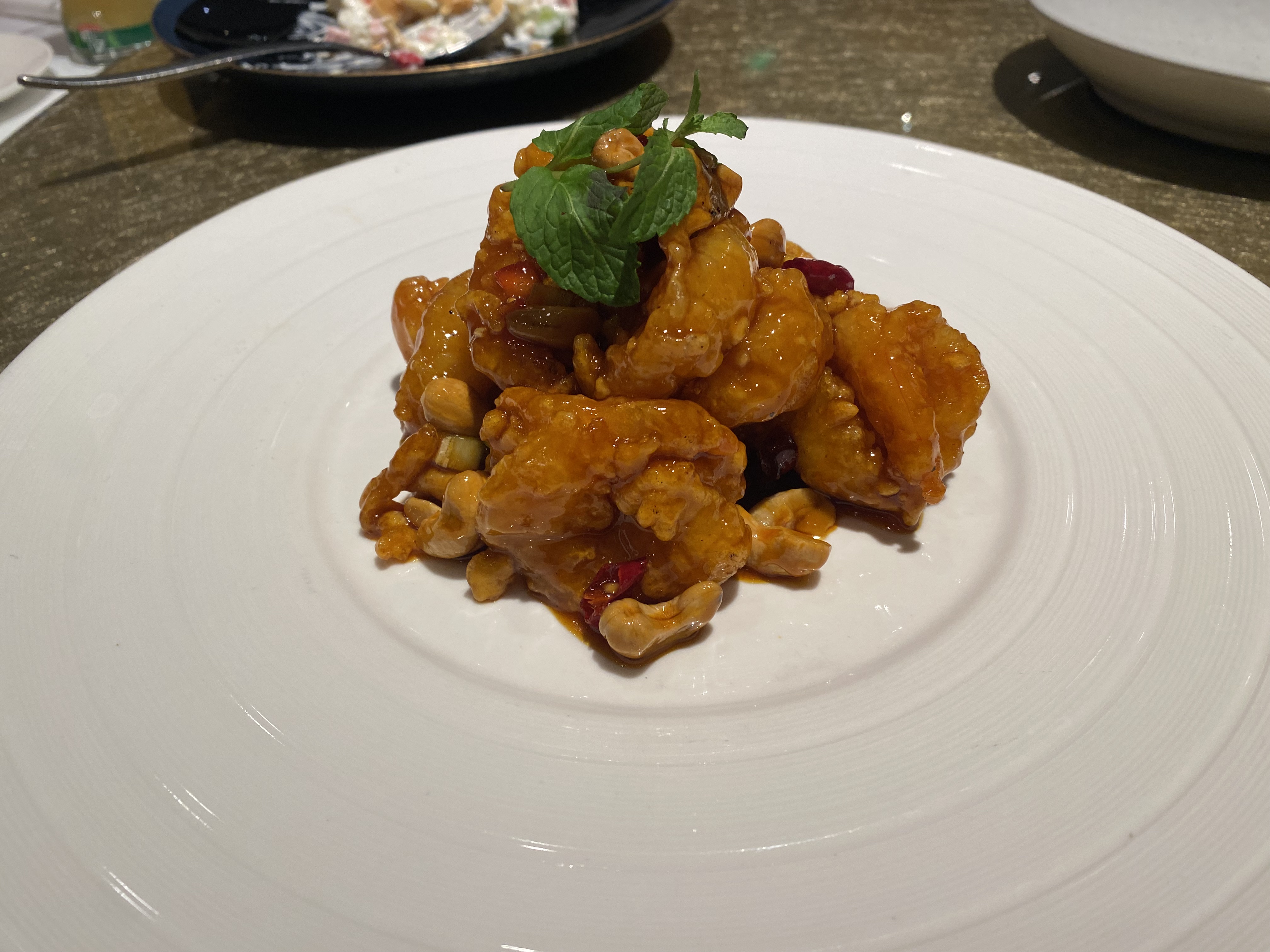
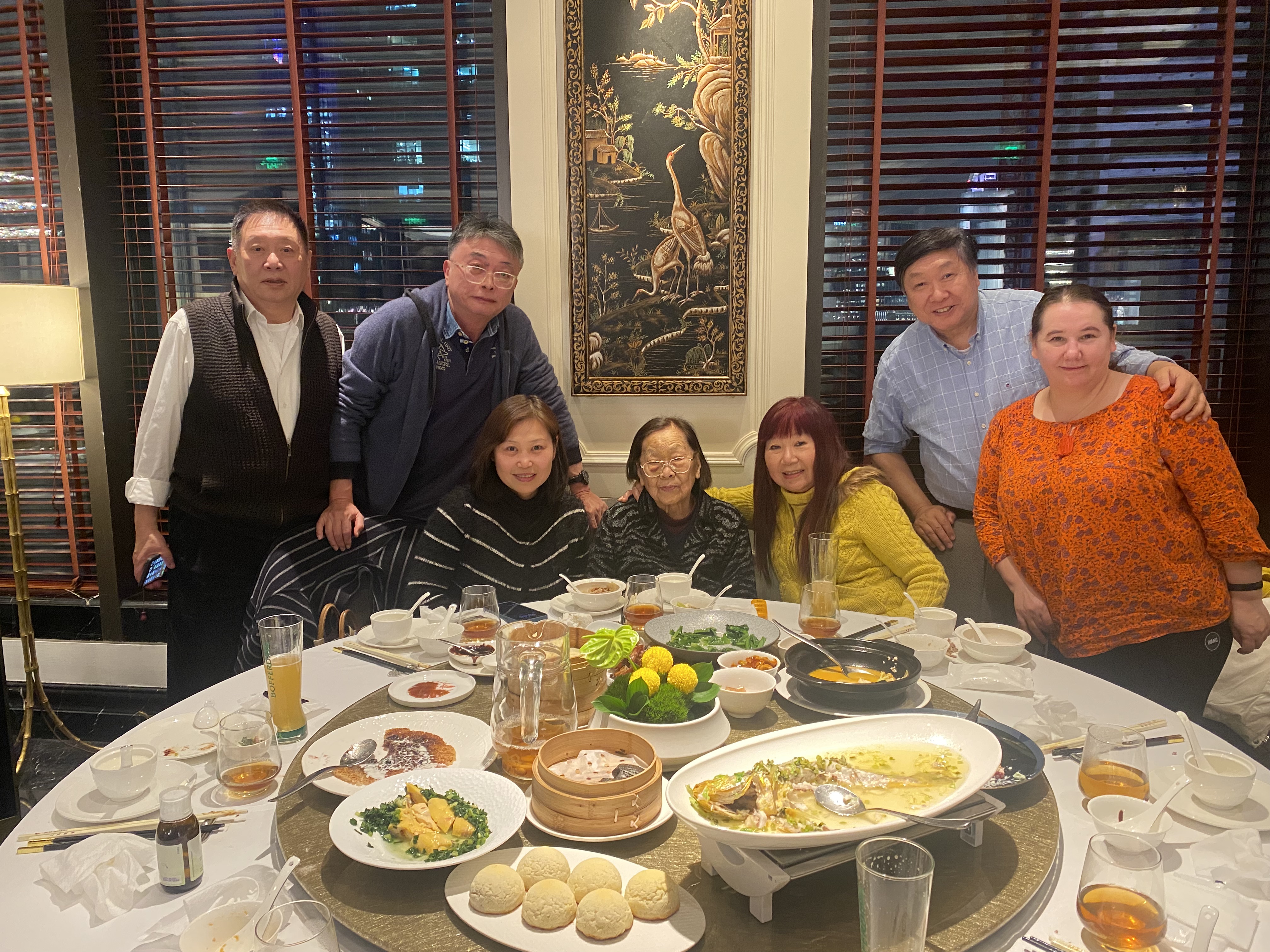
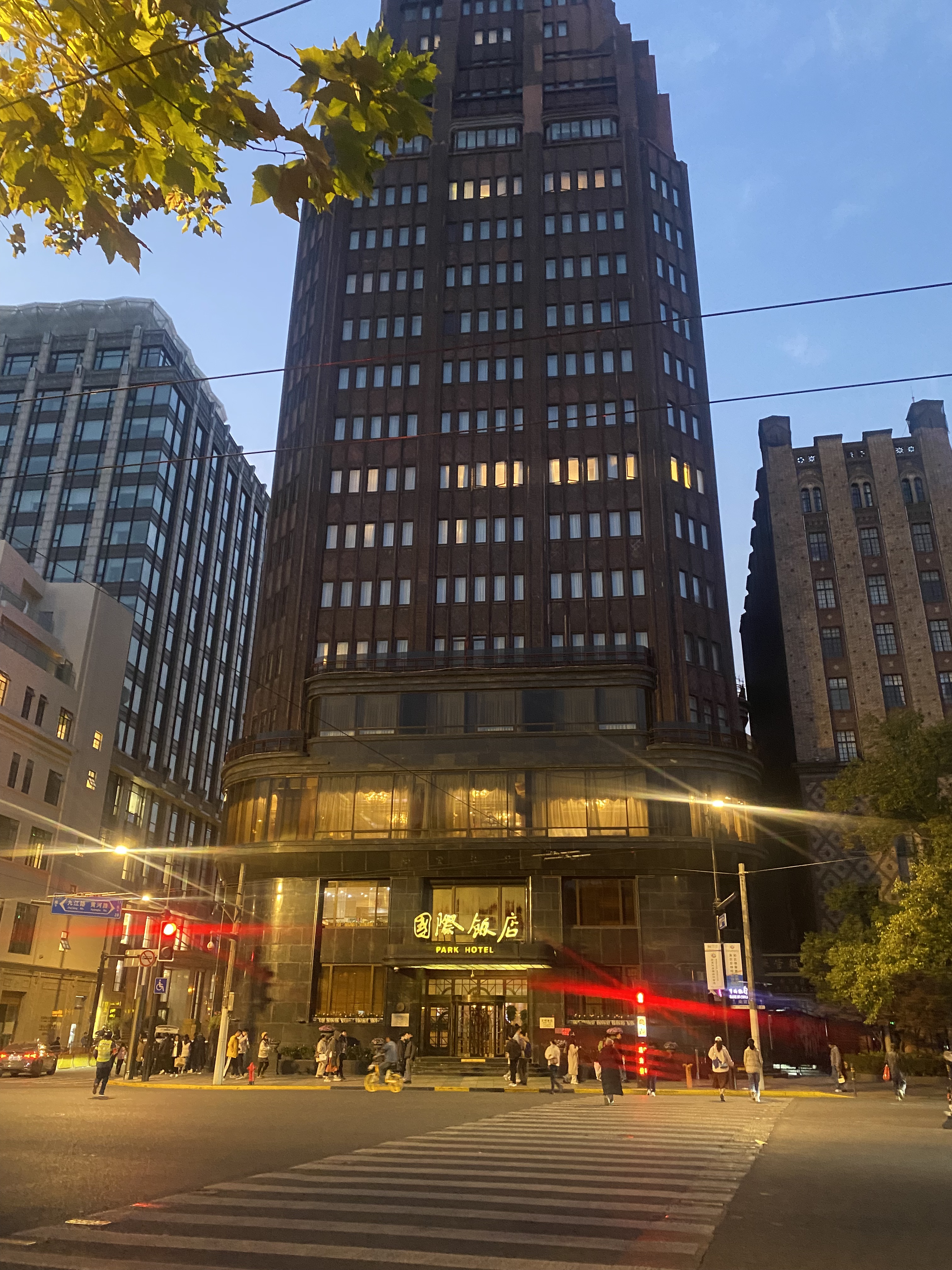
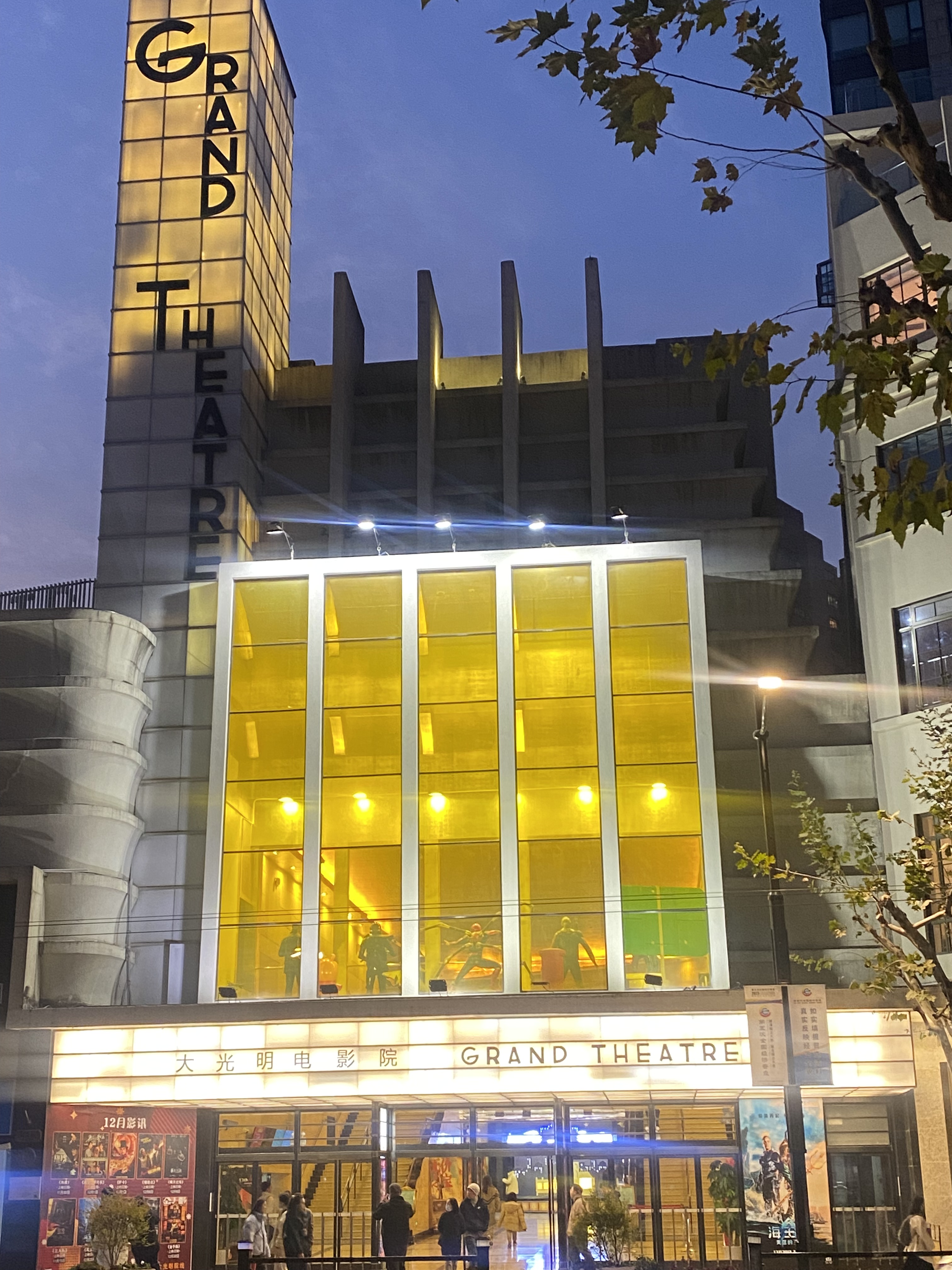
Take a walk and soak in the wonderful memories. I passed the century-old building “Park Hotel (once the tallest building in the Far East), “Grand Cinema” (the most popular cinema for foreigners), Shanghai Workers’ Cultural Palace, People’s Square (former horse race tracks during WWII) and other old buildings.
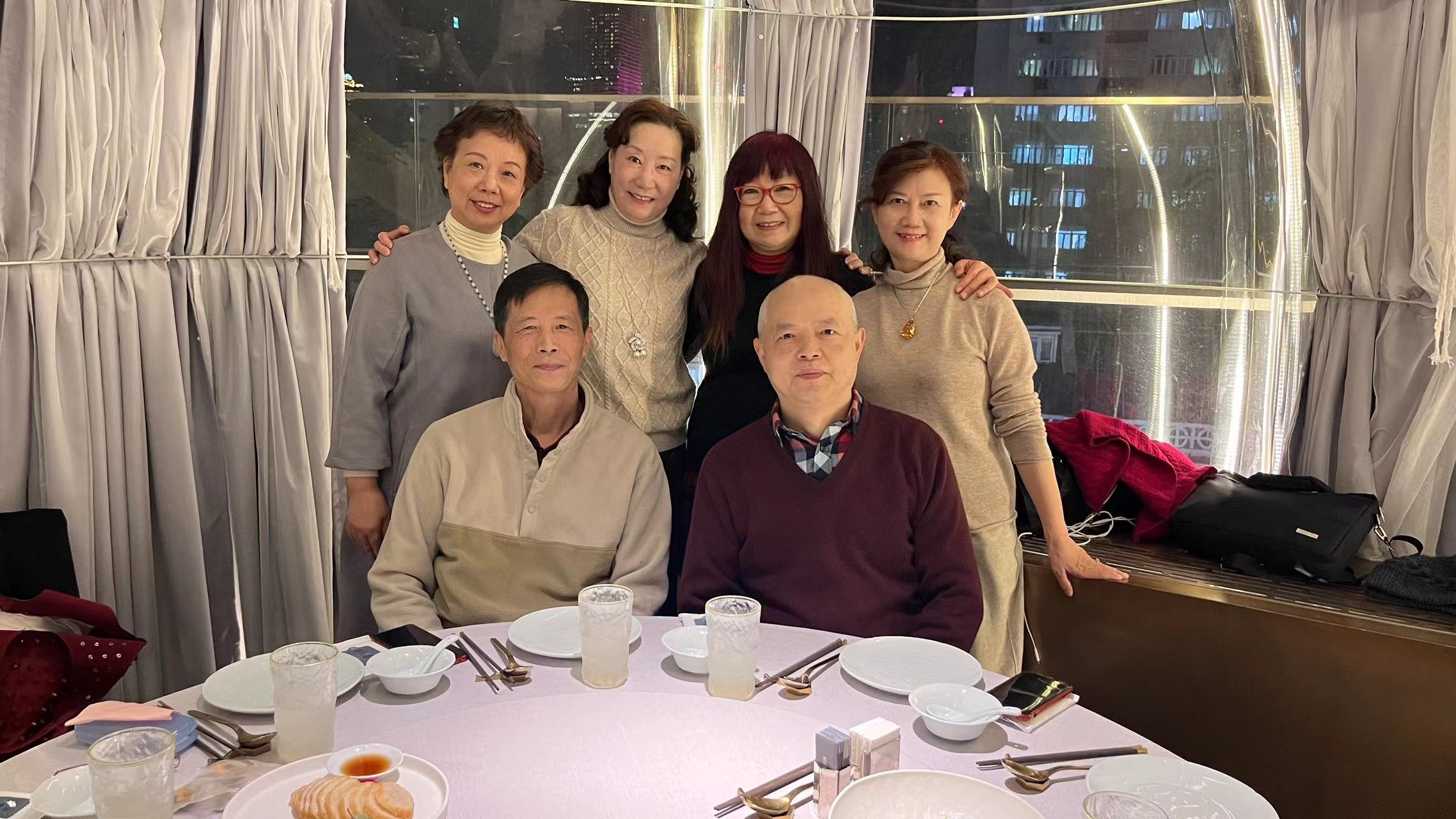
At the end of day, I had a reunion dinner with my our farm friends, we were chatting and laughing. Until the restaurant closes…
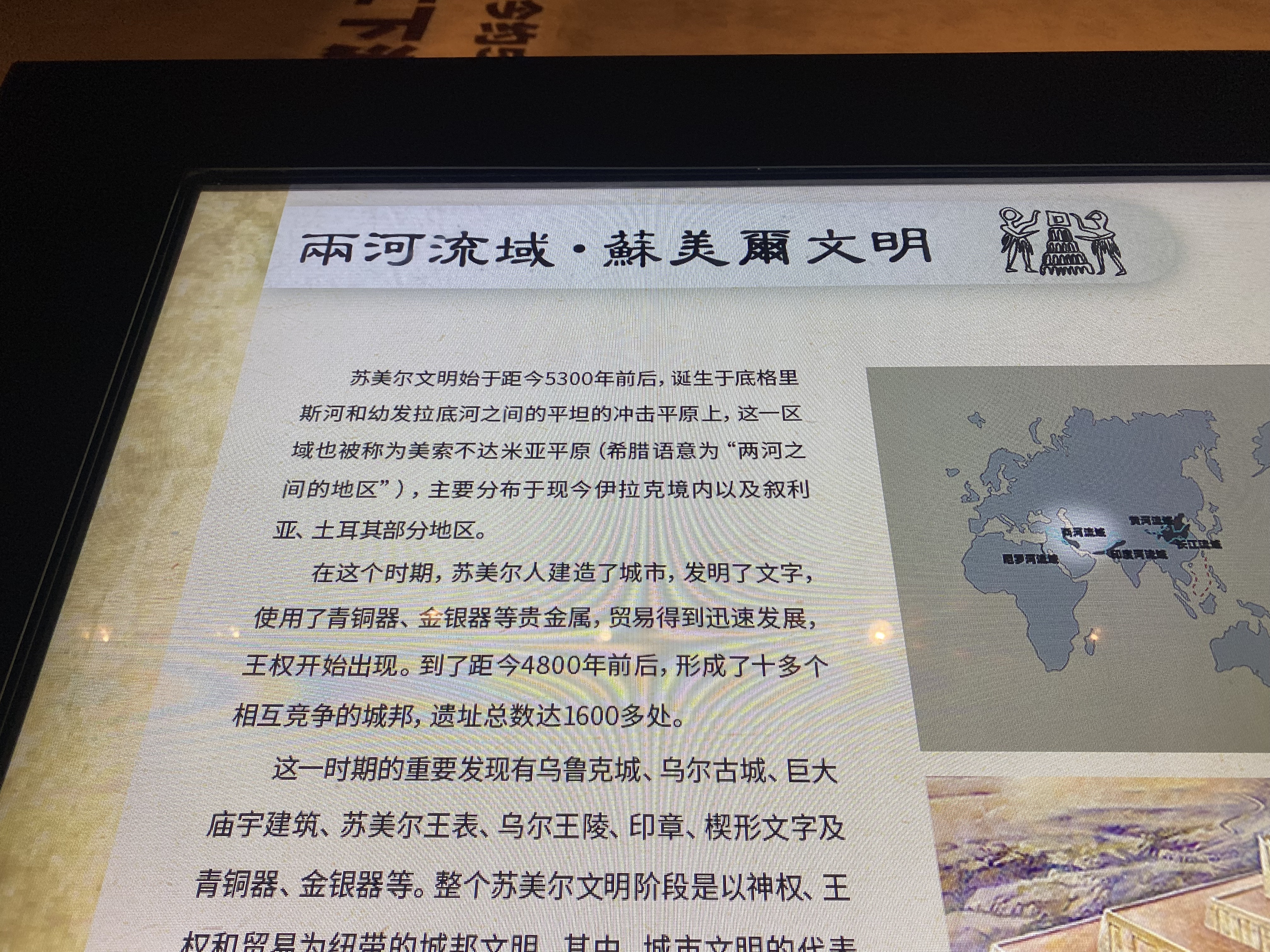
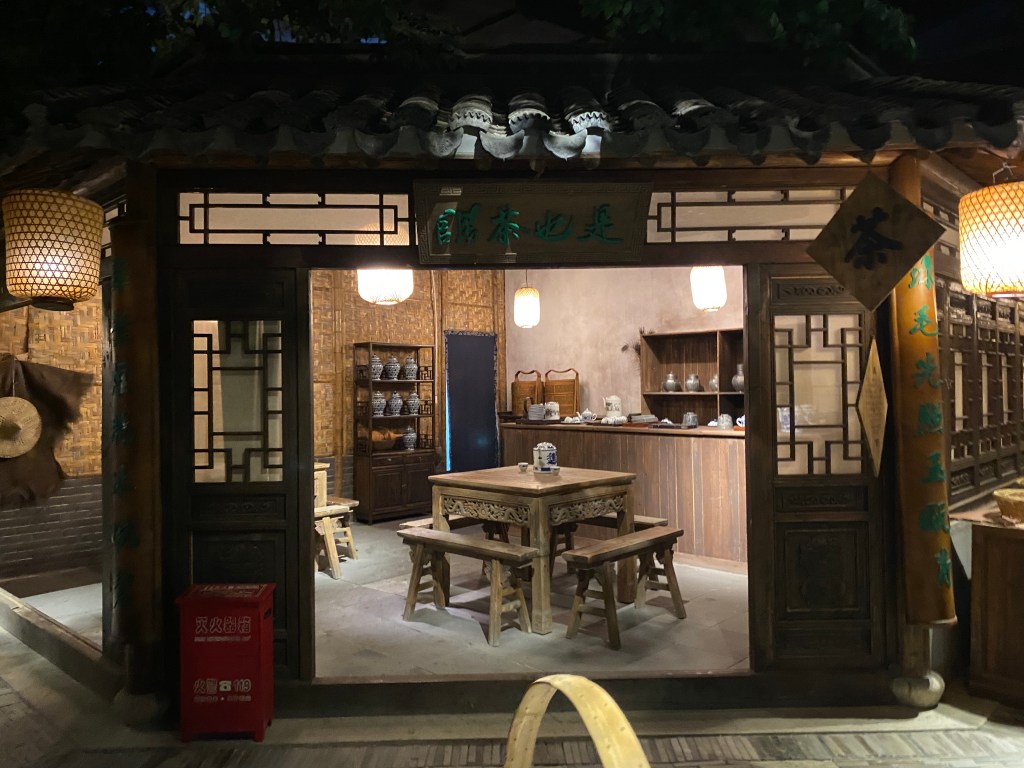
DAY 9: My schedule in Shanghai was very intense. Besides visiting relatives and friends, I was trying to absorb Shanghai cultural heritages as much as possible. Shanghai’s public system is wonderful! Following Baidu Map (equivalent to “Google Map”) I took the subway and a bus to the former “countryside”: the “Guangfulin Cultural Site”. This was once the place where I passed by for camping when I was in high. school, and now it has become a tourist attraction… There are unearthed cultural relics here, with a history of 6,000 years, and this is the origin of Shanghai.
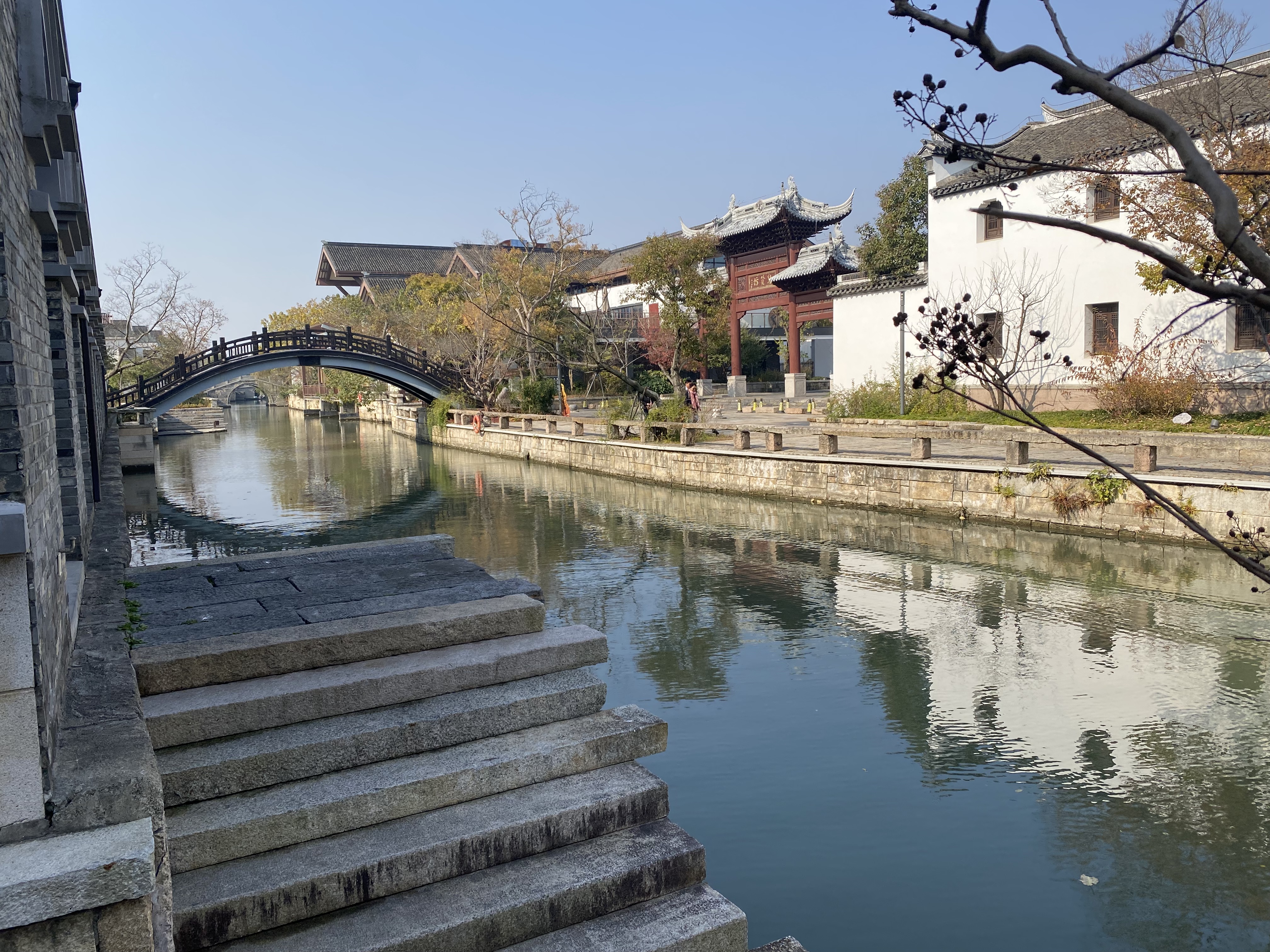
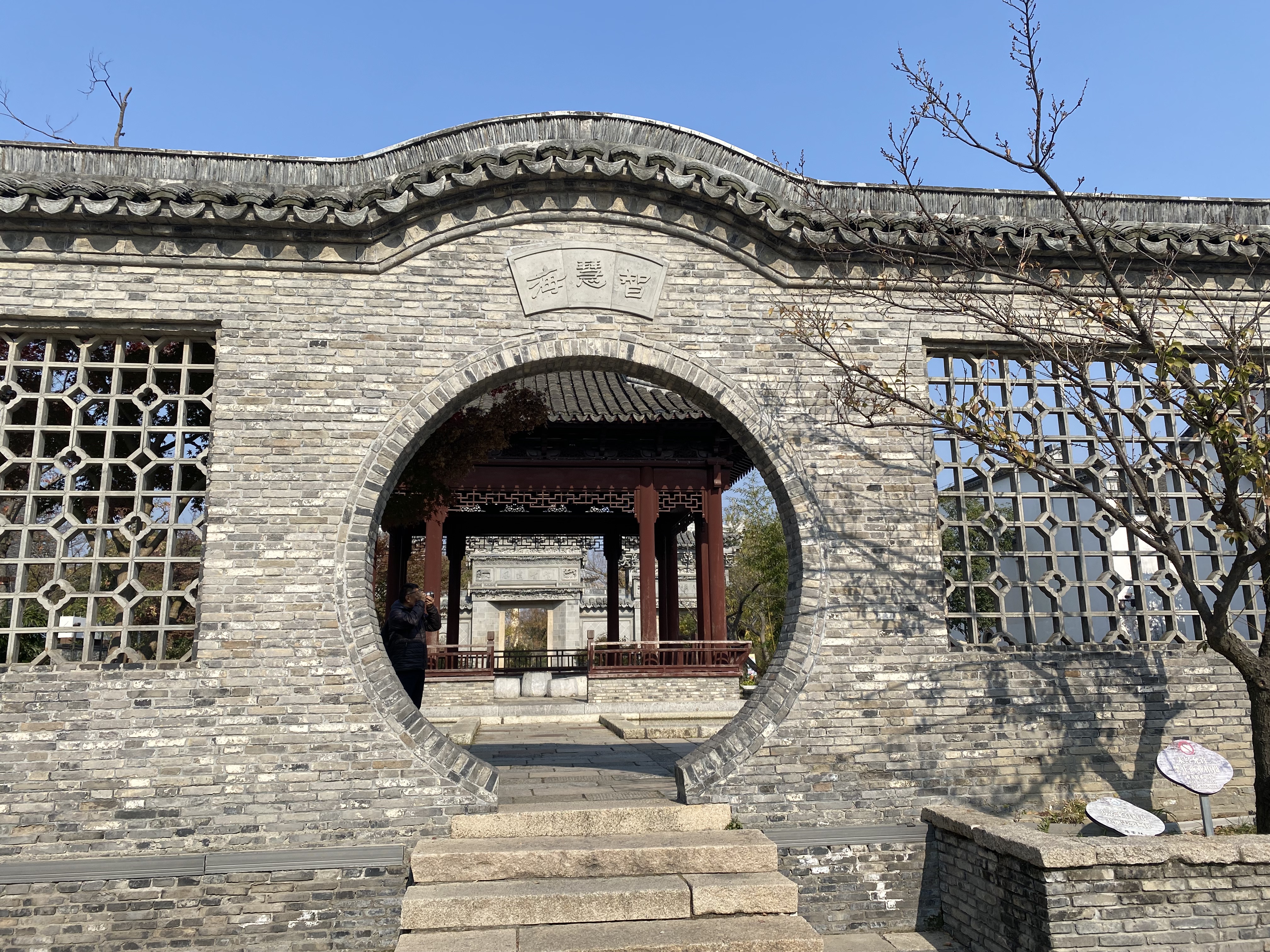
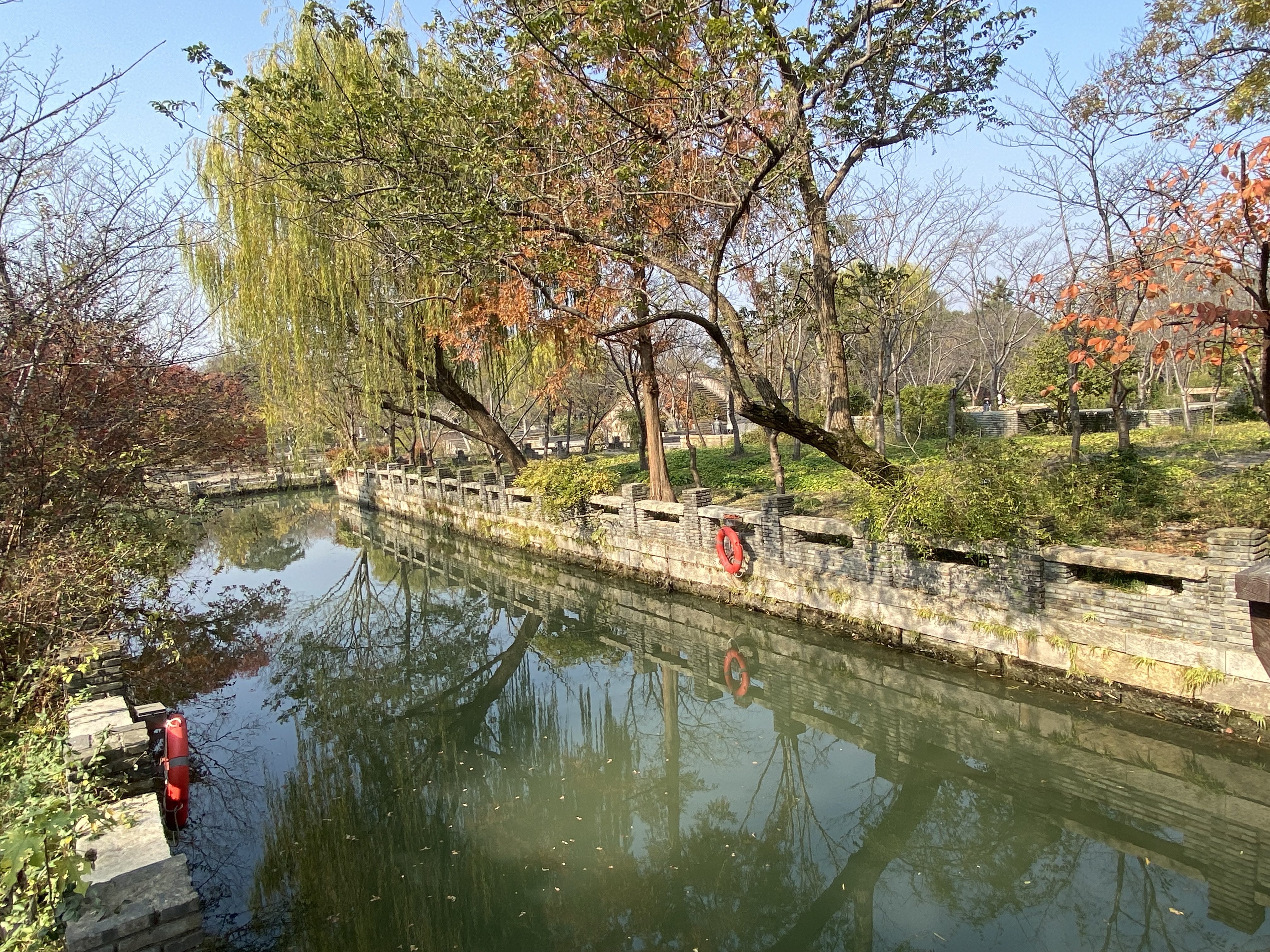
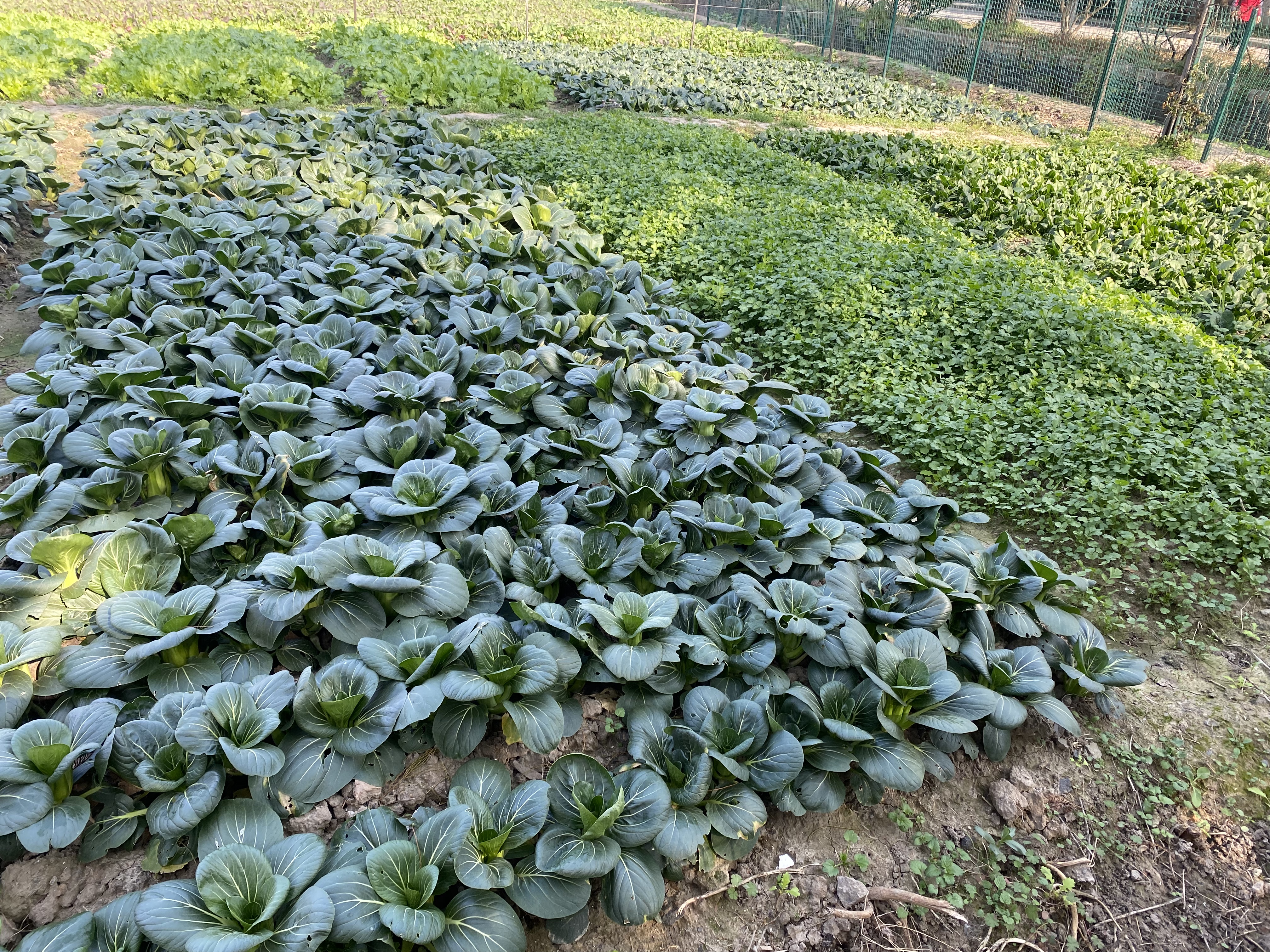
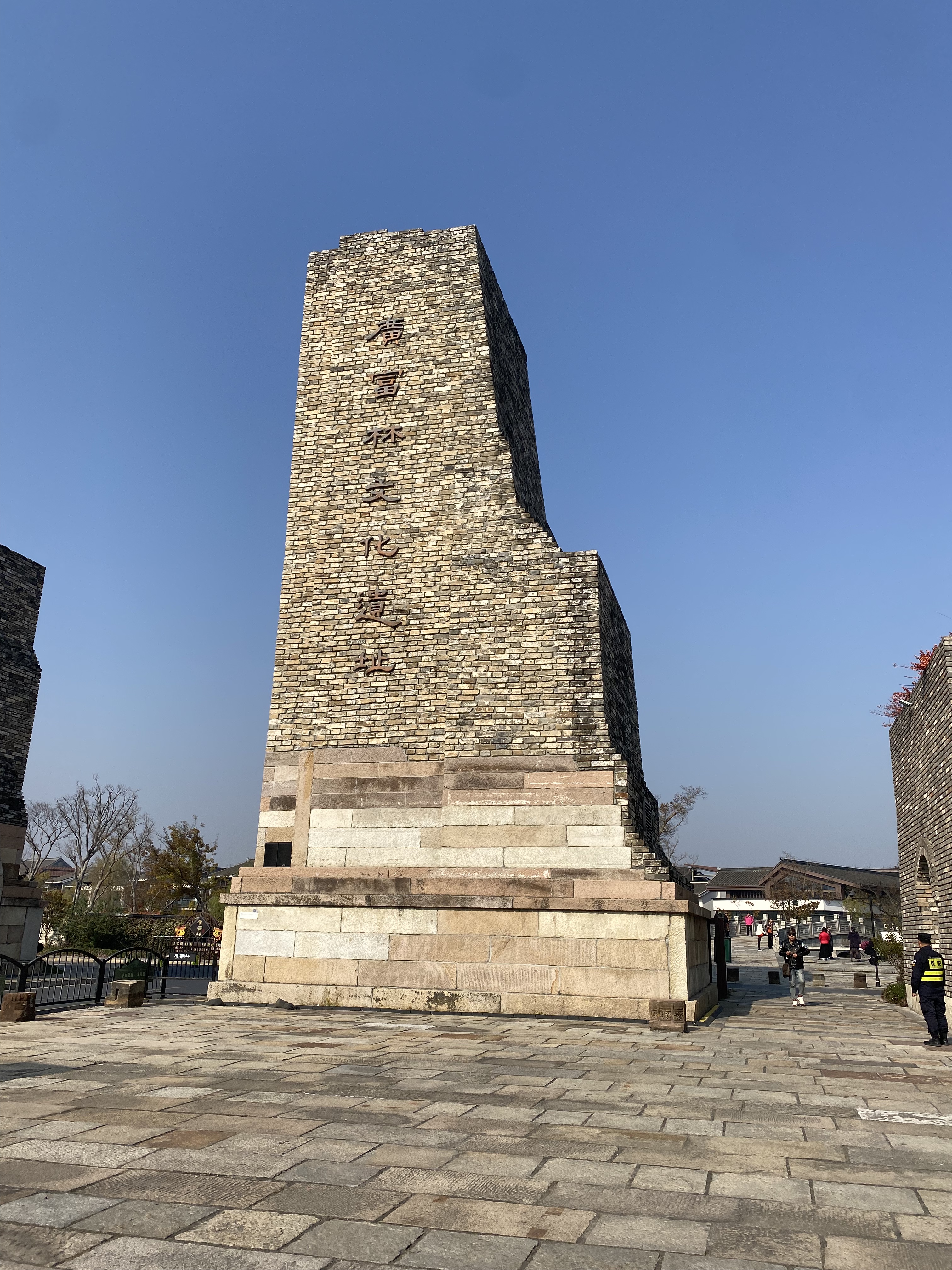
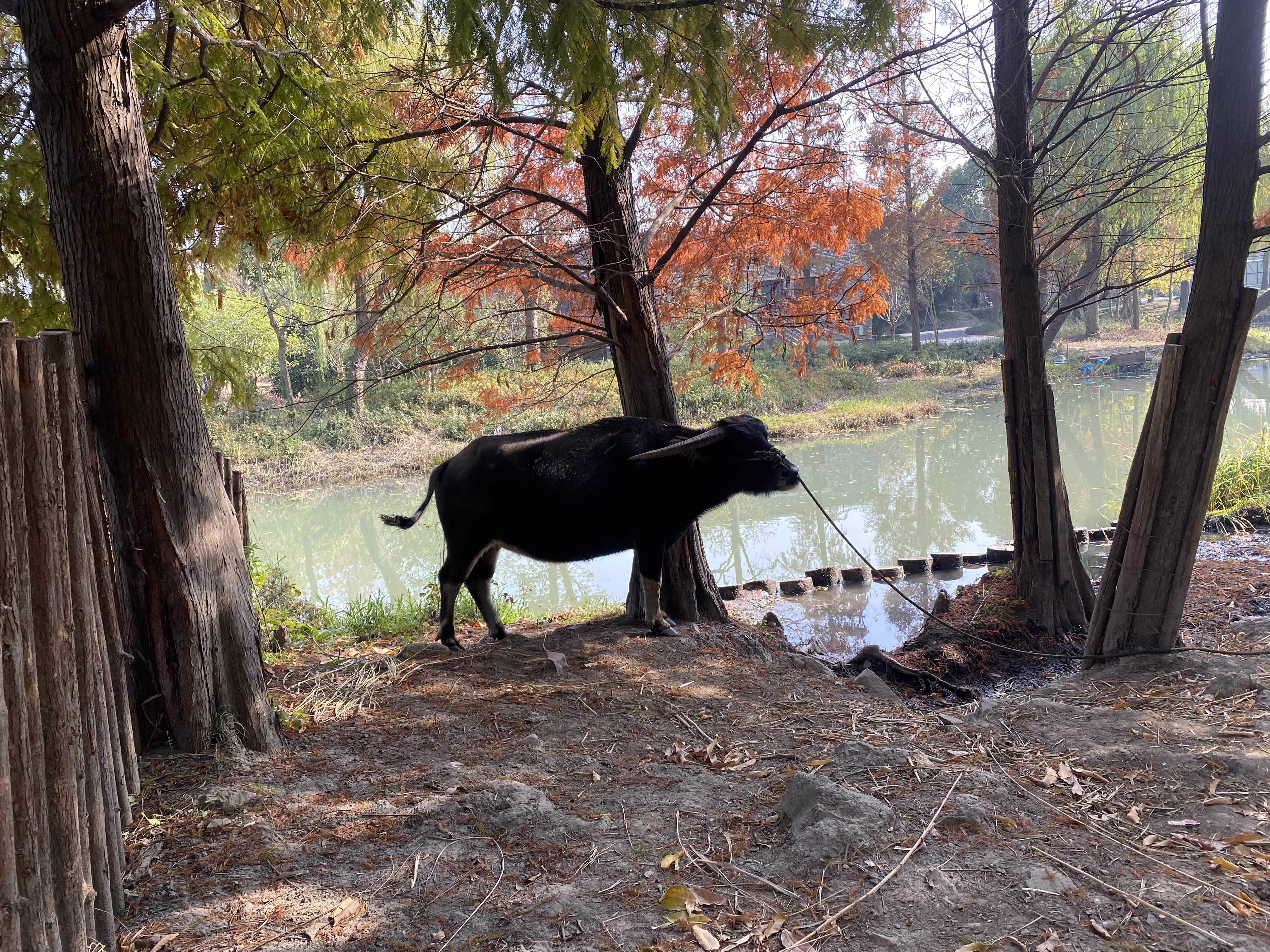
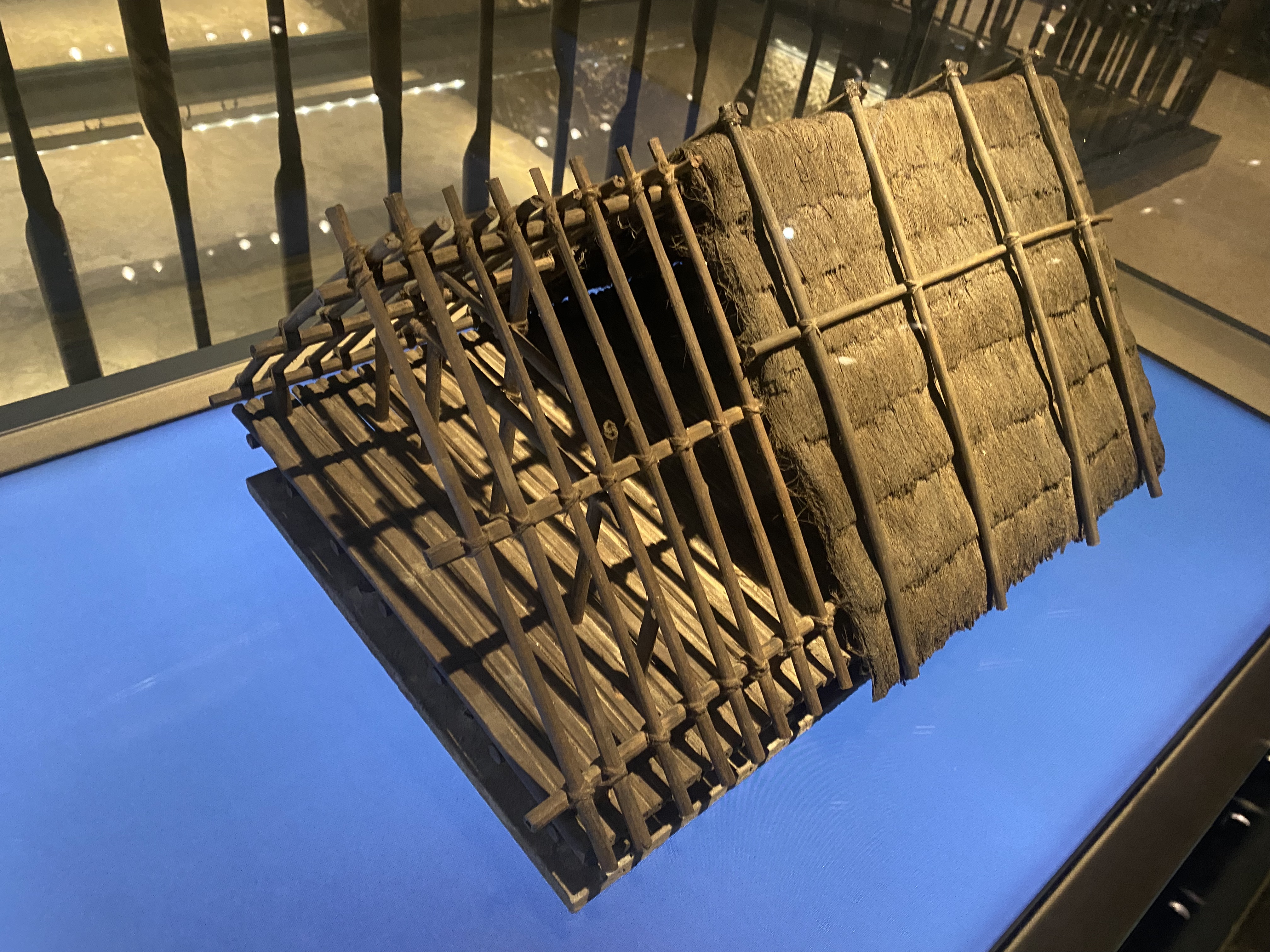
The Guangfulin Cultural Site is a fully preserved ancient village, which includes buildings, cultural relics such as houses, stoves, and tombs. Walking into this ancient village is like going back to the ancient times. You can see the living scenes of human beings at the time of 6000 years ago. I learned how they produced, how they hunted, how they performed religious activities, etc. Here, you can personally feel the rich wisdoms and hardworking spirit of ancient humans.
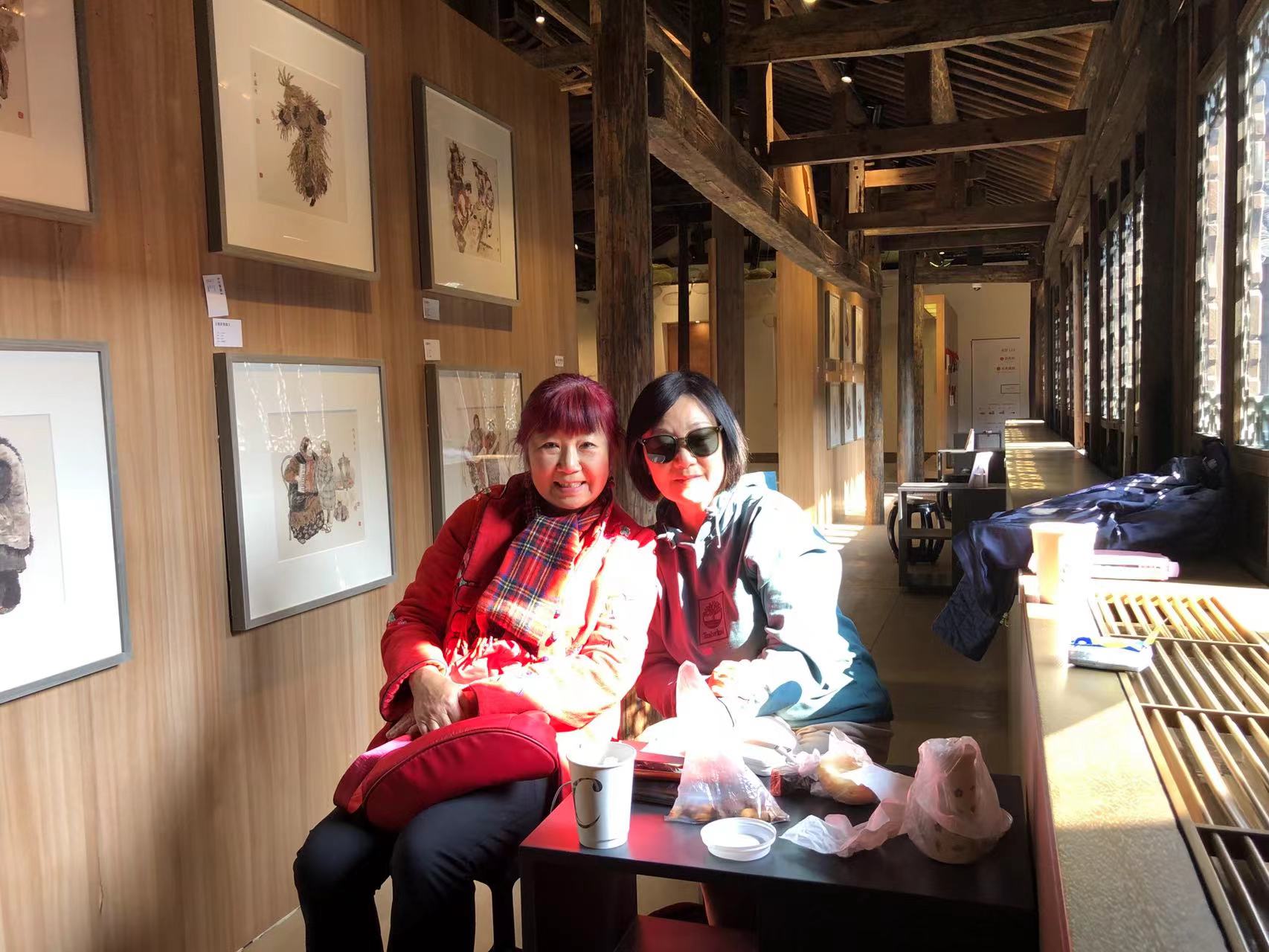
The style of Guangfulin’s “Duoyun Books” is in sharp contrast to the style of the “Duoyun. Books” in Pudong: one is modernistically overlooking the magical city; one is inn Chinese traditional down-to-earth antique Huizhou style. There are bleached walls, black tiles, horse heads decarations,, and embossed winter melon beams on the patio. I met a Shanghai couple here. They warmly invited me to sit down to chat while cracking melon seeds and having teas.
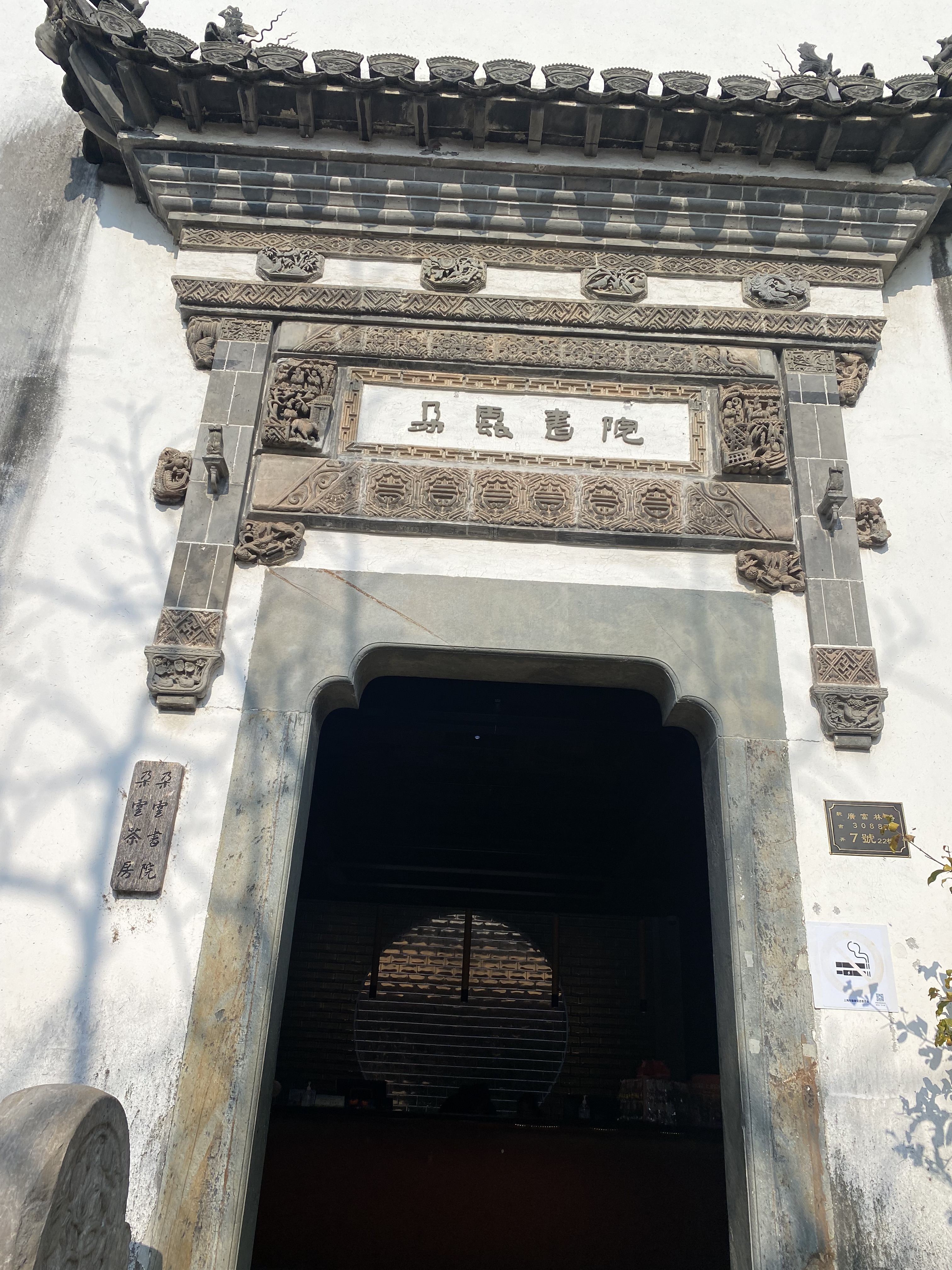
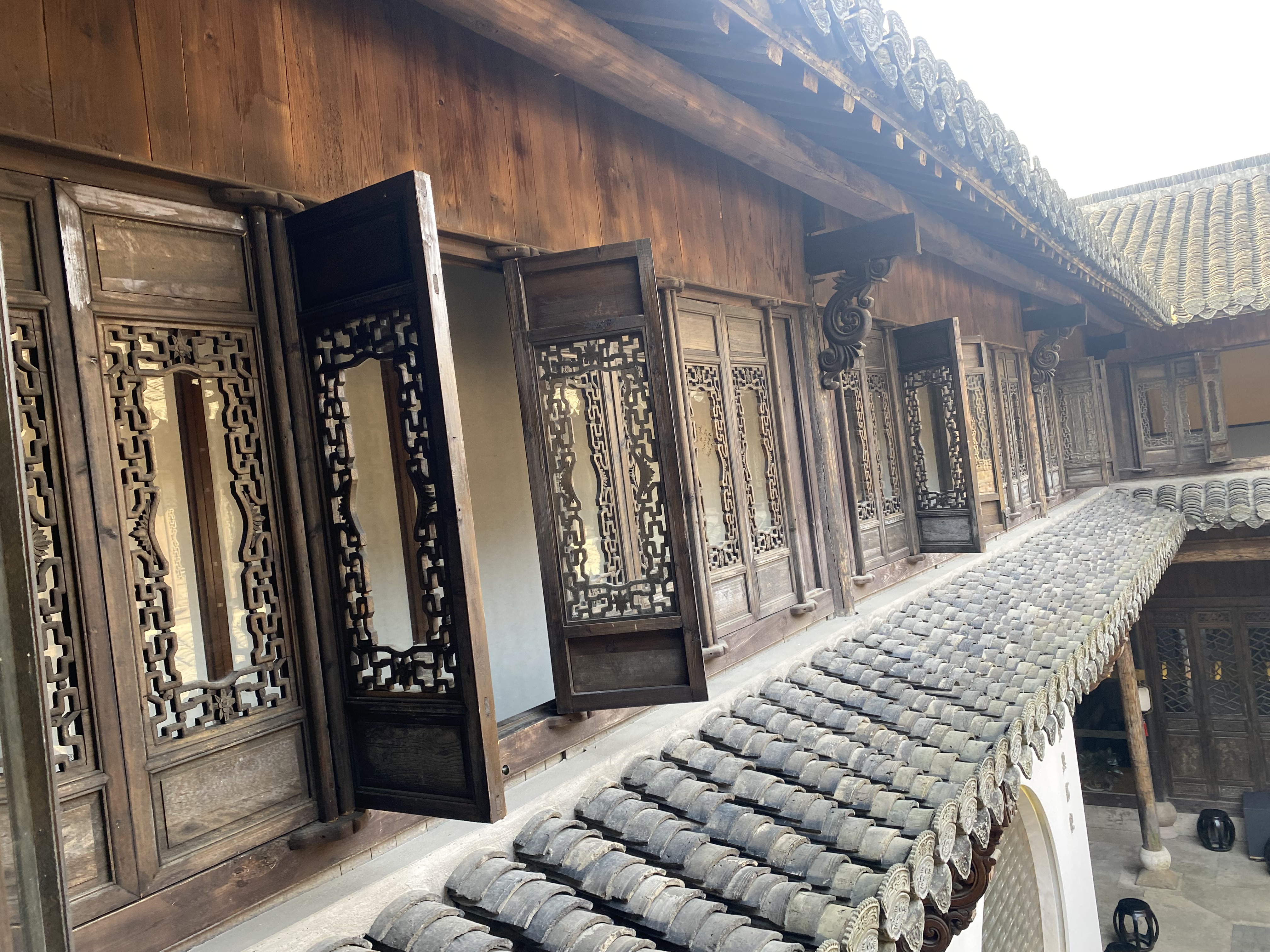
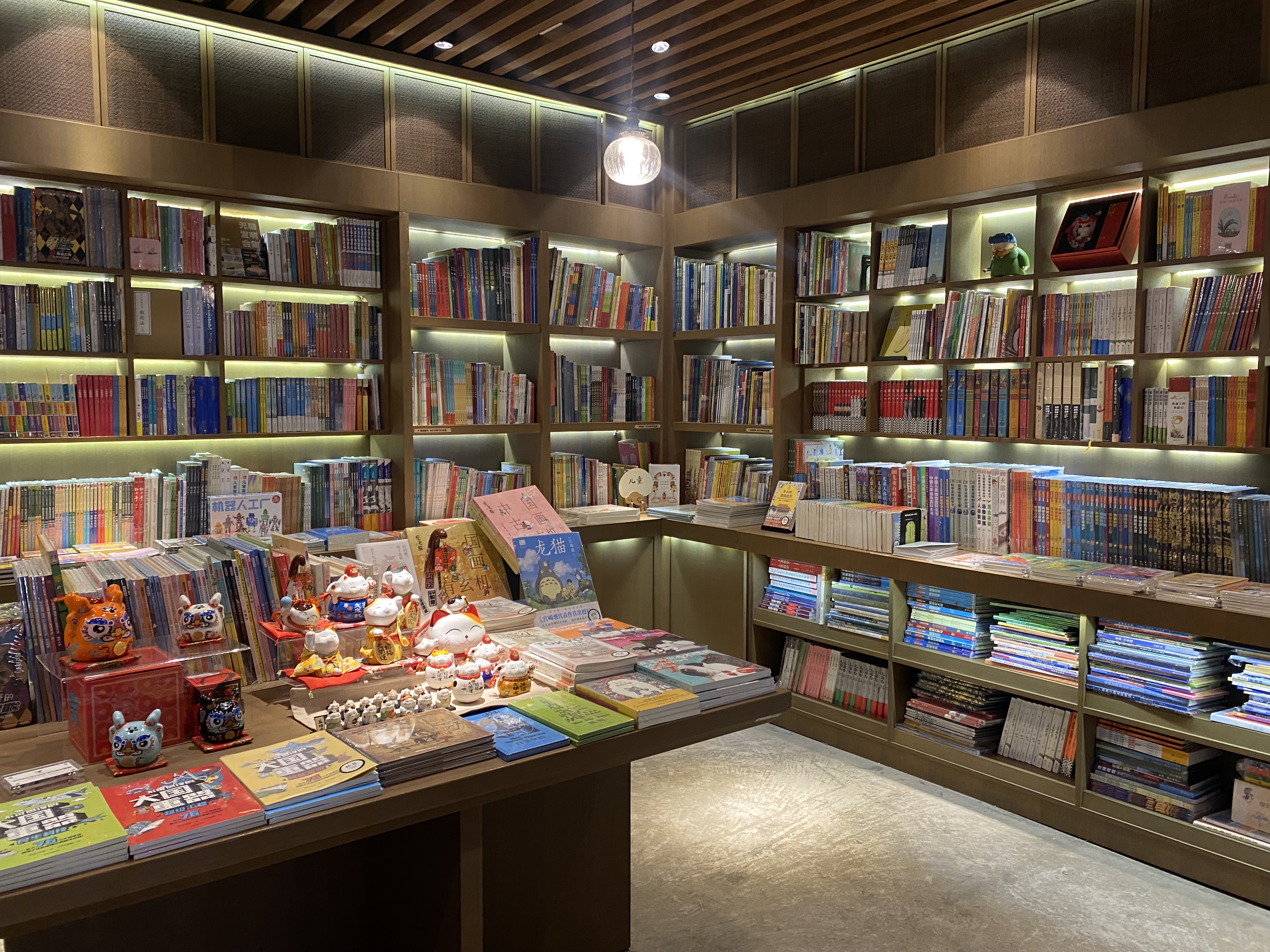
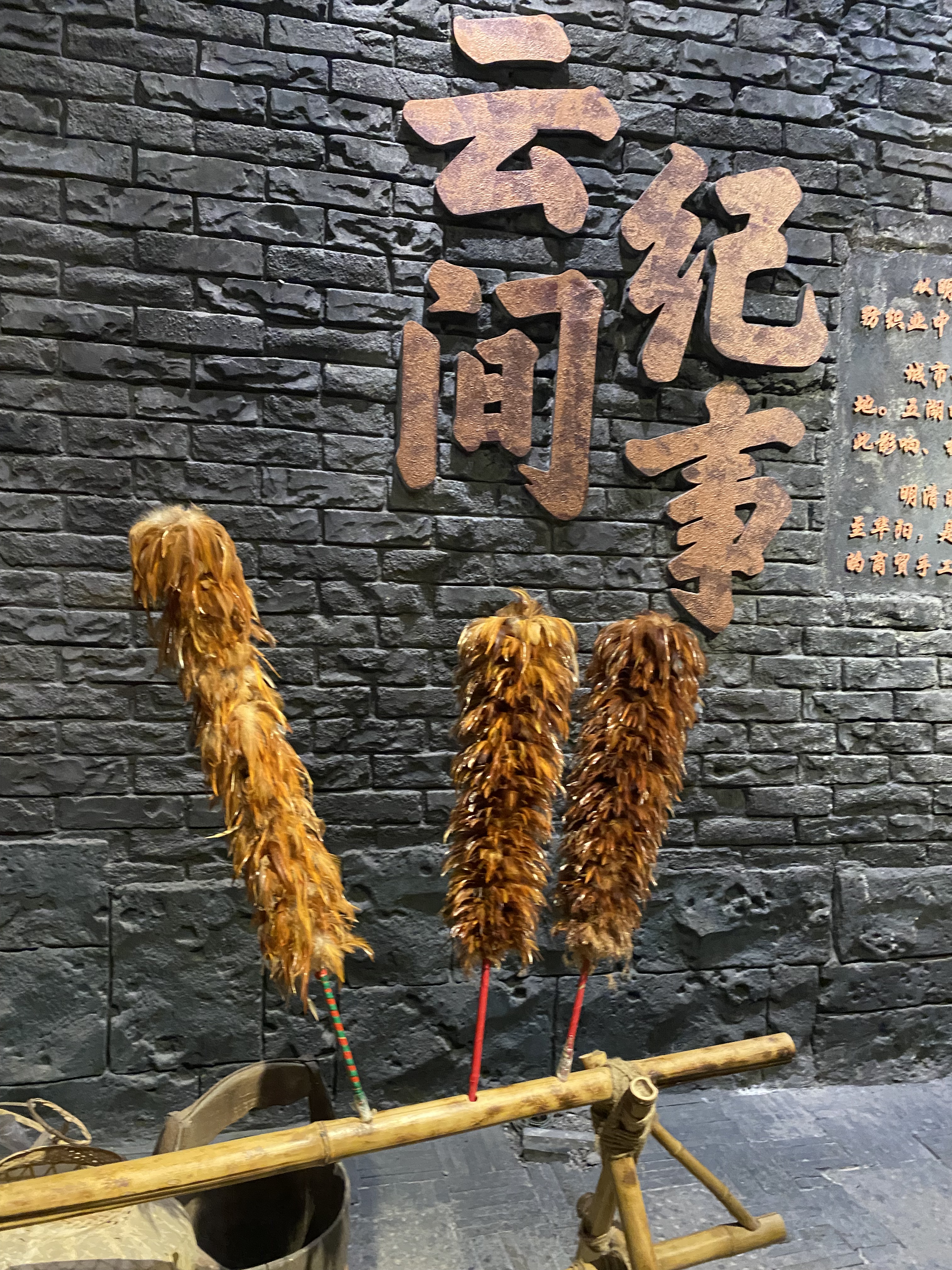
This “Shanghai Evolution History Museum” from the ancient o the present time is so interesting! Highly recommended! 👍👍👍
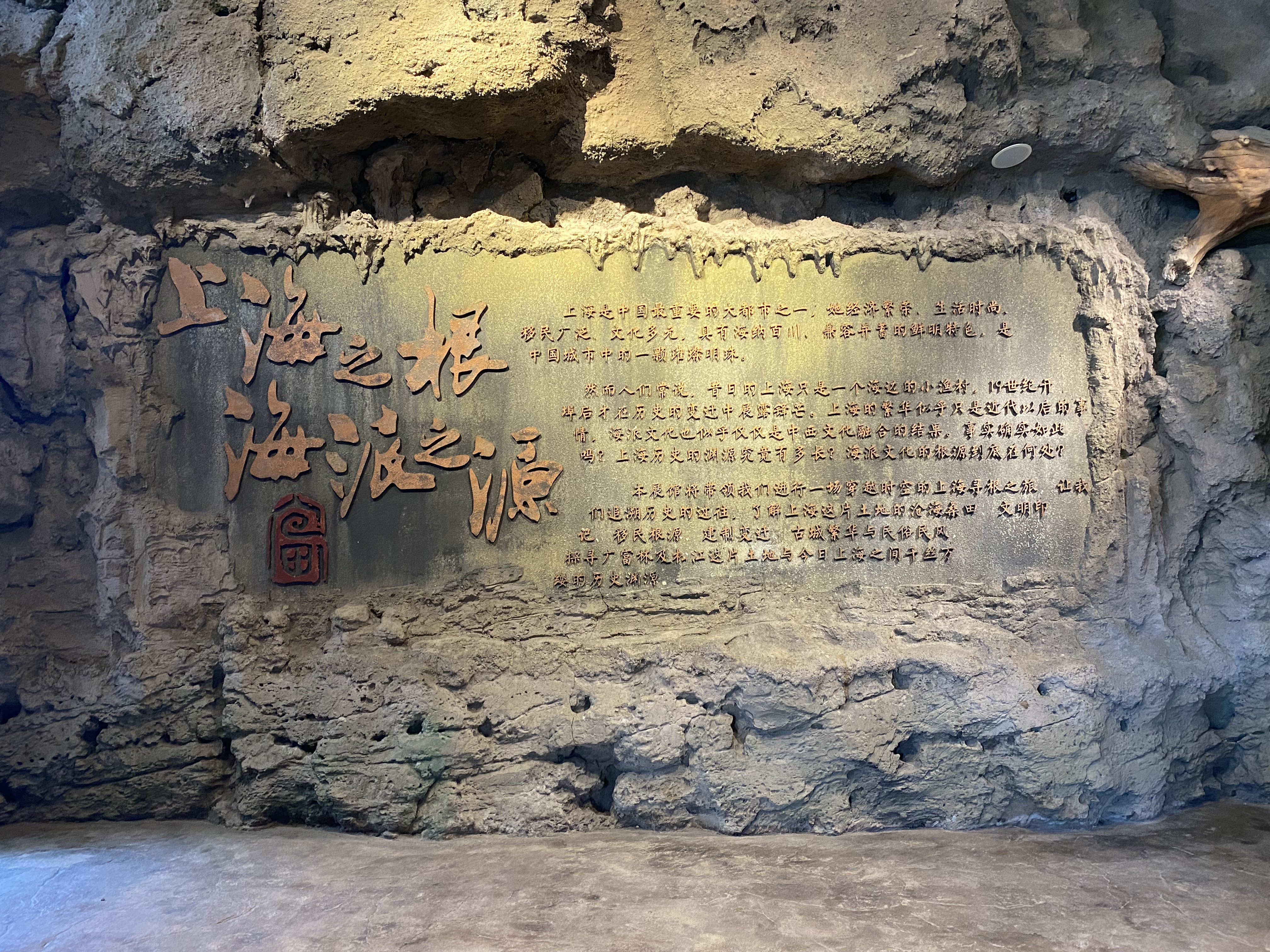
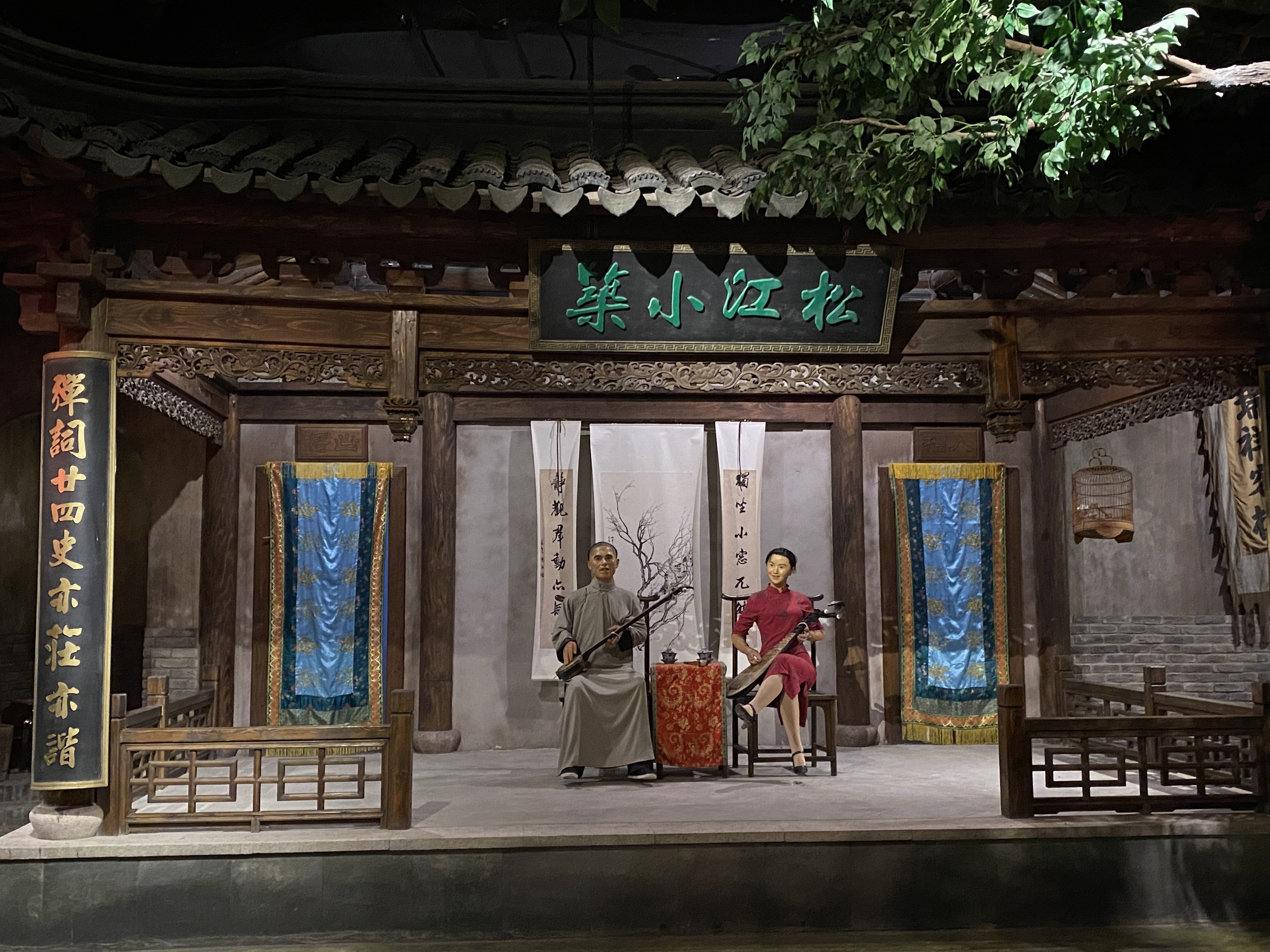
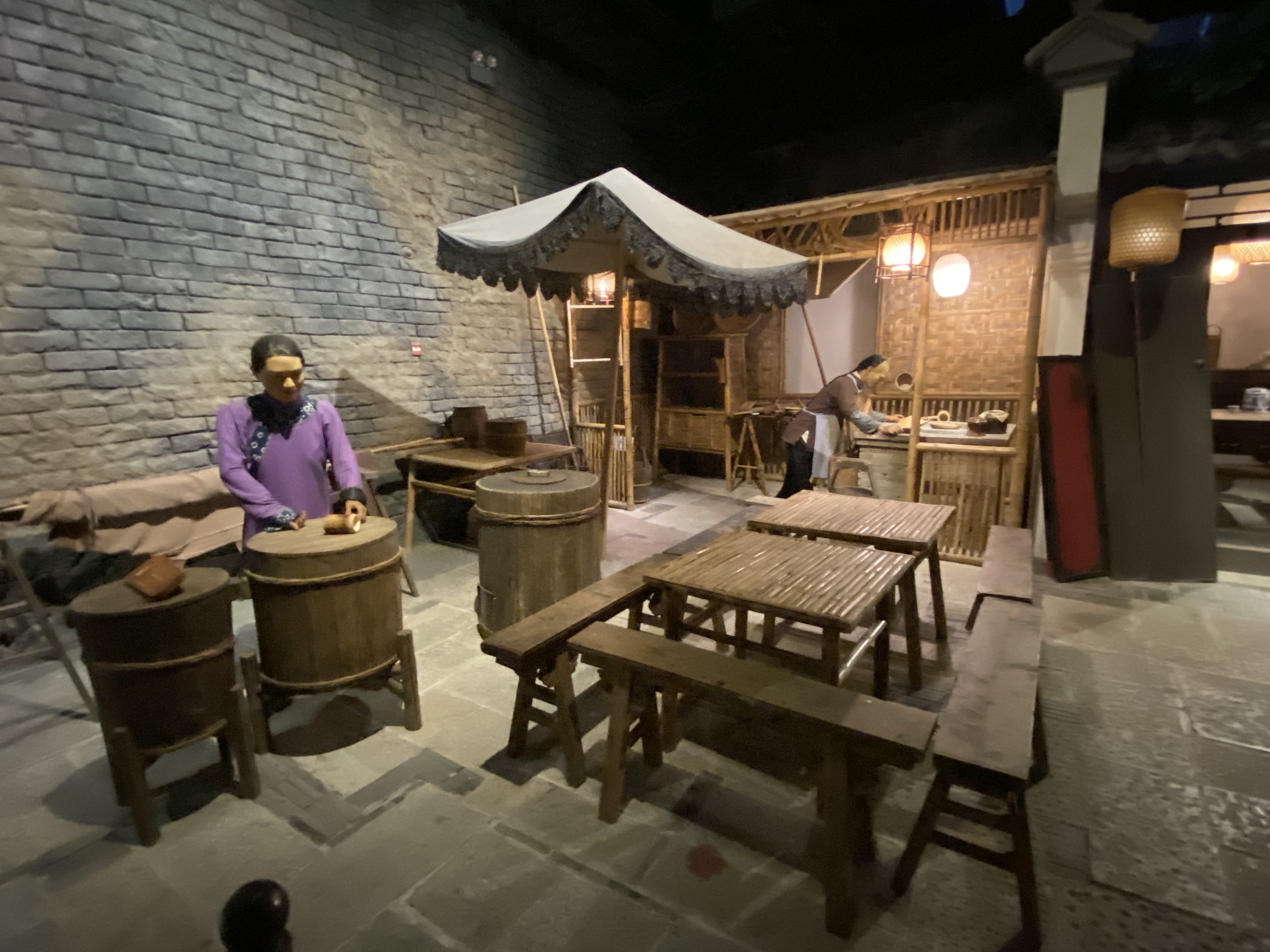
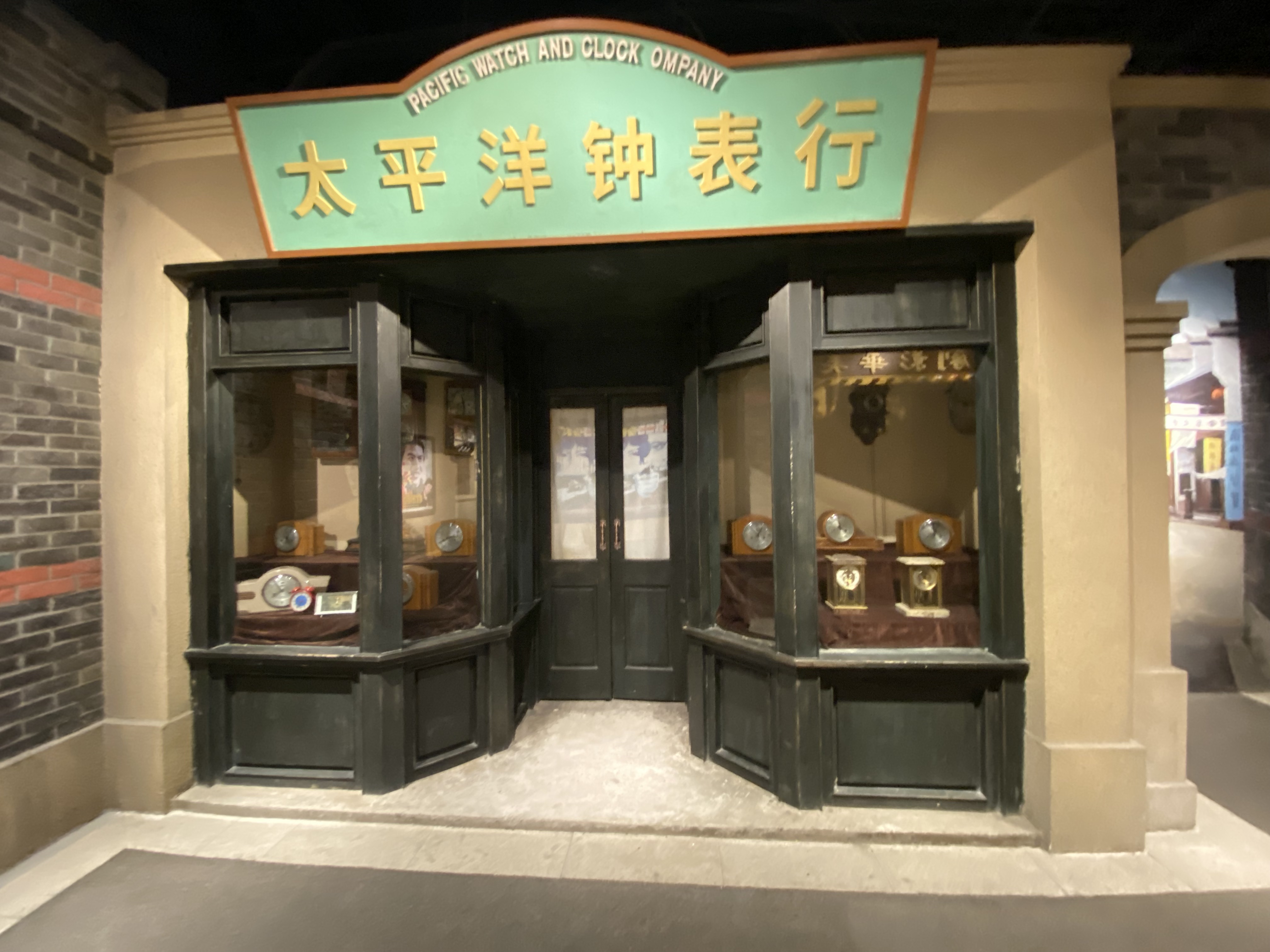
This museum provides the “Roots of Shanghai”. The live sized figures in the history museum vividly portrayed the life of Shanghainese people from ancient to the present. I really fell in love with this exhibition hall in Guangfulin. Shannghai has gone through many vicissitudes. It has just grown from a small fishing village to a prosperous 21st century powerhouse. Accompanied by the tunes of Songjiang opera (the regional opera), you can see the Songjiang cloth at the door of a fabric shop, and you can hear the sound of reading loudly from the school in the distance… The museum also presents life in Shanghai in the last century with “Liushen Perfume”. and “Double Wrigley Hair Scissors” displayed in the glass. The poster of Lushan Love Story (a popular movie in the 1980’s) on the wall felt like yesterday.
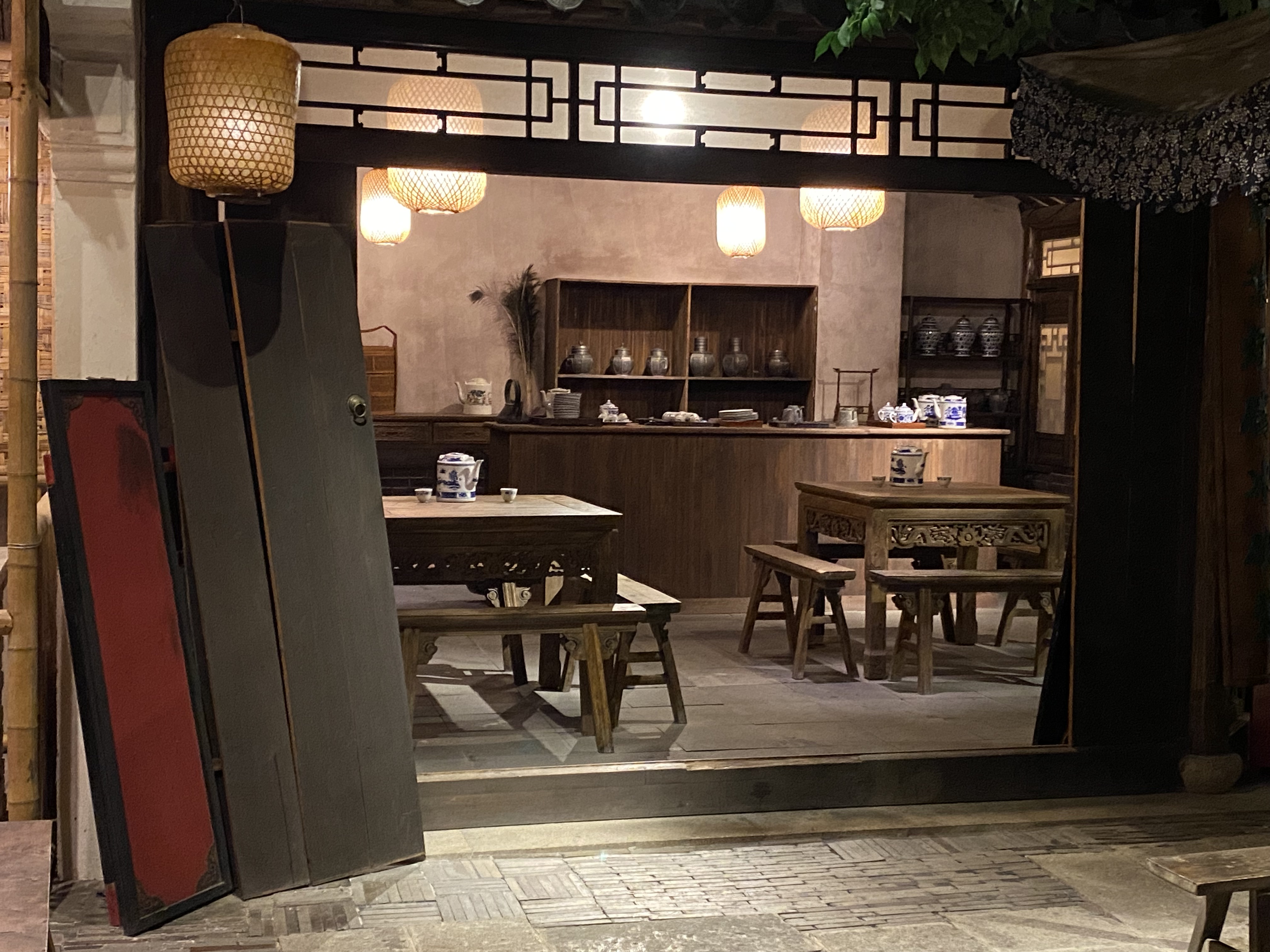
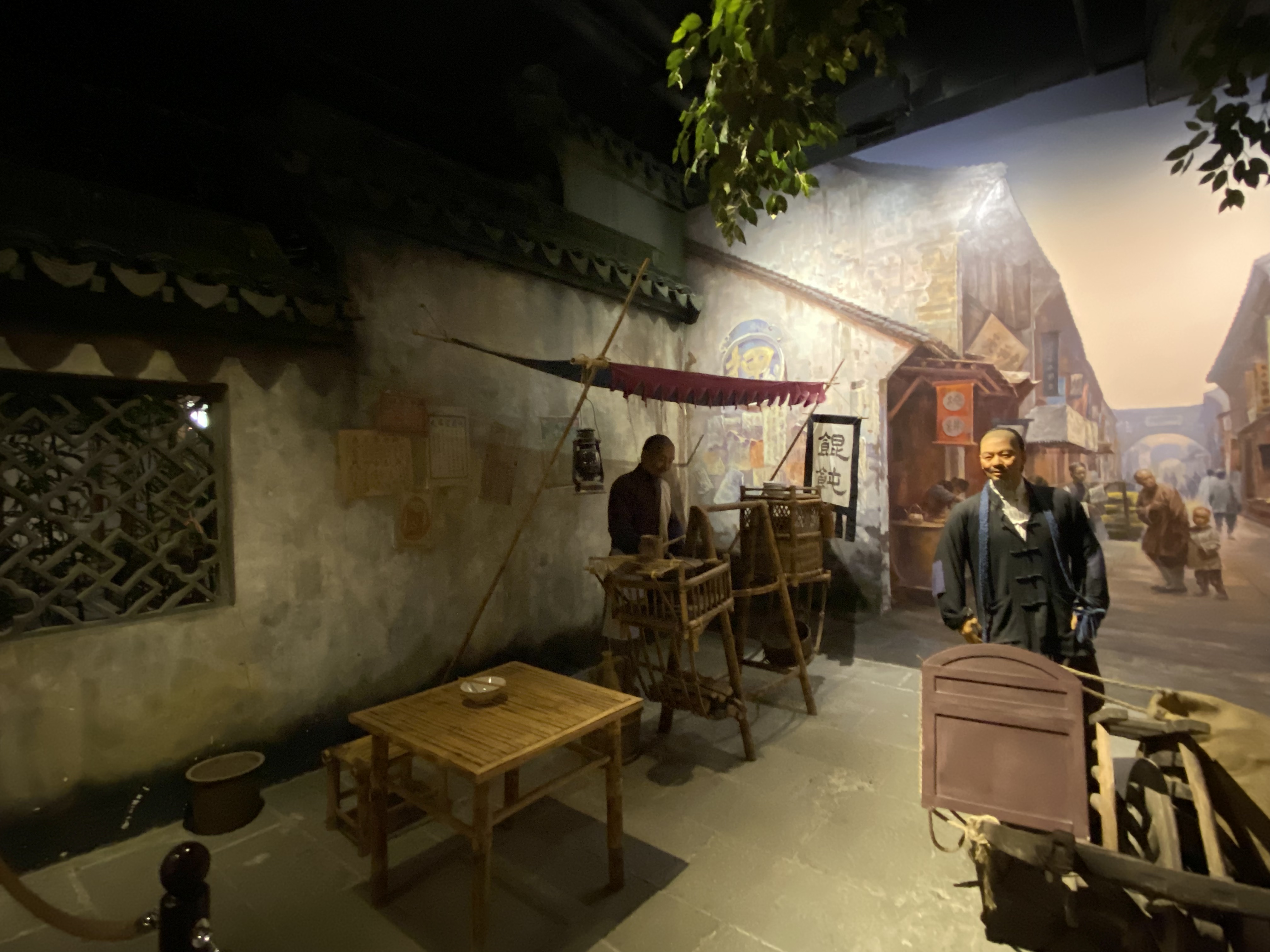
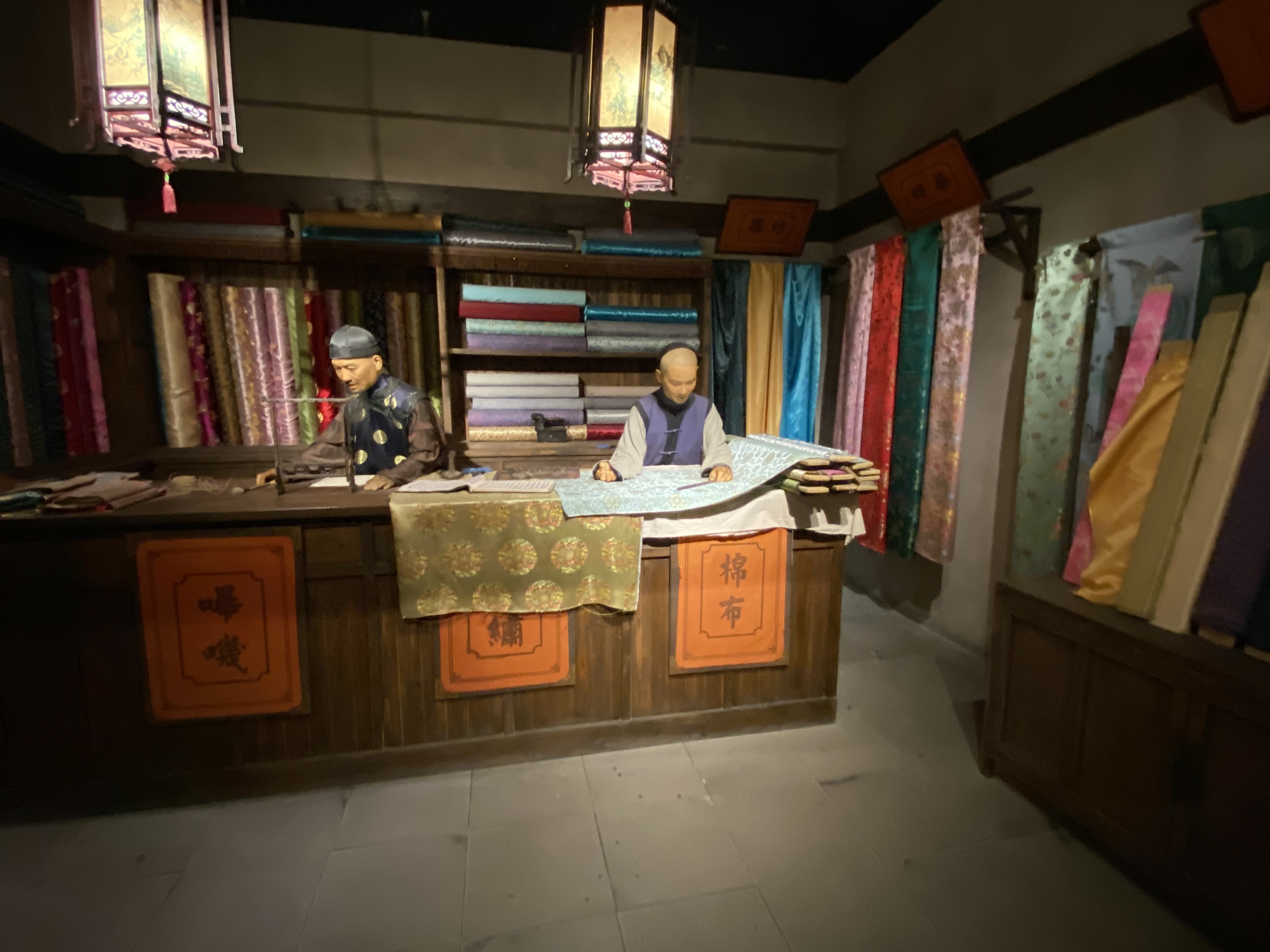
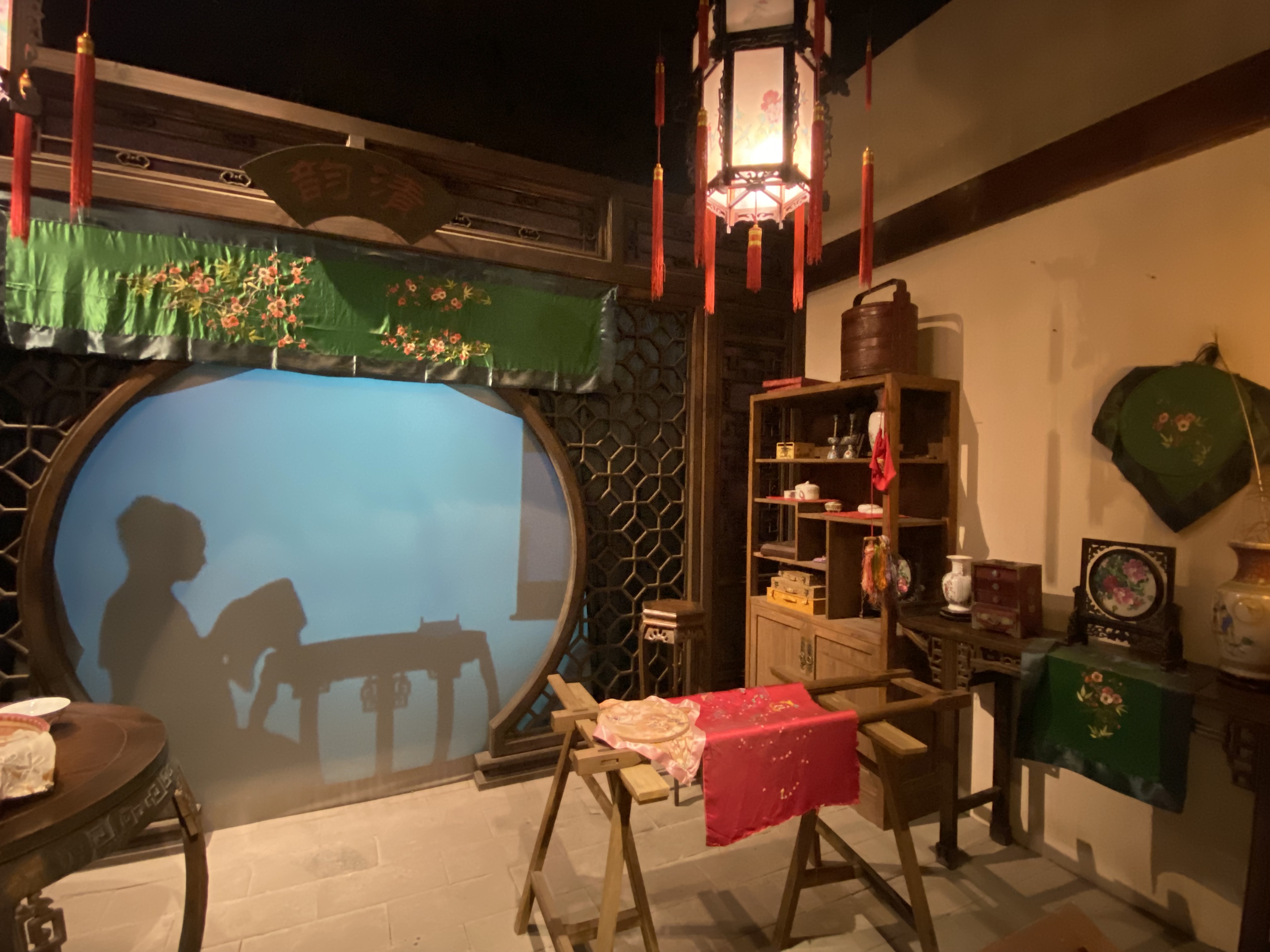
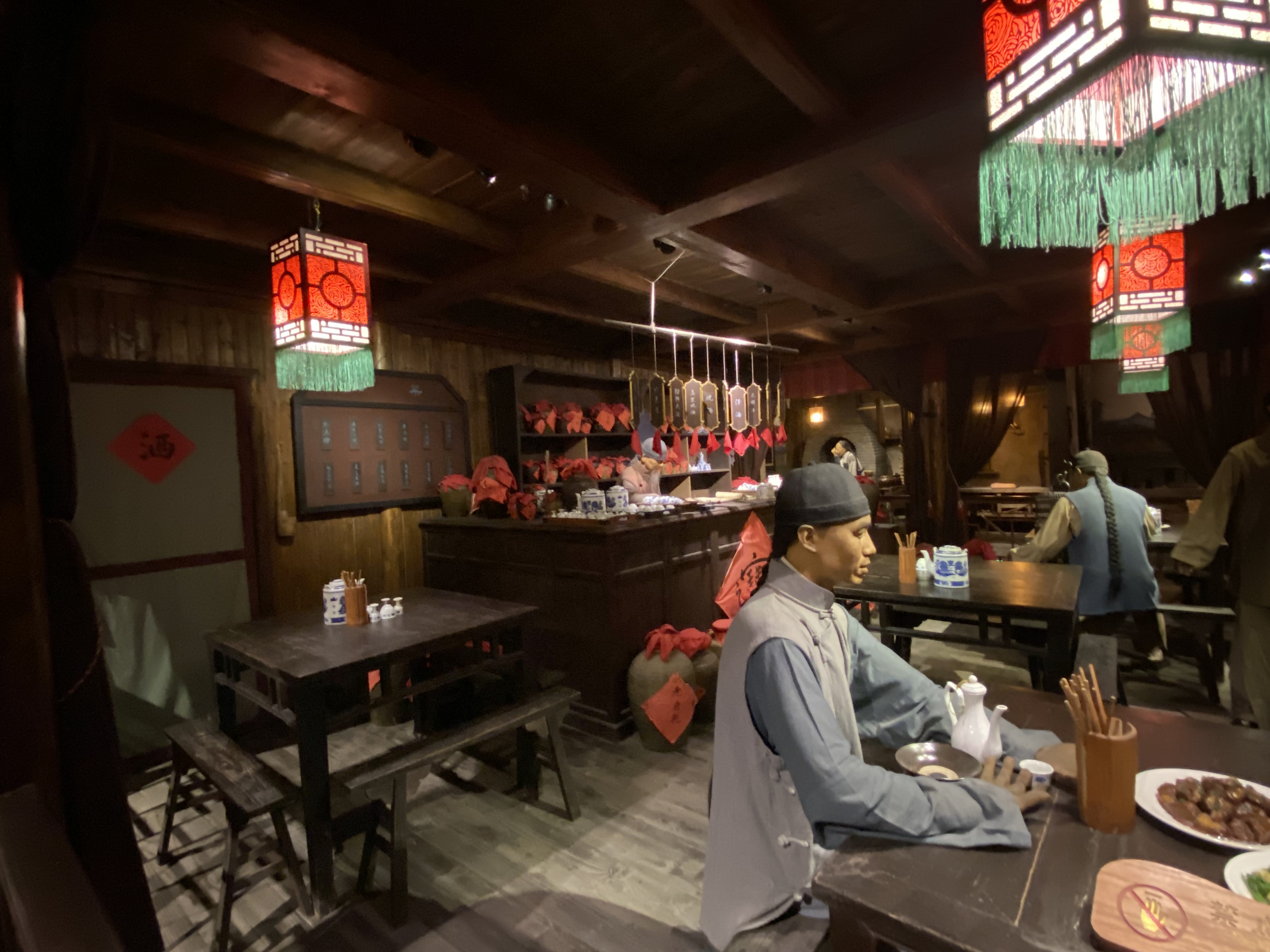
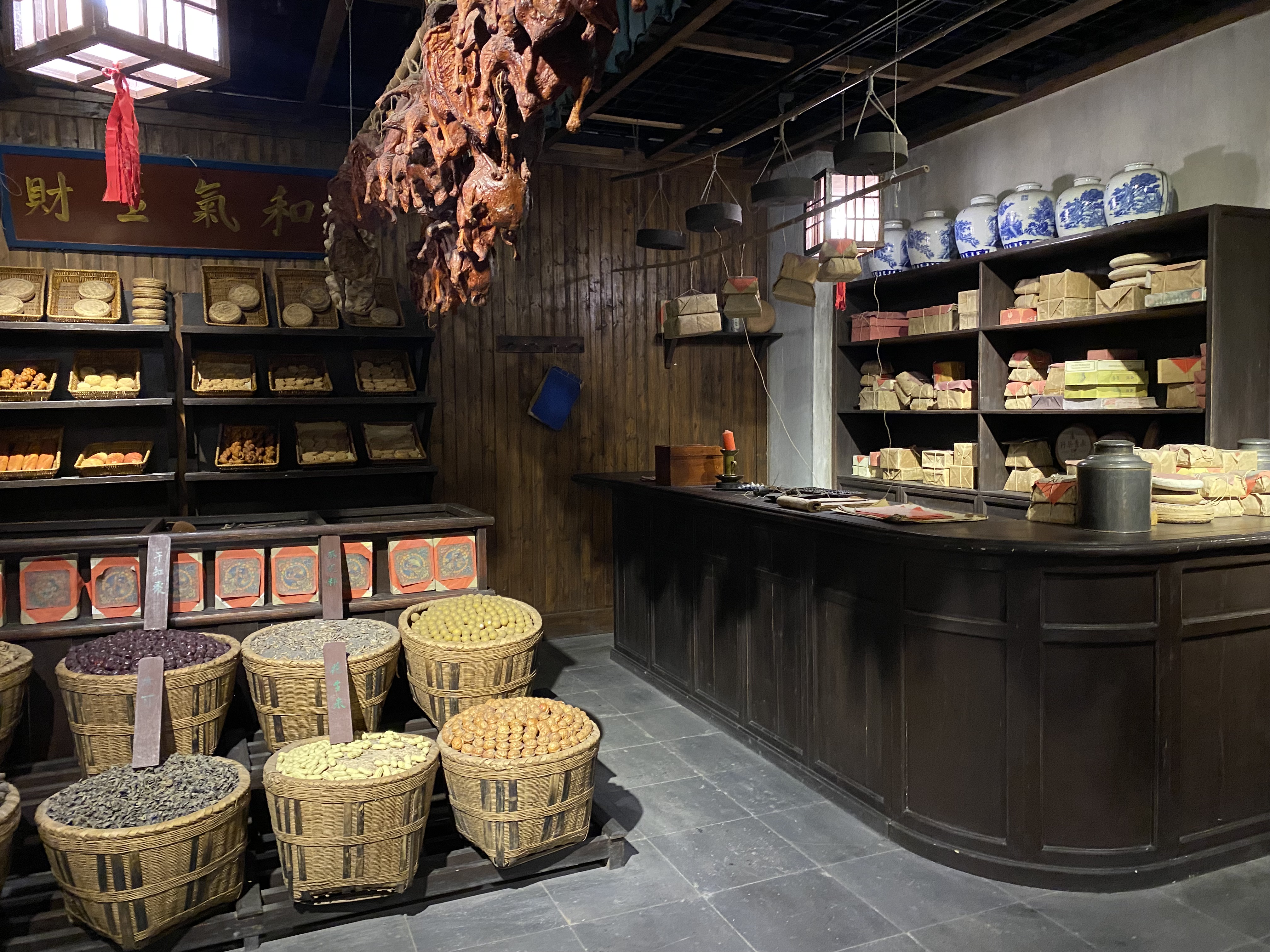
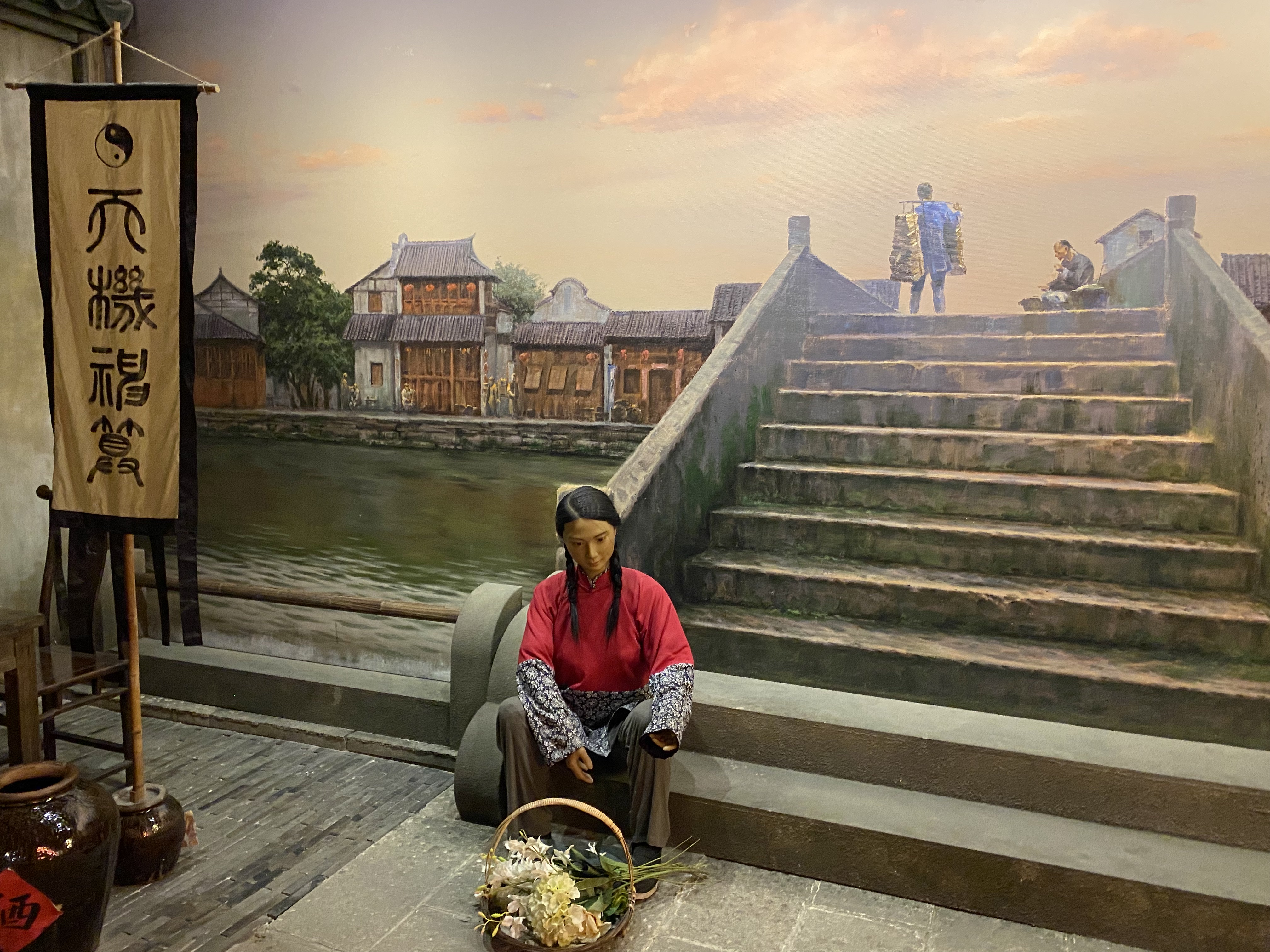
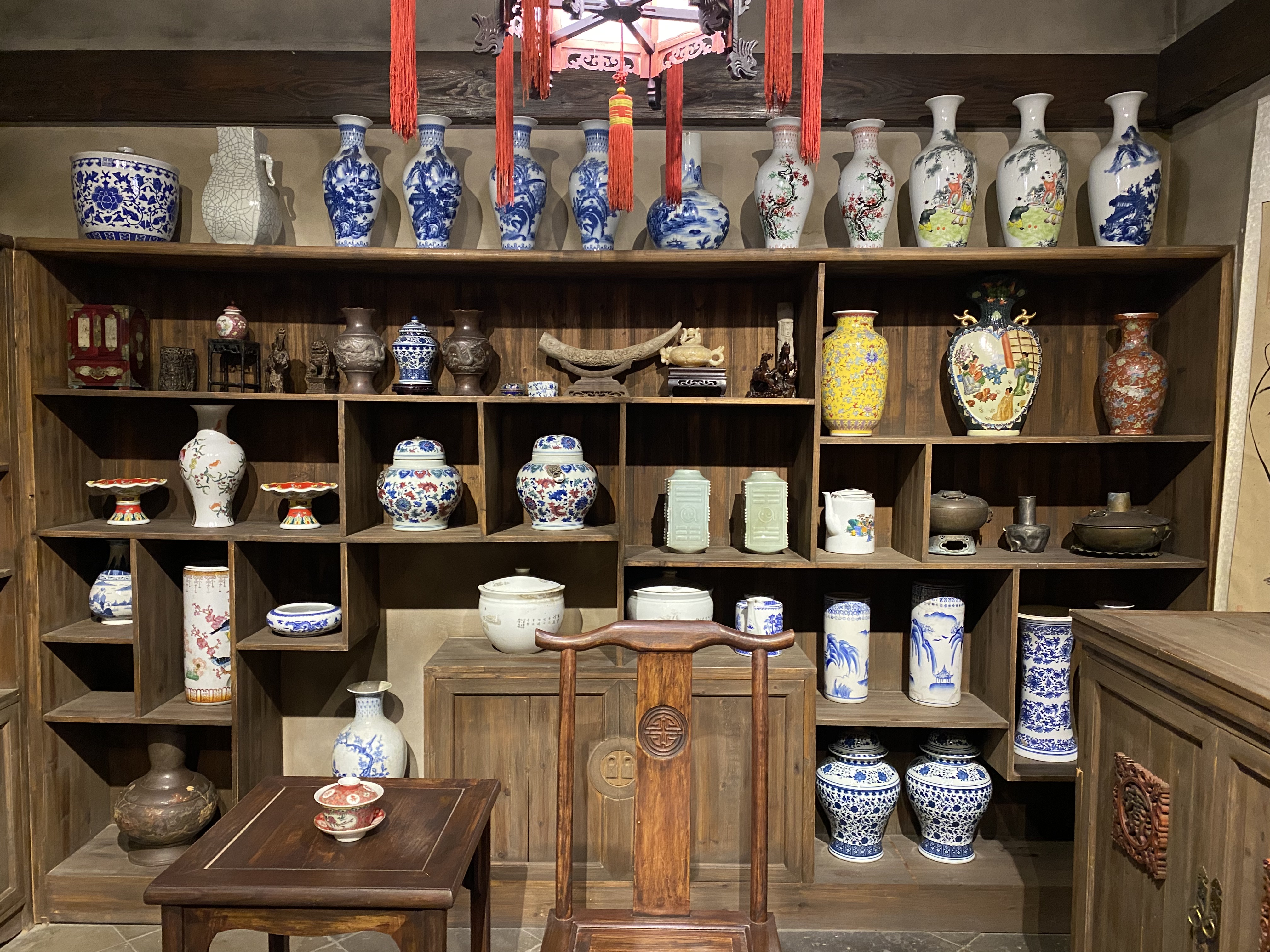
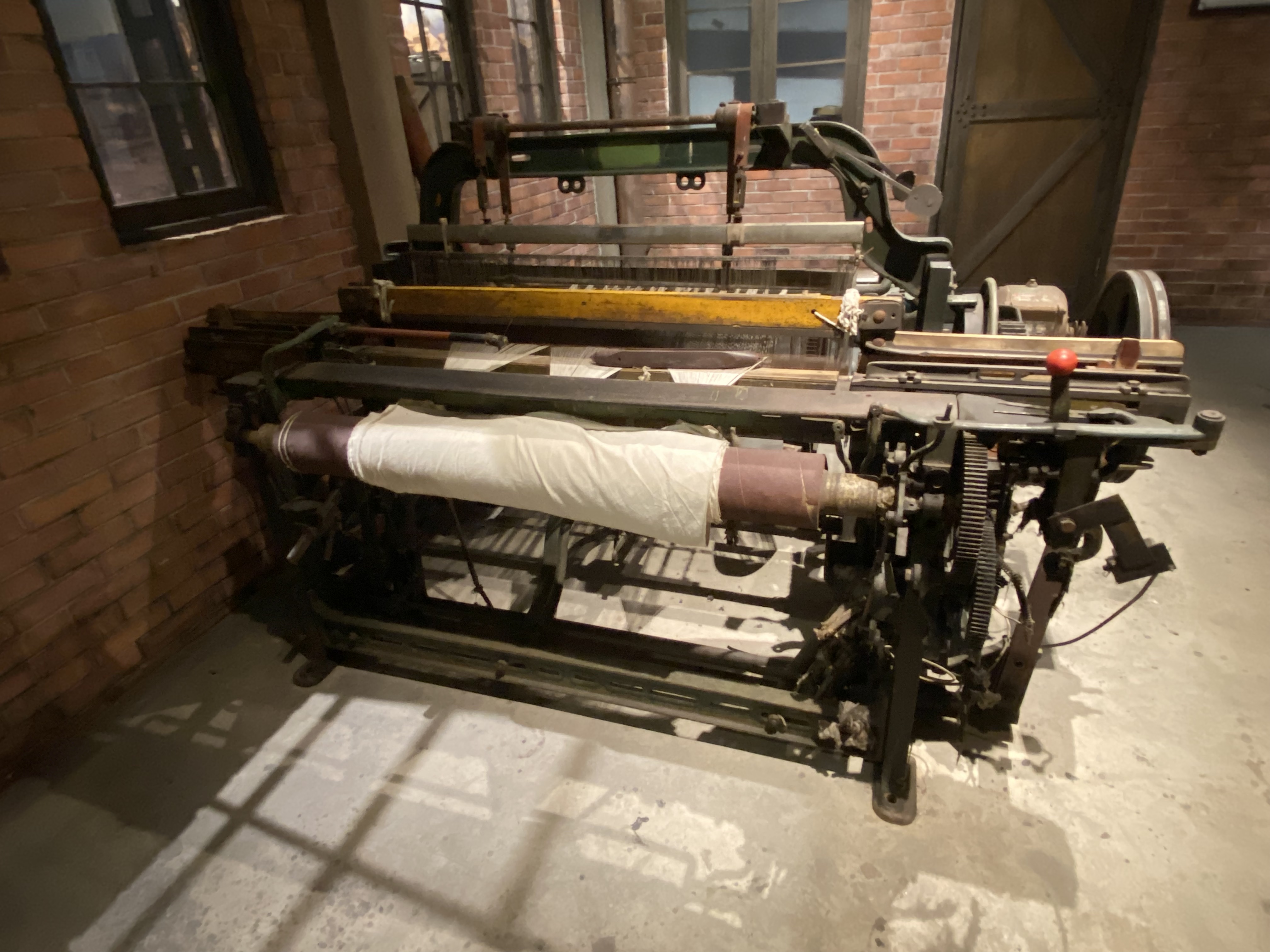

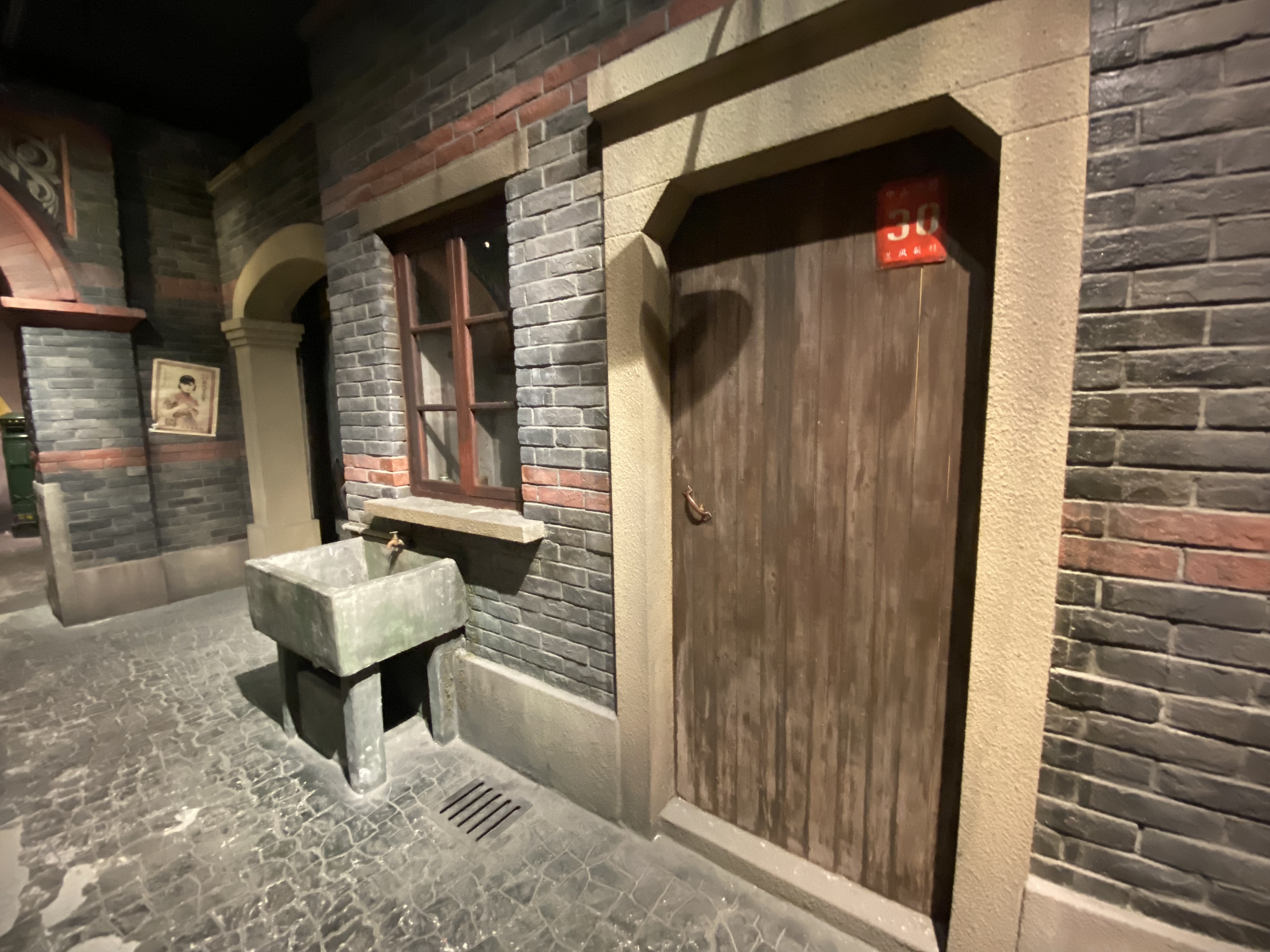
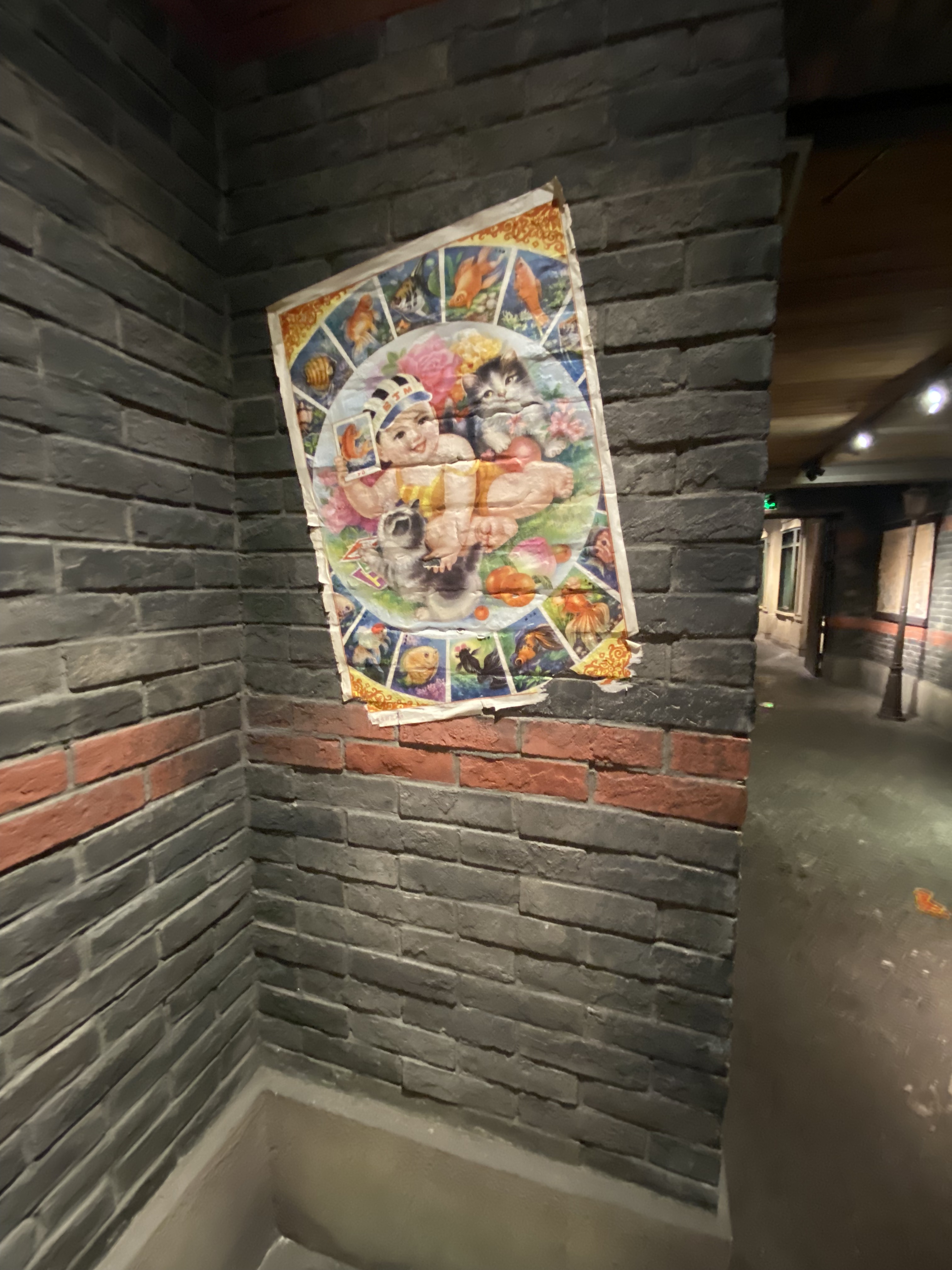
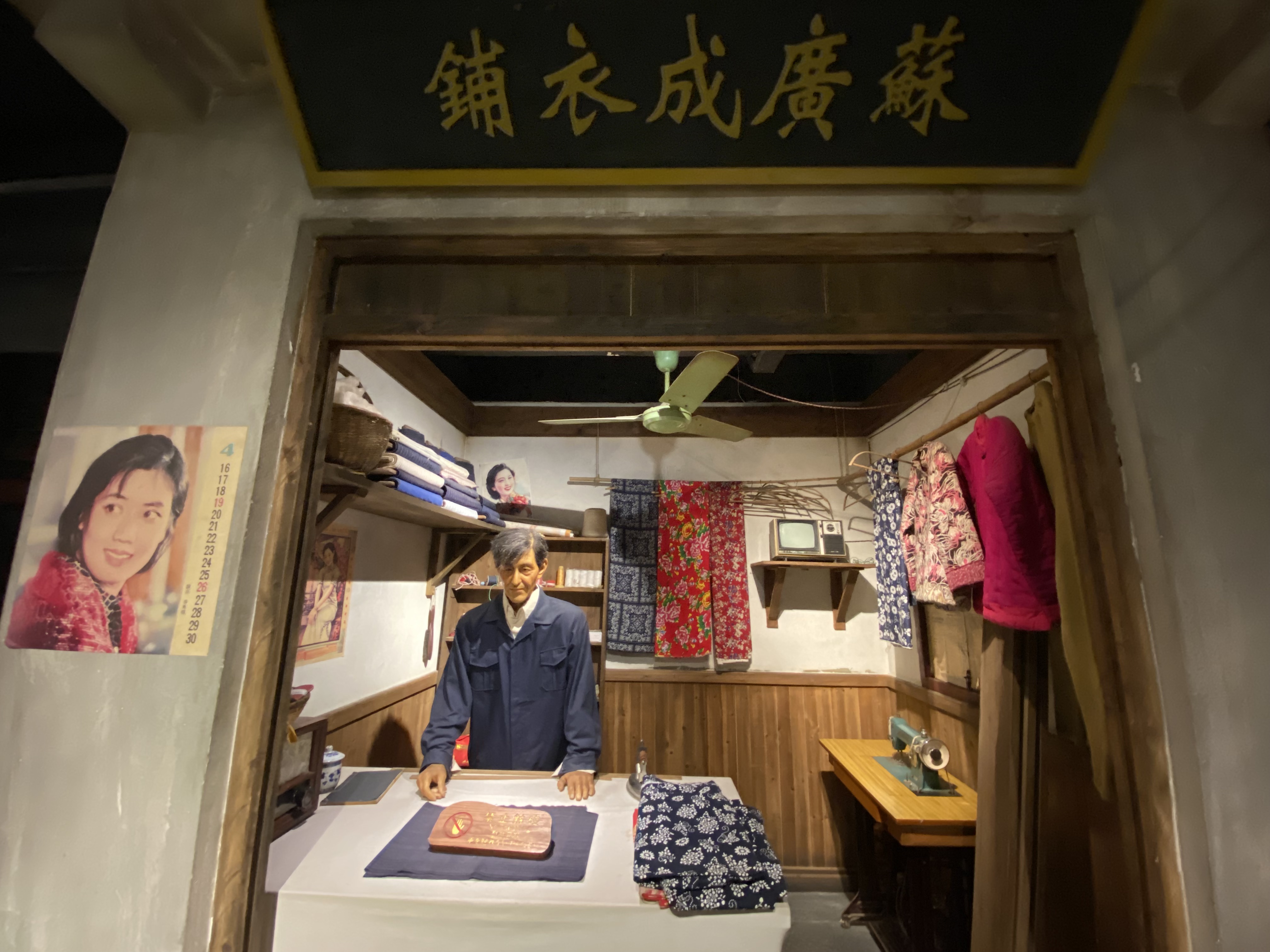
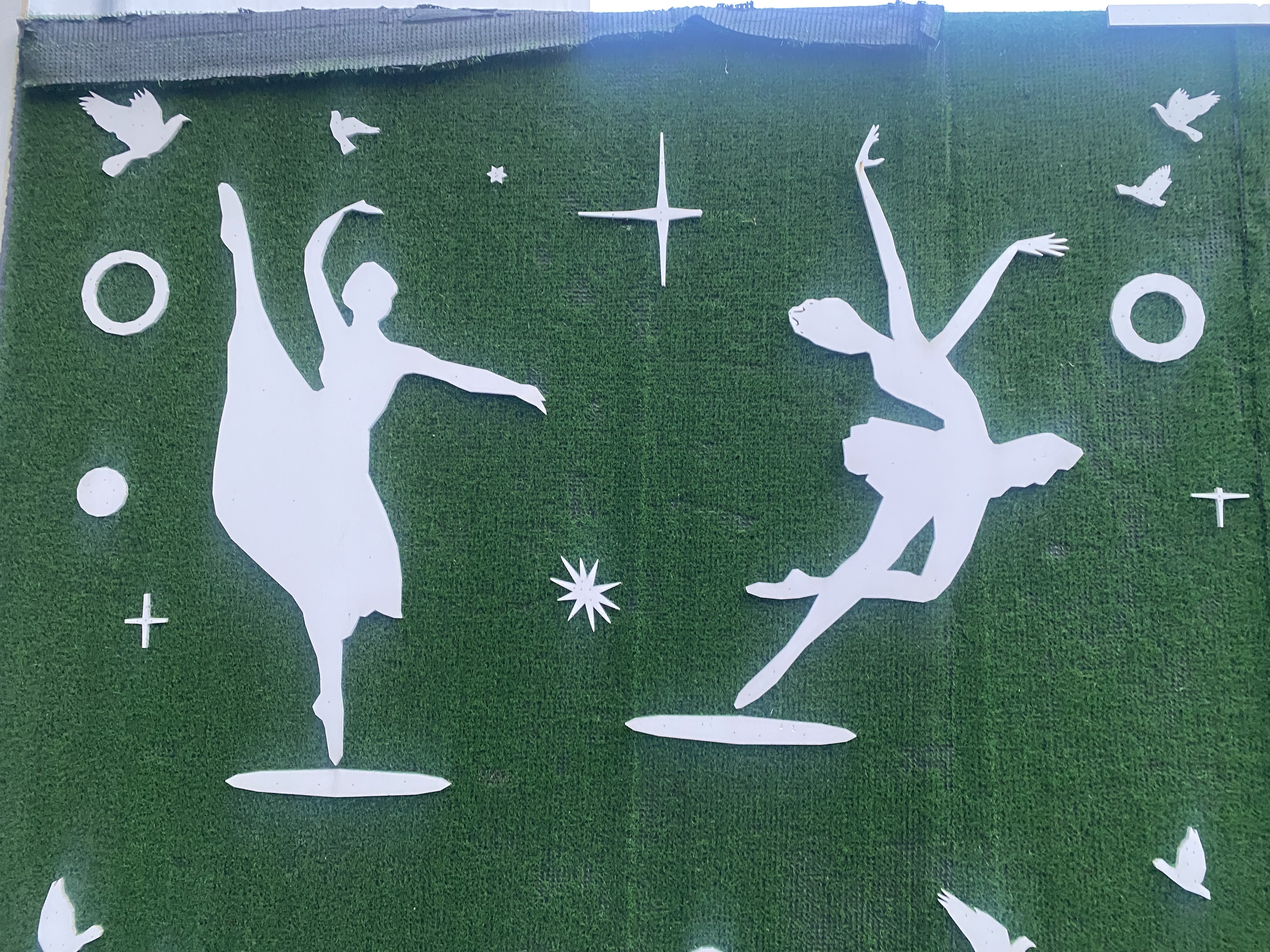
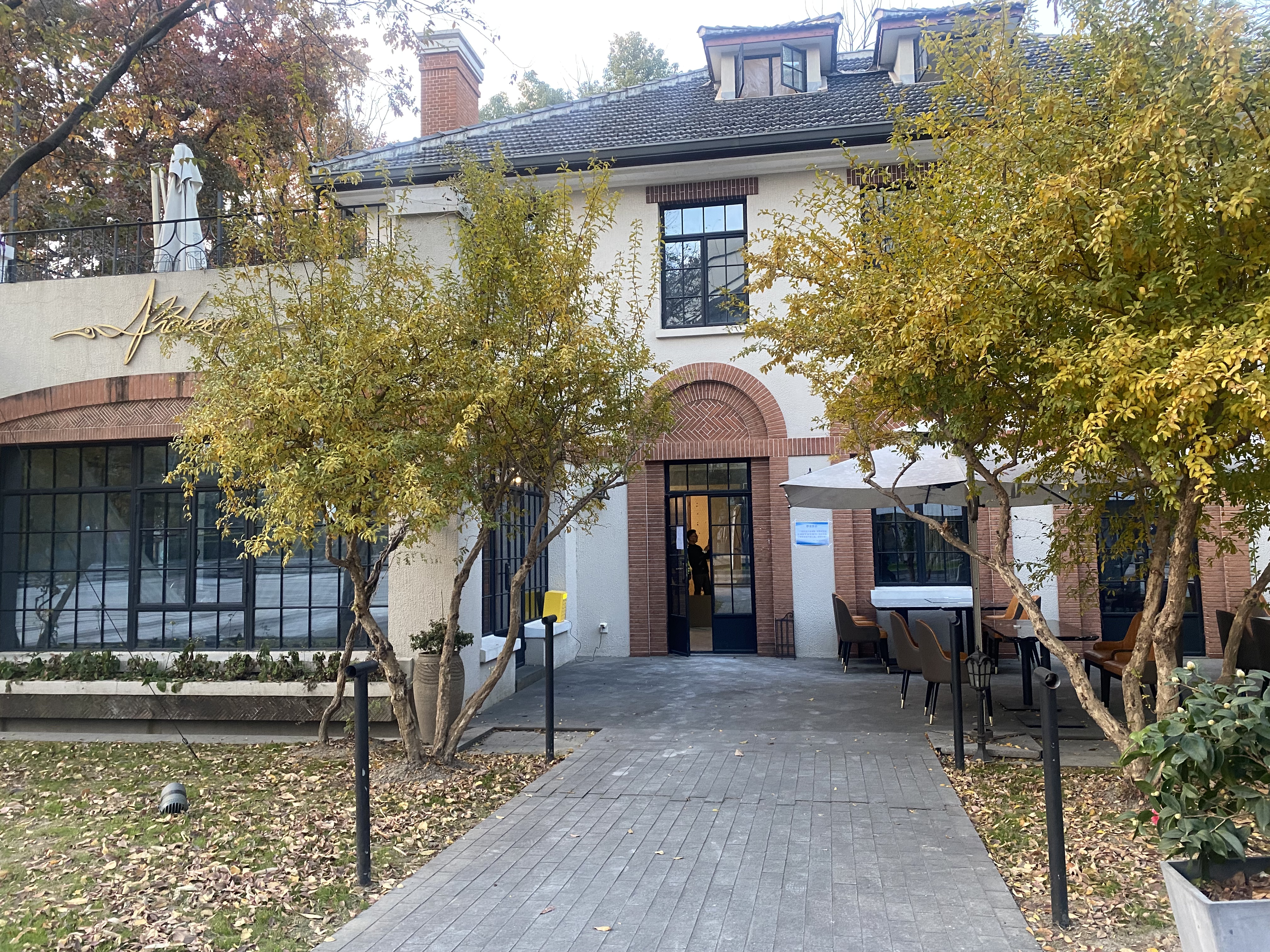
After having lunch at a friend’s house, we went to the Shanghai Ballet, where my father used to work. I remember, when we were children, we were queuing up at Jing’an Temple to take the No. 57 bus to Shanghai Ballet, to watch big sisters’ routine training and rehearse The White-Haired Girl (one of madame Mao’s model operas) during the Cultural Revolution. The rehearsal hall where my father worked was a nice western-style building. ❤️❤️❤️❤️❤️
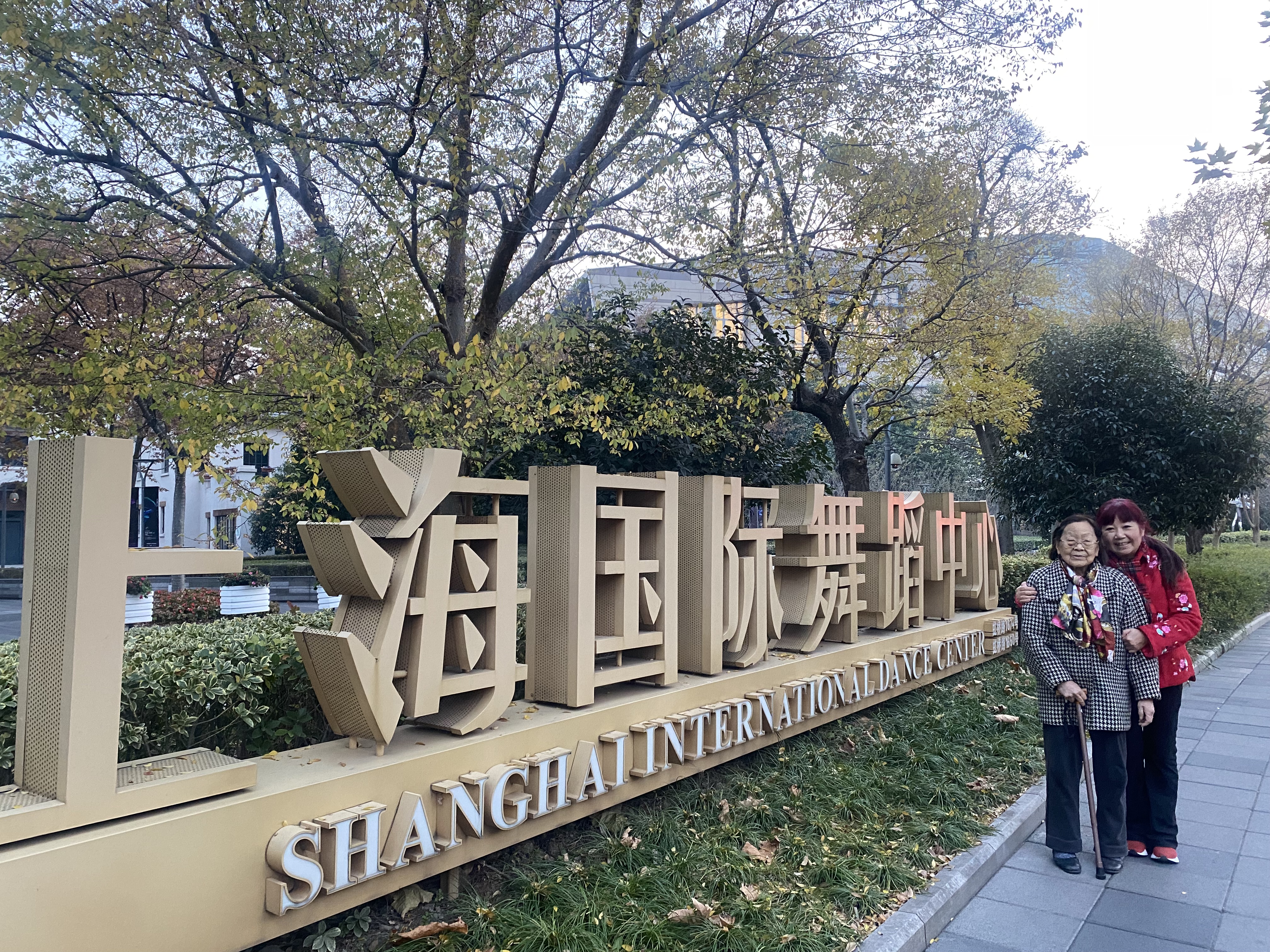
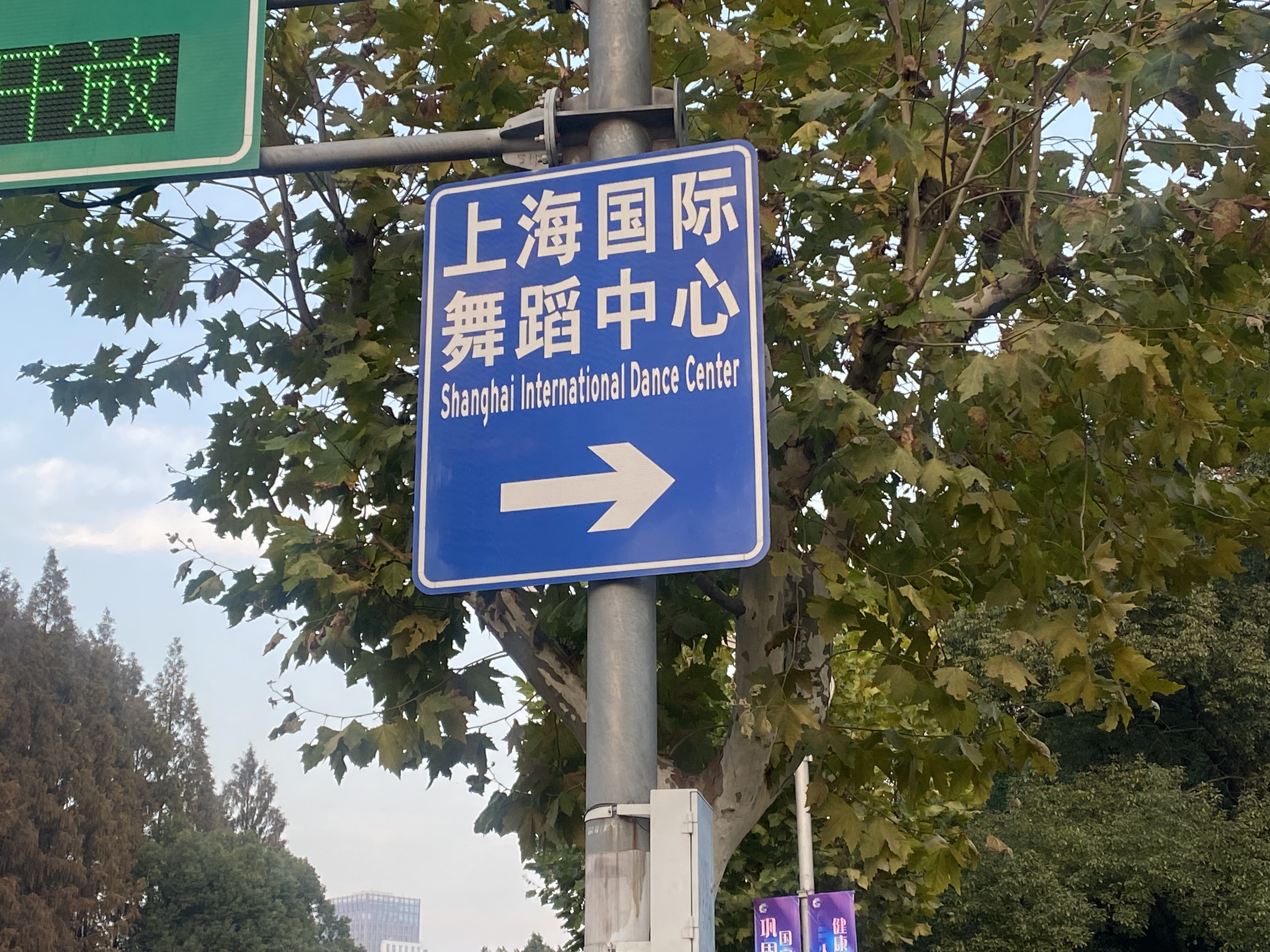
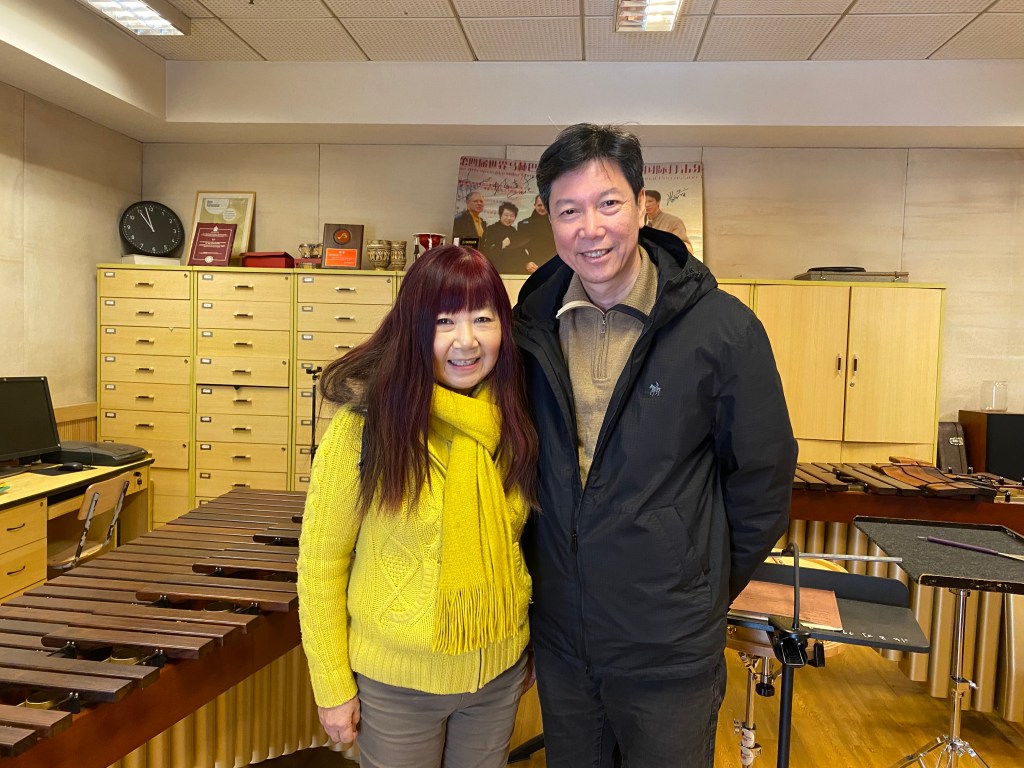
DAY 10: During the time in. Shanghai, I went to my alma mater, the Shanghai Conservatory of Music, to promote Bill’s works, I had a meeting with the Director of the New Music Ensemble and and. Head of the Percussion Department.
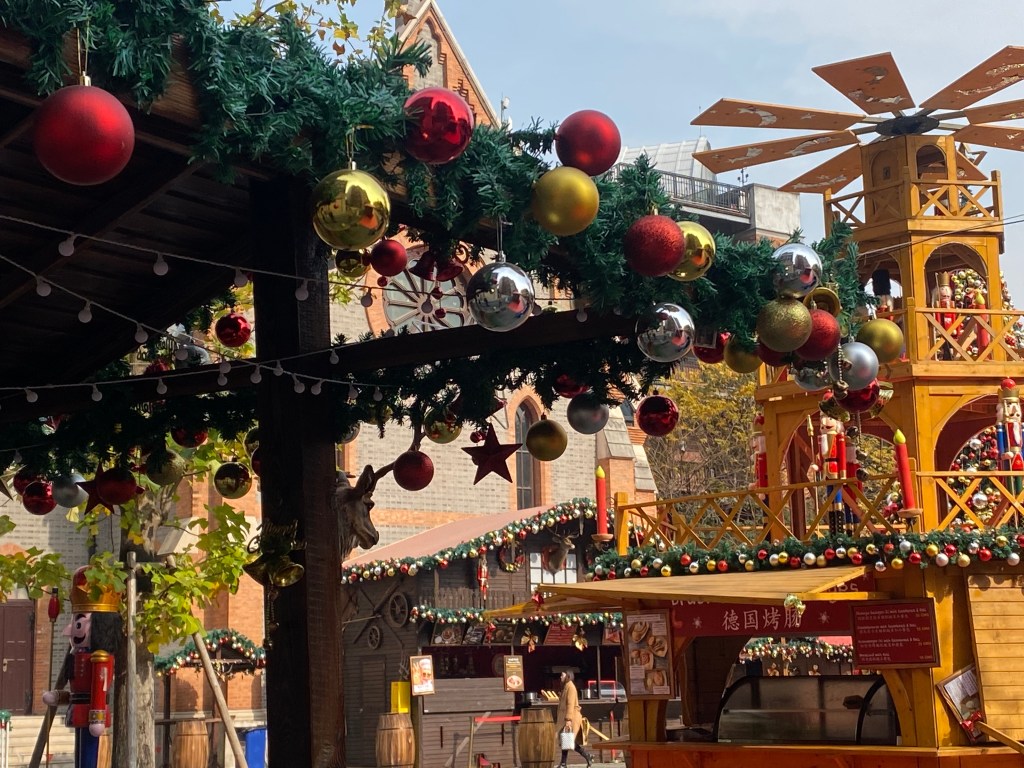
I went the Rockbund Art Museum in Shanghai by the Bund. The works were not very impressive. However the Christmas market outside the art museum was very lively.
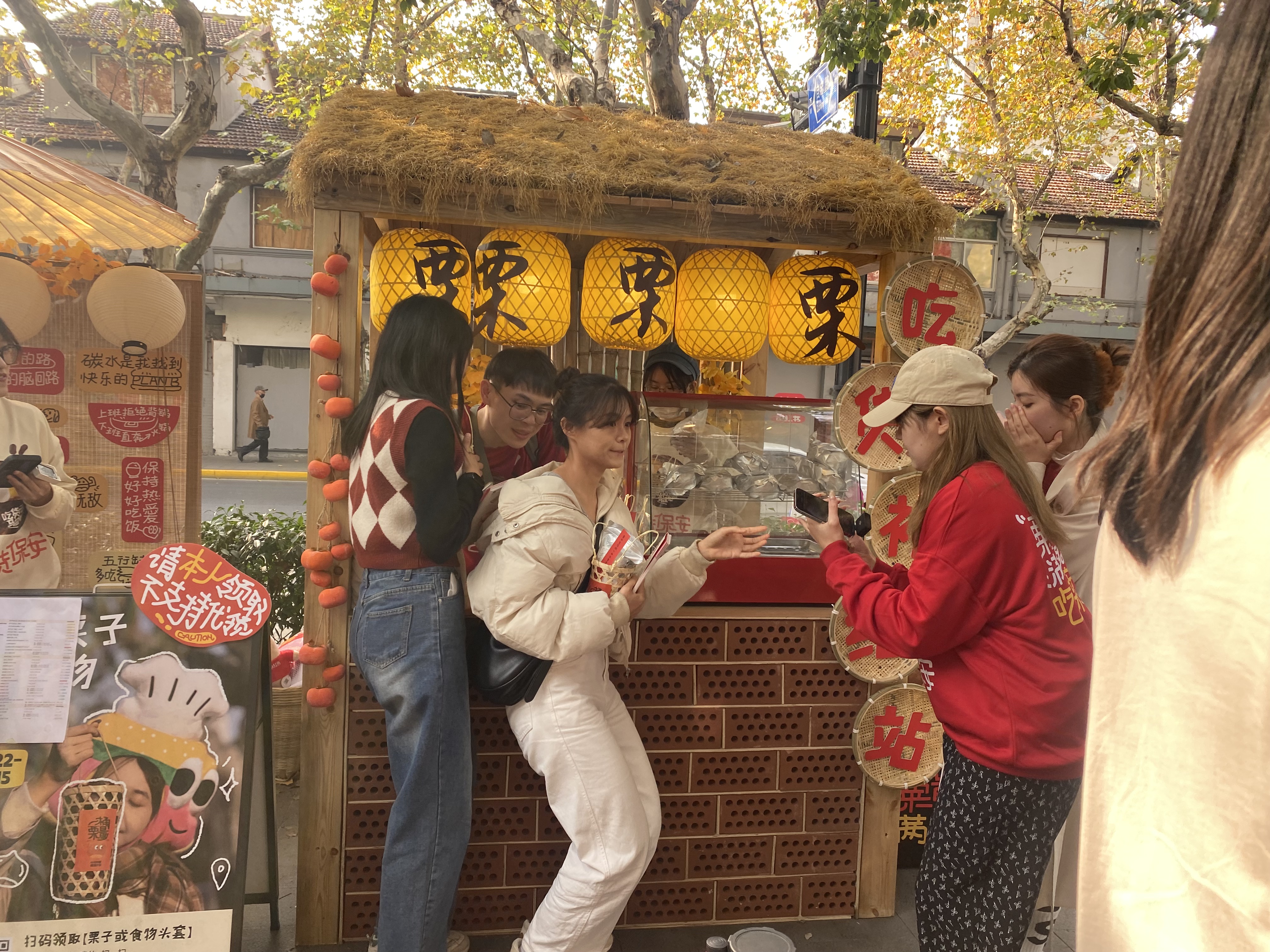
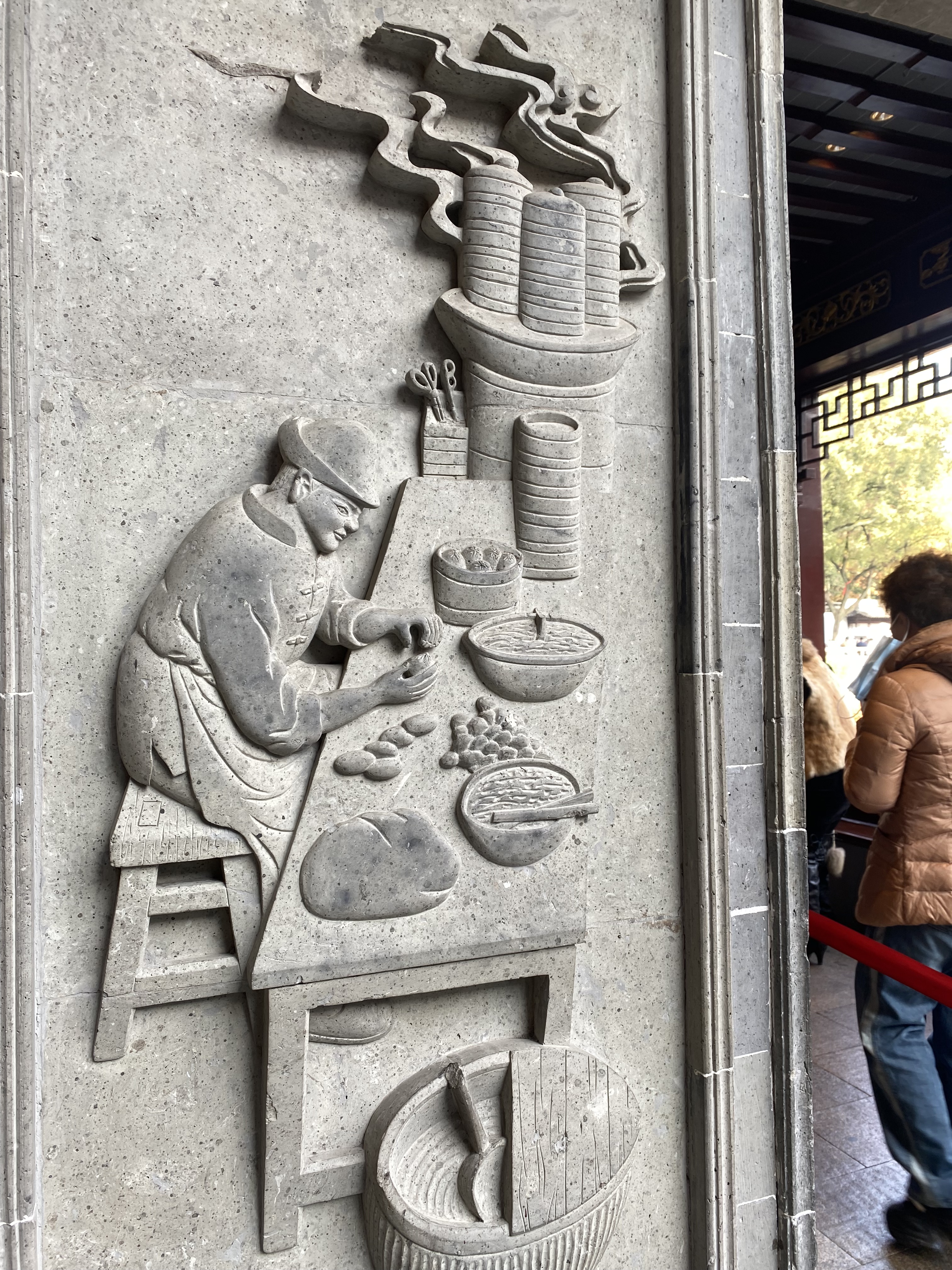
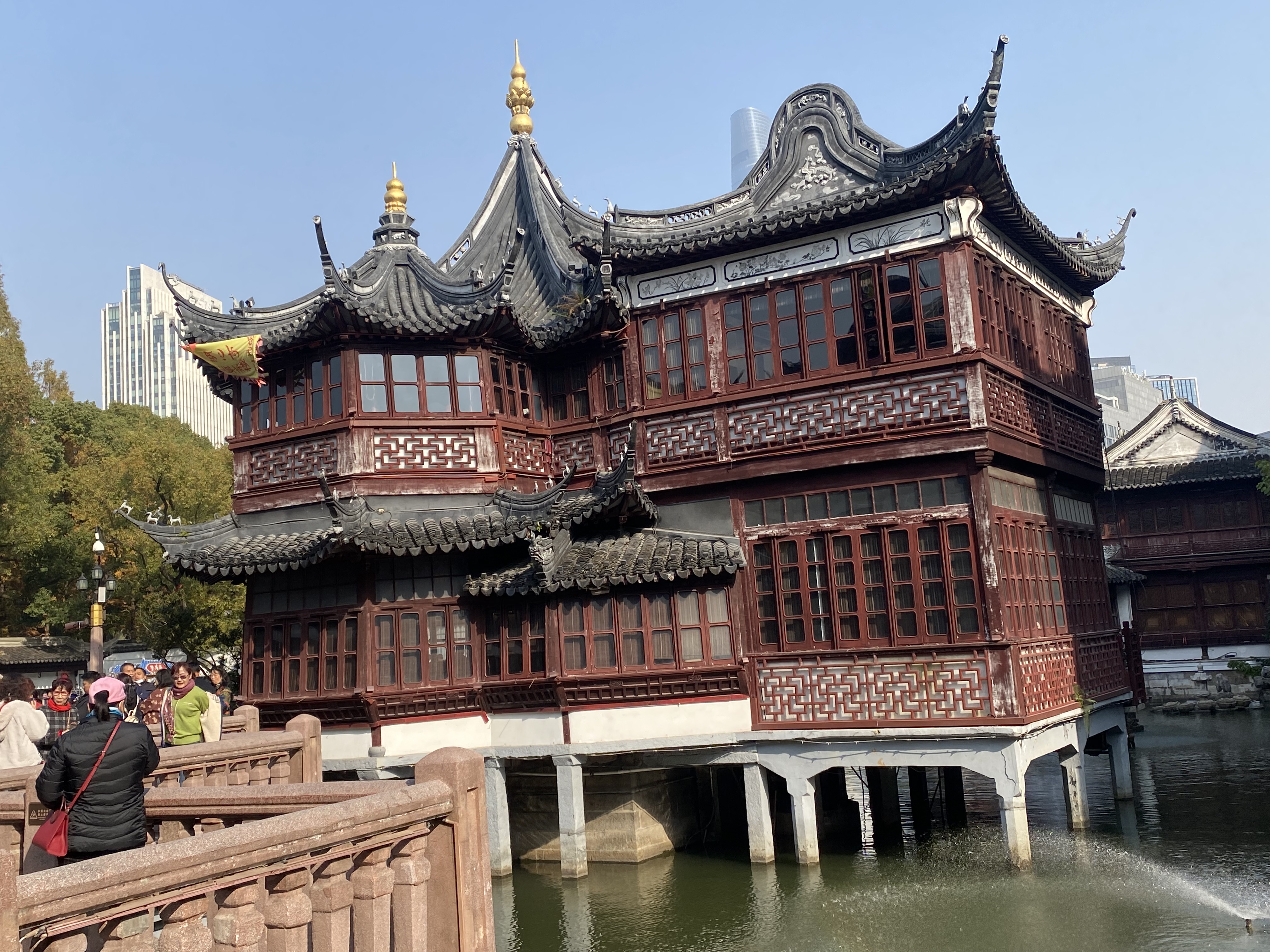
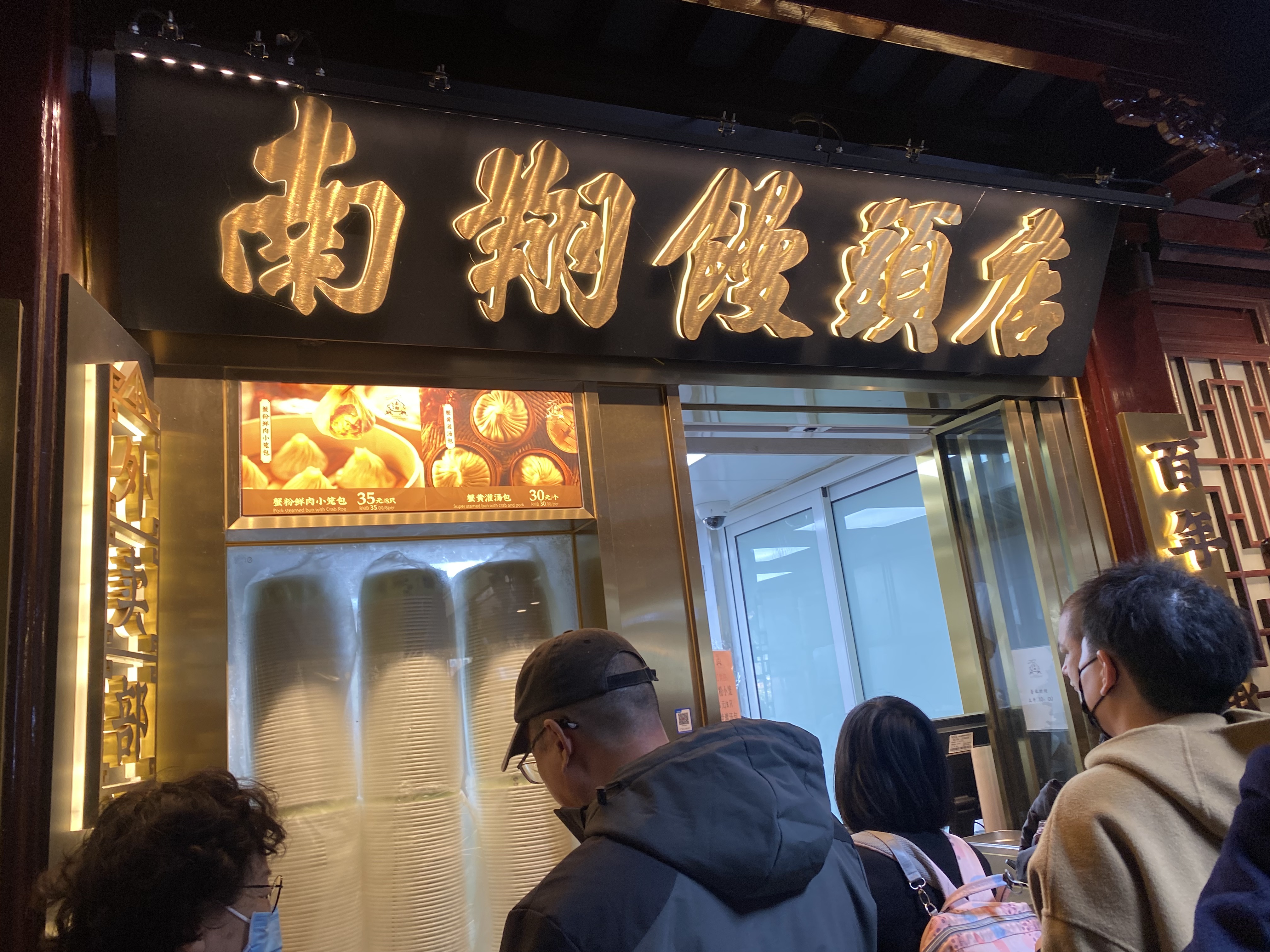
Shopping at the charming Yu Garden was delightful. “Nanxiang Xiaolongbao” (soupy dumplings, Shannghai local specialty) since 18th century) was still very popular and the queue was very long.
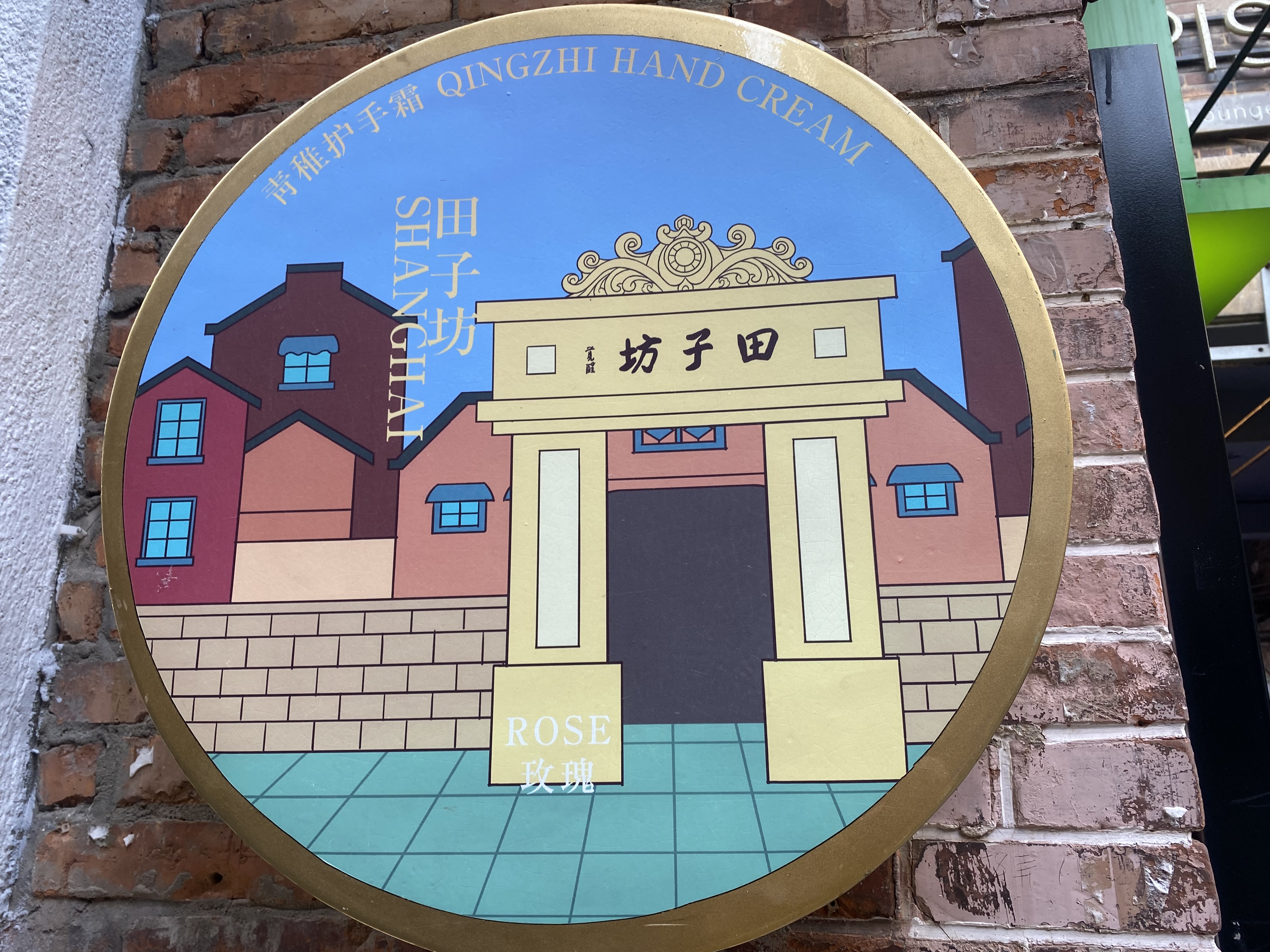
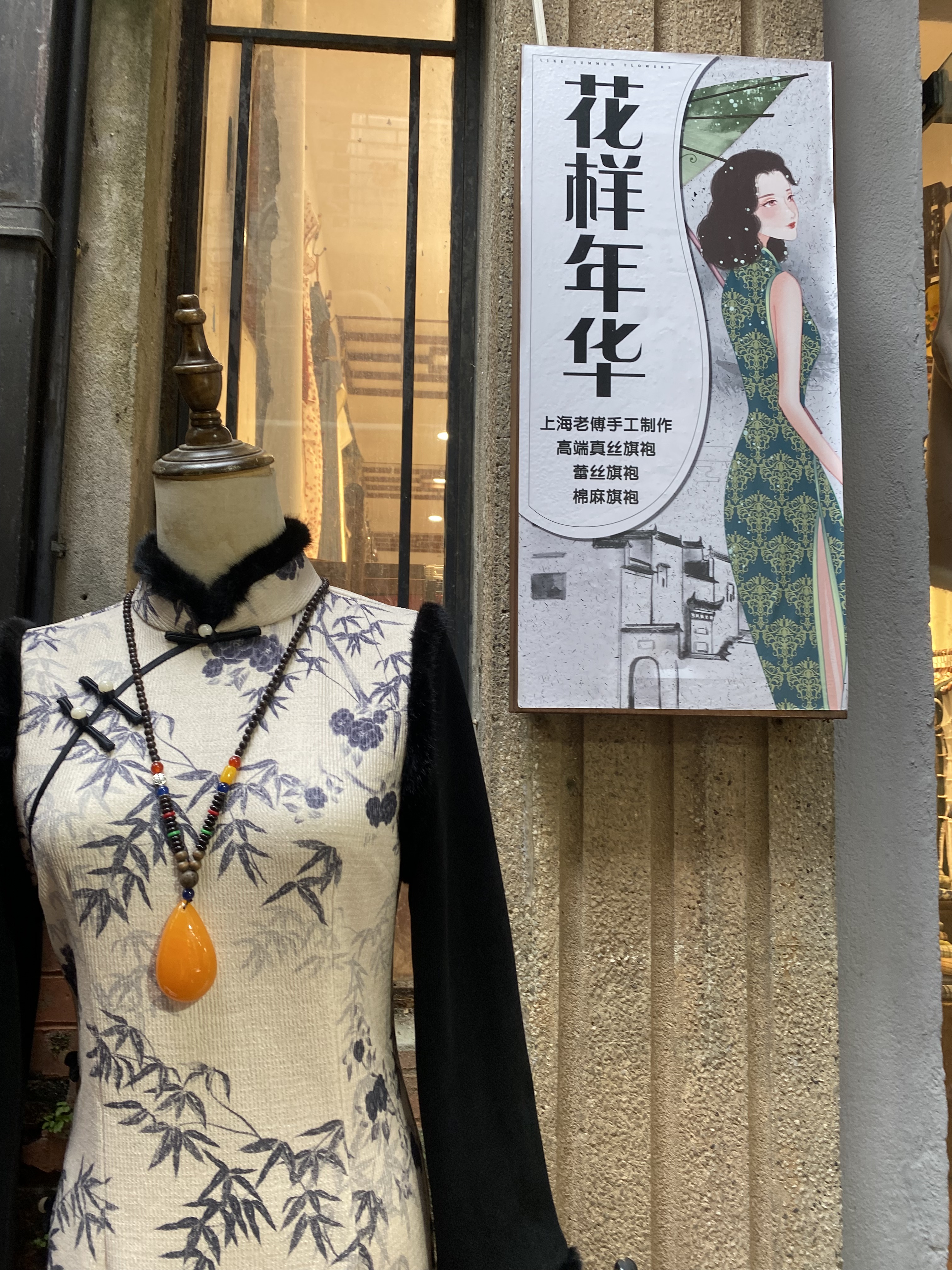
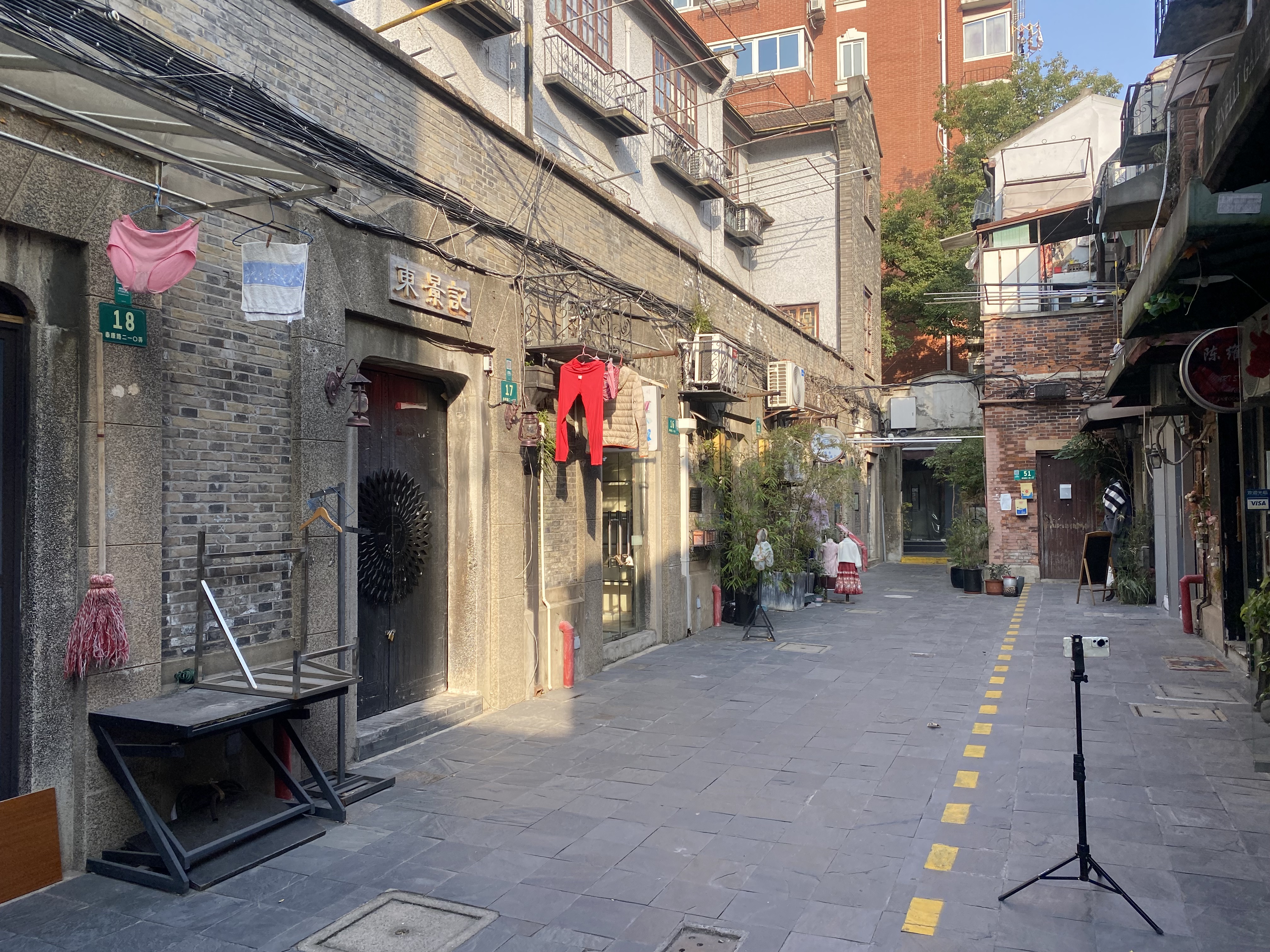
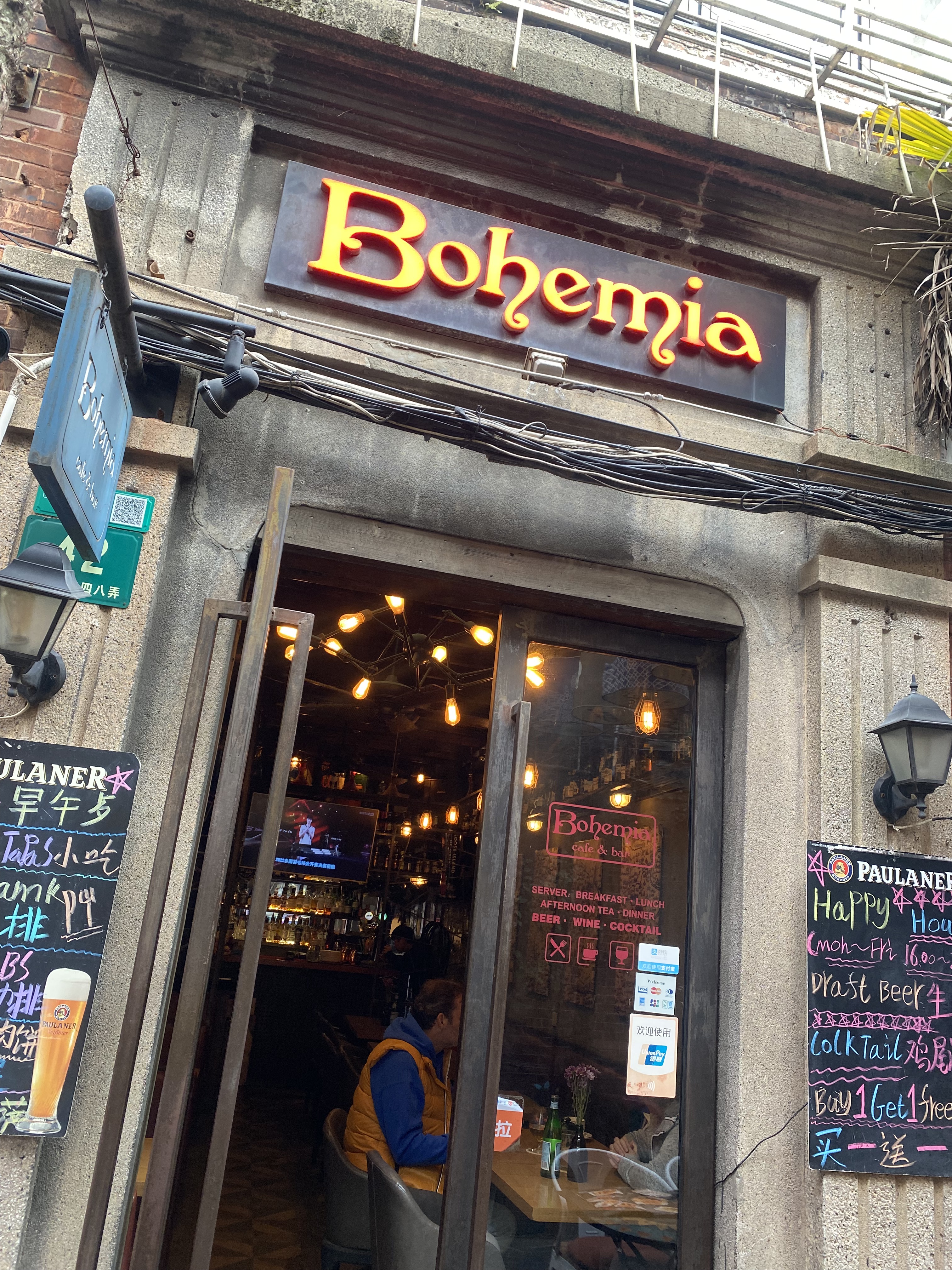
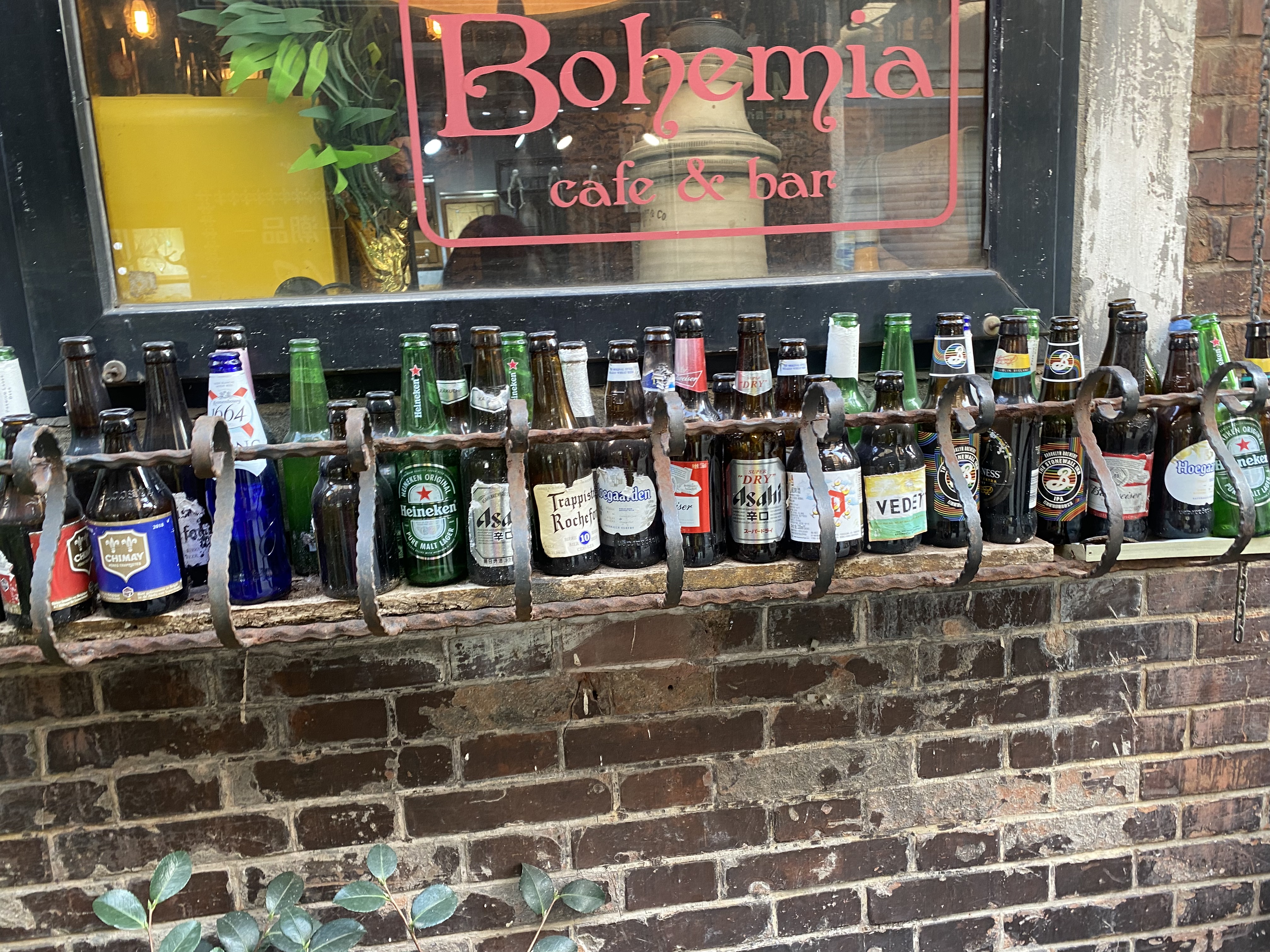
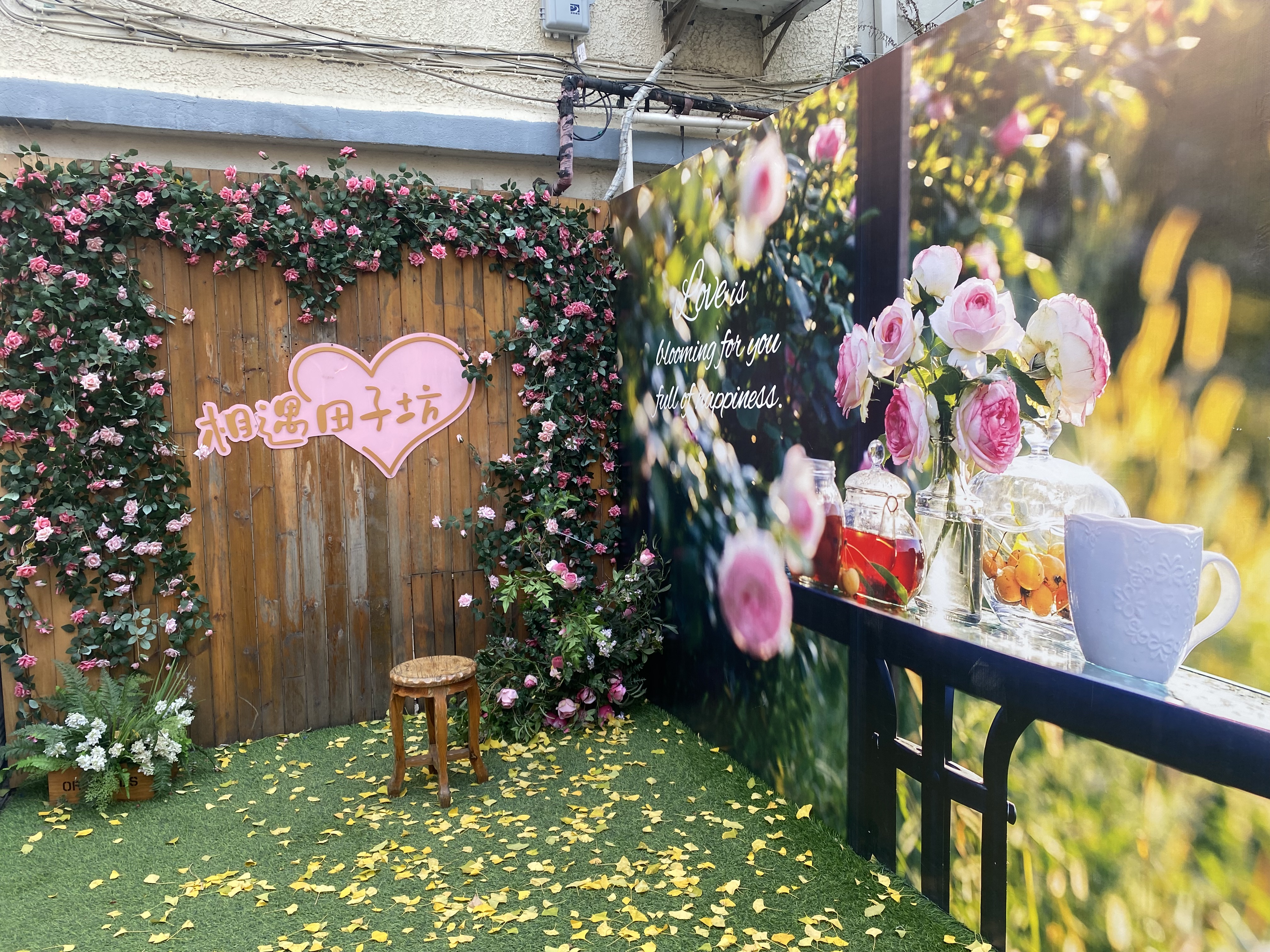
“Tianzifang” is Shanghai’s alley culture, very bohemian. It was transformed itself from legacy residential architectures and factories into an artsy area housing bars, cafes, crafts shops, design studios, galleries and boutiques. It is ardently supported by crowds of yuppies, trend setters, designers and expatriates, who fall for temptation of old “Shikumen houses” (stone-framed-door houses) and lanes with infinite novelties.
DAY 11: I took the bus early in the morning to visit my uncle and aunt whom I had known since my childhood. We always had dinners together every Sunday in our grandma’s apartment. I bought flatbreads, fried dough sticks, soy milk, etc in the canteen of the community where they lived. It was like a small restaurant, the food was very economically reasonable and good. The apartment where my uncle and aunt live is very cozy. Both of their daughters live abroad, they have a nanny come every day. Both of my uncle and aunt are retired scientists, we shared a lot of precious family memories together.
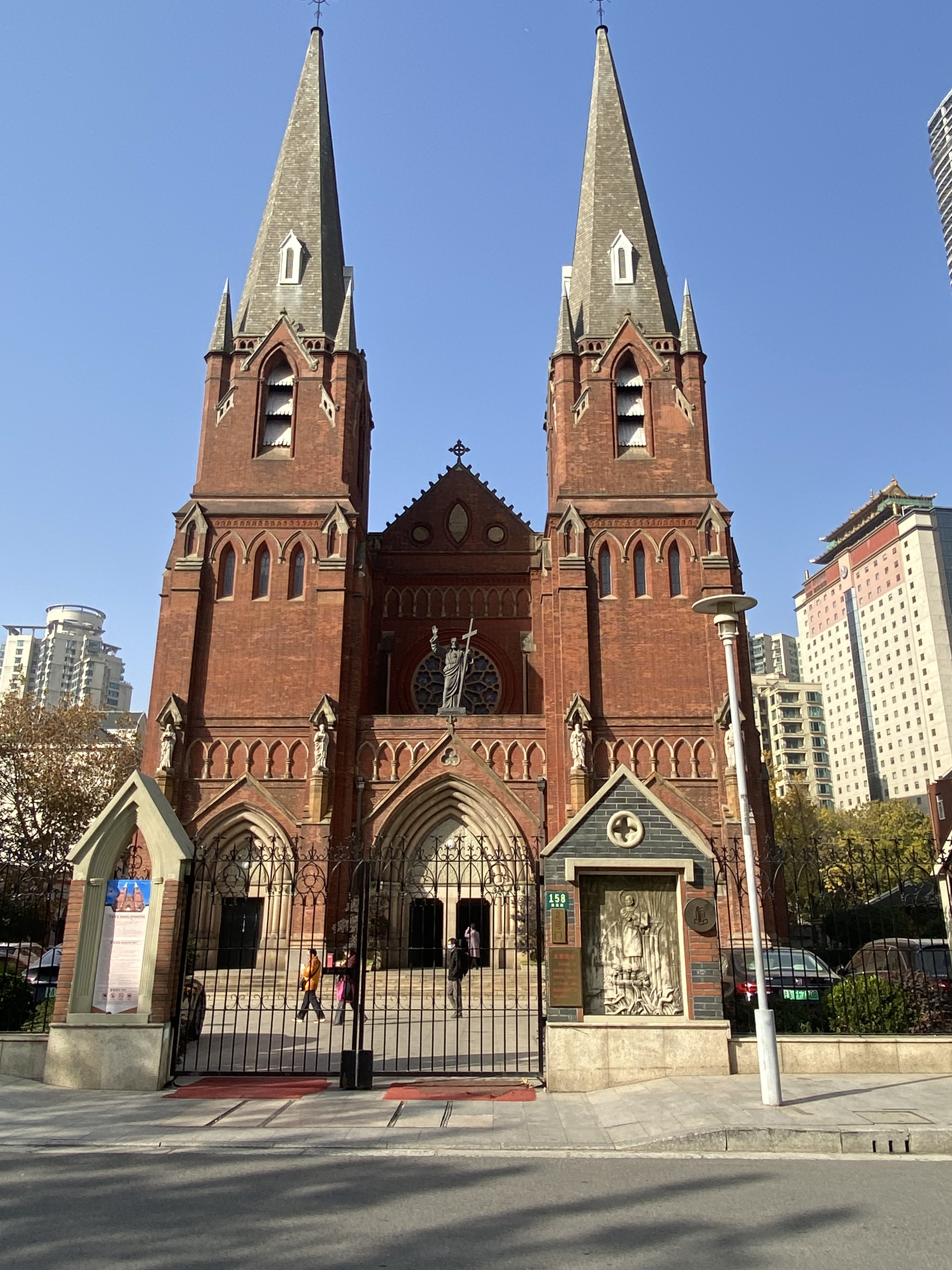
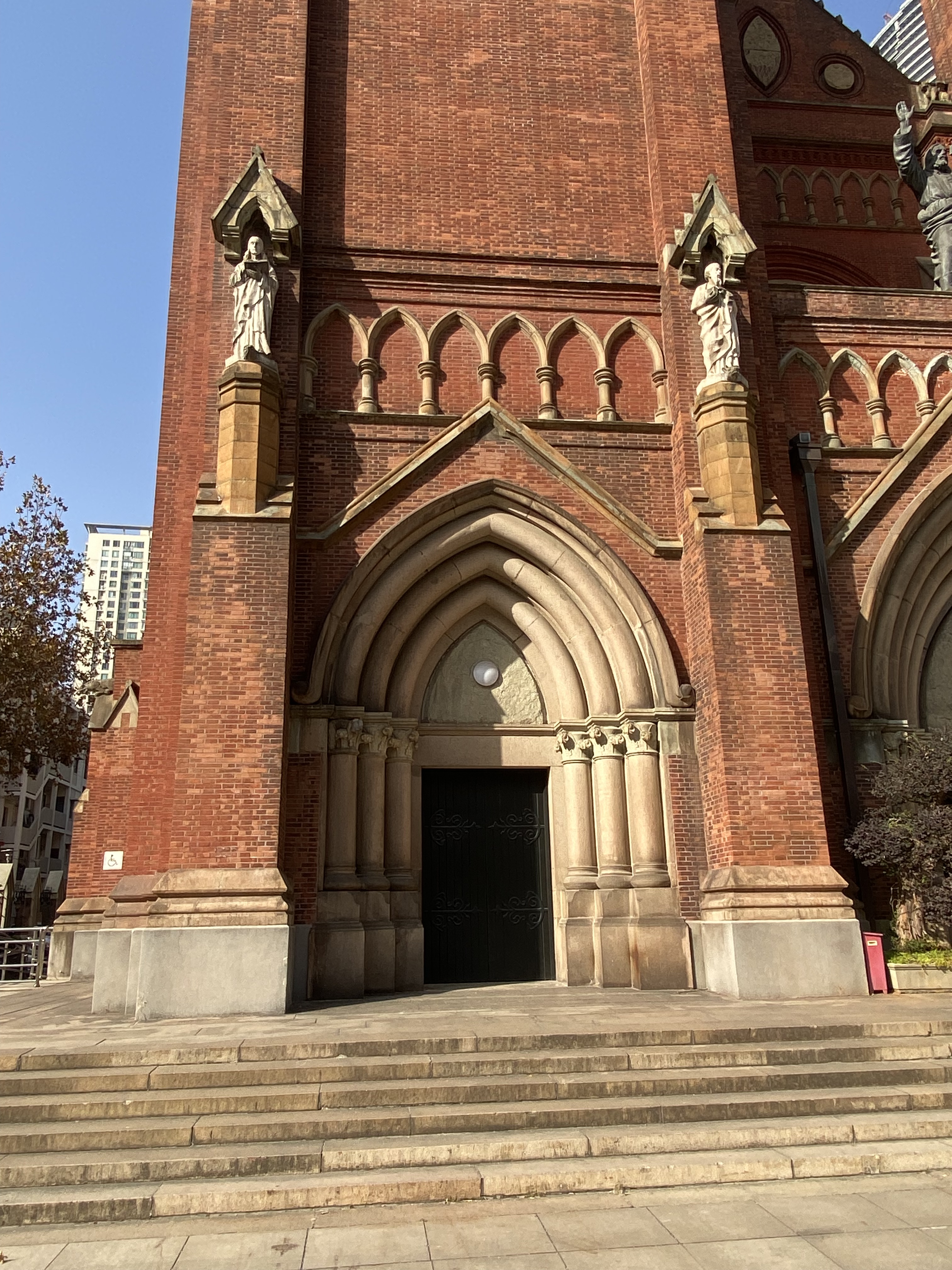
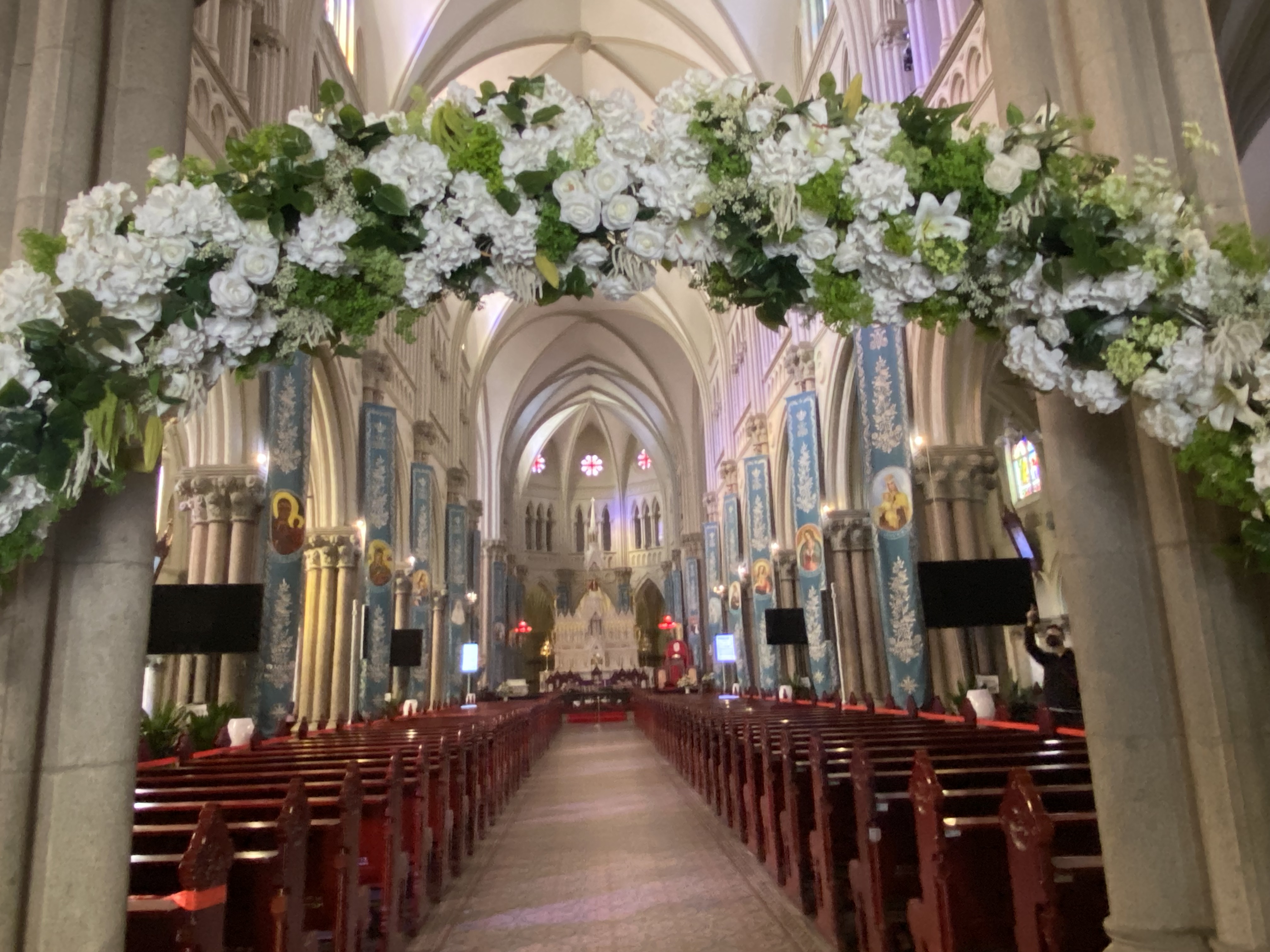
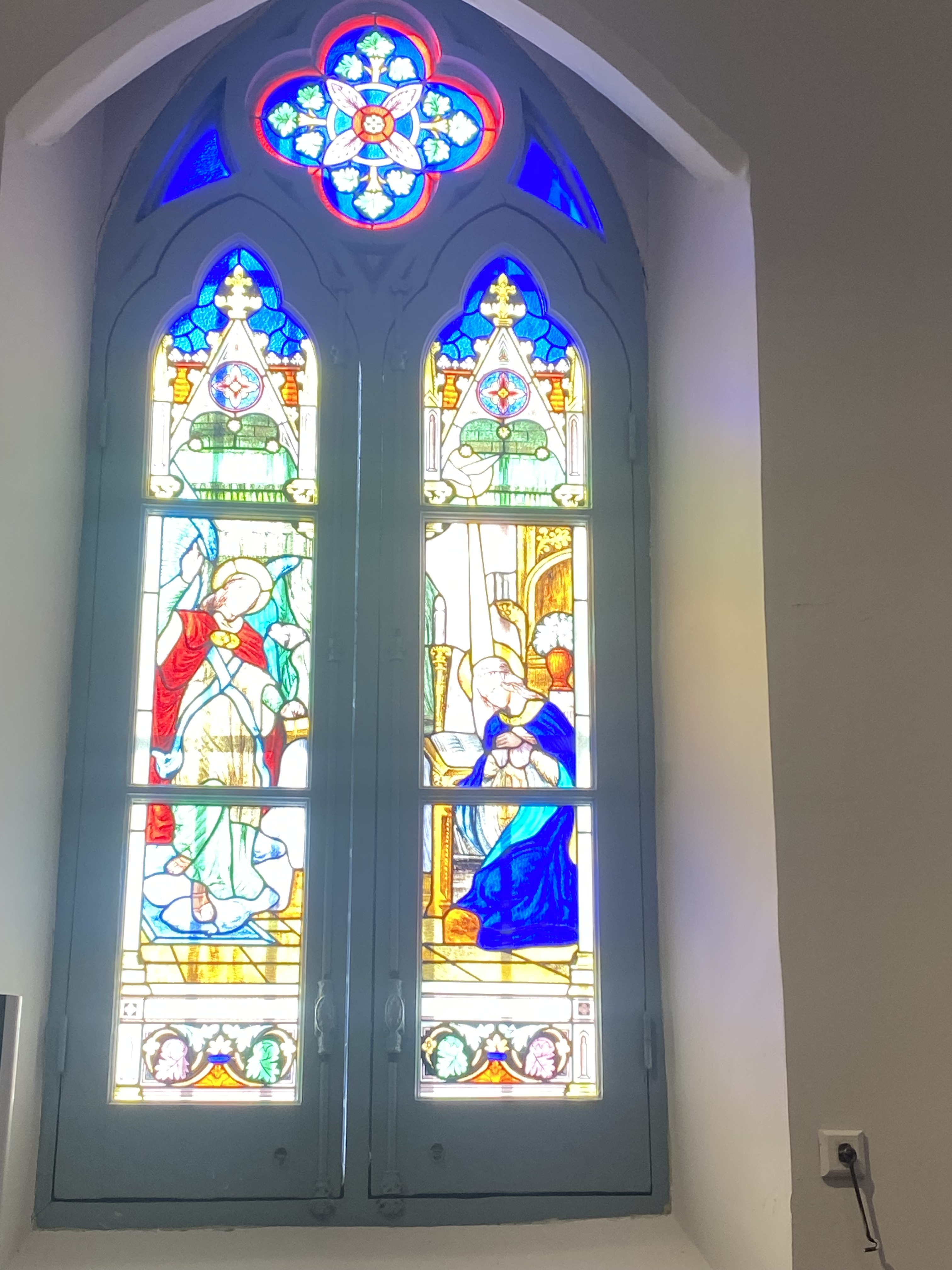
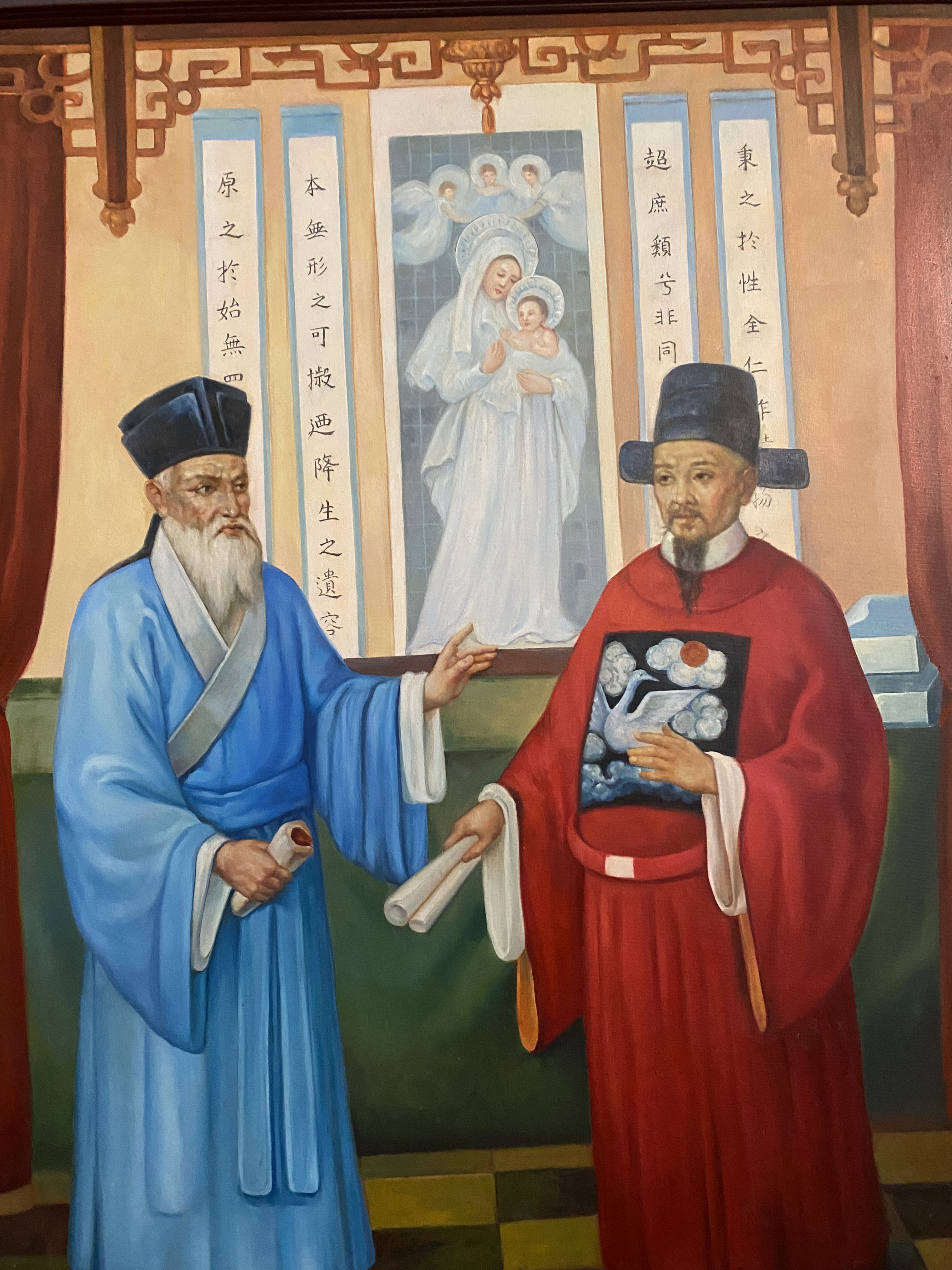
Passing by Xujiahui Catholic Church, I walked in. There are millions of churches in Europe. For the atheist Communist China, Western churches seem incongruous. But Shanghai is very westernized cosmopolitan city, there are many religious believers. The fusion of Chinese and Western elements in the church is quite interesting.
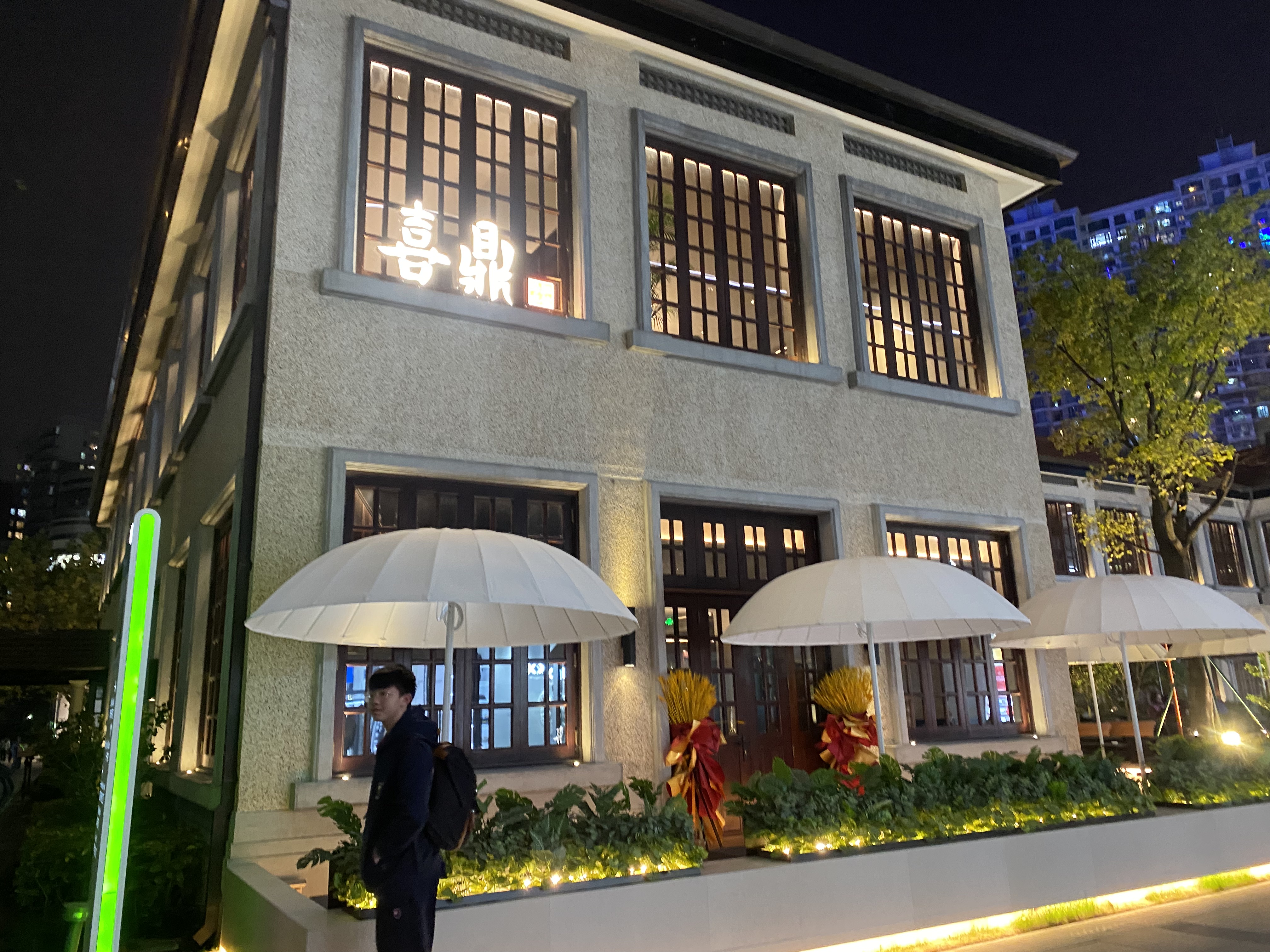
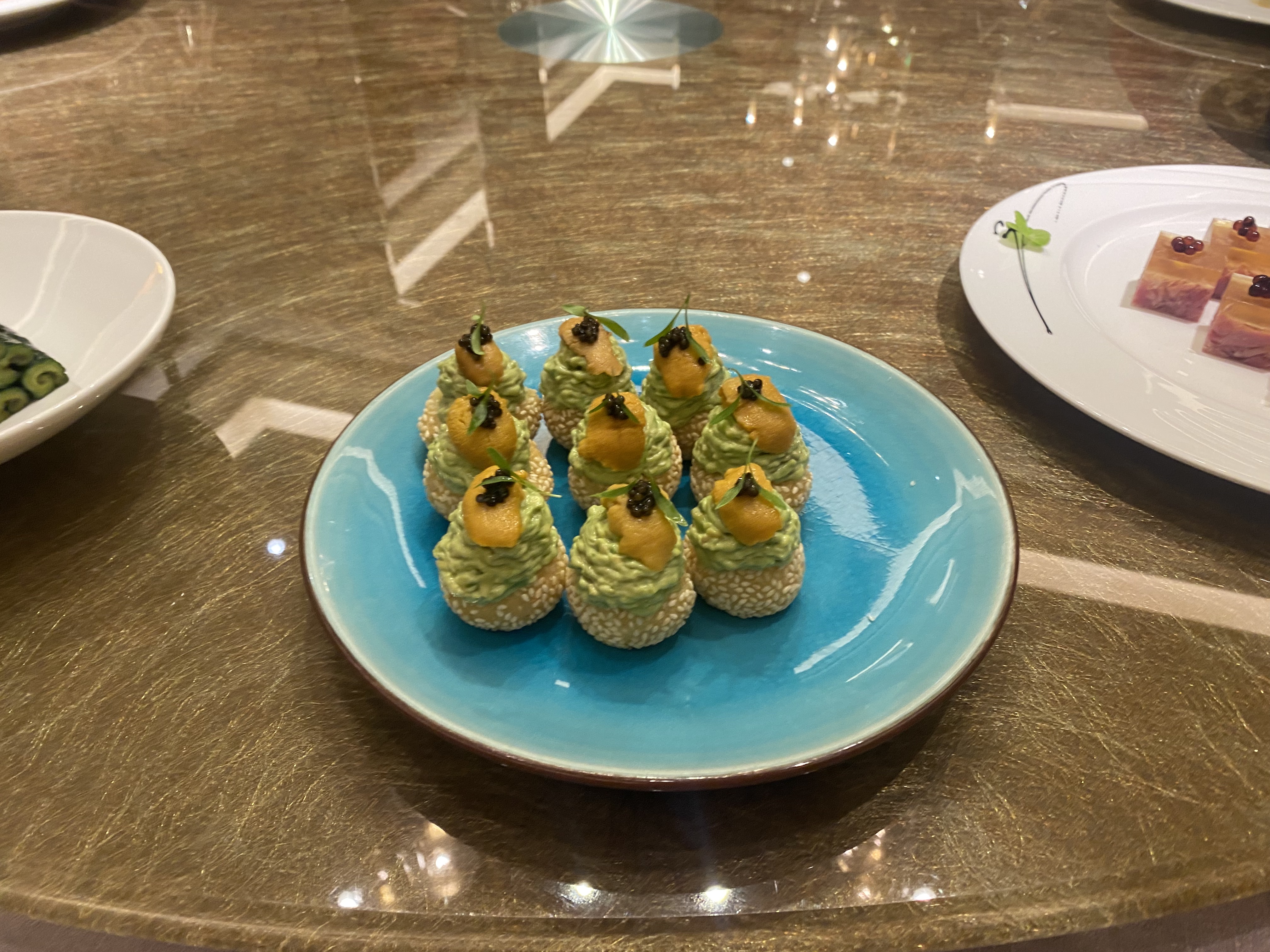
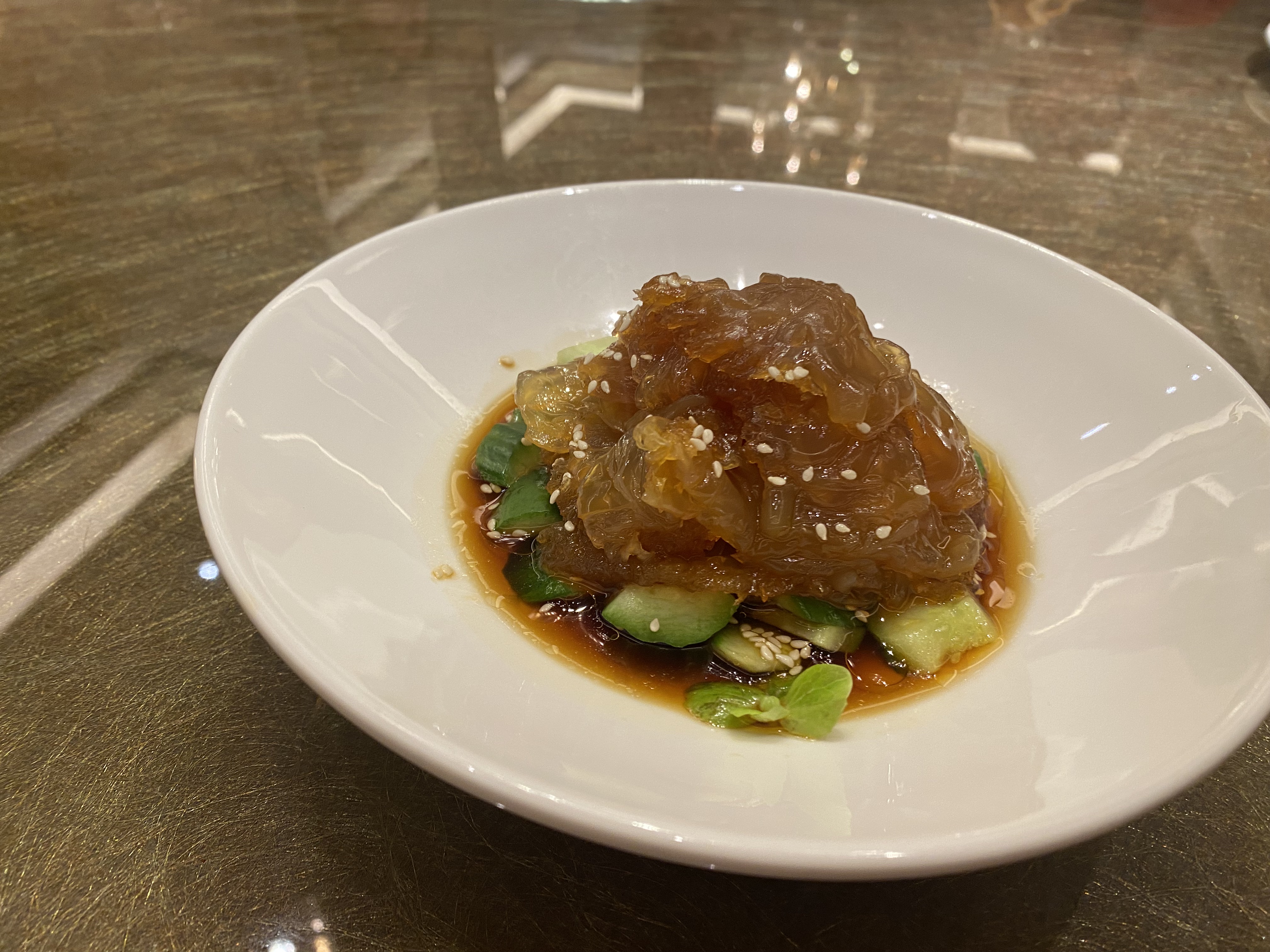
My friends hosted a banquet for me. The restaurant is in the old building of Santa Maria Girls’ School (Eileen Chang used to study in this girls’ school). Each room is related to the lunar season. We were in the “Rainwater” room. I was so lucky, on the sixth day after the restaurant opening, I was able to try something new. The “sea urchin” (is it banned in America?) dumplings are particularly delicious! The cuisine is from Shandong region.
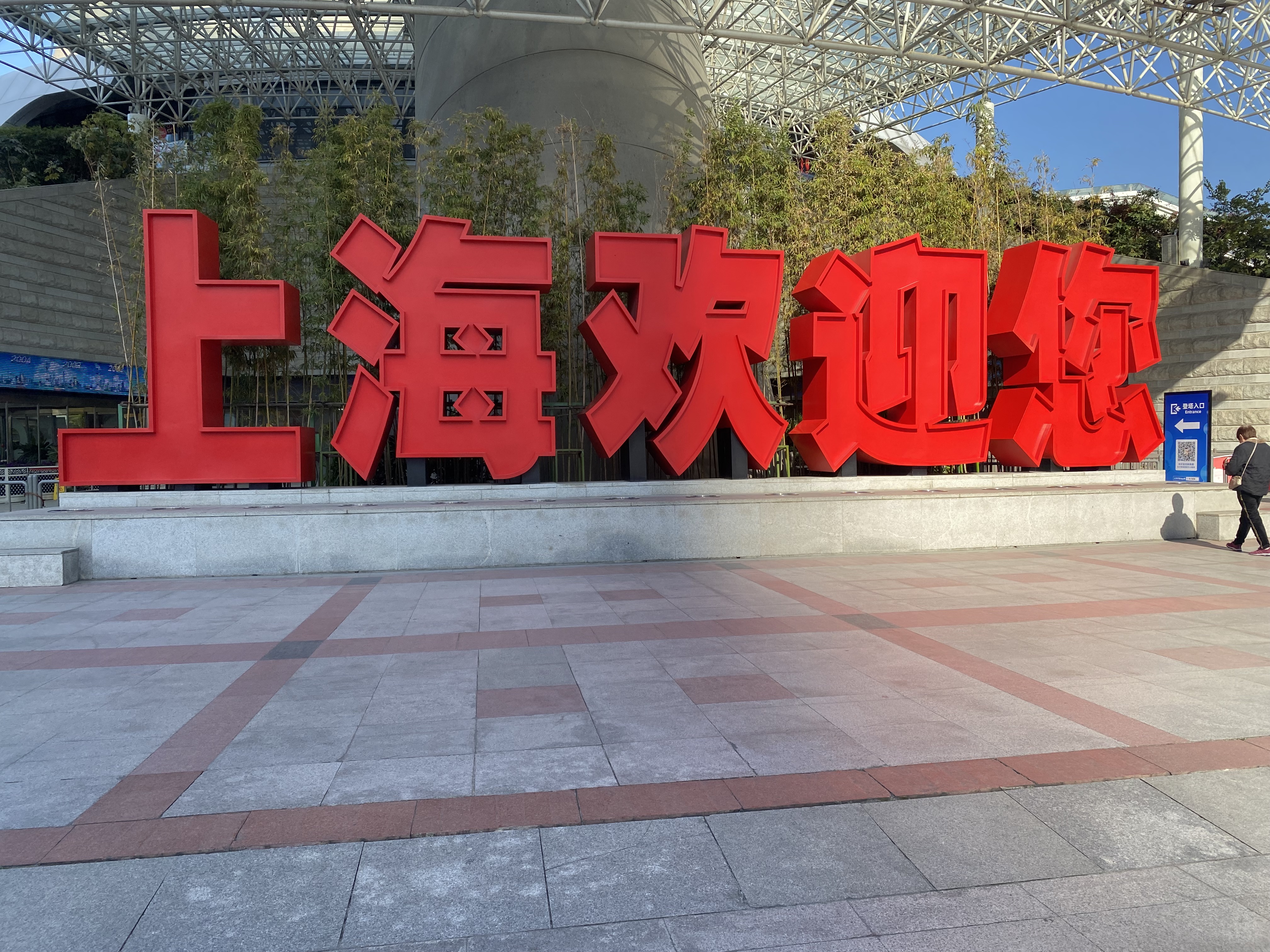
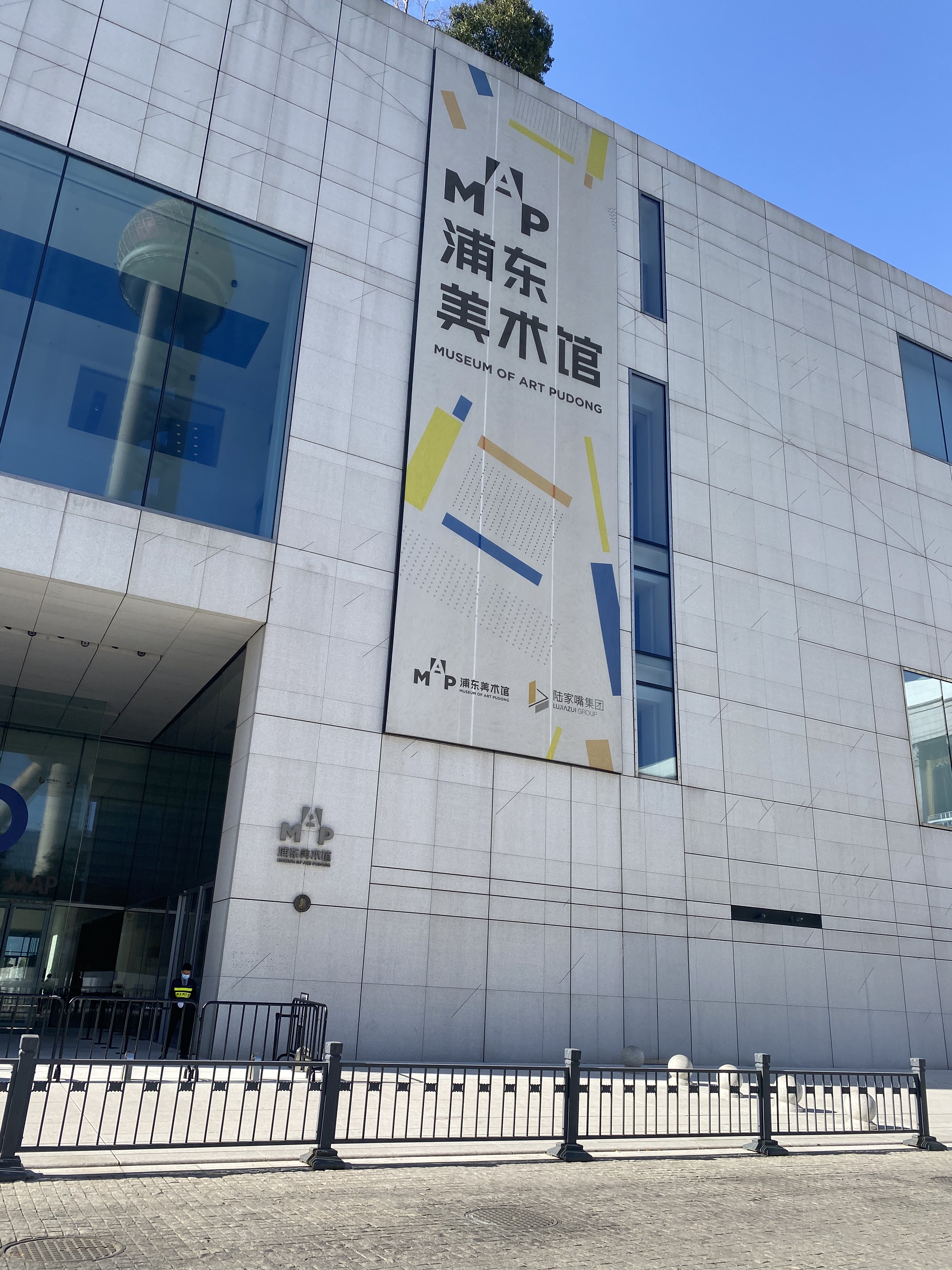
Today is the weather southern California, the sun is shining brightly, and I came to Lujiazui, Pudong again. A friend introduced me to the Pudong Art Museum, which was just opened 2 years ago. He said it was the best art museum in Shanghai, which is located next to the landmark of Shanghai Oriental Pearl Tower.
The works of this modernist painter Zeng Fanzhi from Wuhan are outstanding. Zeng Fanzhi , born 1964. iis a contemporary Chinese artist based in Beijing. Zeng’s works have been praised as possessing an emotional directness, an intuitive psychological sense, and a carefully calibrated expressionistic technique.He was born in 1964. He is prolific and innovative in every period. Now his works have been collected by many major European and American art museums, and he has often held solo exhibitions in major cities around the world. This exhibition is worth seeing…👍👍
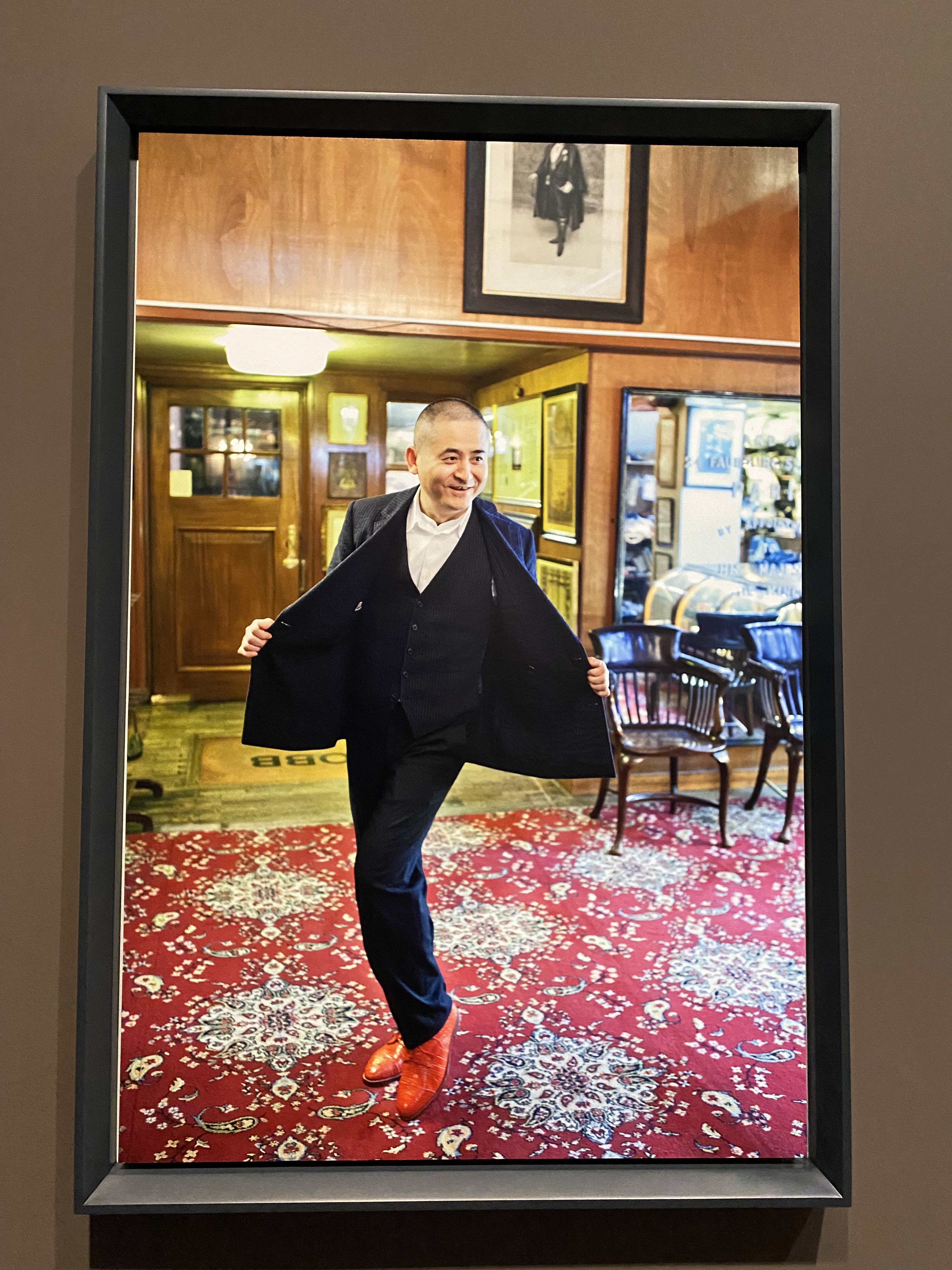
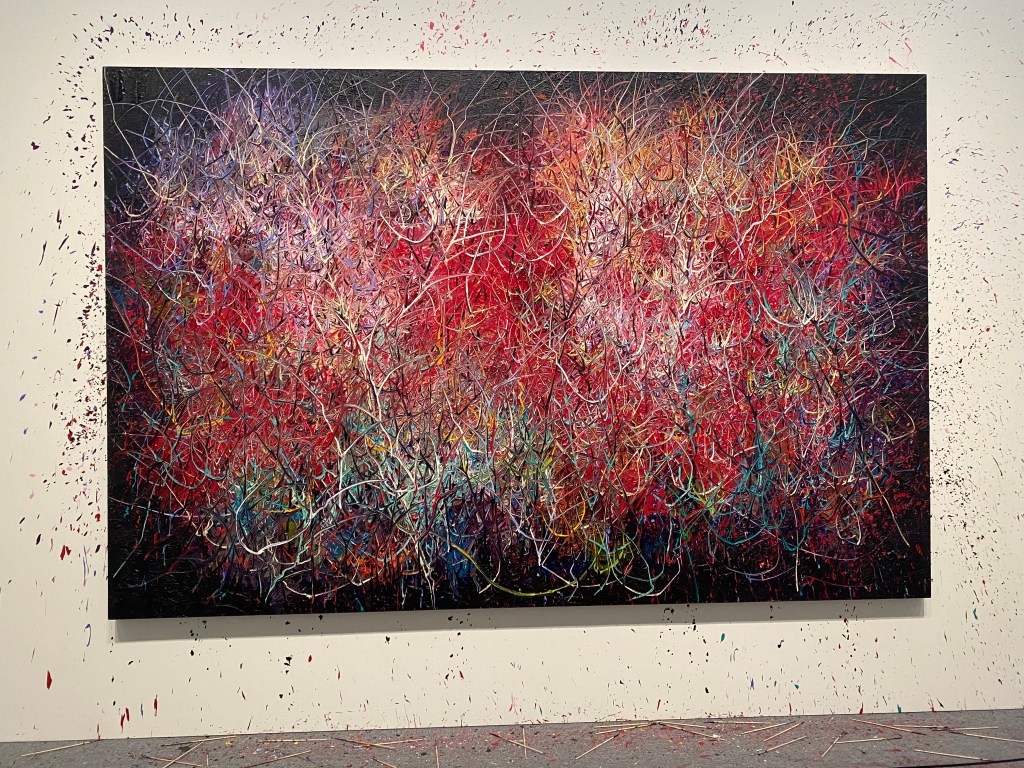
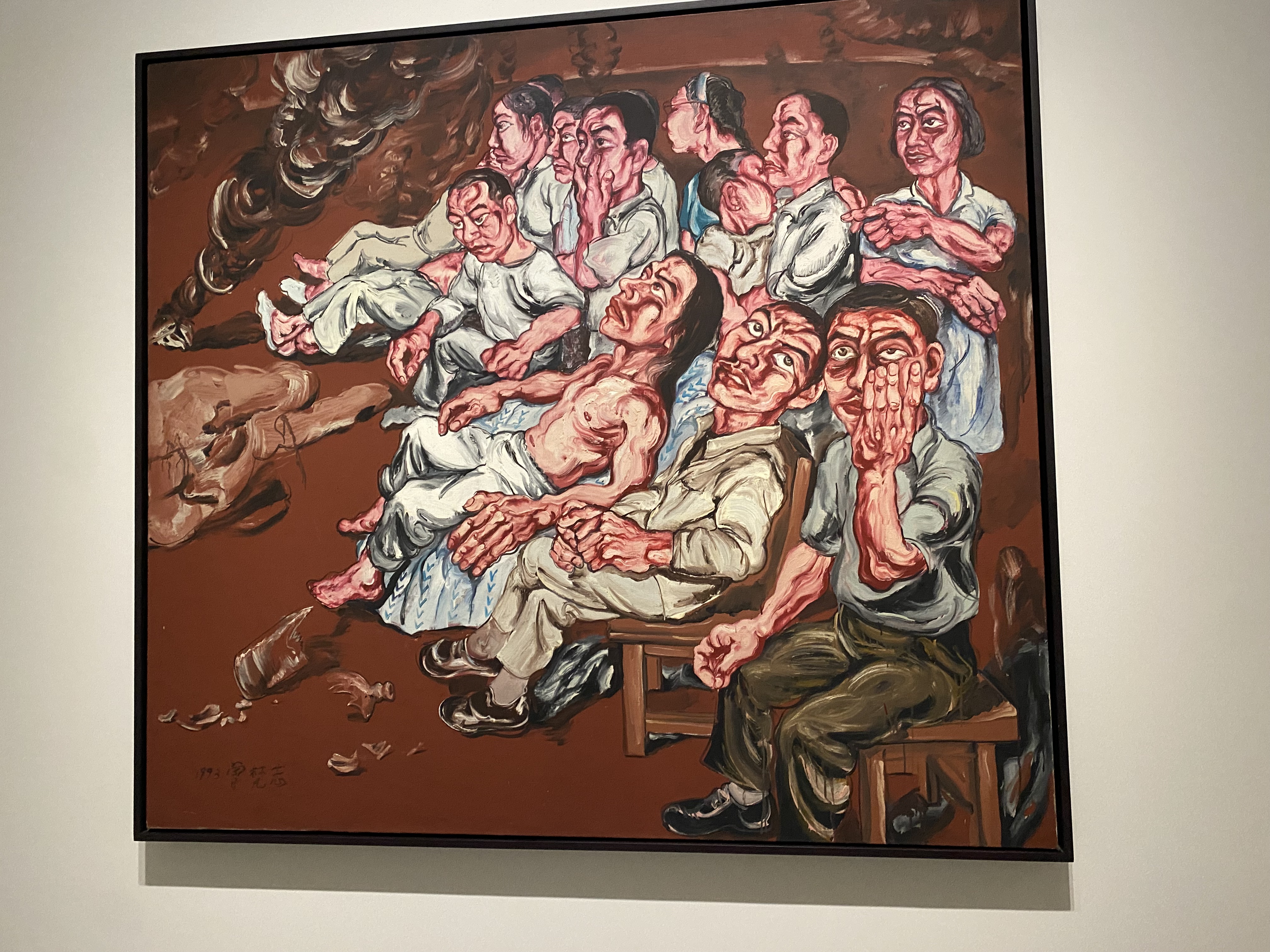
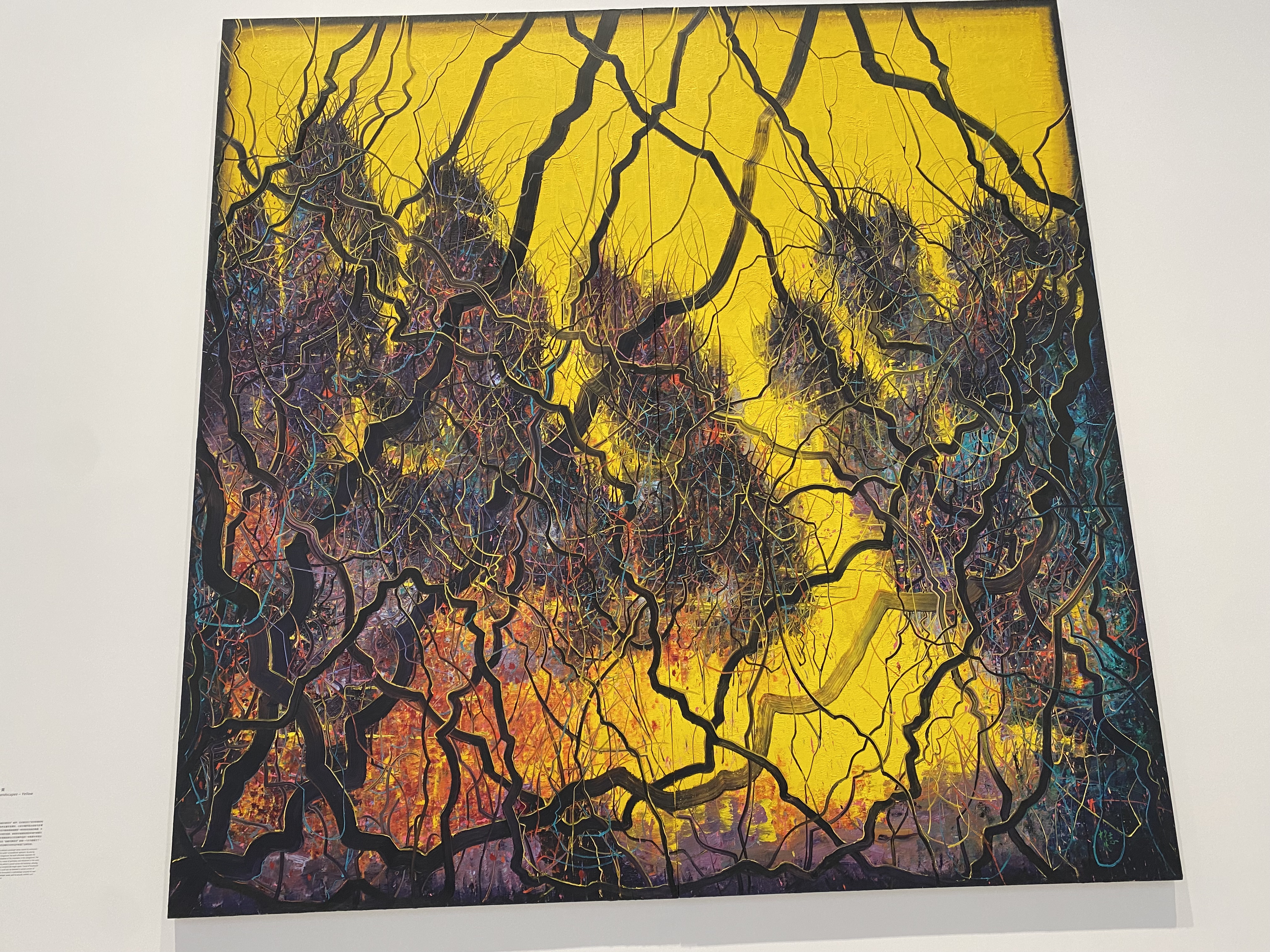
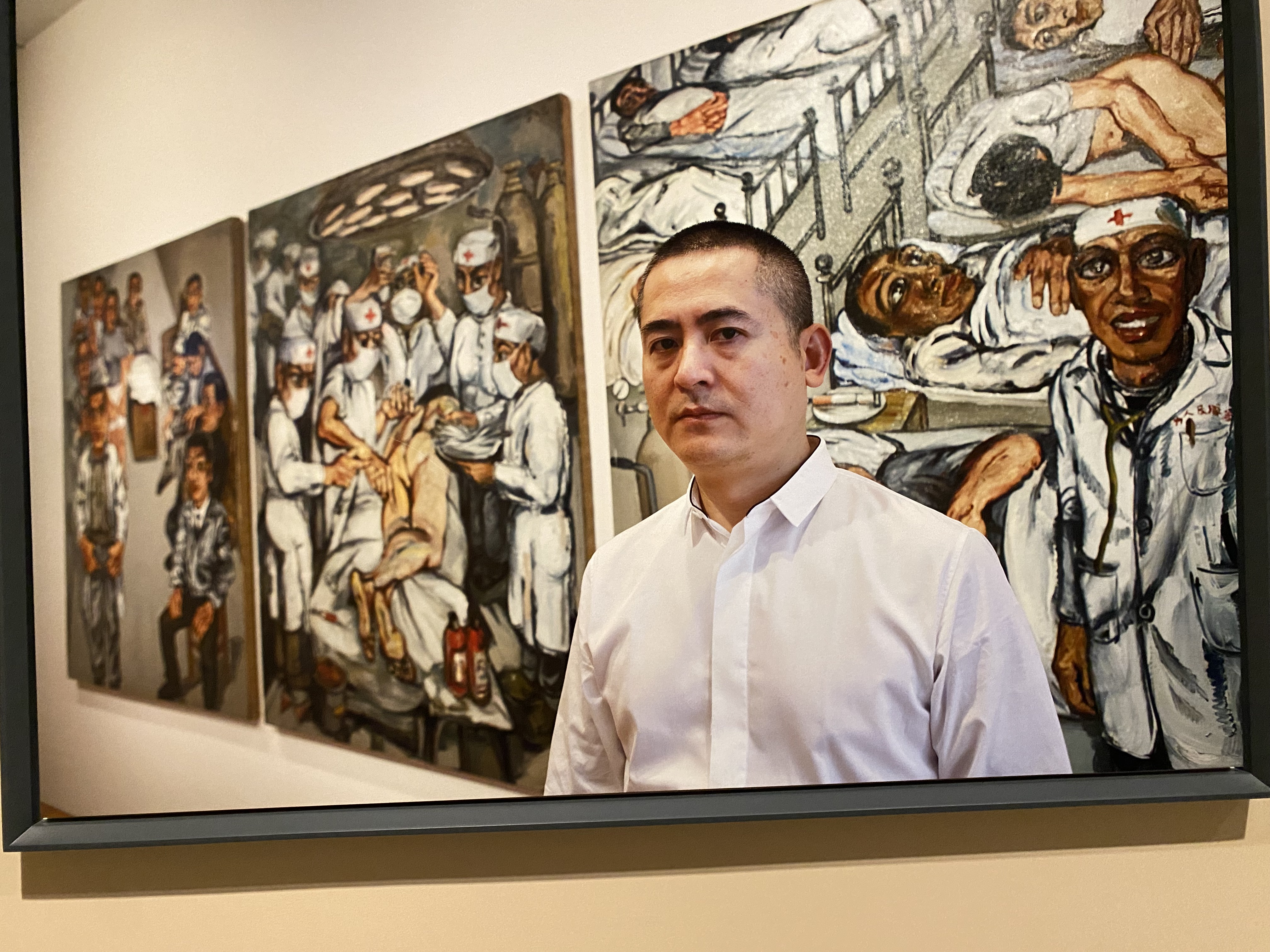
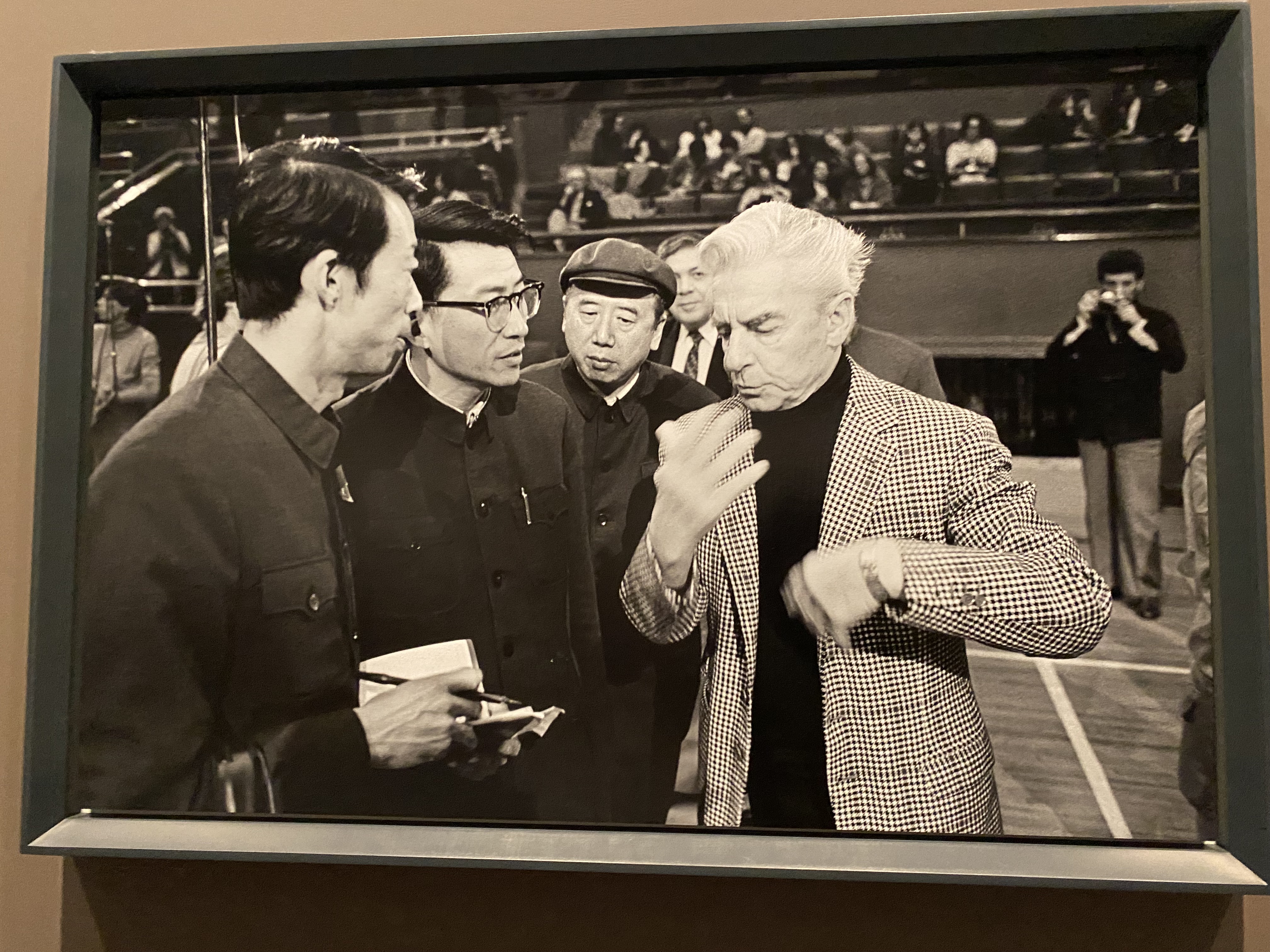
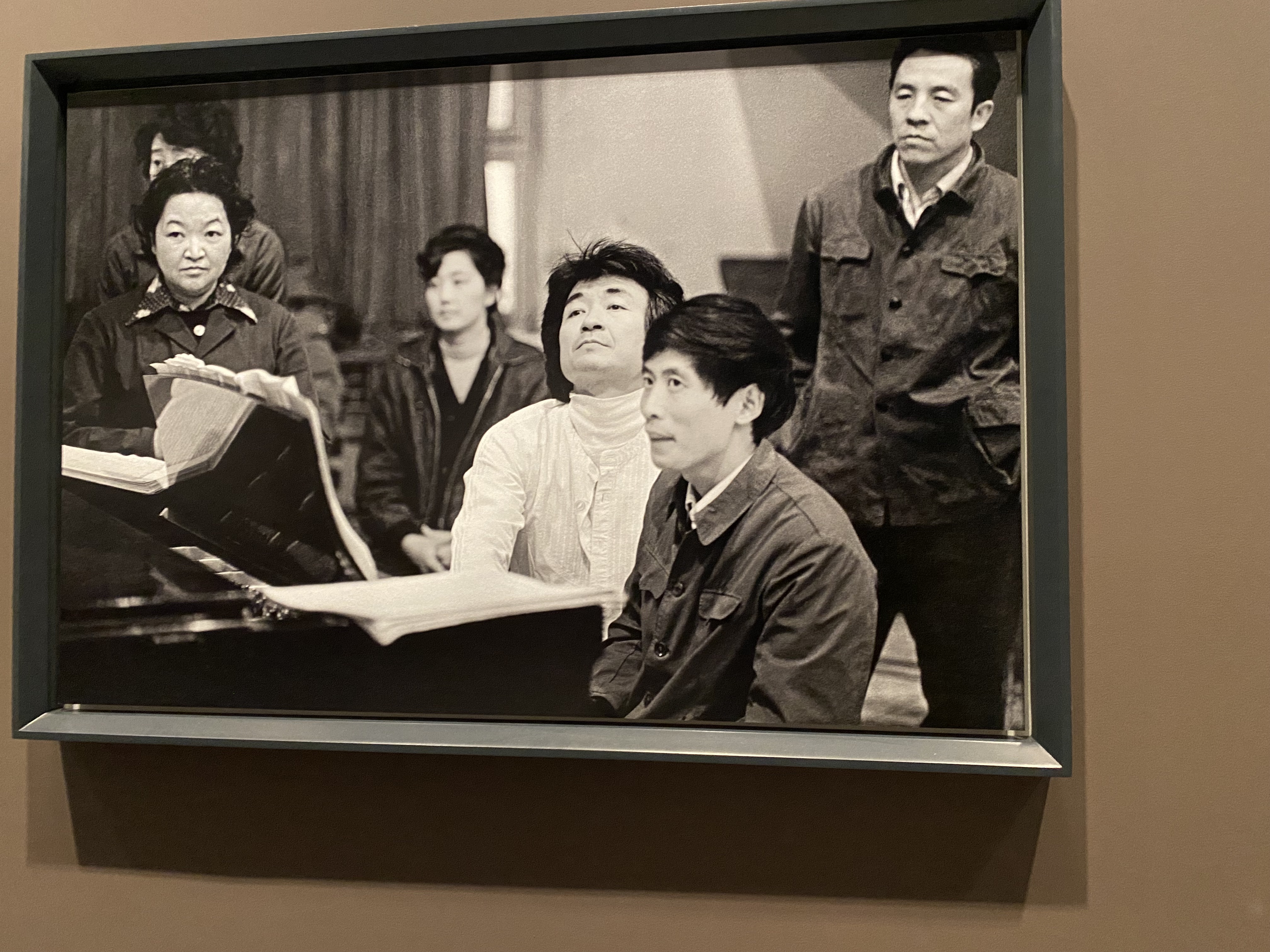
The current photography exhibition at the Pudong Museum of Art in Shanghai took me back the time when I was living in China. Photographer Liu Heung Shing’s first large-scale comprehensive retrospective exhibition : “Liu Heung Shing’s Lens · Era · People”. It presented historical events, portraits of famous people during that specific period. Nearly 200 photographic works vividly showed how the images in the news at that time were created, selected and spread. The photos of Karajan and Seiji Ozawa during 1980’s when they took their orchestras to China were very special to me.
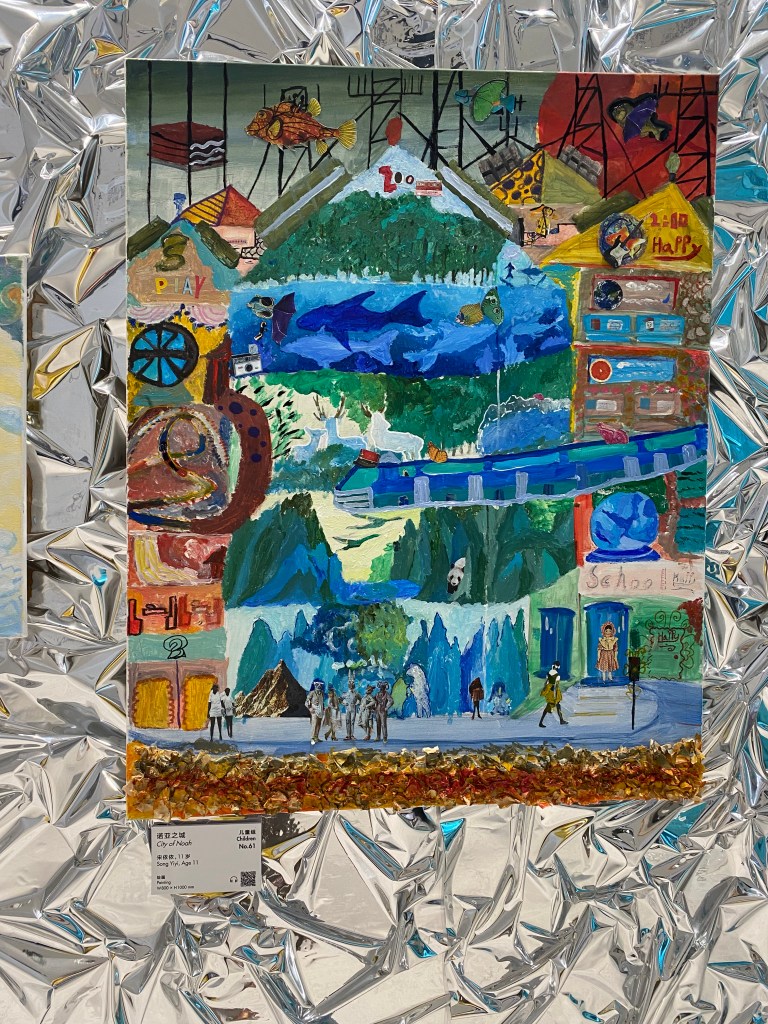
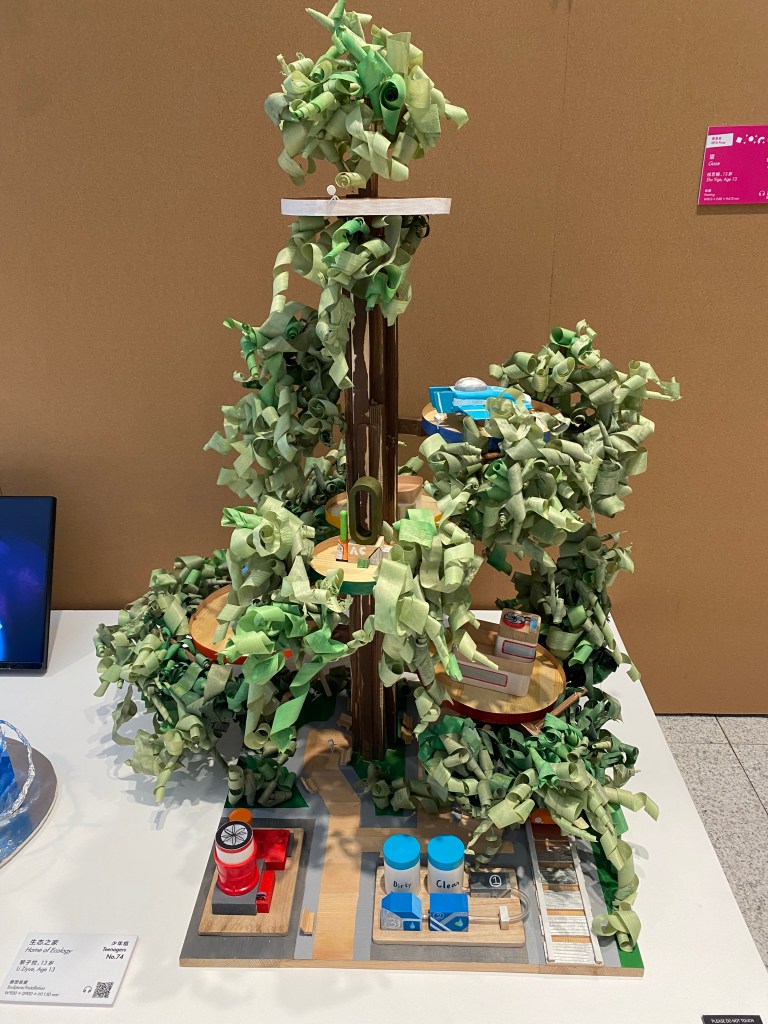
The works presented at “Youth Environmental Protection Art Exhibition” at the Pudong Art Museum are also very good. The ages were all 12 or 13 year olds.
From the top floor of the Pudong Art Museum, you can see the century-old buildings on the Bund across the Huangpu River. It’s breathtaking!
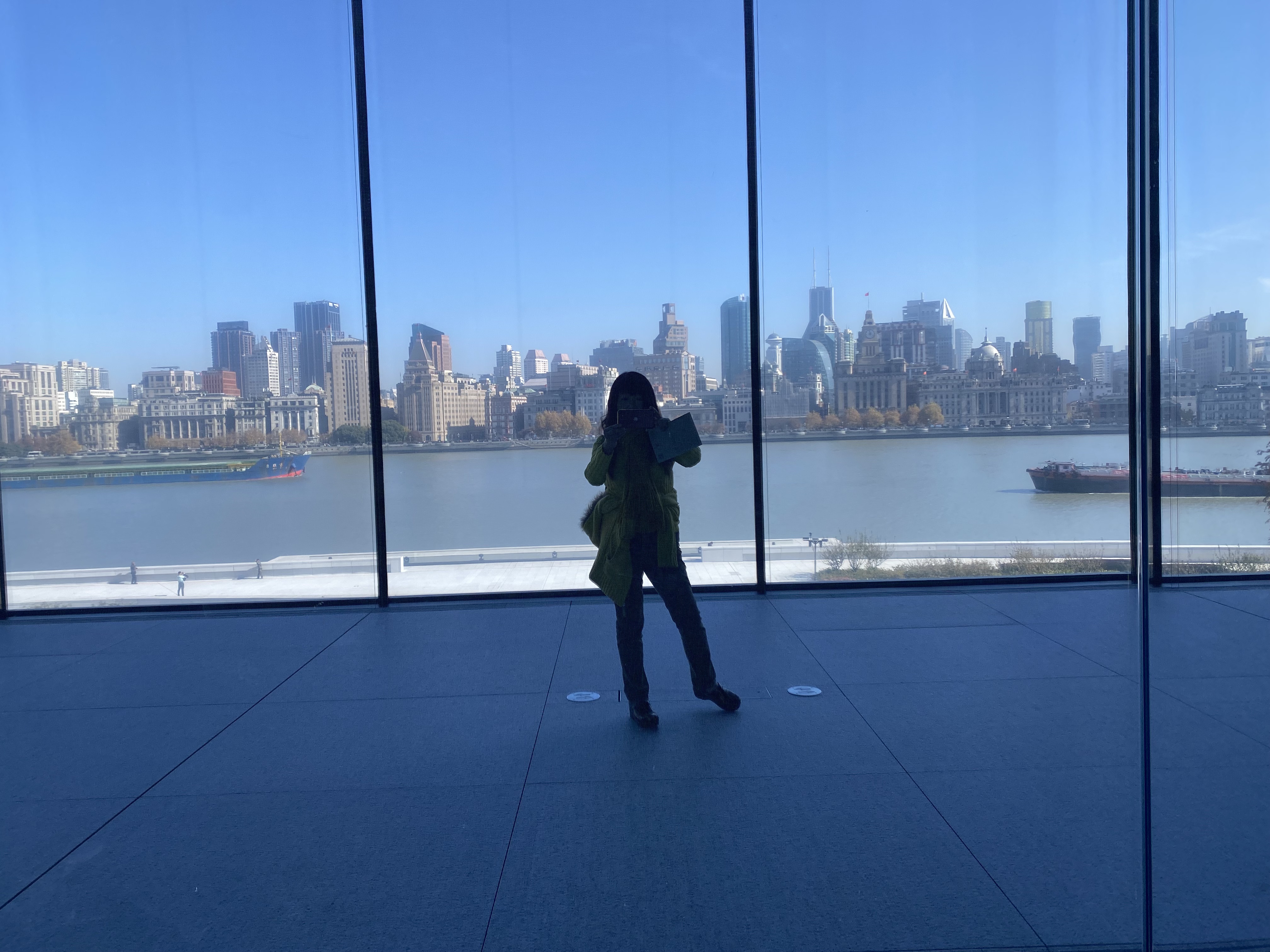
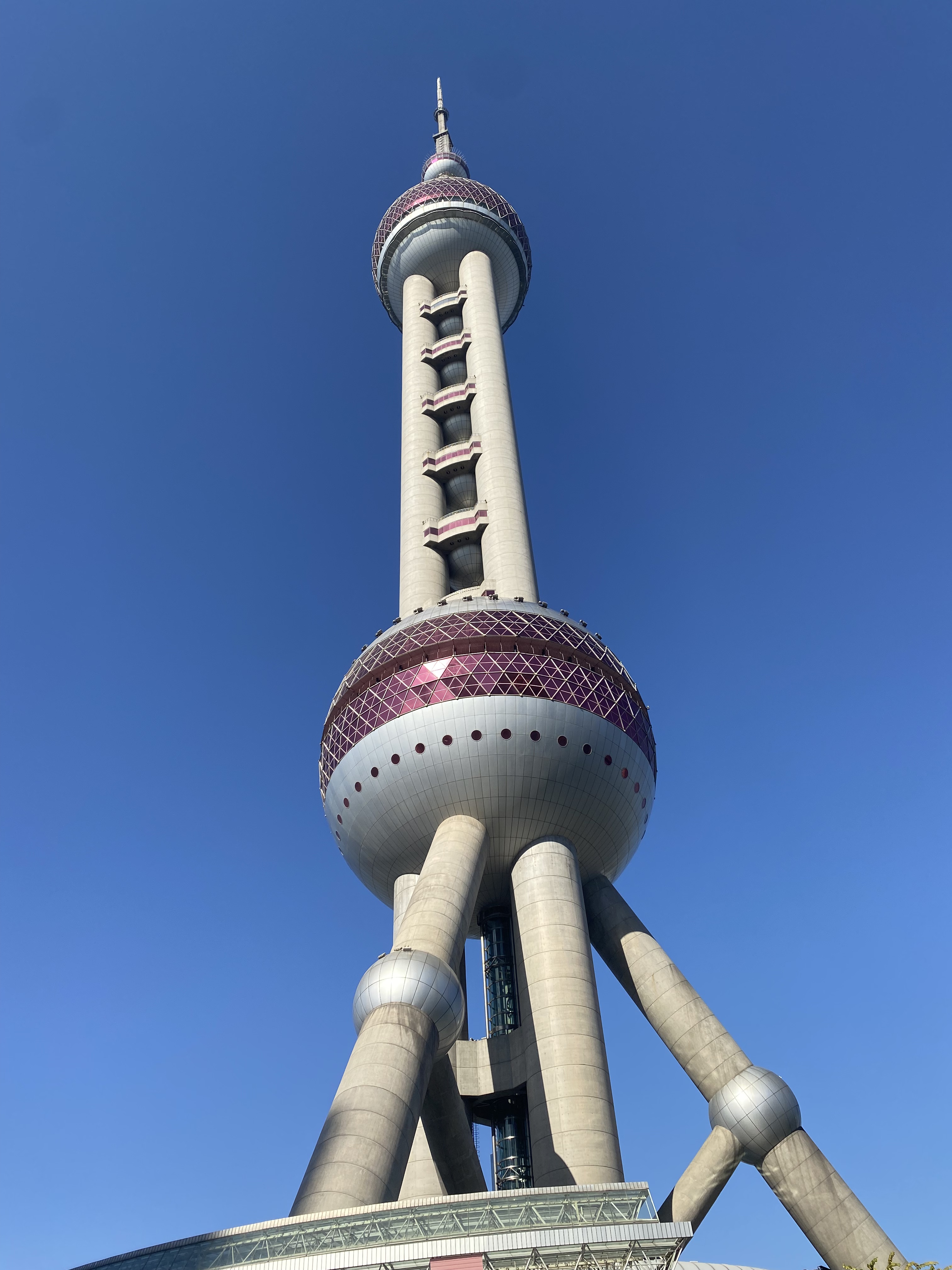
The two-week trip to Shanghai is over. Every day was packed with precious memories. I met many relatives and old friends. The weathers were also very cooperative. I had a fantastic time in my hometown! ❤️❤️❤️
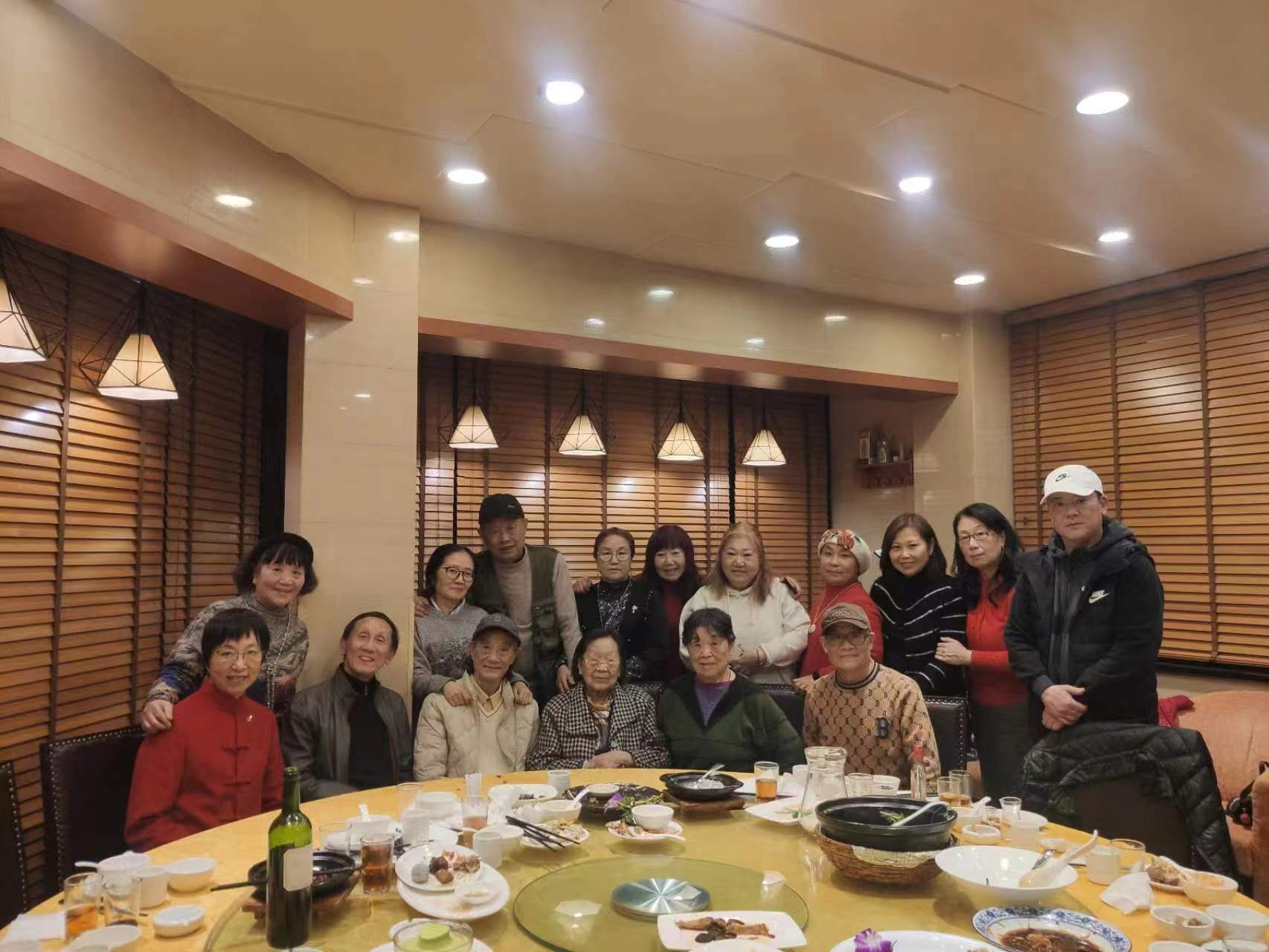
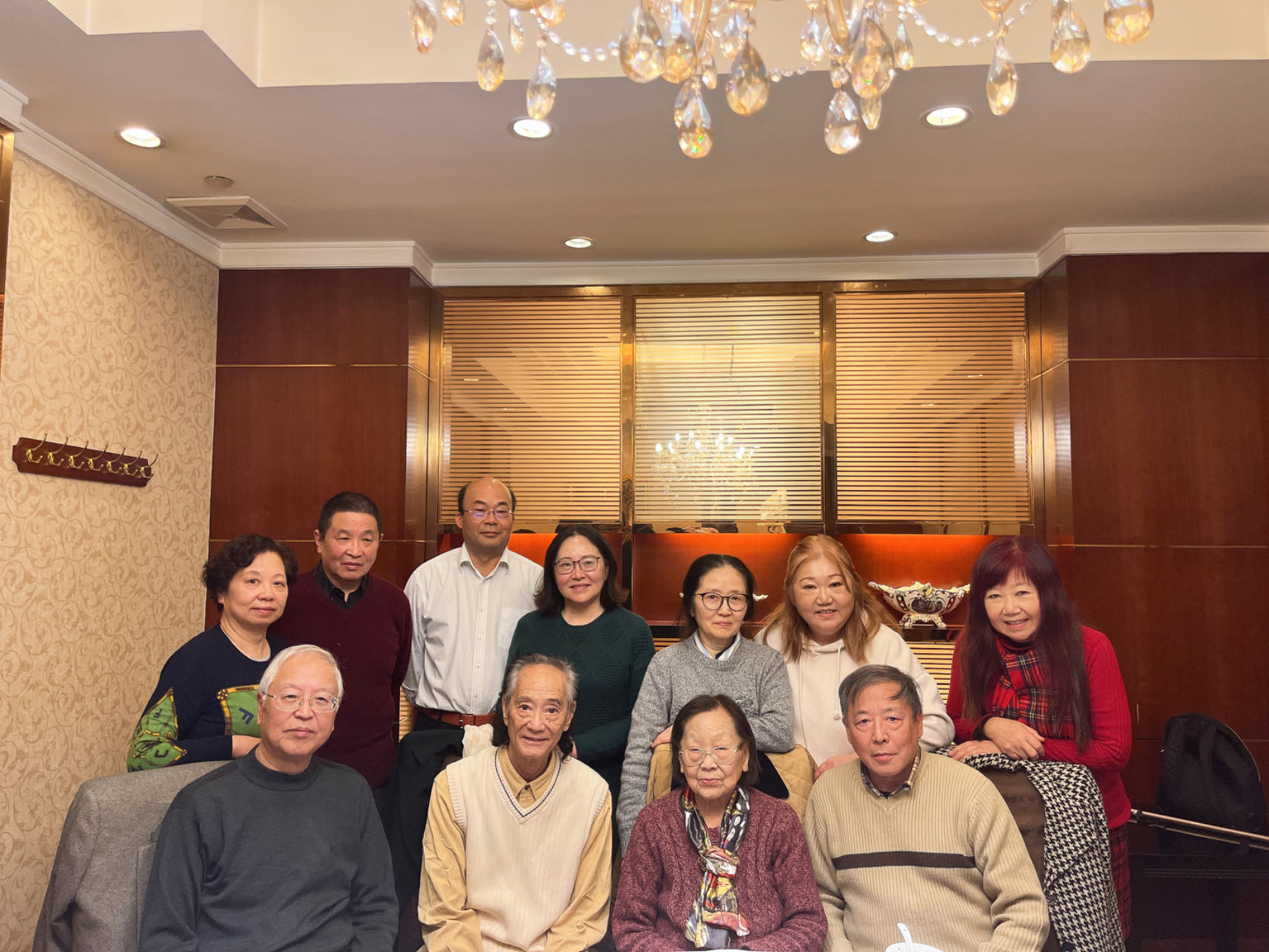
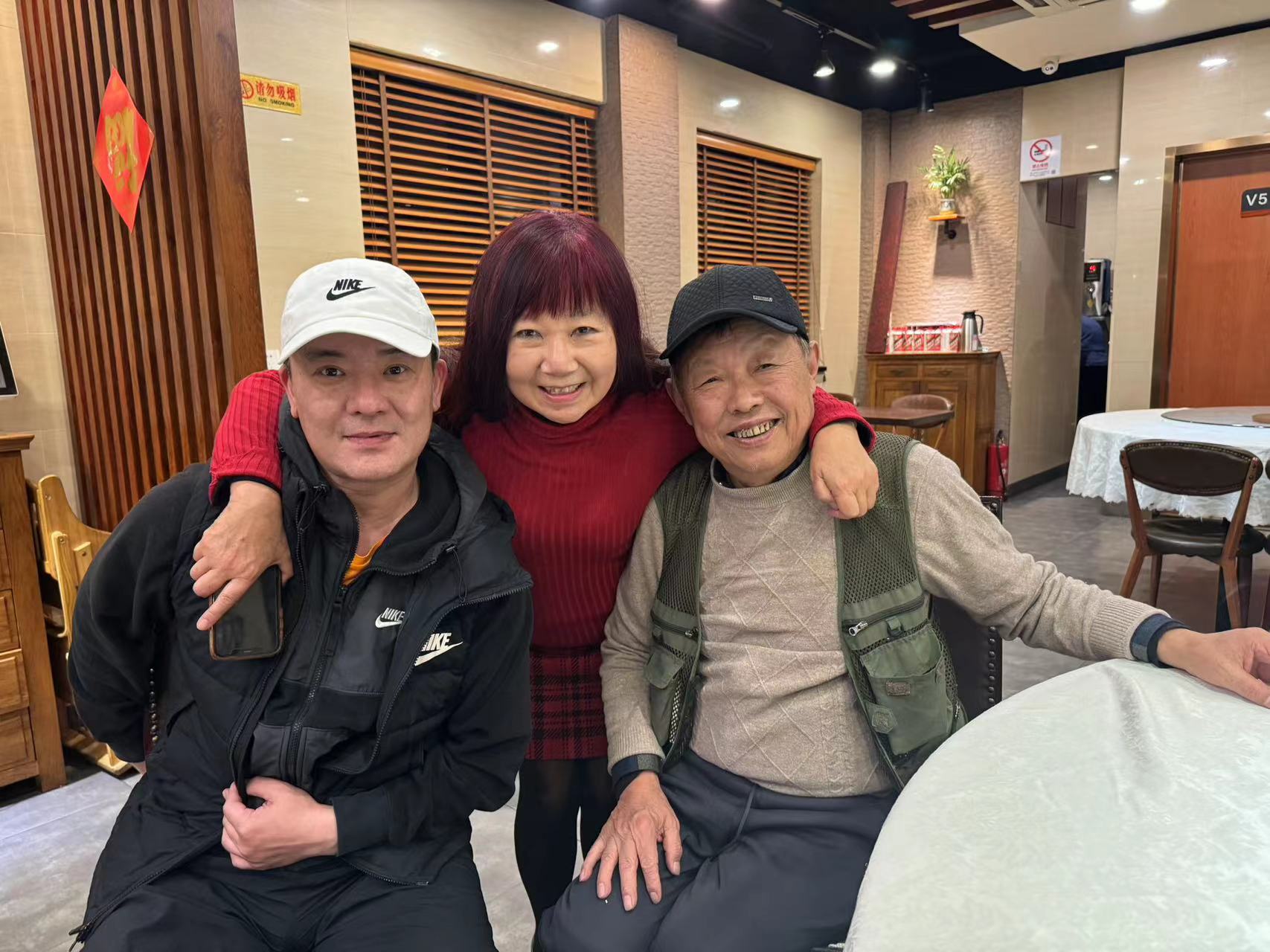
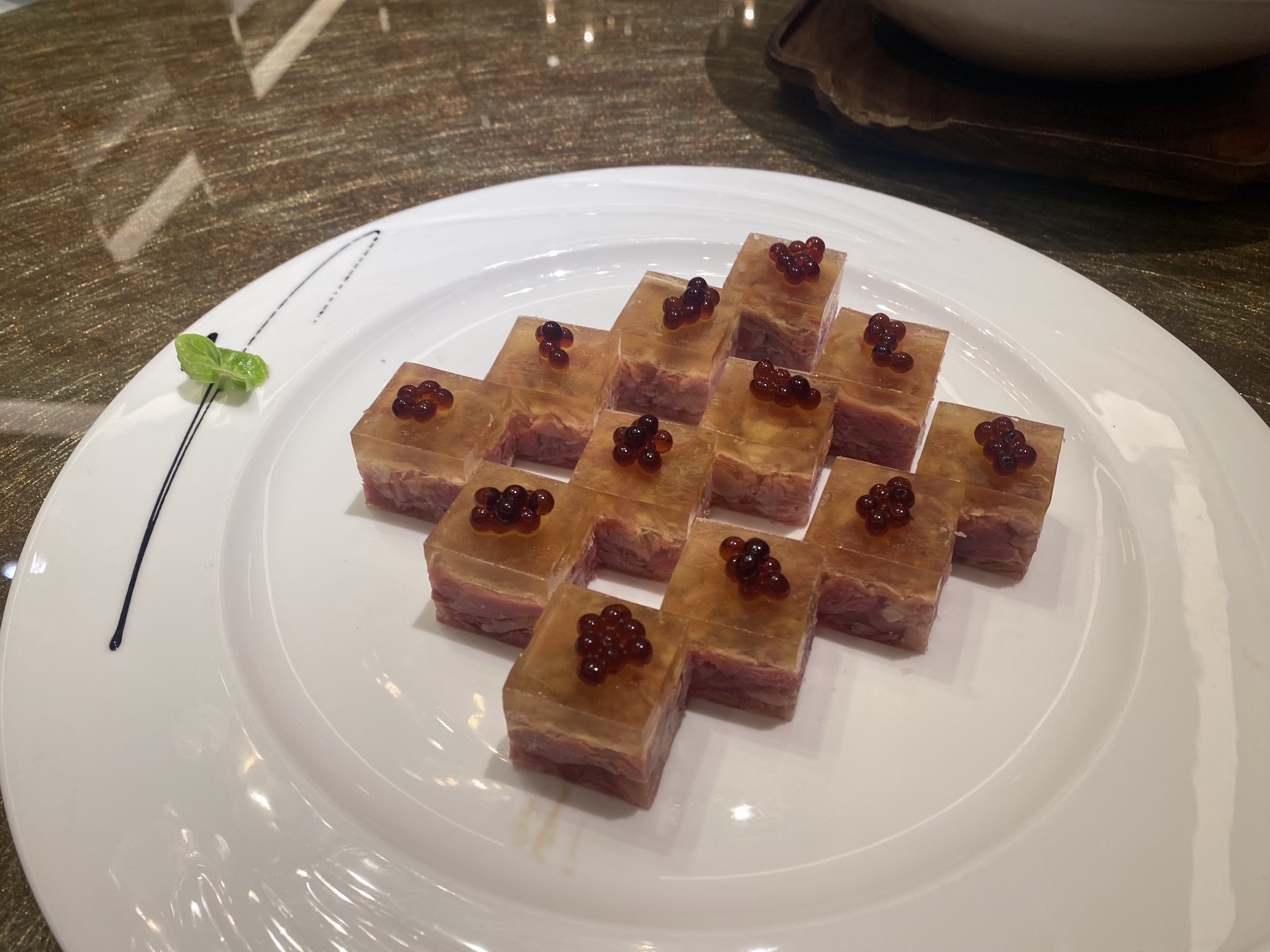
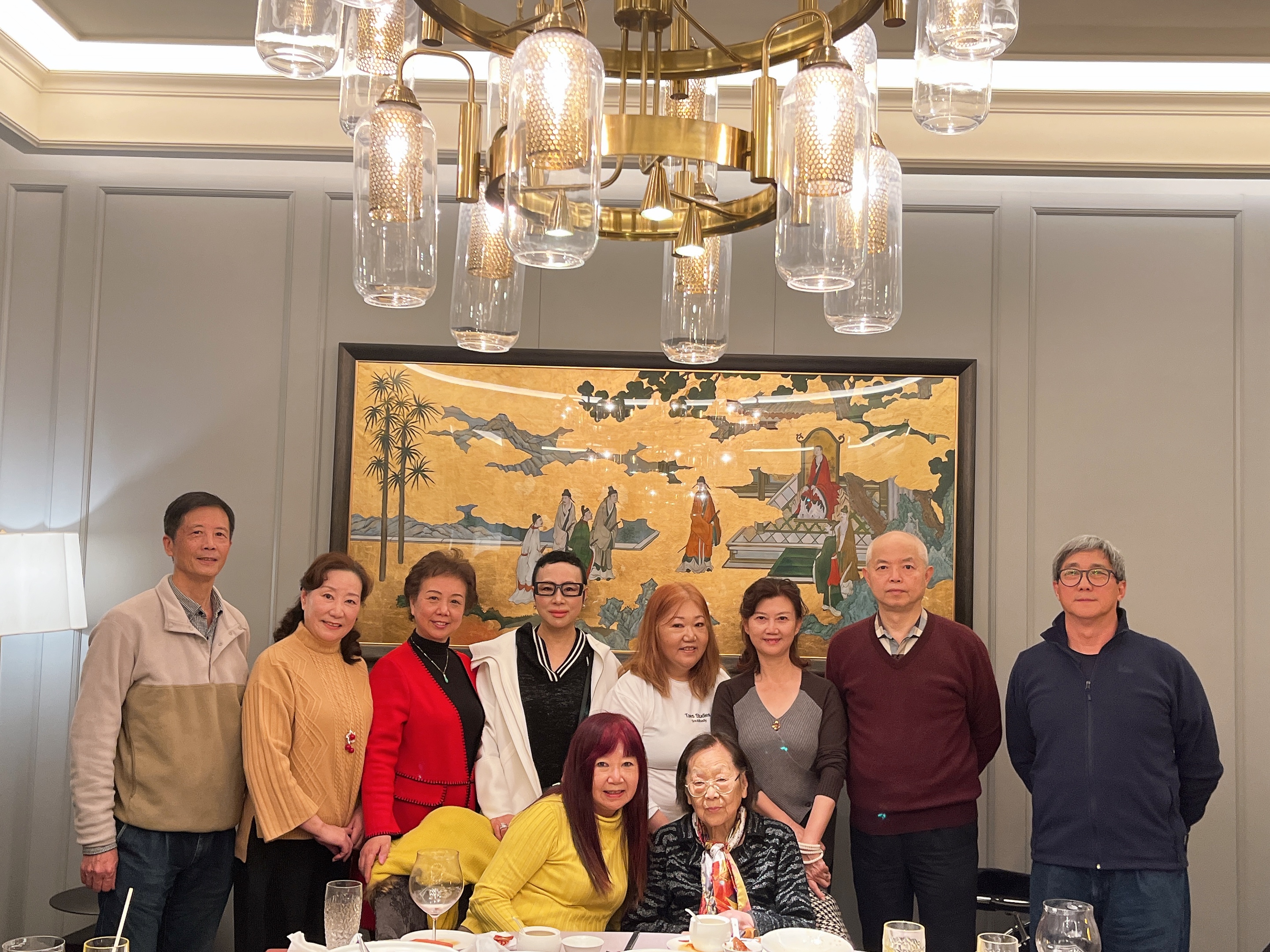
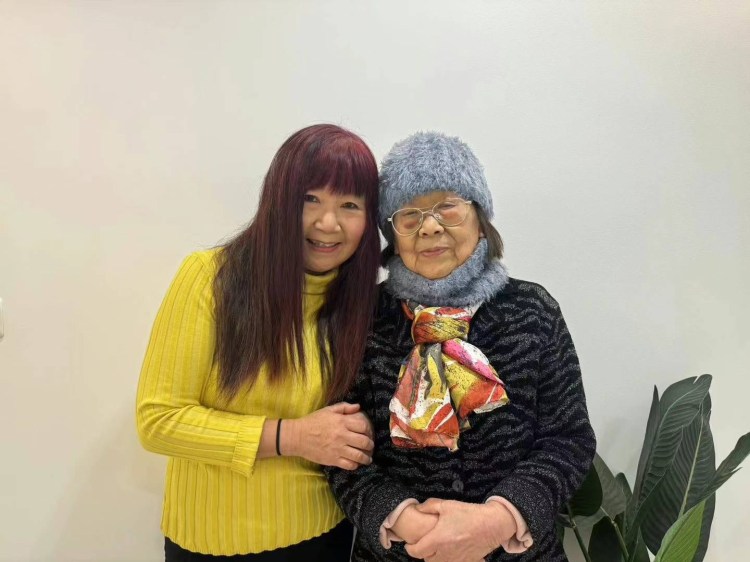
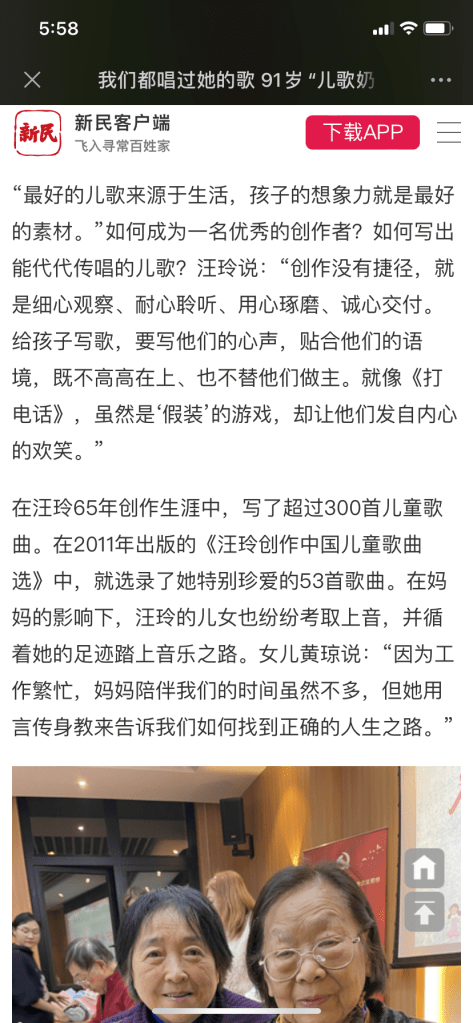
I had to leave Shanghai. It was a pity that I couldn’t attend my 91-year-old mother’s honerary tea party in Shanghai. My mother was low-key and unpretentious throughout her life, and she trained a large number of children’s song writers. During the trip to Shanghai, I reunited with several composers who often came to my home when I was a child.
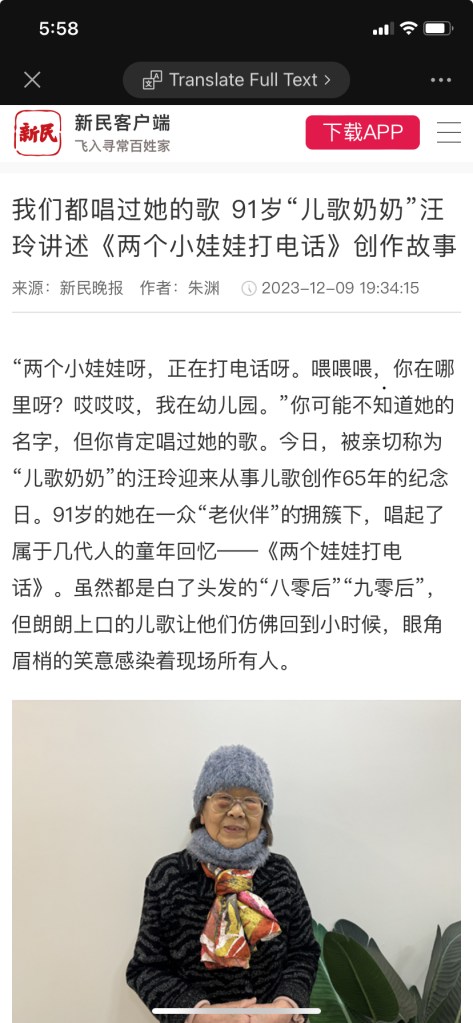
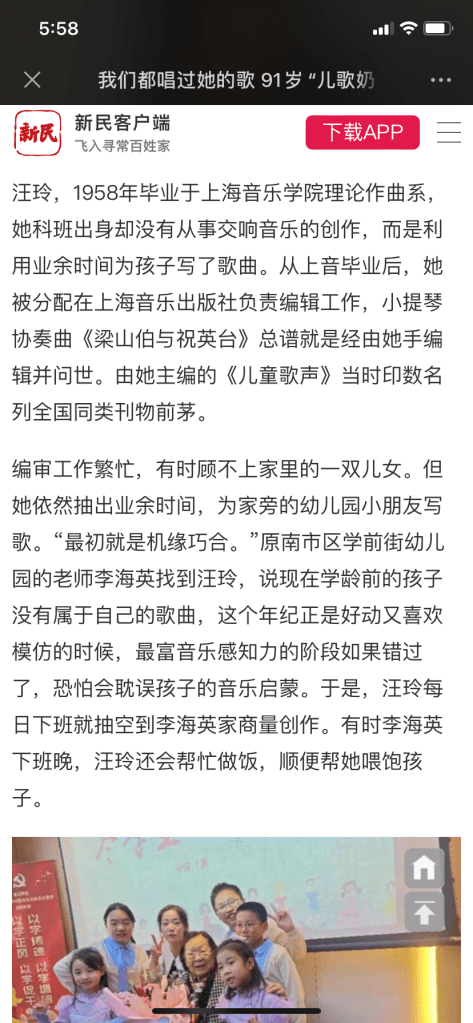
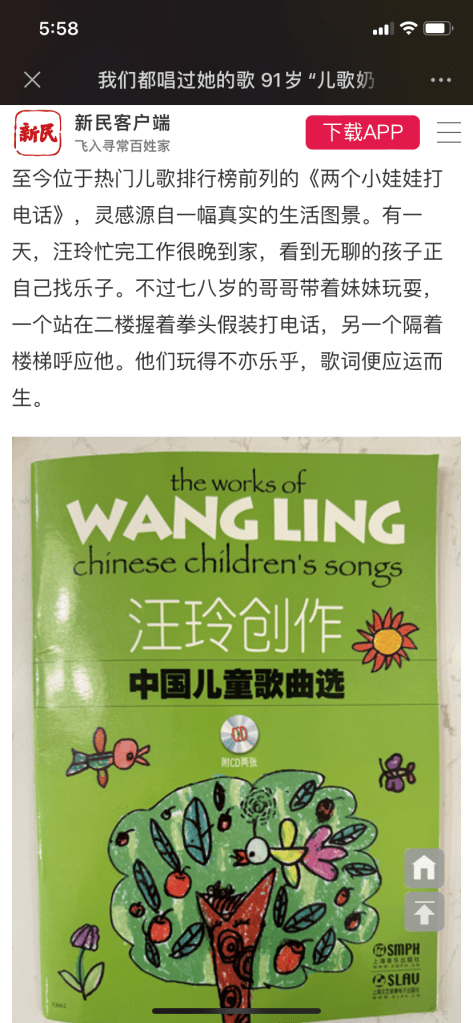
My mother was a well-known children’s song writer in China. After she immigrating to UK 23 years ago, she was not forgotten by her hometown. We had a joyful gathering with her former colleagues and the composers she trained. A reporter from “Xinmin Evening News” also interviewed my mother. We were all so proud of our 91-year-old mother!
I just received the interview article with my mother published on “Shanghai’s Xinmin Evening” (No.1 Newspaper in Shanghai). My mother has set a good example for us! 👍👍👍
After I returned from Shanghai, the long-waited Hong Kong film director Wong Kar-wai’s first television series, Blossoms Shanghai, began airing on December 27, 2023. The 30-episode period drama – six years in the making – is adapted from a 2012 novel of the same name by Jin Yucheng, which won the 9th Mao Dun Literature Prize in 2015 and is written in Shanghainese.
—-Joan Huang, January 22, 2024—-
 Joni - Food, Wine, Fauna, Flora, Melody, Voyage, and Beyond...